In my experience managing enterprise network upgrades, the demand for gigabit speeds remains constant despite the hype around 100G connectivity. While core layers evolve, the access layer relies heavily on the stability of the 1.25g optical transceiver . You likely face the challenge of maintaining legacy systems while ensuring new components match strict performance standards. Finding a module that guarantees data integrity over long distances is critical for your network’s uptime. Let us explore the technical criteria required to vet these modules for specific long-haul deployments.
Understanding Specs of a 1.25G SFP Fiber Optical Transceiver
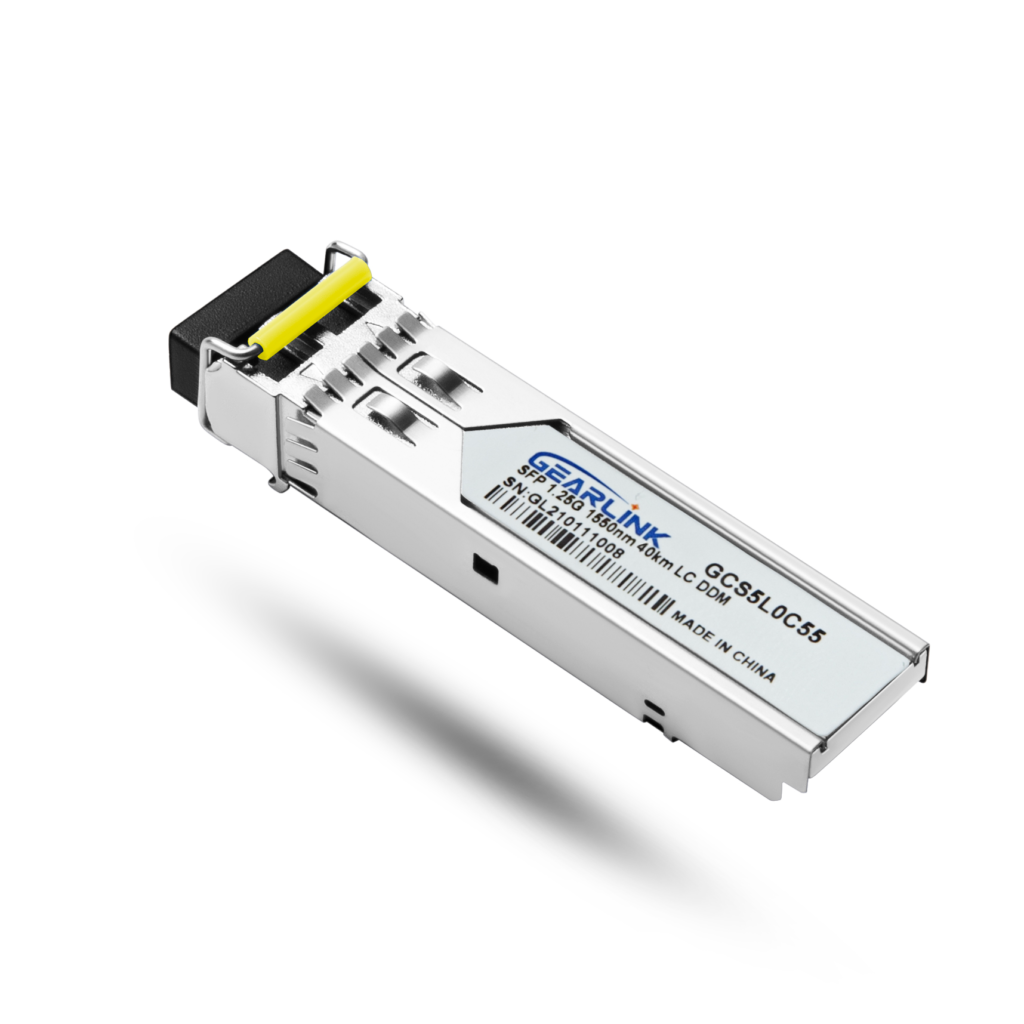
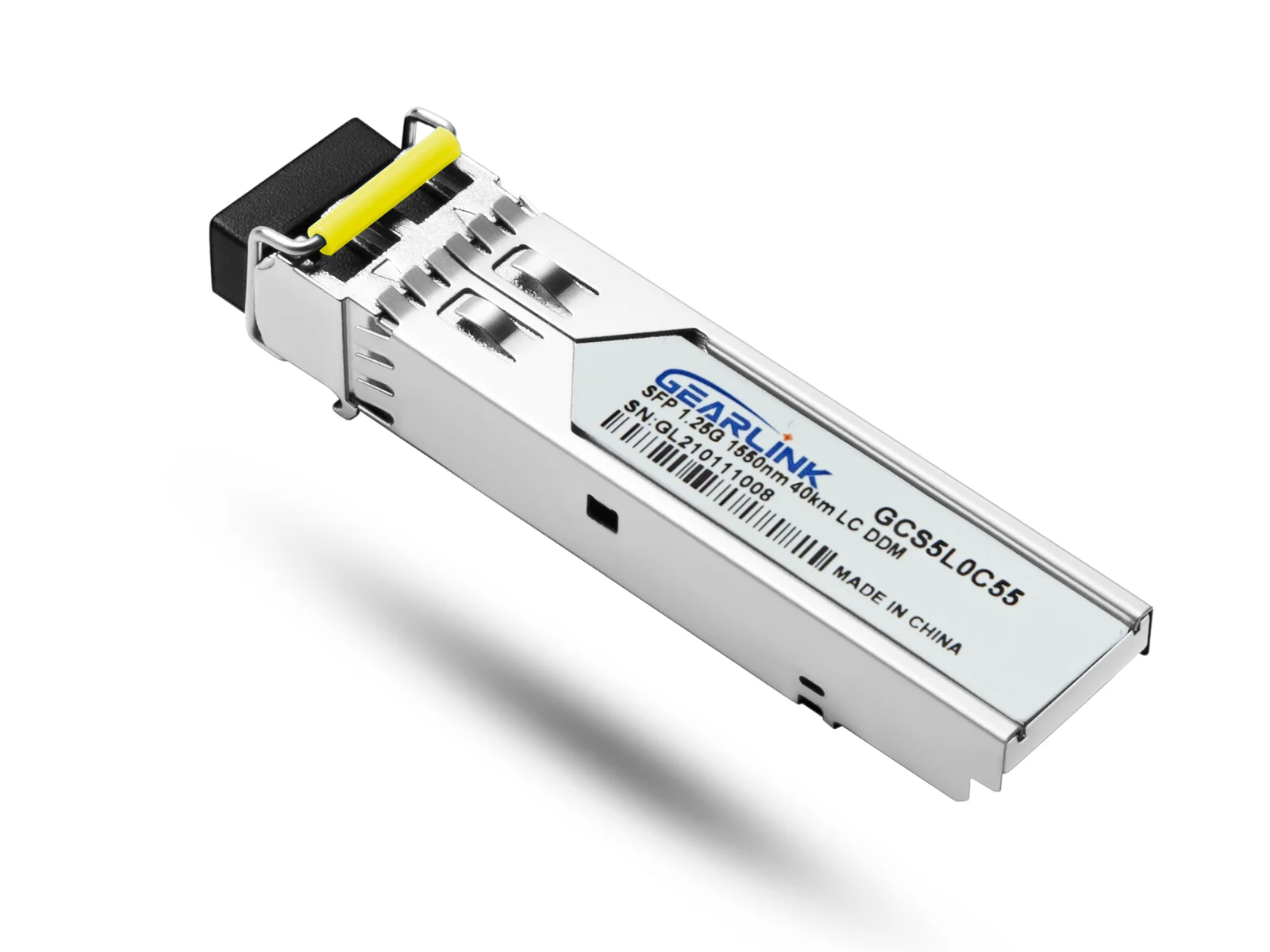
When dealing with extended network links, standard specifications often fall short. A standard 1.25g sfp fiber optical transceiver typically operates at 850nm or 1310nm wavelengths. However, these are insufficient for distances exceeding 10 kilometers due to signal attenuation.
For links reaching 40 kilometers, you must look for modules utilizing the 1550nm wavelength. This specific wavelength experiences the lowest loss in single-mode fiber (SMF). Using a 1310nm module for a 40km run will almost certainly result in packet loss or link failure.
Additionally, the interface type matters significantly for physical installation. Most enterprise switches require a Duplex LC connector. Ensuring your chosen module matches this physical form factor is the first step in successful deployment.
Why DOM Capability is Non-Negotiable
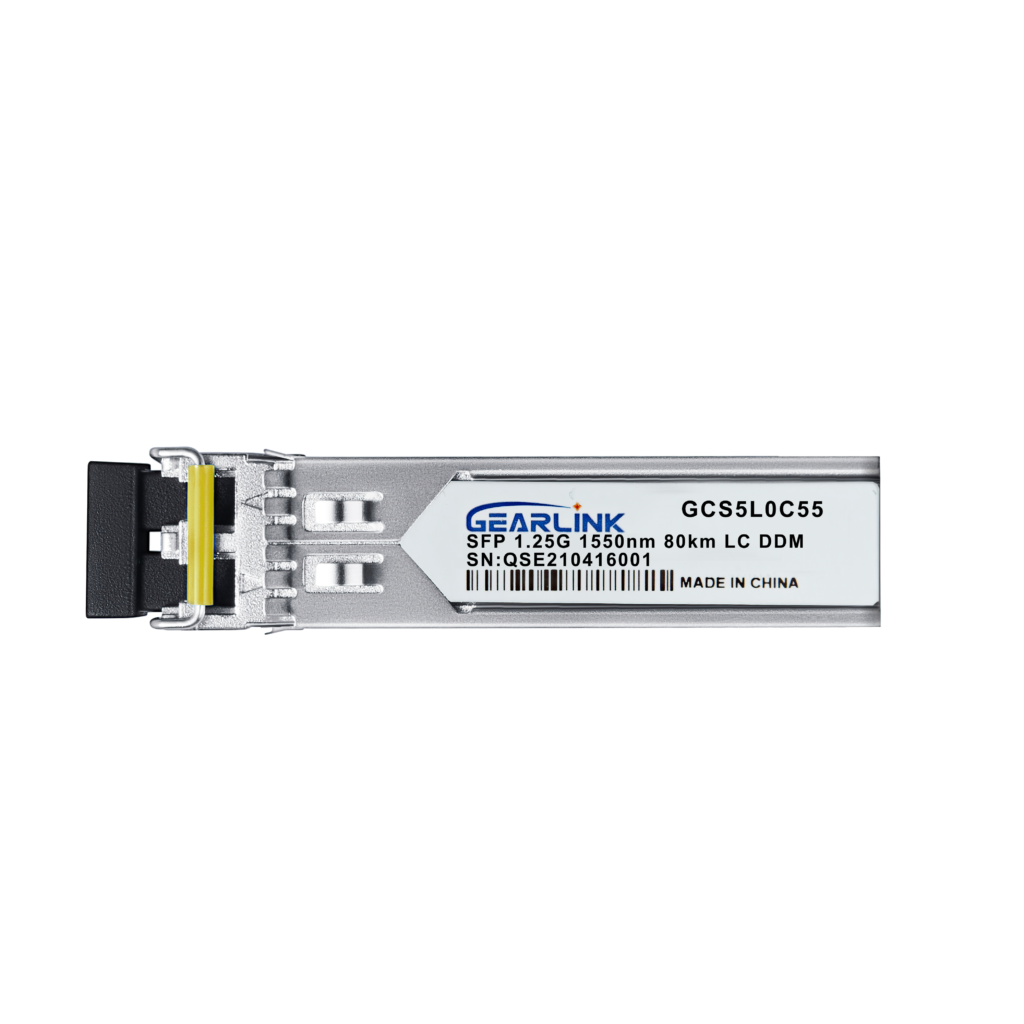
For B2B buyers and network engineers, visibility into network health is paramount. I always advise against purchasing any long-range transceiver that lacks Digital Optical Monitoring (DOM). DOM functions as a real-time health check for your fiber link.
This feature allows you to monitor critical parameters directly through your switch’s command-line interface (CLI). You can view optical output power, optical input sensitivity, temperature, and supply voltage.
If a link becomes unstable, DOM data helps you distinguish between a cable fault and a failing module. This capability reduces troubleshooting time significantly. It transforms a reactive maintenance schedule into a proactive one.
Criteria for Evaluating a 1.25G SFP Module Supplier
The hardware is only as good as the manufacturing standards behind it. Finding a trustworthy 1.25g sfp module supplier involves more than comparing price lists. You must verify their testing protocols and compliance standards.
Reliable suppliers strictly adhere to the Multi-Source Agreement (MSA). This agreement ensures that a transceiver acts identically to an OEM part from brands like Cisco or Juniper. If a supplier cannot guarantee MSA compliance, the risk of incompatibility is high.
Furthermore, ask about their temperature testing procedures. Industrial environments often fluctuate outside the standard commercial range (0°C to 70°C). A robust supplier will offer modules tested for wider temperature tolerances to ensure reliability in unconditioned cabinets.
Assessing Long-Reach Modules for 40km Deployments
Choosing the correct module for mid-to-long-range transmission requires balancing laser precision with receiver sensitivity. For a 40km link, the optical budget is tighter than standard short-range connections. You need a transceiver that utilizes a DFB (Distributed Feedback) laser rather than a cheaper Fabry-Perot laser.
DFB lasers provide a narrower spectral width. This characteristic allows the signal to travel 40km at 1550nm without significant dispersion. When your project demands this level of reach and stability, reviewing the specifications of a dedicated 1000BASE-EX SFP is essential.
You should verify that the module supports single-mode fiber (SMF) and includes the DOM features mentioned earlier. If you are currently evaluating components for a long-haul gigabit uplink, I recommend examining the technical details of the 1000BASE-EX SFP 1550nm 40km Module to understand the baseline requirements for this architecture.
Summary
To secure a reliable link over 40km, you must prioritize the 1550nm wavelength and DFB laser technology. Always insist on DOM capabilities for future troubleshooting and verify MSA compliance. Selecting a 1.25g optical transceiver with these specific attributes ensures long-term network stability.
FAQ
Q: What is the difference between 1310nm and 1550nm 1.25G transceivers?
A: The 1310nm wavelength is typically used for links up to 10km, while 1550nm is optimized for longer distances like 40km to 80km due to lower attenuation.
Q: Can I use a 1.25G SFP module in a 10G SFP+ port?
A: Yes, most SFP+ ports are backward compatible, but you must manually configure the port speed to 1Gbps (1000Mbps) for the link to function.
Q: Why is DOM important for a 1.25G optical transceiver?
A: DOM allows network administrators to monitor real-time parameters like signal power and temperature, helping to predict failures before they disrupt the network.
Q: What fiber cable type is required for a 40km 1.25G link?
A: You must use Single-Mode Fiber (SMF), specifically 9/125µm cables, as Multimode Fiber cannot support transmission over such long distances.
Reference Sources
The Fiber Optic Association (FOA) – Reference for optical wavelengths and attenuation standards.
Small Form Factor Committee (SFF) – Documentation on SFP MSA standards and DOM (SFF-8472).
IEEE Standards Association – IEEE 802.3z specifications for Gigabit Ethernet.