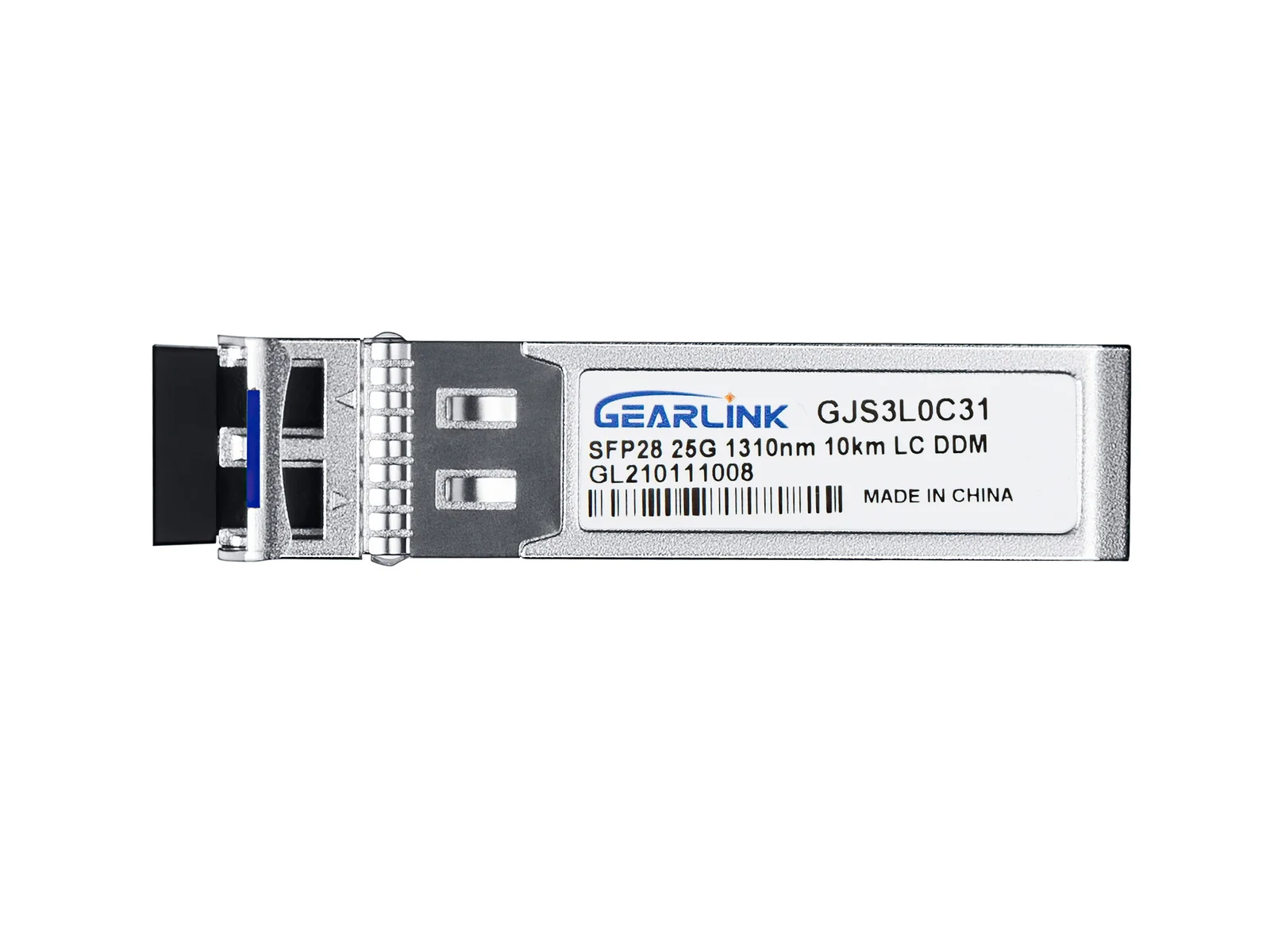
In the rapidly evolving landscape of telecommunications and data center infrastructure, the transition from 10G to higher bandwidth has become an inevitable necessity for maintaining competitive operations. For many network architects and engineers, the challenge lies in finding a balance between high-speed performance and long-distance reliability. Among the myriad of optical solutions available today, the 25G SFP28 LR transceiver stands out as a critical component for bridging the gap between local server racks and distant metropolitan access points. This module is not merely a faster version of its predecessors; it is a precision-engineered tool designed to support the backbone of 5G fronthaul networks and large-scale enterprise environments. By utilizing the 1310nm wavelength over single-mode fiber, the 25G SFP28 LR offers a robust 10km transmission range, making it an indispensable asset for those who refuse to compromise on signal integrity. This guide analyzes the technical architecture of this module and why it has become the gold standard for long-haul 25Gbps connectivity in the current market.
Technical Architecture and Single-Lane Efficiency
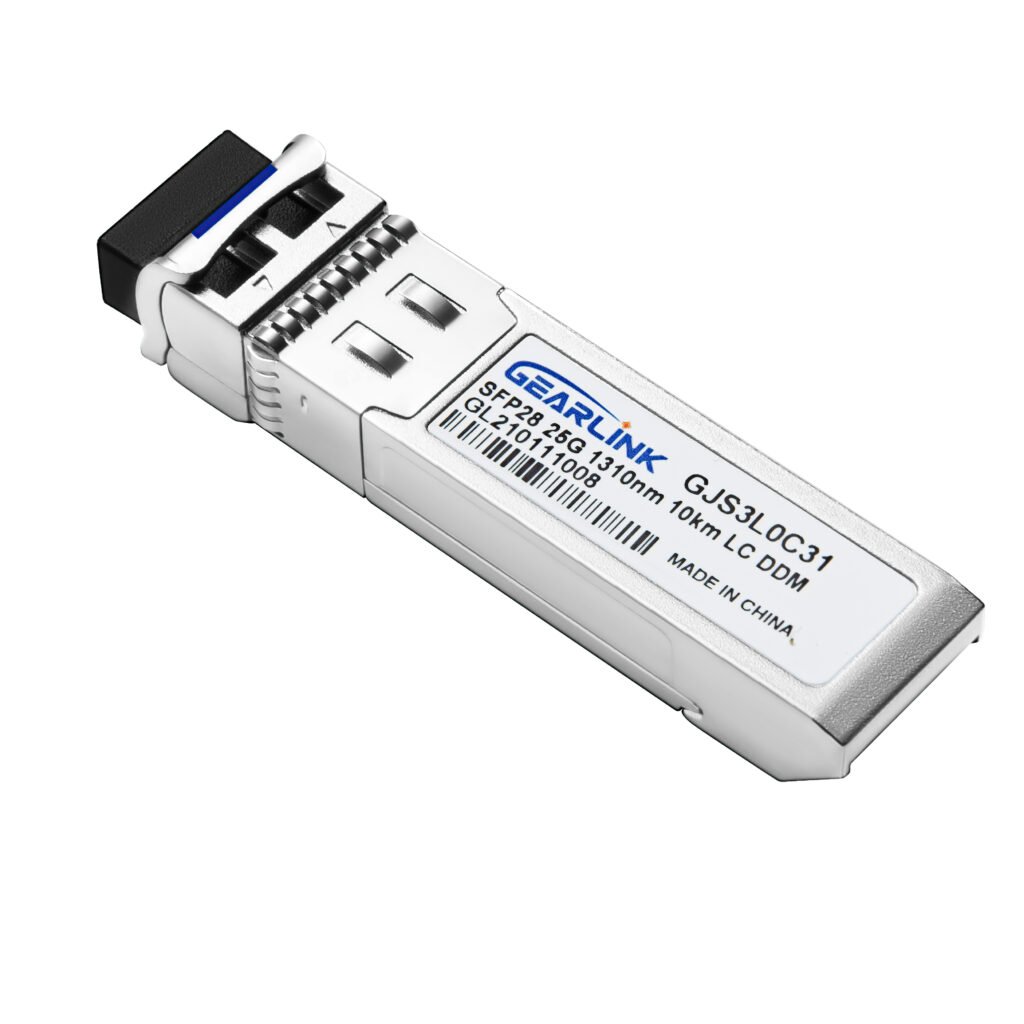
The fundamental advantage of the 25G SFP28 LR lies in its simplified yet high-performance internal design. Unlike older 100G solutions that required multiple lanes of 10G to achieve aggregated speed, the SFP28 standard operates on a single 25Gbps lane. This shift significantly reduces the complexity of the host board and lowers the overall power consumption of the networking equipment. Because it avoids the overhead of multi-lane alignment, the latency is naturally lower, which is a critical requirement for high-frequency trading and real-time data processing. The “LR” designation, standing for Long Reach, indicates that the module utilizes a DFB (Distributed Feedback) laser. This type of laser is specifically chosen for its narrow spectral width, which minimizes chromatic dispersion over long distances.
Superior Thermal Performance and DDM Integration
Beyond the laser technology, the 25G SFP28 LR is housed in the familiar SFP form factor, allowing for high port density on switches and routers without requiring massive hardware redesigns. This means that a standard 1U switch can support dozens of 25G links, providing a massive increase in aggregate bandwidth while maintaining a manageable thermal footprint. Reliability is further enhanced by Digital Diagnostics Monitoring (DDM). This feature allows network administrators to monitor real-time parameters such as laser bias current, optical output power, and internal temperature. Such proactive telemetry is essential for identifying potential fiber degradation or laser aging before a link failure occurs, ensuring that the 25G SFP28 LR remains stable in demanding environments.
Signal Integrity and Wavelength Precision
The choice of the 1310nm wavelength is not arbitrary. In single-mode fiber applications, 1310nm is the zero-dispersion window, which allows the 25G SFP28 LR to maintain a clean signal over the full 10km reach. When signal integrity is preserved at the physical layer, the higher-level protocols experience fewer retransmissions and higher effective throughput. For professional users, this means that the 25G SFP28 LR is not just a cable replacement but a performance-enhancing component that optimizes the entire network stack.
Strategic Advantages in 5G Fronthaul and Enterprise Backbones
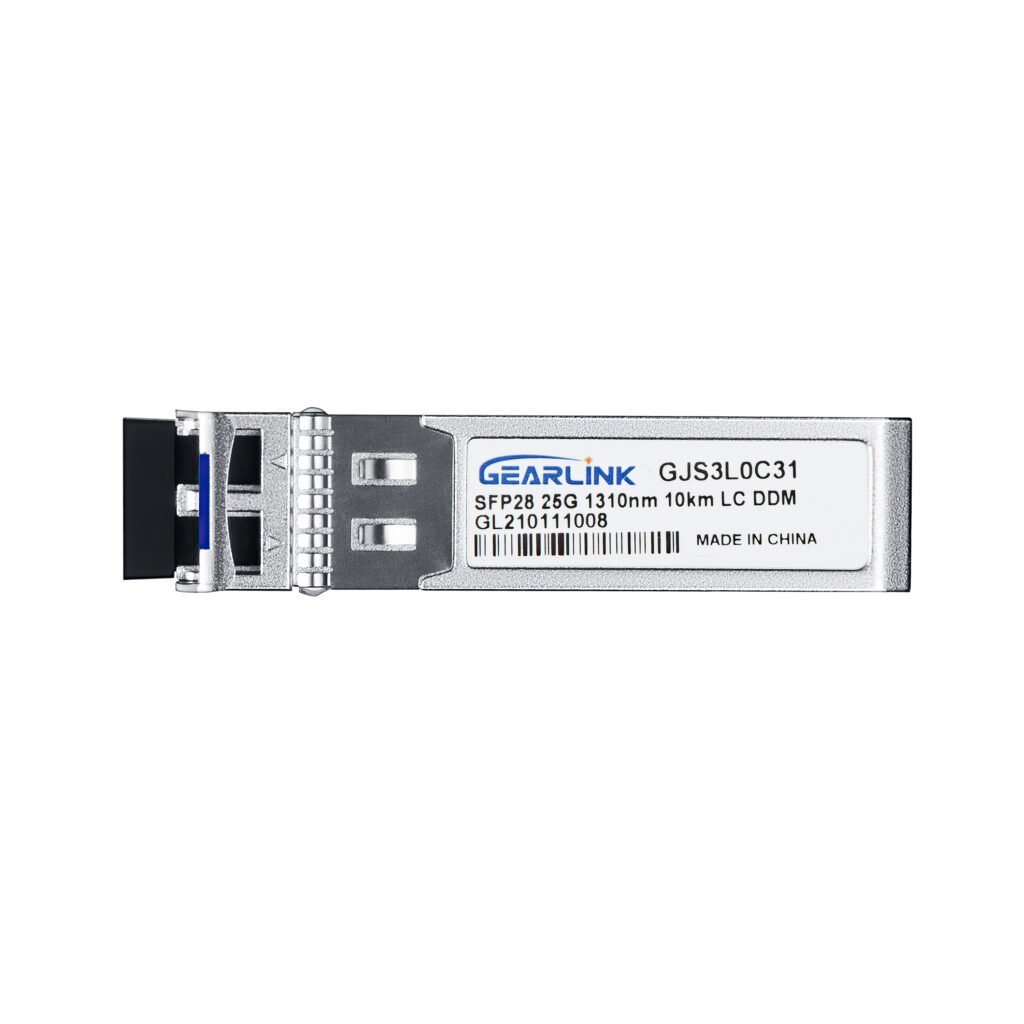
One of the most significant drivers behind the adoption of the 25G SFP28 LR is the global rollout of 5G technology. In a 5G architecture, the connection between the Remote Radio Unit (RRU) and the Building Baseband Unit (BBU) requires high bandwidth and low latency to handle the massive influx of mobile data. Because many cell sites are located kilometers apart, the short-reach multimode fiber used in internal data centers is simply insufficient. Consequently, the 25G SFP28 LR becomes the primary choice for these fronthaul links. It provides the necessary reach to connect urban cell towers to centralized processing hubs, ensuring that mobile users experience the true speed of 5G without network bottlenecks.
Cost-Effective Fiber Utilization
In the enterprise sector, the 25G SFP28 LR serves a different but equally vital purpose. Large campuses and corporate headquarters often have data centers separated by distances that exceed the 300-meter limit of multimode fiber. By implementing 25G SFP28 LR modules over existing single-mode fiber plants, companies can upgrade their inter-building links to 25G without the exorbitant cost of installing new cabling. This backward compatibility with single-mode fiber infrastructures makes it a “future-proof” investment that maximizes the value of existing assets. Moreover, the 25G standard aligns perfectly with the native lanes of modern server CPUs, eliminating the need for lane conversion, which improves application performance across the board.
Interoperability and Industry Standardization
Standardization is another core value of the 25G SFP28 LR ecosystem. Adhering to the IEEE 802.3by and SFF-8432 standards, these modules are designed to be interoperable across different hardware vendors. This prevents vendor lock-in and allows procurement teams to source high-quality optics from specialized manufacturers like OpticTran while maintaining full compatibility with their existing infrastructure. This open ecosystem fosters innovation and ensures that the 25G SFP28 LR remains a cost-effective solution for years to come. By choosing a standardized 25G path, organizations are adopting a globally recognized networking philosophy that prioritizes efficiency, scalability, and technical integrity.
Optimizing Long-Distance Link Budgets
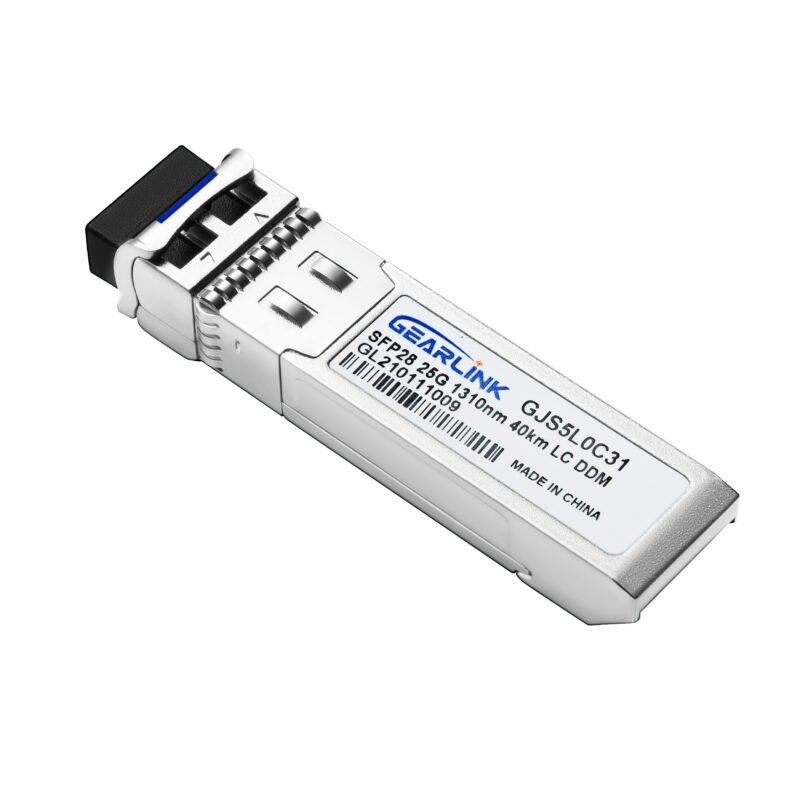
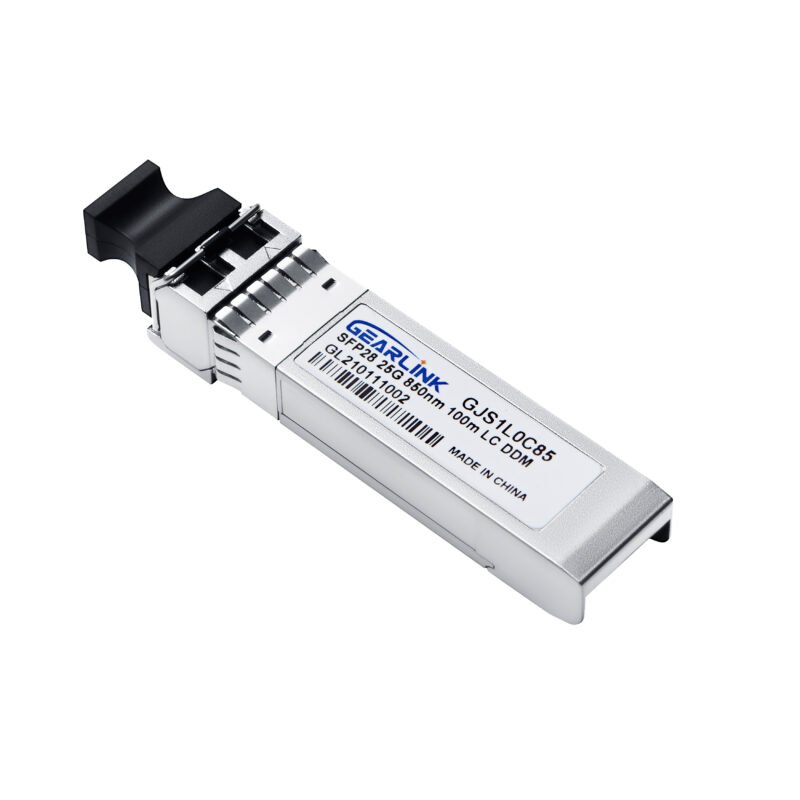
When designing a long-range network, the link budget—the total allowed signal loss—is a primary concern for engineers. The 25G SFP28 LR is engineered with a high extinction ratio and sensitive receivers to ensure that the signal remains legible even after traveling through patches, splices, and 10km of glass. Furthermore, many modern deployments utilize Forward Error Correction (FEC) to enhance the reliability of the 25G SFP28 LR link. FEC allows the system to correct bit errors caused by noise or signal attenuation, effectively extending the reliable life of the optical link.
Low Power Consumption for Sustainable Growth
As data centers face increasing pressure to reduce their carbon footprint, the energy efficiency of the 25G SFP28 LR becomes a major selling point. Because it operates on a single lane and uses a more efficient laser driver, it consumes significantly less power than older 40G or 100G optics per unit of data transferred. This reduction in power consumption leads to lower heat generation, which in turn reduces the demand on the facility’s cooling systems. For large-scale deployments involving thousands of ports, the cumulative energy savings of switching to 25G SFP28 LR can be substantial, aligning technical performance with corporate sustainability goals.
Frequently Asked Questions (FAQ)
Q1: What is the maximum distance supported by 25G SFP28 LR?
A: The standard 25G SFP28 LR supports a transmission distance of up to 10 kilometers over G.652 single-mode fiber (SMF). Some specialized versions may reach slightly further depending on the quality of the fiber and the use of FEC.
Q2: Can I use 25G SFP28 LR with multimode fiber (MMF)?
A: No. The 25G SFP28 LR uses a 1310nm laser designed specifically for single-mode fiber. If you attempt to use it with multimode fiber, the signal will suffer from massive modal dispersion and will likely not establish a link.
Q3: Is the 25G SFP28 LR backward compatible with 10G SFP+ ports?
A: While the physical form factor is identical, compatibility depends on the switch’s hardware and firmware. Most modern 25G ports can be “speed-sensed” or manually configured to 10G, but a legacy 10G-only port generally cannot support a 25G module.
Q4: Does the 25G SFP28 LR support hot-swapping?
A: Yes, all SFP28 modules are designed to be hot-swappable, meaning they can be inserted or removed from a powered switch without interrupting the operation of the rest of the system.