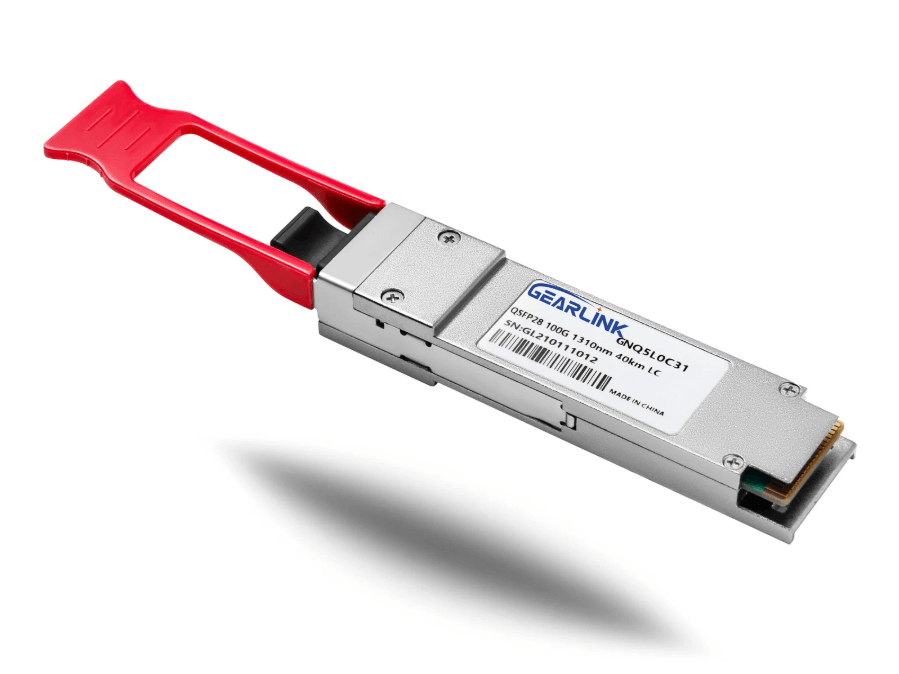
The relentless evolution of digital technology has created an insatiable demand for network bandwidth. As businesses and cloud providers race to meet the needs of data-intensive applications like AI, machine learning, and 5G, the limitations of previous-generation networking infrastructure are becoming increasingly apparent. In this landscape, 400G transceivers have emerged as a cornerstone technology, fundamentally reshaping how we build and scale high-performance networks. But what exactly are these modules, and why are they becoming a crucial component for modern data centers and enterprise networks?
The Core of the Matter: What Defines a 400G Transceiver?
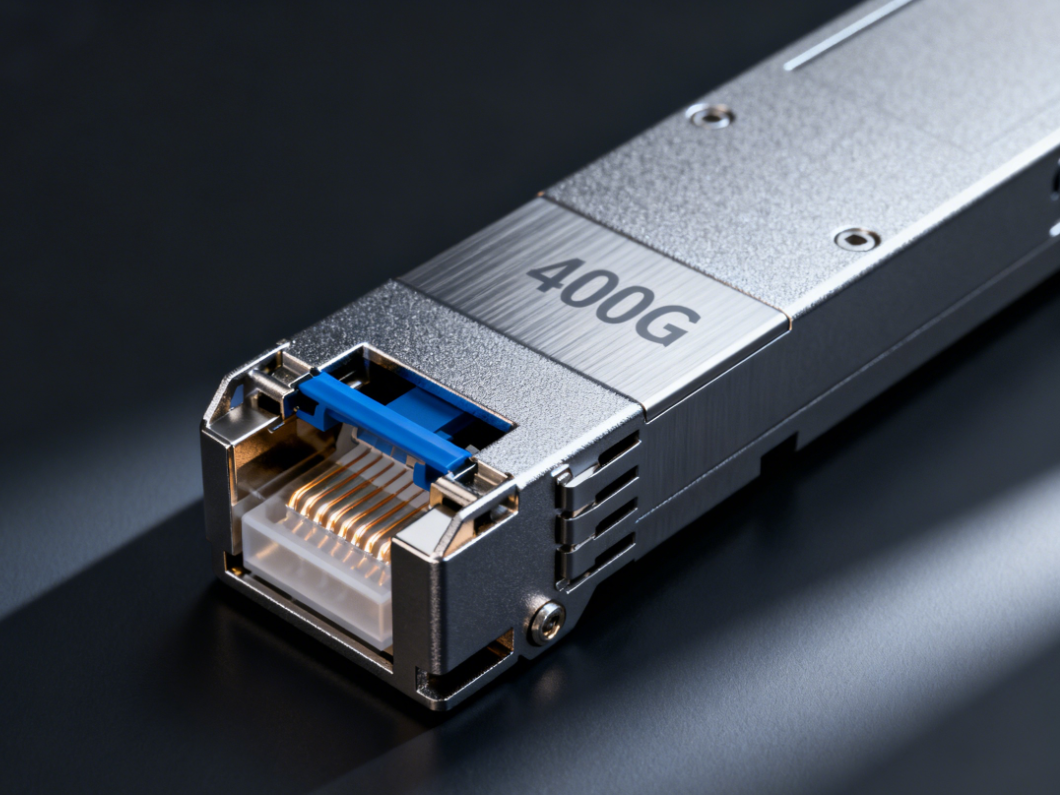
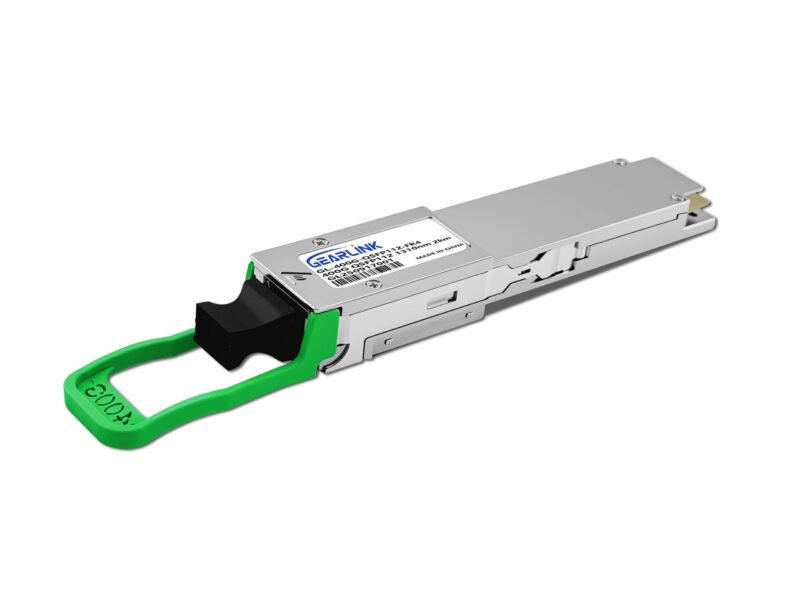
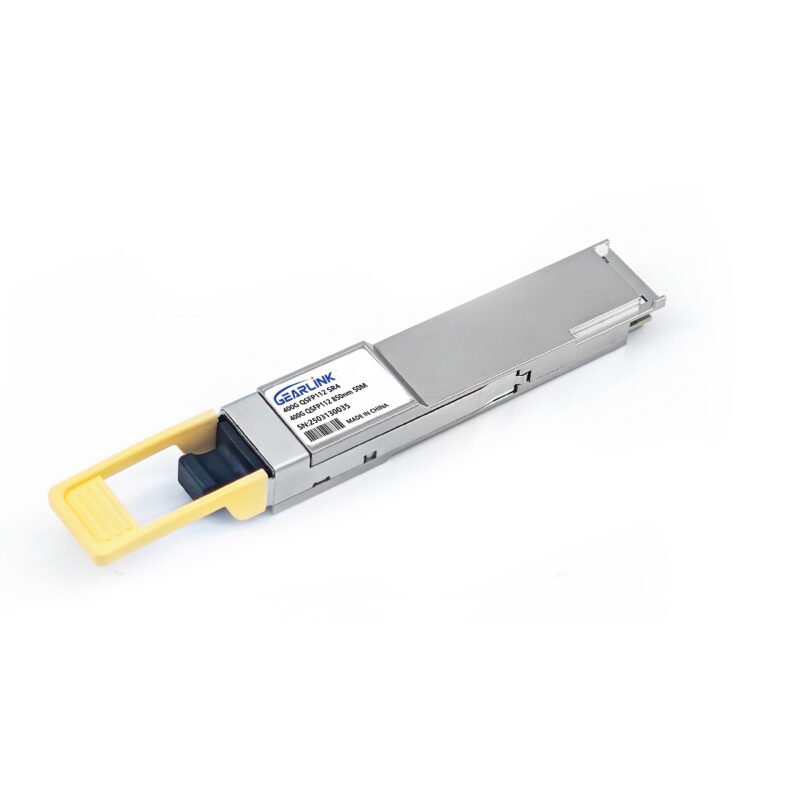
At its heart, a 400G transceiver is an optical module designed to transmit and receive data at a staggering rate of 400 gigabits per second (Gbps). This is a monumental leap from the 100G and 200G modules that preceded it, offering a fourfold increase in capacity over 100G. To achieve this incredible speed, these transceivers rely on a combination of advanced technologies and innovative design principles.
First and foremost, the secret lies in advanced modulation. While older transceivers often used Non-Return-to-Zero (NRZ) modulation, which encodes one bit per symbol, 400G transceivers predominantly employ Pulse Amplitude Modulation 4-level (PAM4). This sophisticated technique encodes two bits per symbol, effectively doubling the data rate per lane without increasing the signal’s bandwidth. By using eight lanes of 50Gbps PAM4 or four lanes of 100Gbps PAM4, these modules can reach the 400Gbps mark efficiently. This not only boosts performance but also allows for a more streamlined, power-efficient architecture.
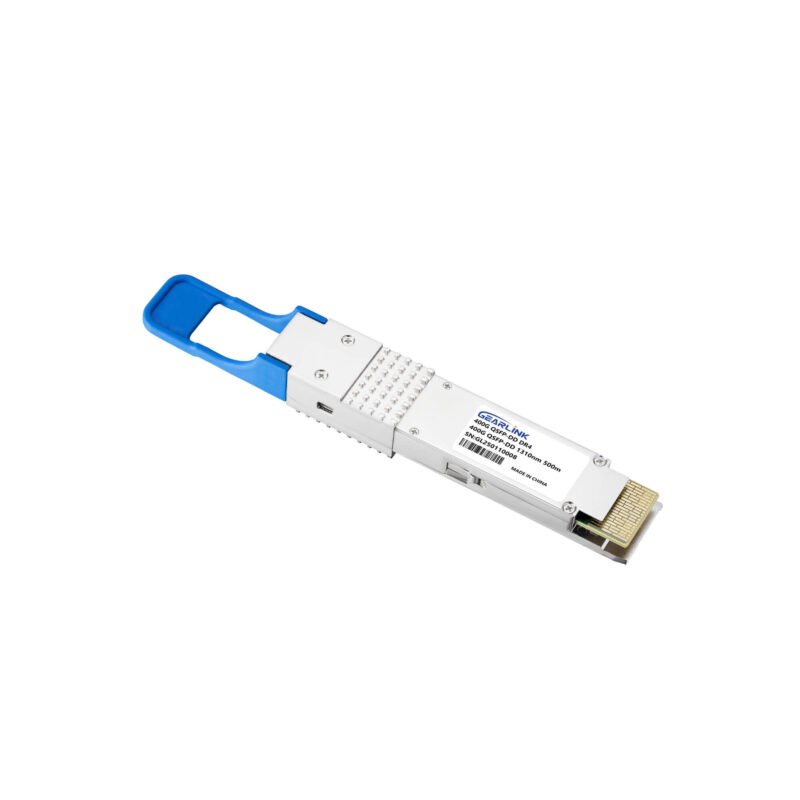
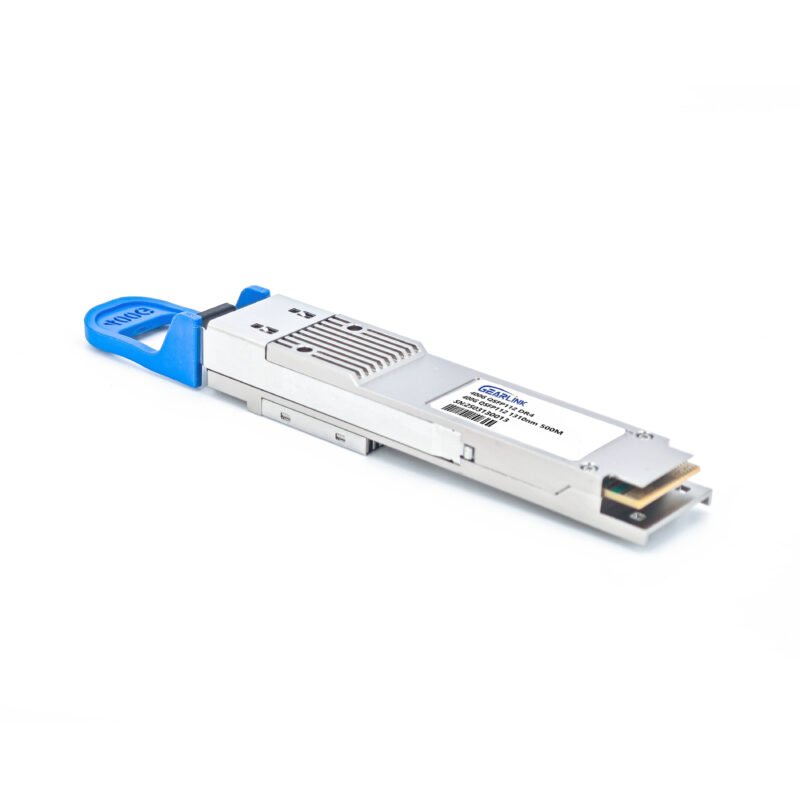
Another defining characteristic is the form factor. The industry has largely standardized two primary form factors for 400G transceivers: the Octal Small Form-factor Pluggable (OSFP) and the Quad Small Form-factor Pluggable Double Density (QSFP-DD). The QSFP-DD, an evolution of the widely adopted QSFP form factor, is backward compatible with existing 100G and 200G QSFP modules, making it a preferred choice for seamless network upgrades. The OSFP, on the other hand, is slightly larger, allowing for better thermal management and higher power consumption, which can be advantageous in certain high-density applications. The choice between these two largely depends on a network administrator’s specific needs regarding density, backward compatibility, and power efficiency.
More Than Just Speed: The Unparalleled Benefits of 400G
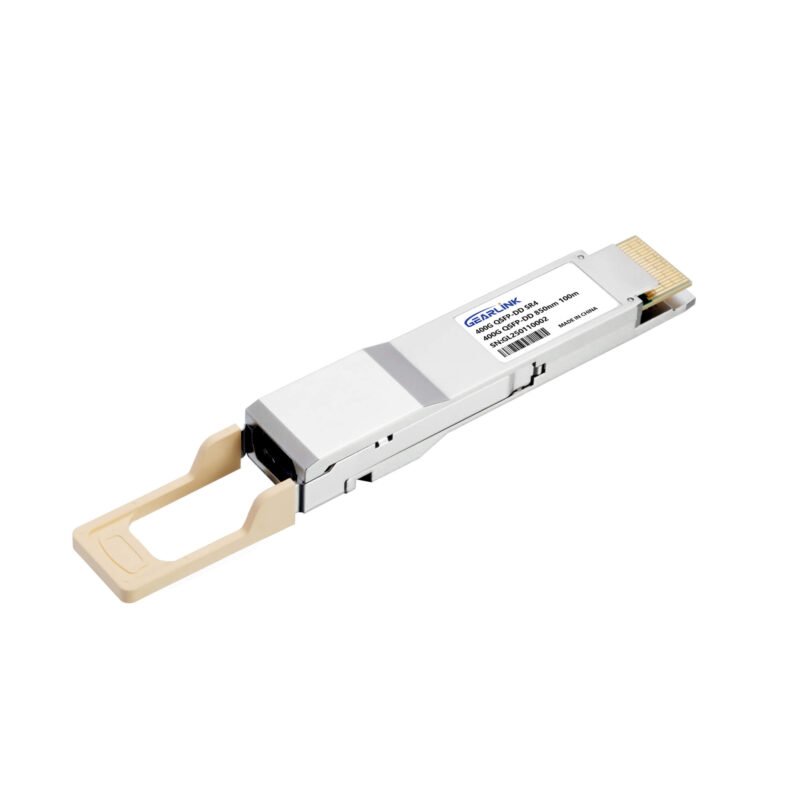
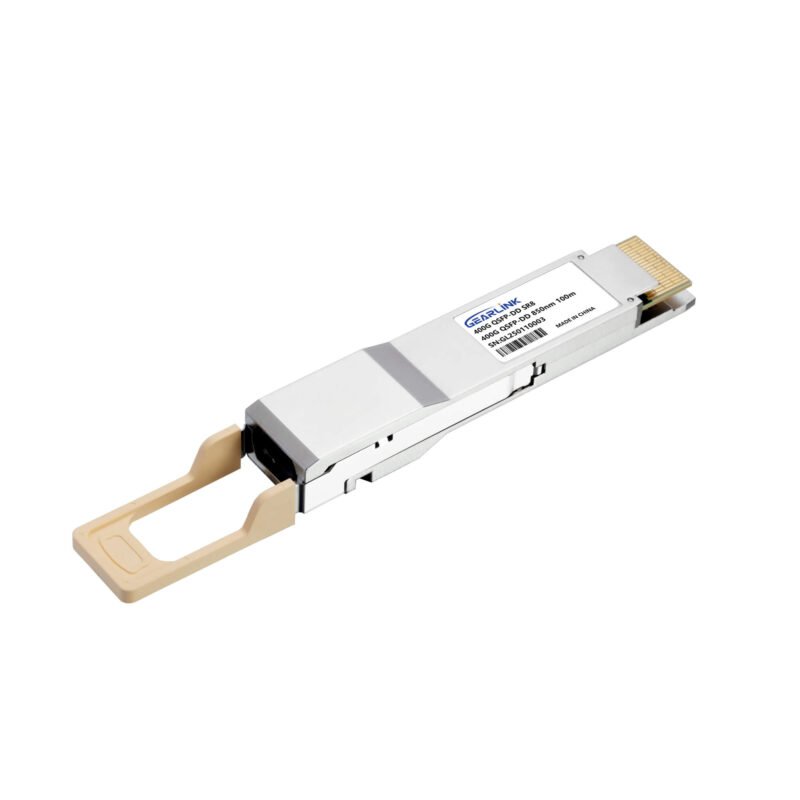
The transition to 400G transceivers is driven by far more than just raw speed. It’s a strategic move that delivers a host of operational and financial benefits, particularly for hyperscale data centers and cloud service providers.
Exceptional Scalability and Density: One of the most significant advantages of 400G transceivers is their ability to deliver more bandwidth per rack unit (RU). A 1U switch with 32 400G ports can achieve a massive 12.8 Tbps of throughput. When you compare this to a 100G switch, which would need four times the number of ports to reach the same capacity, the space savings become immediately clear. This higher density not only saves valuable rack space but also simplifies network architecture by reducing the need for an excessive number of switches and interconnects.
Improved Power Efficiency: Despite their immense power, 400G transceivers are remarkably energy-efficient. They consume less power per gigabit of data transmitted compared to their 100G predecessors. As energy costs and environmental concerns continue to rise, this reduction in power consumption is a critical factor for large-scale deployments. It directly translates to lower operational costs and a smaller carbon footprint, aligning with the industry’s push toward more sustainable practices.
Cost-Effectiveness at Scale: While the initial price of a single 400G transceiver may be higher than a 100G module, the cost-per-bit is significantly lower. This is a crucial metric for large networks where billions of bits of data are transferred every second. By deploying 400G, network operators can achieve a lower total cost of ownership (TCO) over time, as they can handle a greater volume of traffic with fewer modules and less supporting infrastructure.
Simplified Network Architecture: The high port density and increased capacity of 400G allow for the creation of simpler, more robust network topologies. In a leaf-spine architecture, for example, a single 400G link can replace multiple 100G links between switches. This not only reduces cabling complexity and potential points of failure but also streamlines network management. Furthermore, many 400G transceivers can be used in “breakout” configurations, allowing a single 400G port to connect to multiple 100G or 50G devices, providing a flexible and future-proof upgrade path.
Applications Across the Digital Landscape
The practical applications of 400G transceivers are broad and impactful, extending across various sectors that are the backbone of our digital world.
The Data Center: Where Speed is Everything
Within the data center, 400G transceivers are the engine of modern connectivity. They are deployed in a variety of key locations to manage immense data flows.
Spine-and-Leaf Architecture: In modern spine-and-leaf topologies, 400G links are used to connect the “spine” switches, which form the network’s core, to the “leaf” switches at the rack level. This high-speed backbone ensures that data can move horizontally between servers with minimal latency, which is essential for distributed applications and AI clusters.
Data Center Interconnect (DCI): For connecting geographically dispersed data centers, long-distance 400G transceivers like the 400G ZR and ZR+ modules are indispensable. These coherent optical modules can transmit 400Gbps over hundreds of kilometers without needing complex, costly signal regeneration, dramatically simplifying DCI and reducing operational expenses.
AI and Machine Learning Clusters: The rapid growth of AI and machine learning workloads requires an enormous amount of data to be moved between servers and GPUs. 400G transceivers provide the low-latency, high-bandwidth interconnects necessary to prevent bottlenecks, allowing these computationally intensive tasks to run efficiently.
Beyond the Data Center: Extending the Reach
The impact of 400G transceivers is not confined to the data center floor. They are also playing a vital role in building the networks of tomorrow.
5G Network Backbones: The rollout of 5G networks is generating an explosion of data traffic from connected devices. 400G transceivers are used to build the high-capacity backbones that transport this traffic from cell towers and edge computing centers back to the core network, ensuring a seamless and fast user experience.
High-Performance Computing (HPC): In scientific research and financial modeling, where massive datasets must be processed at unprecedented speeds, 400G transceivers provide the high-speed links needed for HPC clusters. Their ability to deliver low-latency performance is crucial for parallel processing tasks.
The Future is Now: Choosing the Right 400G Transceiver
For network professionals and technology leaders, the decision to migrate to 400G is a strategic investment in the future. The choice of which 400G transceivers to deploy depends on specific application requirements:
Short-reach, intra-data center links: For connections within a rack or between adjacent racks (typically up to 100m), multimode modules like 400G SR8 are ideal. They use parallel fiber and are cost-effective for short distances.
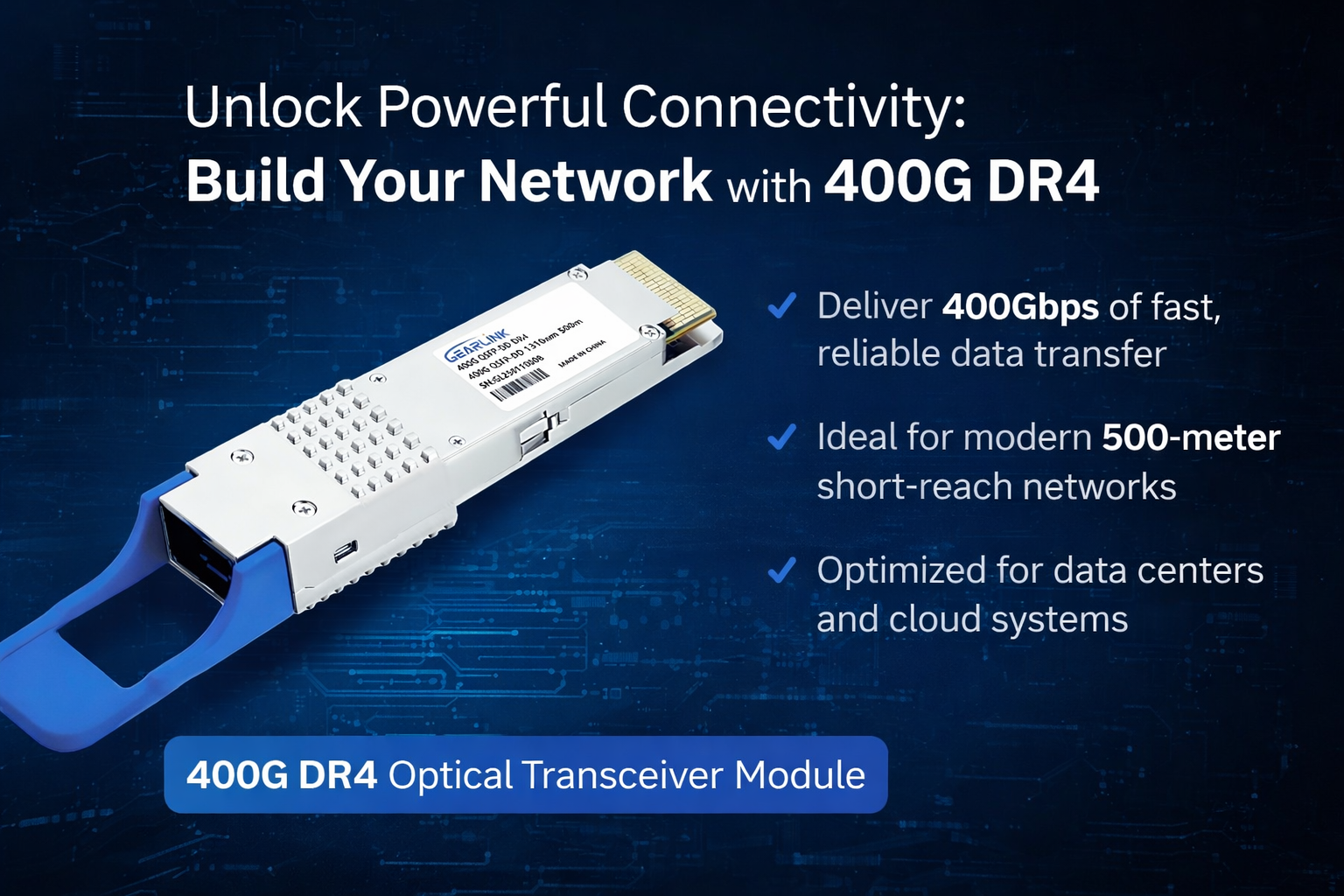
Medium-reach data center links: For spine-and-leaf connections or rack-to-rack links up to 500m, single-mode modules such as 400G DR4 are a perfect fit.
Campus or metro-level links: For longer distances up to 2km, 400G FR4 modules offer a cost-effective solution.
Long-haul DCI and telecom networks: For links spanning 80km or more, 400G ZR/ZR+ coherent optics are the definitive solution, offering exceptional performance over long distances without active amplification.
The move to 400G transceivers is not just an upgrade; it’s a fundamental shift that enables a more scalable, efficient, and powerful network infrastructure. By understanding their core technology and practical applications, businesses can make informed decisions to build networks that are ready to handle the data demands of today and tomorrow.
FAQ
Q: What’s the main difference between 400G QSFP-DD and OSFP form factors? A: The primary differences are size, thermal management, and backward compatibility. QSFP-DD is smaller and backward compatible with 100G/200G QSFP modules, making it suitable for a smooth migration. OSFP is slightly larger, allowing for better heat dissipation and higher power consumption, which can be an advantage in certain high-density applications.
Q: Can a 400G port be used for multiple 100G connections? A: Yes, many 400G transceivers and switches support breakout configurations. For example, a single 400G DR4 module can be broken out into four 100G DR4 connections, providing flexibility and efficient use of ports.
Q: Is it necessary to replace all my network cables when upgrading to 400G? A: Not necessarily. Depending on the transceiver type and transmission distance, you may be able to use existing single-mode or multimode fiber. For example, 400G transceivers designed for short-reach multimode applications often use MPO connectors, which are already common in data centers. However, longer-reach applications may require specific fiber types.