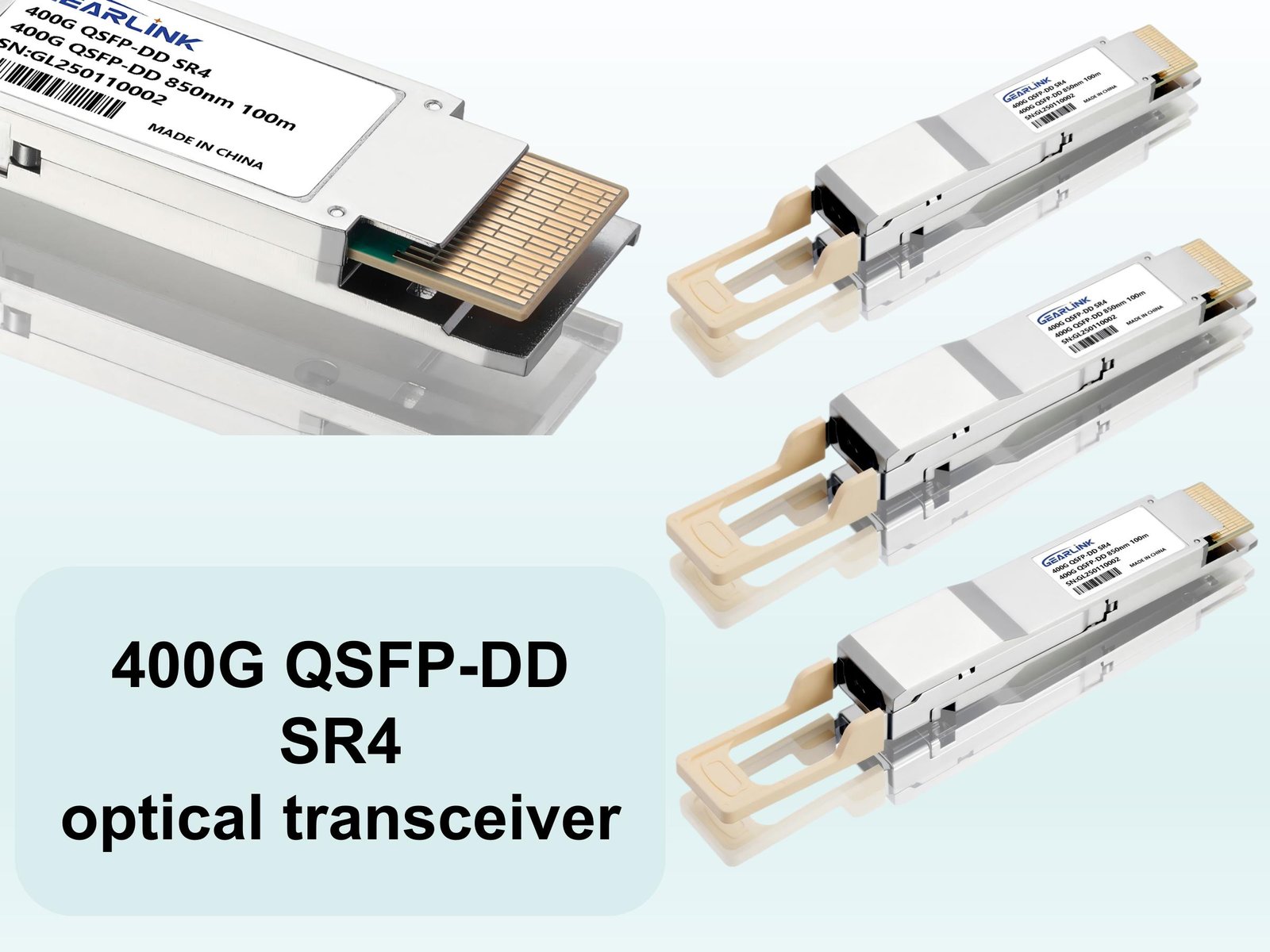
The Indispensable Role of the QSFP-100G-SM-SR in High-Speed Interconnects
The relentless demand for bandwidth, driven by cloud computing, artificial intelligence, and massive data centers, has pushed network technology into the 100 Gigabit Ethernet (100GbE) era. At the heart of this transformation lies the optical transceiver, a tiny, yet powerful device responsible for converting electrical signals into light and back again, facilitating ultra-fast data transmission. Among the myriad of 100G modules, the QSFP-100G-SM-SR stands out as a high-value, specialized solution. But what exactly defines this module, and why has it become an essential component for network engineers and IT managers navigating the complexities of modern data center architecture?
This article delves deep into the architecture, capabilities, and critical applications of the QSFP-100G-SM-SR, providing technical users with the necessary knowledge to make informed deployment decisions. The QSFP-100G-SM-SR is not merely another product on a specification sheet; it represents a crucial link in the chain of next-generation, high-density networks. Its particular designation signifies a unique blend of form factor, speed, fiber type, and reach, offering a compelling case for its selection in specific short-reach scenarios within data center interconnects and enterprise backbones.
Deciphering the Nomenclature: Understanding QSFP-100G-SM-SR
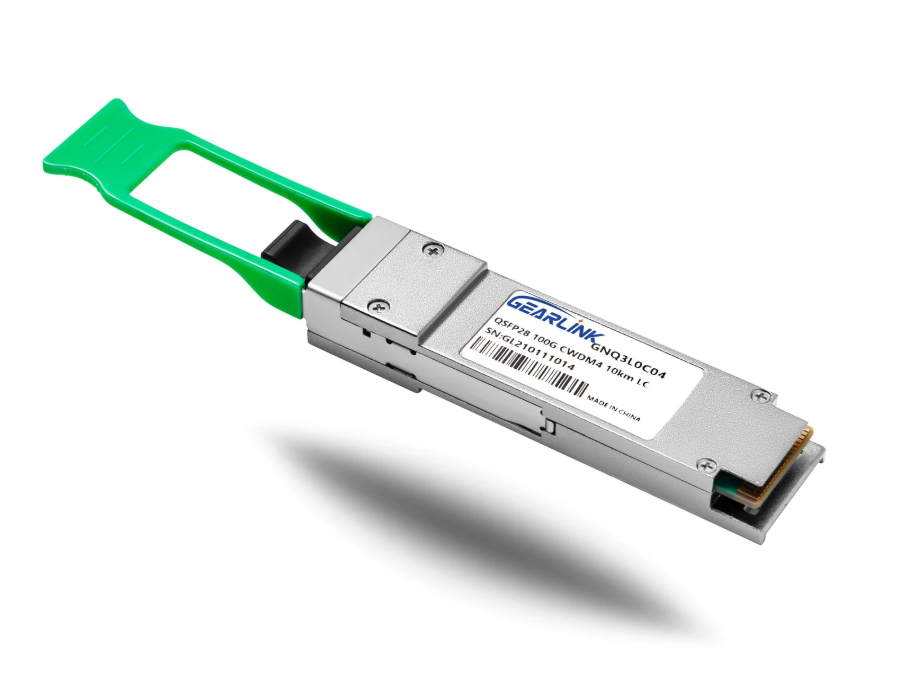
To appreciate the module’s value proposition, it is necessary to first break down its alphanumeric designation, where every segment conveys a critical technical specification. This nomenclature is standardized across the industry, ensuring that users can immediately grasp the fundamental capabilities of the product.
The Quad Small Form-Factor Pluggable (QSFP)
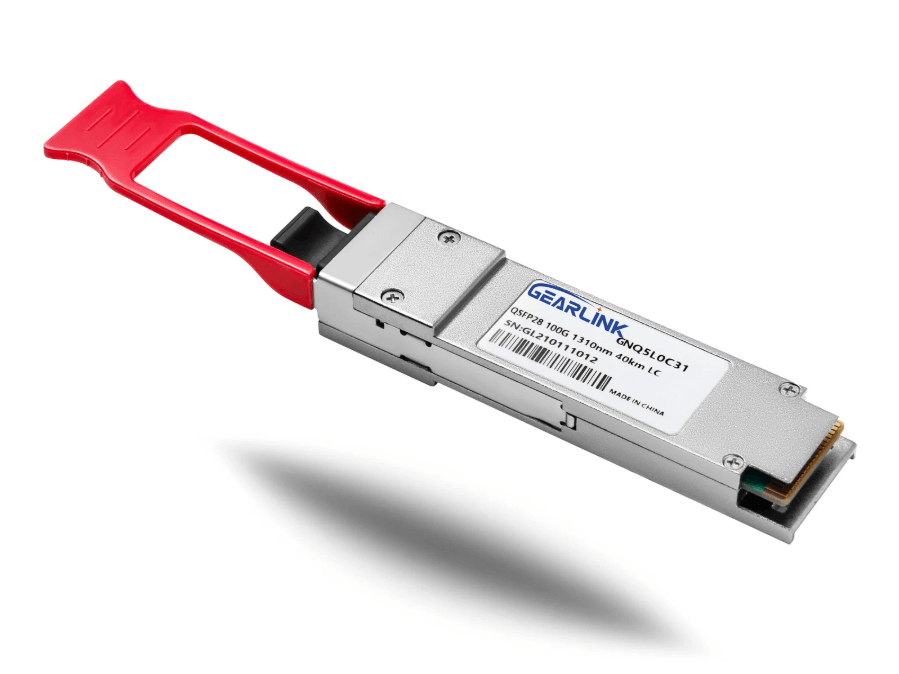
The prefix QSFP indicates the module’s form factor. Specifically, it is the Quad Small Form-Factor Pluggable. This form factor is pivotal because it allows for four lanes of high-speed data transmission, significantly enhancing port density compared to earlier standards like SFP. The compact size of the QSFP module enables hardware manufacturers to pack more ports onto a single line card or switch, a vital feature for space-constrained, high-density networking environments. The design evolution from QSFP to QSFP28 (the de facto standard for 100G) ensures electrical compatibility while supporting the higher 25Gbps per lane rate required for 100G performance.
The 100G and the Short-Reach Specification
The 100G segment clearly denotes the maximum aggregate data rate—100 Gigabits per second. This speed is non-negotiable for handling the intense traffic load generated by server-to-server and switch-to-switch communication in core network infrastructures. The SR suffix, standing for Short Reach, is where the module’s specialization becomes clear. Historically, SR modules are associated with Multi-Mode Fiber (MMF) for reaches up to a few hundred meters. However, the QSFP-100G-SM-SR is unique in that it incorporates SM (Single-Mode) fiber technology while still maintaining a relatively Short Reach. This configuration is often designed to interoperate with specialized Mux/DeMux technologies or specific fiber management scenarios where Single-Mode fiber has already been deployed for shorter links, providing an alternative to traditional, long-distance SM applications (like LR4 or ER4).
The Distinctive Features and Technological Edge
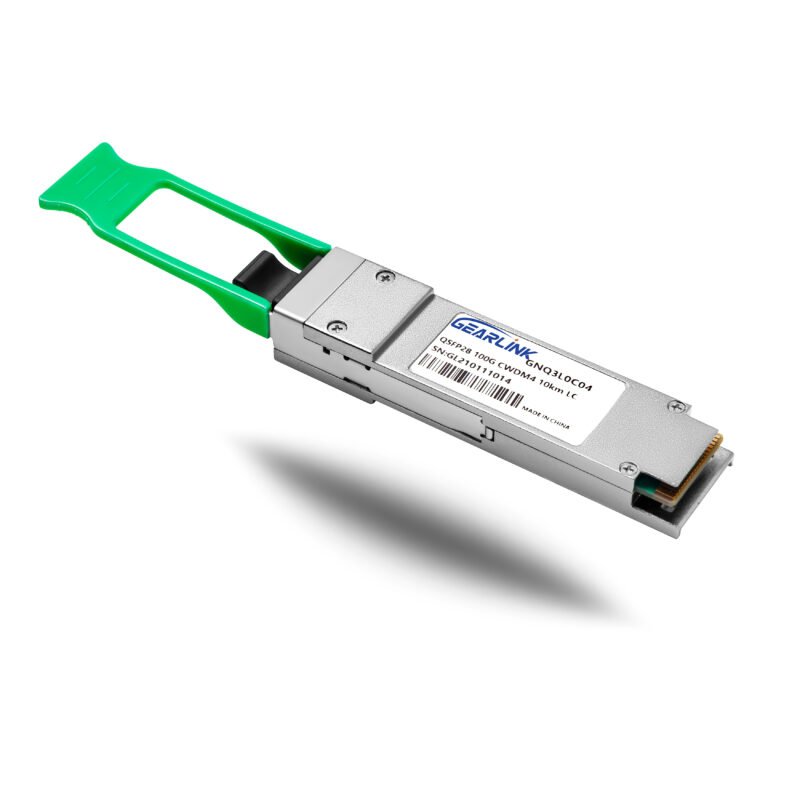
100GBASE-CWDM4 QSFP28 1310nm 2km DOM Duplex LC/UPC SMF Optical Transceiver Module
NT$99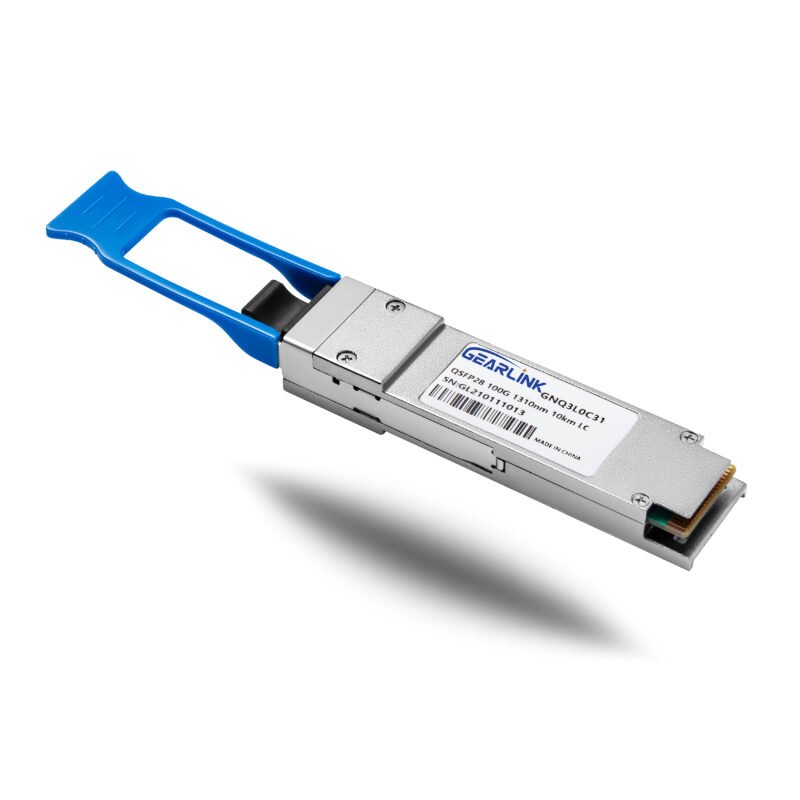
100GBASE-LR4 QSFP28 1310nm 10km DOM Duplex LC/UPC SMF Optical Transceiver Module
NT$179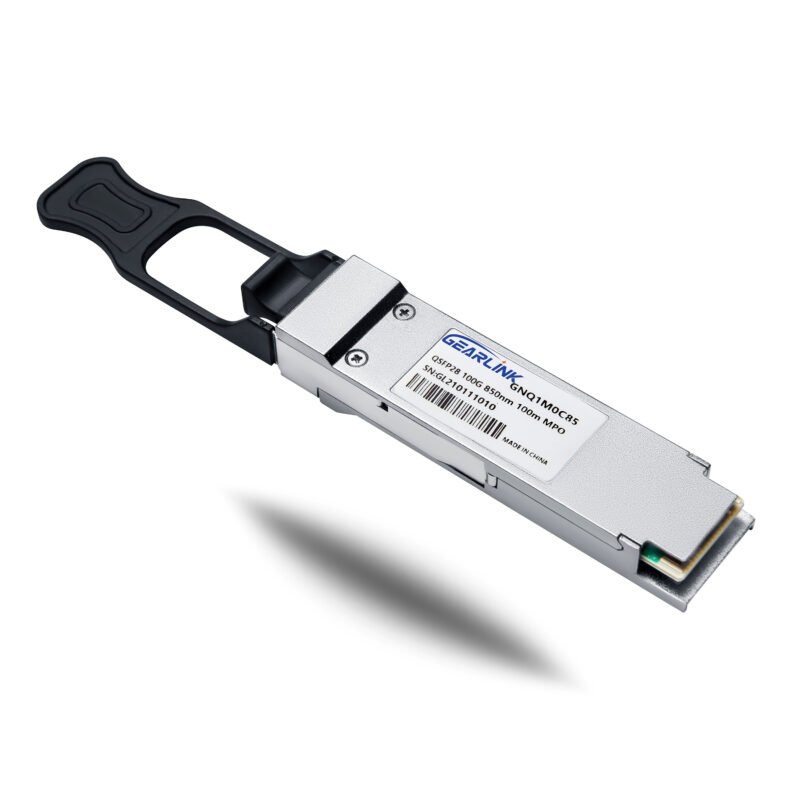
100GBASE-SR4 QSFP28 850nm 100m DOM MPO-12 MMF Optical Transceiver Module
NT$38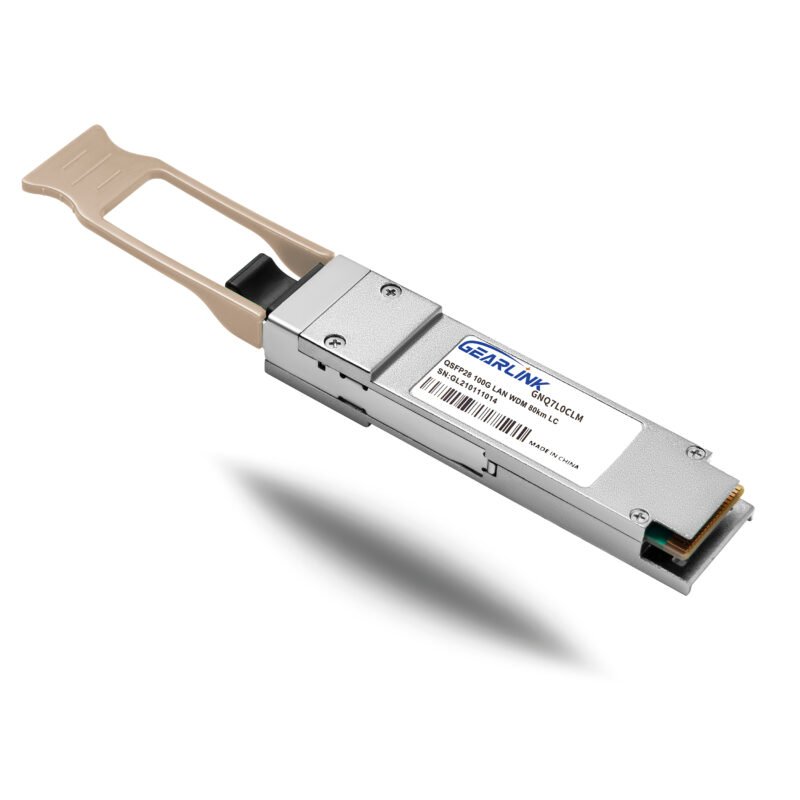
100GBASE-ZR4 QSFP28 1310nm 80km DOM Duplex LC/UPC SMF Optical Transceiver Module
NT$1,500
The QSFP-100G-SM-SR is architecturally built to provide high performance and operational flexibility. Its core features differentiate it from other 100G solutions, such as the QSFP28-SR4 or QSFP28-LR4, making it an excellent choice for targeted applications.
Harnessing Single-Mode Fiber for Short Distances
The adoption of Single-Mode (SM) fiber for a short-reach (SR) application is a compelling technical feature. Single-mode fiber is known for its lower signal dispersion over distance, offering a performance advantage that can be leveraged even in shorter links. The underlying technology typically employs a single-channel wavelength or a simple two-lane (bidirectional) scheme, often using a standard duplex LC connector. This is a considerable advantage over the parallel optics solution of the QSFP28-SR4, which requires an MPO connector and eight fiber strands. Consequently, the QSFP-100G-SM-SR simplifies cable management and reduces the total fiber count needed, leading to both capital expenditure (CapEx) and operational expenditure (OpEx) savings. Furthermore, network planners can utilize existing single-mode fiber infrastructure for short links without the need for costly fiber runs.
Power Efficiency and Operational Reliability
In modern data centers, power consumption is a primary concern, directly impacting cooling requirements and long-term costs. QSFP-100G-SM-SR modules are often designed to be highly power-efficient. By optimizing the internal laser and driver components for shorter transmission distances, these modules typically operate in lower power classes compared to their long-reach counterparts. This reduction in power not only lowers utility bills but also enhances the reliability of the module and the overall switch system by reducing heat load. The module is engineered with Digital Diagnostics Monitoring (DDM) capabilities, allowing users to continuously monitor crucial parameters such as temperature, voltage, and optical power levels, thus ensuring proactive maintenance and system stability.
Compliance and Interoperability
Adherence to industry standards is paramount in a multi-vendor network environment. The QSFP-100G-SM-SR must be compliant with the relevant IEEE 802.3 standards and the QSFP28 Multi-Source Agreement (MSA). This compliance guarantees seamless interoperability when the module is deployed alongside networking equipment from different manufacturers. This level of standardization provides network architects with the freedom to select best-of-breed components, avoiding vendor lock-in and maximizing investment flexibility. The module’s robust design and standardized interface make it a plug-and-play solution across a broad array of enterprise and carrier-grade switches and routers.
Core Applications in the Optical Module Landscape
The application scope of the QSFP-100G-SM-SR is narrowly focused but critically important within the data communications ecosystem. Its specific features make it ideal for solving particular deployment challenges faced by network professionals.
Data Center Interconnects (DCI) and Top-of-Rack (ToR) Aggregation
In medium-sized or clustered data centers, the QSFP-100G-SM-SR is frequently utilized for linking aggregation switches or for short Data Center Interconnects. While MMF-based SR4 modules are dominant in the shortest in-rack links, the QSFP-100G-SM-SR becomes advantageous when single-mode fiber is preferred for future-proofing or when links span short distances between adjacent racks or within a small campus environment. It provides a robust, high-speed connection between core networking components, ensuring that the backhaul capacity is never a bottleneck to data processing. The transition from 10G and 40G to 100G is made significantly smoother by the high-density nature of the QSFP form factor.
Enterprise Network Core and Campus Backbone
For large enterprise networks or campus environments, the QSFP-100G-SM-SR offers a reliable solution for the backbone. It can be used to connect distribution layers to the core switch, especially where single-mode fiber has been laid across the campus but the link distance is well below the kilometer range required by LR solutions. This application leverages the simplicity and cost-effectiveness of a two-fiber duplex solution while retaining the high bandwidth necessary for aggregating traffic from hundreds of users and systems. The module’s short-reach limitation is carefully considered against the physical layout of the network, ensuring the right tool is used for the job.
Economic and Strategic Value for Network Users
Choosing the QSFP-100G-SM-SR over alternatives is a decision often guided by a combination of performance, cost, and future scalability. The strategic value it delivers to optical module product users is substantial.
Cost-Effectiveness and Simplification
For the designated short-reach single-mode applications, the QSFP-100G-SM-SR generally offers a lower total cost of ownership (TCO) compared to more complex, long-distance solutions. By minimizing the number of active components and optimizing the laser technology, the manufacturing cost is often reduced. More importantly, the use of standard duplex LC connectors reduces the cost and complexity of the cabling infrastructure, simplifying installation and maintenance. Fewer fibers and simpler connectors translate directly into less potential for error and faster deployment times. Network engineers are continuously seeking this balance between performance and simplified operation.
Preparedness for Future Upgrades
The investment in QSFP-100G-SM-SR modules, operating over single-mode fiber, provides a degree of future-proofing. Single-mode fiber infrastructure inherently supports higher data rates and longer distances than multi-mode fiber. Although this specific module is short-reach, the underlying fiber plant is capable of supporting future 400G and 800G upgrades with a change only to the transceiver at either end. This preservation of the physical layer investment is a crucial strategic consideration for organizations planning multi-year network evolution roadmaps. This particular module, therefore, serves as an intelligent bridge technology.
Conclusion: A Focused Solution for Today’s 100G Networks
The QSFP-100G-SM-SR optical transceiver is an important and highly specific product within the 100GbE ecosystem. It is an engineering solution designed to maximize efficiency and minimize complexity in targeted short-distance, single-mode fiber applications. Its compact size, high data rate, power efficiency, and reliance on readily available duplex single-mode fiber connectors position it as a powerful and cost-effective choice for network architects building and maintaining high-performance data centers and enterprise backbones.
By understanding the QSFP-100G-SM-SR’s technical distinctiveness—its use of SM fiber for SR applications—optical module users can strategically deploy this module to optimize cable infrastructure, reduce TCO, and ensure a stable, high-speed network foundation. The module’s role is not just to transmit data, but to do so reliably and efficiently, upholding the crucial role of optics in the foundation of modern digital communication. The adoption of this technology affirms a commitment to scalable and simplified network operations.
Frequently Asked Questions (FAQ)
How does the QSFP-100G-SM-SR differ from the more common QSFP28-SR4?
A: The primary difference lies in the fiber type and connector. The QSFP-100G-SM-SR uses Duplex LC connectors and Single-Mode (SM) fiber, typically utilizing one or two fiber lanes. The QSFP28-SR4 uses an MPO connector and Multi-Mode (MM) fiber, utilizing eight fiber strands (four transmitting, four receiving) in a parallel optics configuration. The QSFP-100G-SM-SR simplifies cabling and is preferred when SM fiber is already in place.
What is the typical maximum reach of the QSFP-100G-SM-SR module?
A: While the official specification is short-reach, the exact distance can vary slightly based on specific implementations (e.g., BiDi technology). It is generally designed for distances up to a few hundred meters, operating over Single-Mode Fiber (SMF), making it suitable for intra-building or small campus links. Always consult the product’s datasheet for the precise maximum supported link length.
Can the QSFP-100G-SM-SR be used to connect with an LR4 module?
A: Directly connecting a QSFP-100G-SM-SR to a QSFP28-LR4 is generally not supported without special consideration. The QSFP-100G-SM-SR is a short-reach module and may use a different underlying wavelength or transmission scheme than the long-reach (LR) module. For interoperability, both modules must be designed to communicate using the same standardized protocol and optical characteristics, which is typically not the case between SR and LR classes.