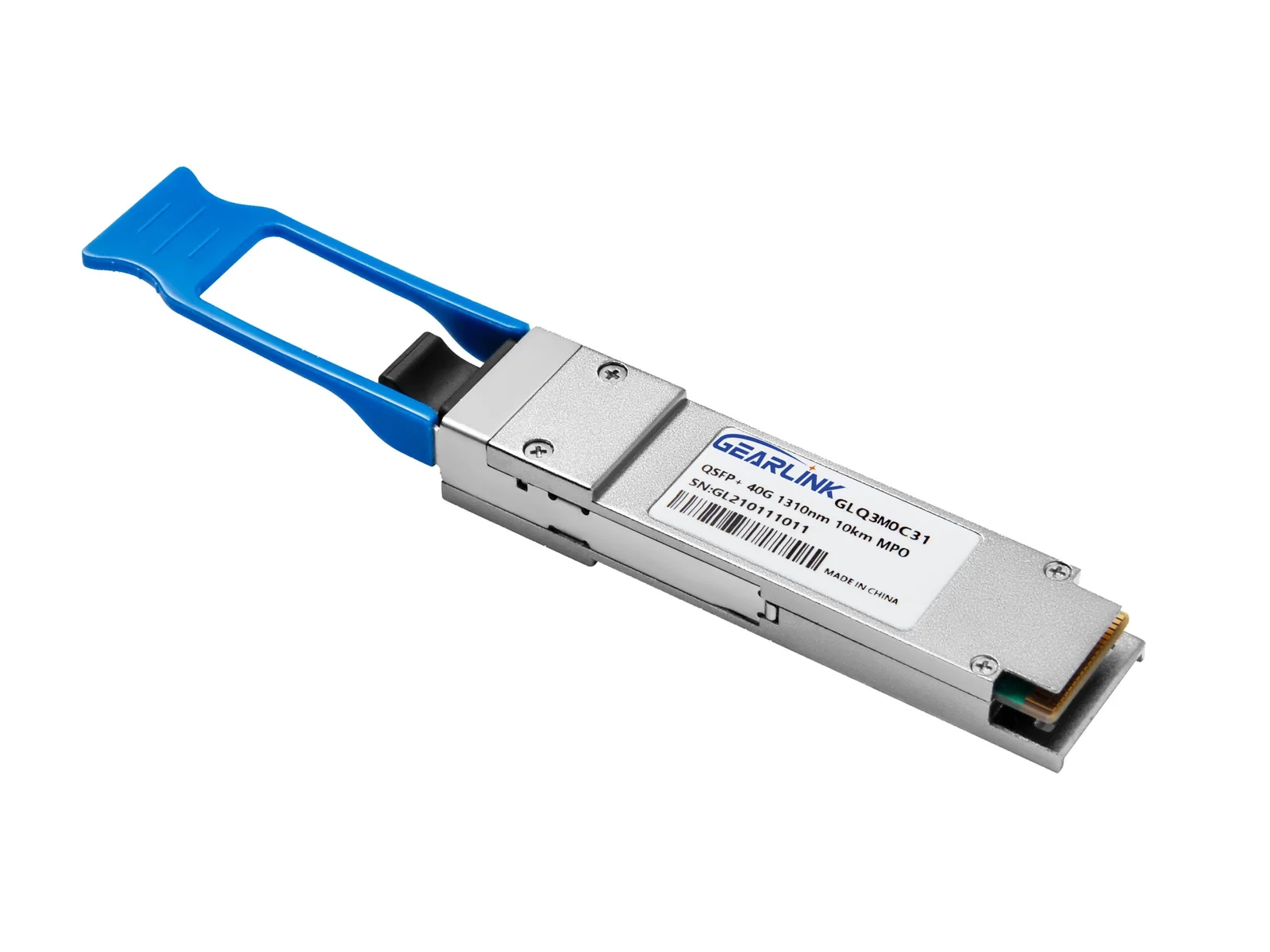
In the current era of hyperscale data centers and rapidly expanding cloud computing, the demand for high-speed, reliable, and cost-effective interconnects has never been more critical. As network architects transition from traditional 10G infrastructures to higher-bandwidth environments, the 40G QSFP+ PSM4 optical transceiver has emerged as a cornerstone technology for specific long-reach applications. Unlike many traditional solutions that rely on complex multiplexing, this module offers a unique approach to data transmission by utilizing parallel single-mode fiber (SMF) technology. For optical networking professionals and IT procurement managers, understanding the intricacies of the 40G QSFP+ PSM4 is essential for optimizing network efficiency while maintaining a strictly controlled budget. This article explores the technical architecture, strategic advantages, and practical use cases of this specialized module within the broader spectrum of modern telecommunications.
Technical Architecture and Parallel Single-Mode Transmission
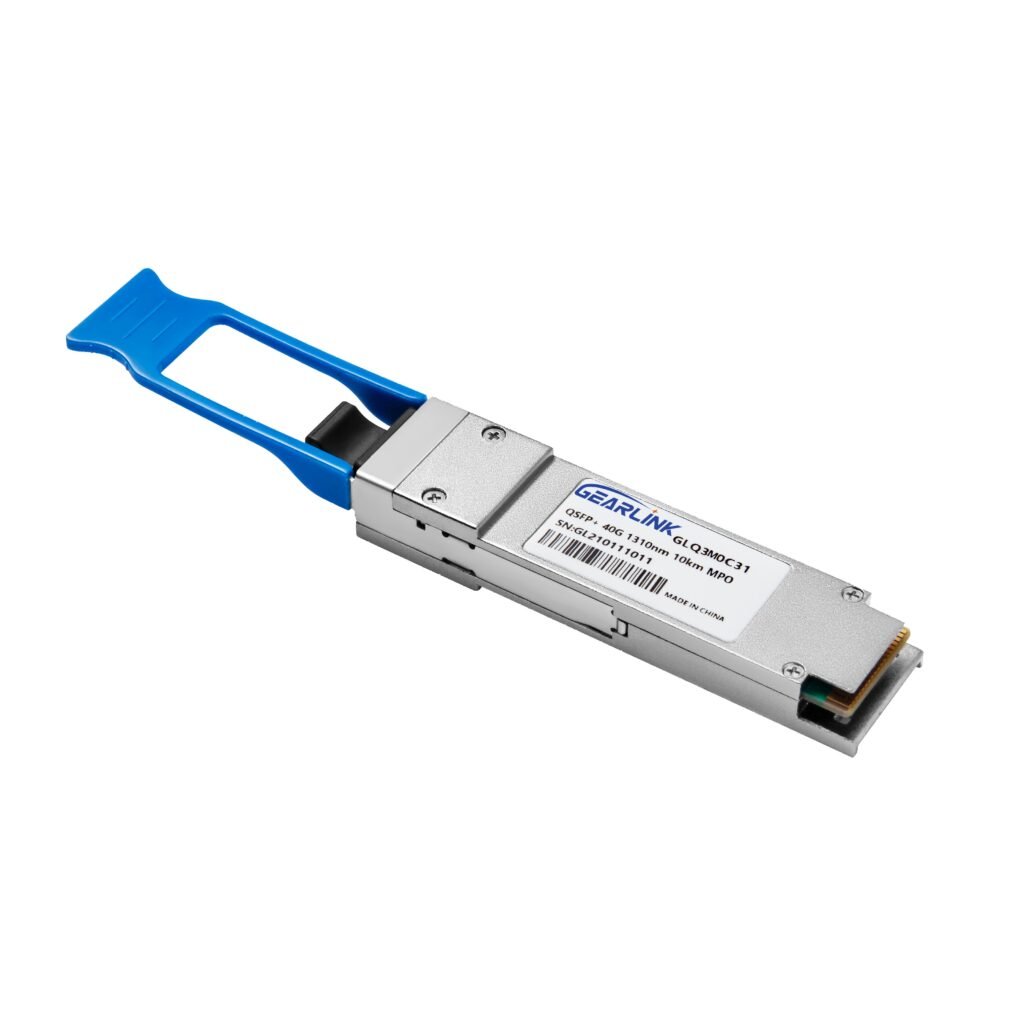
The “PSM4” in 40G QSFP+ PSM4 stands for Parallel Single-Mode 4-channel. To understand its value, one must first look at its internal mechanism, which differs significantly from WDM (Wavelength Division Multiplexing) solutions like the QSFP+ LR4. While LR4 modules multiplex four different wavelengths onto a single fiber pair, the PSM4 variant utilizes four independent lanes of 10Gbps data, each traveling over its own dedicated fiber strand within a single cable. This architectural choice allows the module to maintain a simplified internal design, as it eliminates the need for expensive optical mux/demux components.
The Role of the 1310nm Single Wavelength
Specifically, the 40G QSFP+ PSM4 operates over an MTP/MPO ribbon fiber connector, typically requiring eight fiber strands—four for transmitting and four for receiving. By using a single 1310nm wavelength across all lanes, the module ensures high signal integrity and lower latency compared to more complex multi-wavelength systems. This simplicity translates directly into better thermal performance and a lower failure rate, which are paramount in high-density rack environments where air cooling is often a challenge. Furthermore, the use of single-mode fiber allows the 40G QSFP+ PSM4 to reach distances of up to 2 kilometers, effectively bridging the gap between short-reach multimode fiber and the much more expensive 10km long-reach modules.
Connector Efficiency and Fiber Management
The interface of the 40G QSFP+ PSM4 typically utilizes an MPO-12 connector, which is a standard in high-density environments. This allows for rapid deployment and a significant reduction in the physical space required for patching. Because the module does not require a complex internal laser cooling system (TEC) like some longer-reach modules, it maintains a lower power consumption profile. For data center operators managing thousands of links, the cumulative energy savings of using 40G QSFP+ PSM4 can be substantial, aligning technical performance with corporate sustainability goals.
Strategic Advantages in Data Center Scaling
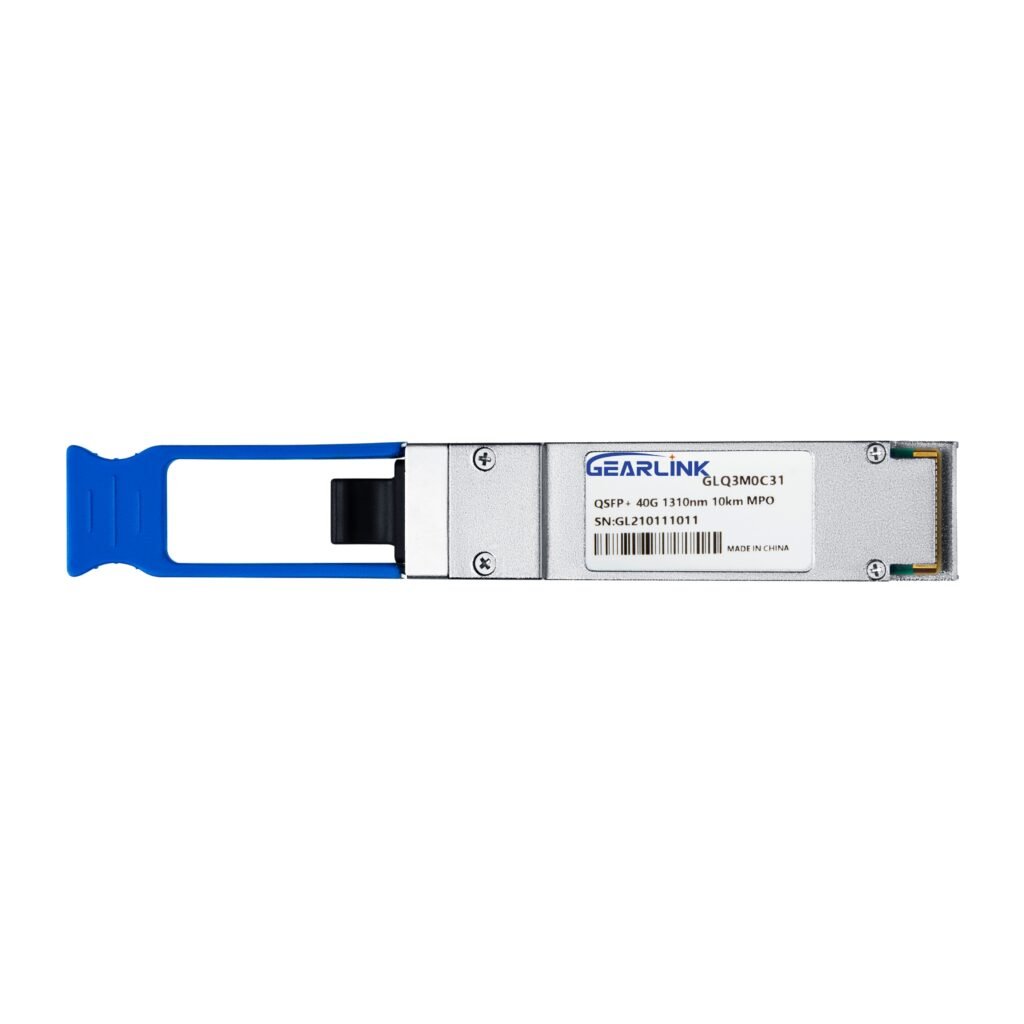
For many data center operators, the primary attraction of the 40G QSFP+ PSM4 is its role as a cost-effective solution for medium-range connectivity. In large-scale facilities, the distance between leaf switches and spine switches often exceeds the 300-meter or 400-meter limit of multimode fiber (OM3/OM4). In these scenarios, choosing a traditional LR4 module for every link can lead to astronomical costs. The 40G QSFP+ PSM4 solves this by providing the necessary 2km reach at a fraction of the price of long-reach alternatives.
Breakout Flexibility and Port Density
Moreover, the versatility of the 40G QSFP+ PSM4 is showcased in its “breakout” capability. Because it uses four independent lanes of 10G, a single 40G port can be split into four individual 10G links using an MPO-to-LC breakout cable. This is particularly useful in top-of-rack (ToR) switching, where a high-density 40G switch can connect directly to four separate 10G servers without the need for additional intermediate hardware. This consolidation not only reduces the physical footprint within the server rack but also simplifies cable management, leading to improved airflow and easier maintenance.
Future-Proofing with Single-Mode Fiber
By choosing the 40G QSFP+ PSM4, engineers gain a multi-functional tool that adapts to both high-speed trunking and high-density distribution. More importantly, the installation of single-mode fiber for PSM4 links future-proofs the physical infrastructure. When the time comes to upgrade to 100G (PSM4) or 400G (DR4), the same MPO single-mode cabling can often be reused, drastically reducing the labor costs of future network migrations. This long-term perspective makes the 40G QSFP+ PSM4 an economically sound choice for growing enterprises.
Reliability and Operational Excellence in Harsh Environments
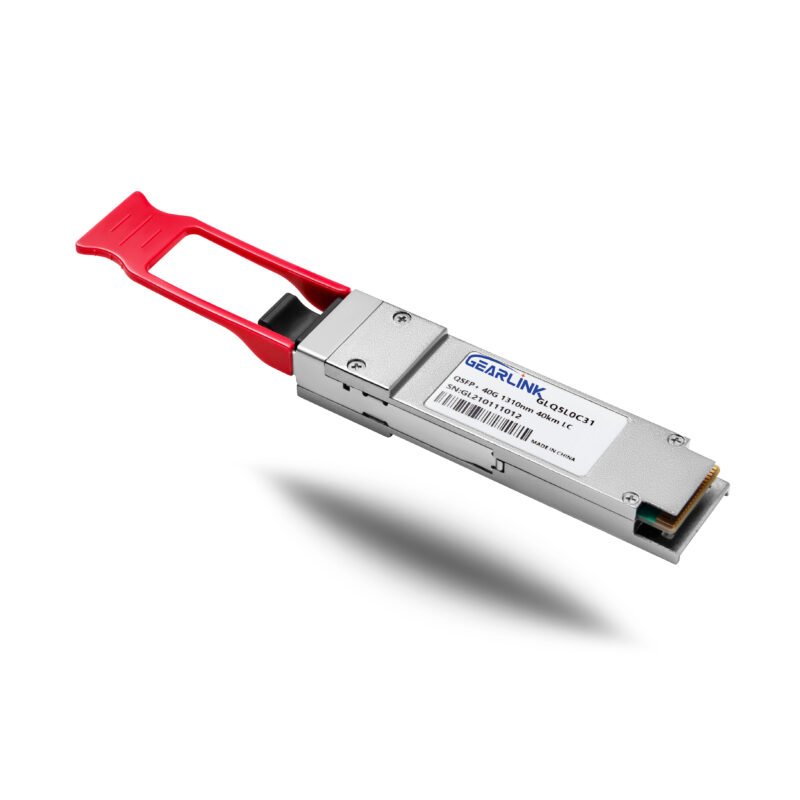
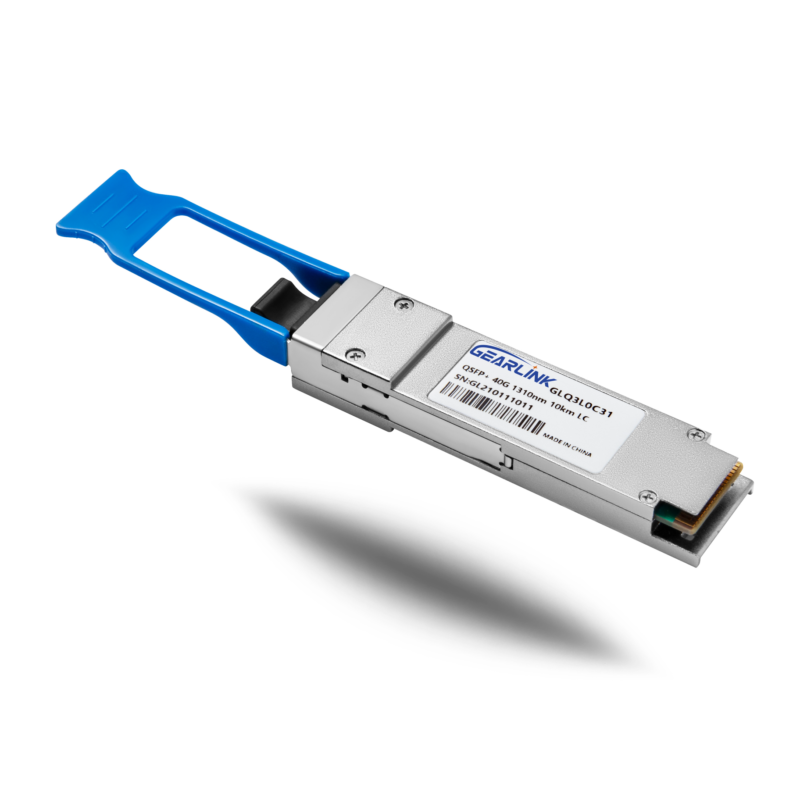
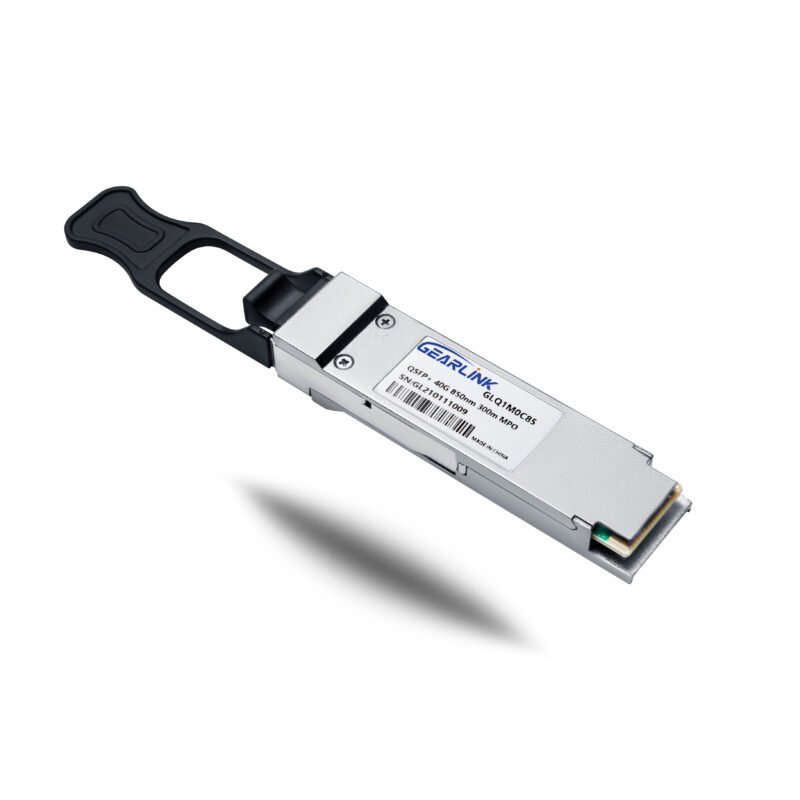
Beyond cost and versatility, the 40G QSFP+ PSM4 is highly regarded for its reliability. In the optical transceiver world, the complexity of a module is often inversely proportional to its lifespan. Because the PSM4 design avoids the use of complicated optical prisms and filters found in WDM modules, it is inherently more stable across varying temperatures. Network administrators often prefer the 40G QSFP+ PSM4 for critical backbone links where downtime is not an option.
Signal Integrity over 2km Ranges
The module’s ability to maintain a consistent bit-error rate (BER) over its 2km range ensures that high-definition video streaming, real-time data analytics, and financial transactions are transmitted without interruption. The use of single-mode fiber means that signal attenuation is much lower compared to multimode fiber, providing a cleaner signal over the entire link distance. This reliability is further enhanced by Digital Diagnostics Monitoring (DDM), which allows technicians to monitor parameters like optical output power and temperature in real-time, enabling proactive maintenance before a failure occurs.
Unified Infrastructure Standards
From a professional standpoint, deploying the 40G QSFP+ PSM4 aligns with the value of long-term infrastructure investment. While the upfront cost of MPO cabling is higher than LC-LC duplex cabling, the savings achieved at the transceiver level often offset this initial expense in large deployments. Additionally, the adoption of a parallel single-mode strategy allows organizations to maintain a unified cabling standard, reducing the complexity of the inventory. At OpticTran, we believe that providing high-quality 40G QSFP+ PSM4 modules is about more than just selling a component; it is about enabling our users to build more resilient and scalable digital foundations for the future.
Frequently Asked Questions (FAQ)
Q1: What is the maximum distance supported by 40G QSFP+ PSM4?
A: The standard 40G QSFP+ PSM4 module supports a transmission distance of up to 2 kilometers over G.652 single-mode fiber (SMF).
Q2: What type of fiber connector does the 40G QSFP+ PSM4 use?
A: It uses an MTP/MPO-12 female connector. Only 8 of the 12 fibers are typically used (4 transmit and 4 receive) to support the 4x10G lanes.
Q3: Can I connect a 40G QSFP+ PSM4 to a 40G QSFP+ LR4 module?
A: No. These two modules use different technologies. PSM4 uses parallel fiber strands at 1310nm, while LR4 multiplexes four wavelengths onto a single fiber pair. They are not interoperable.
Q4: Is the 40G QSFP+ PSM4 compatible with breakout applications?
A: Yes, it is ideal for breakout applications. You can use an MPO-to-4xLC breakout cable to connect one 40G PSM4 port to four 10G SFP+ LR ports.