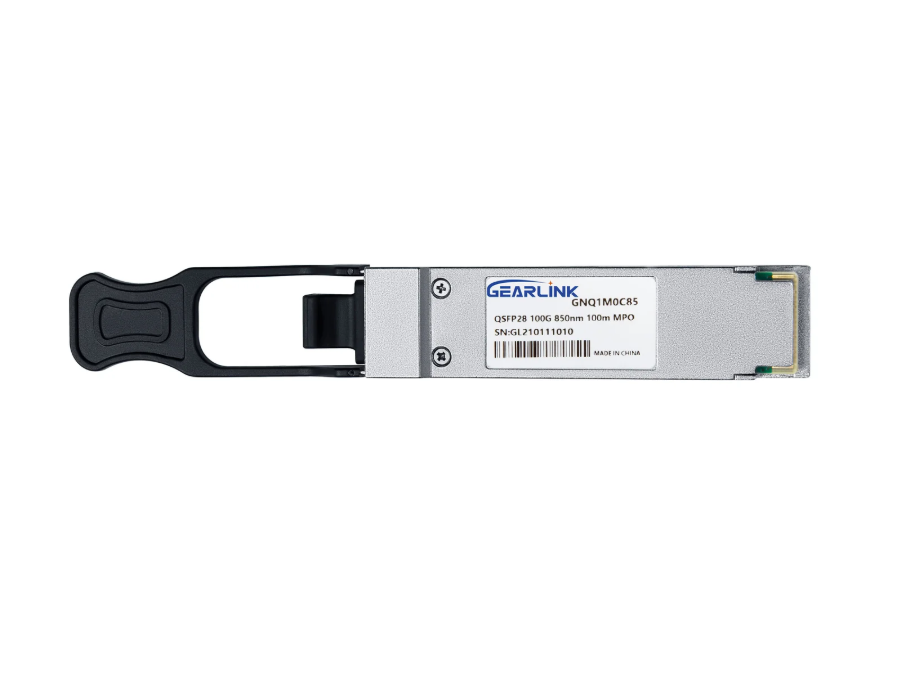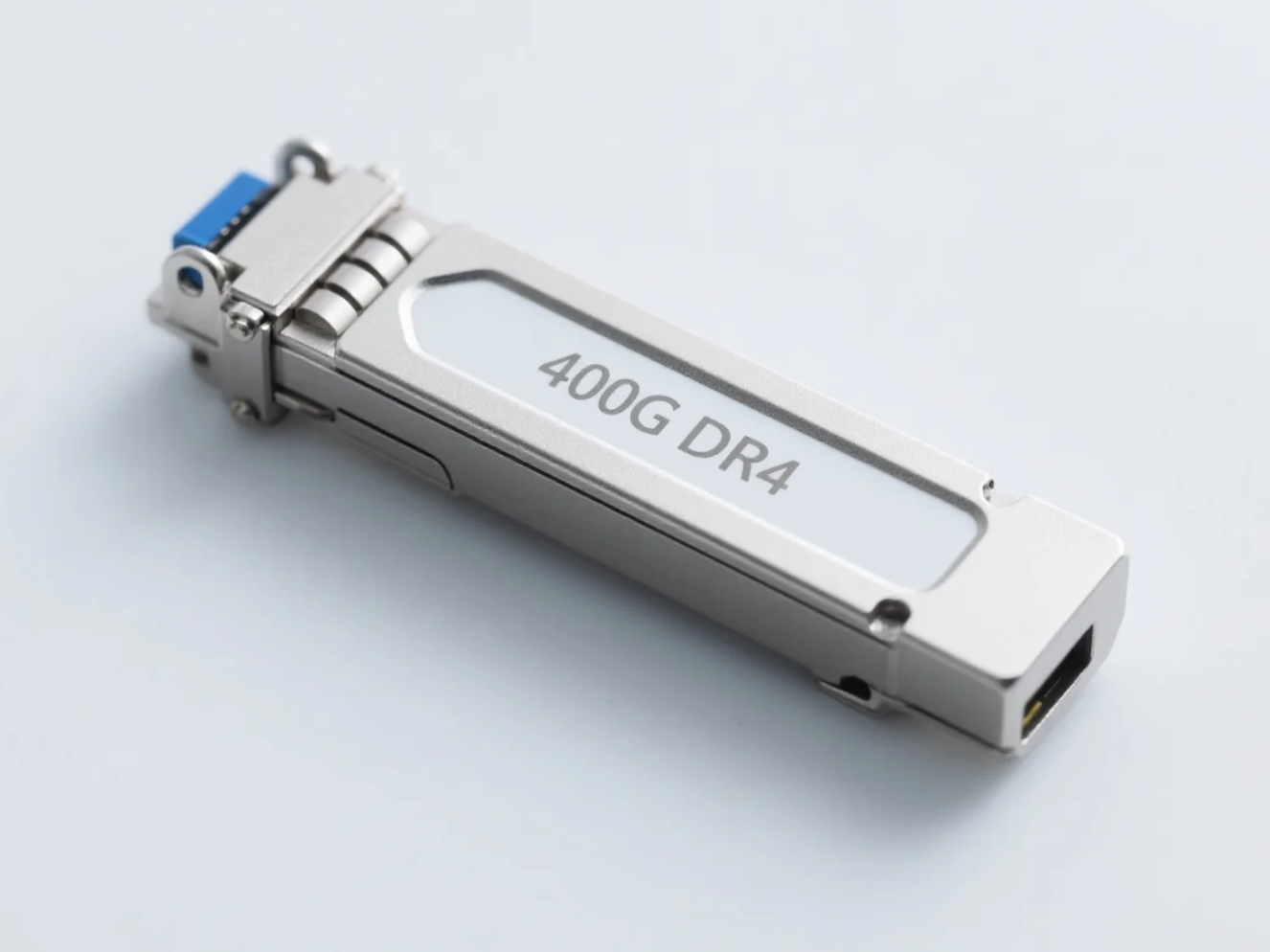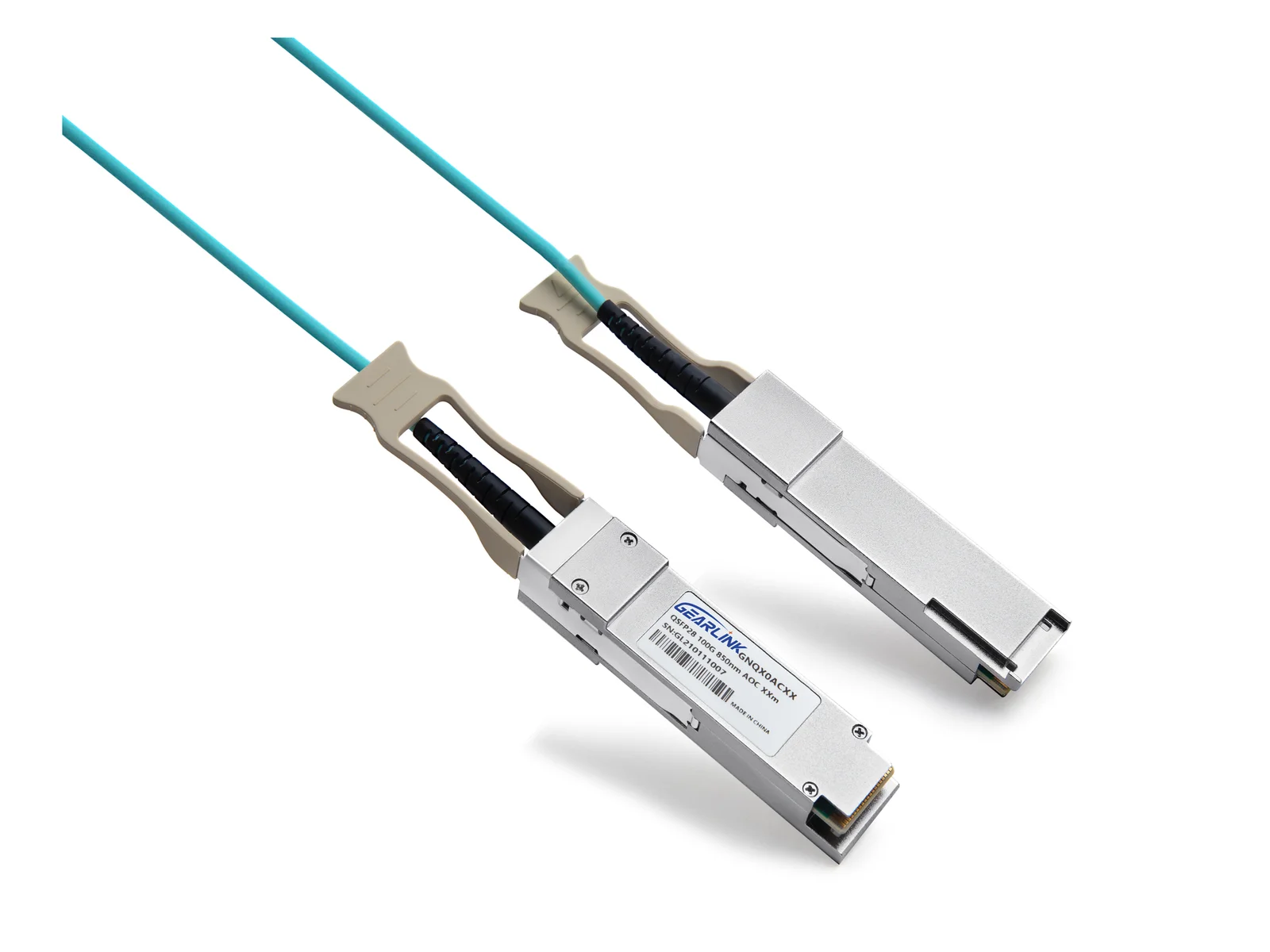
Managing high-density data centers requires balancing performance, reach, and budget. You are likely evaluating whether to upgrade your interconnects to handle 100G traffic without overspending on full transceivers. The active optical cable often emerges as the ideal middle ground in this decision matrix.
However, selecting the right cabling architecture is not just about speed. It involves calculating power budgets, airflow restrictions, and long-term reliability. I will guide you through the technical and commercial considerations of deploying AOCs in modern network environments.
Understanding the AOC Active Optical Cable Architecture
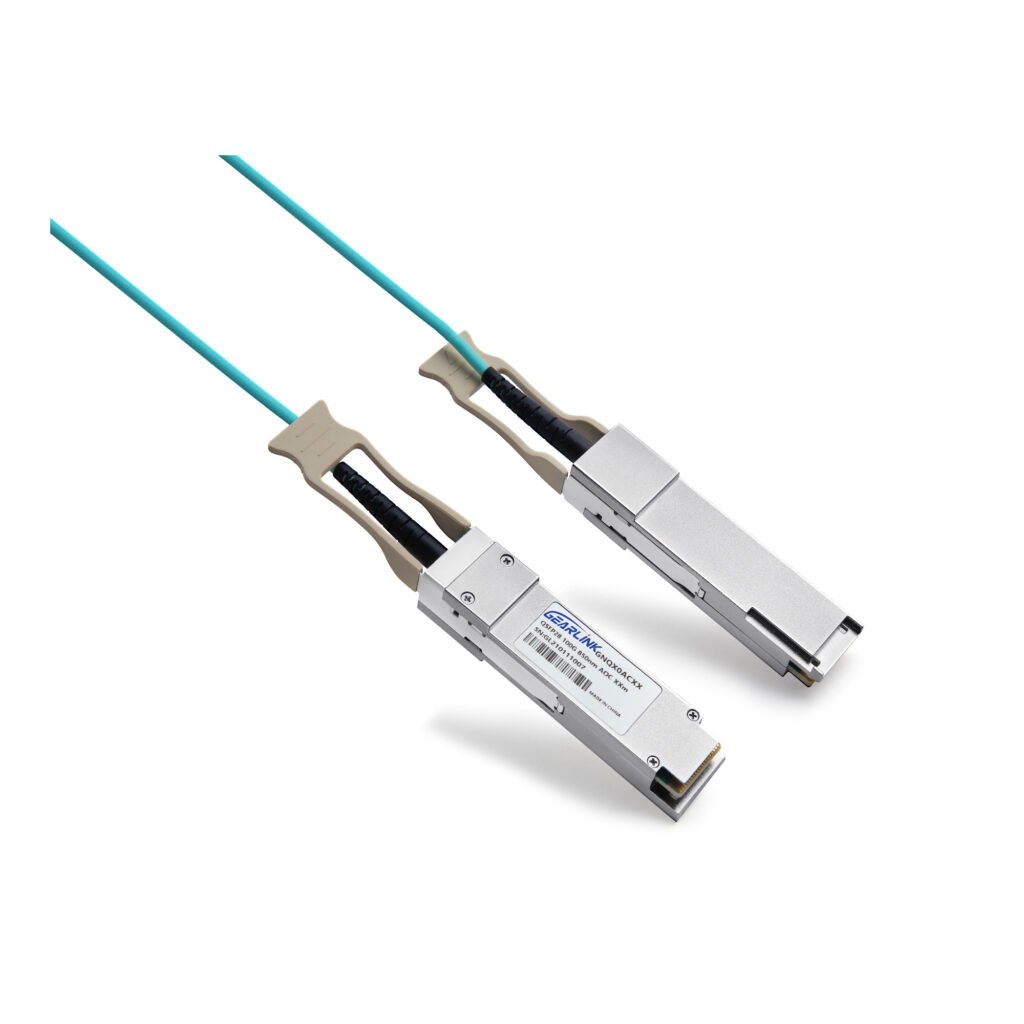
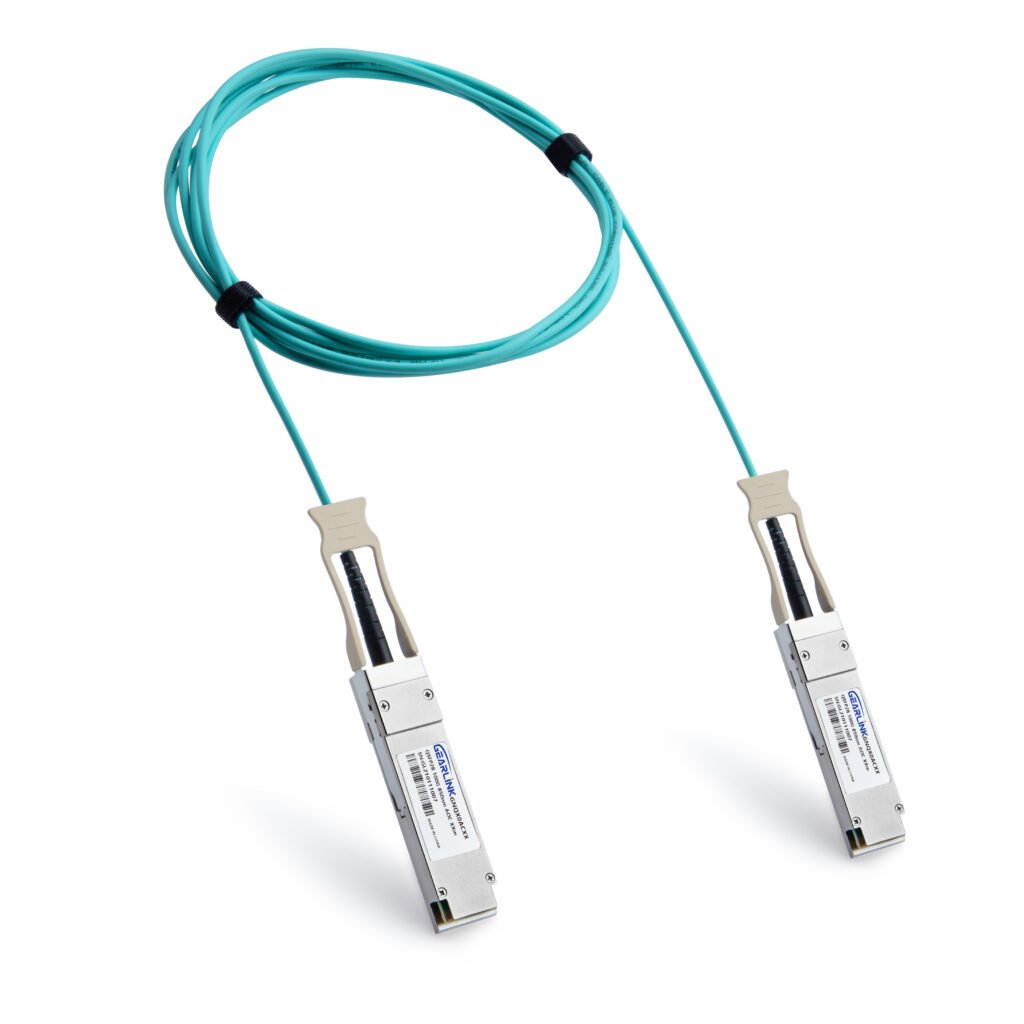
To make an informed purchase, we must first clarify what differentiates this technology. An aoc active optical cable is a factory-terminated assembly. It permanently attaches multimode optical fibers to transceivers at both ends.
Unlike passive copper solutions, these cables contain active electrical-to-optical components. The connectors house lasers and photodetectors silicon. This design allows the cable to convert electrical signals into light and back again within the connector head.
For B2B buyers, this integration simplifies installation. You do not need to clean fiber connectors or match transceivers to patch cords. It is a “plug and play” solution that eliminates optical interface contamination risks. This architecture significantly reduces troubleshooting time during deployment.
Why Choose a 100G QSFP28 Active Optical Cable?
The transition to 100G networking creates specific physical challenges. Copper cables become heavy and bulky at these speeds. A 100g qsfp28 active optical cable addresses these physical limitations effectively.
Weight and Airflow Efficiency
Copper DACs (Direct Attach Cables) get thicker (lower AWG) to support 100G over distance. This blocks airflow in server racks and increases strain on switch ports. Active optical cables are significantly lighter and thinner. They allow for tighter bend radii, improving cable management and cooling efficiency in high-density racks.
EMI Immunity
Data centers are noisy electrical environments. Optical fibers are immune to electromagnetic interference (EMI). If your cable runs near power lines or heavy machinery, an AOC ensures signal integrity where copper might fail. This reliability is crucial for mission-critical storage area networks (SAN) and high-performance computing (HPC).
Commercial Analysis: AOC vs. DAC vs. Transceivers
Choosing the right interconnect depends heavily on link distance and cost. I recommend analyzing your floor plan before finalizing orders.
Direct Attach Cables (DAC):
These are passive copper cables. They are the cheapest option but physically limited. At 100G speeds, they are viable only for very short distances, typically under 5 meters. Use these for connections within the same rack.
Active Optical Cables (AOC):
This is your target solution for distances between 5 meters and 100 meters. They bridge the gap between racks or rows. An active optical cable is more expensive than copper but significantly cheaper than buying two separate transceivers and fiber patch cords. They offer the reach of optics with the simplicity of copper.
Optical Transceivers:
For distances exceeding 100 meters, or where structured cabling exists, separate transceivers are necessary. However, they carry higher component costs and require more maintenance.
Evaluating Technical Specifications and Reliability
Not all cables are manufactured equally. When selecting a 100g qsfp28 active optical cable , you must look beyond the price tag. Reliability in a B2B context means consistent performance over thousands of hours.
You should verify the power consumption ratings. High-quality AOCs typically consume less than 2.5W per end. Lower power consumption reduces your overall OpEx, specifically regarding cooling costs.
Additionally, pay attention to the Digital Diagnostic Monitoring (DDM) capabilities. A professional-grade cable will provide real-time data on temperature, voltage, and laser bias current. This transparency allows your network engineers to predict failures before they disrupt operations.
How to Assess Connectivity Partners
The market is flooded with third-party compatible accessories. Determining which supplier offers industrial-grade quality is critical for network stability. You need a partner that tests for compatibility and signal integrity.
Testing Standards
Ask potential suppliers about their testing protocols. Do they perform eye diagram testing on every unit? This test visualizes the signal quality and jitter. Reliable suppliers also conduct thermal aging tests to ensure the lasers survive high-heat rack environments.
Compatibility verification
Your switches (Cisco, Arista, Juniper, etc.) require specific coding to recognize connected devices. A generic cable may not link up. You must ensure the supplier offers custom coding for your specific hardware ecosystem.
If you are currently sourcing high-speed interconnects, it is helpful to view detailed specifications to compare against your current infrastructure. For those looking to verify specific power metrics or compatibility options, you can explore the technical details of the 100G QSFP28 Active Optical Cable to see how they align with industry standards.
Summary
The active optical cable is the most commercially viable solution for 100G inter-rack connectivity up to 100 meters. It solves the weight and distance limitations of copper without the high cost of discrete transceivers. By focusing on verified power metrics and manufacturing quality, you ensure long-term network stability.
FAQ
Q1: What is the maximum distance for a 100G AOC?
Most 100G AOCs on the market support distances up to 70 meters on OM3 fiber or 100 meters on OM4 fiber.
Q2: Can I cut or shorten an active optical cable?
No, you cannot cut these cables. The fiber is permanently fused inside the connectors, and cutting them destroys the assembly.
Q3: Does an AOC require separate power cables?
No, the active components inside the connectors draw power directly from the network switch’s QSFP28 port.
Q4: Is a 100G QSFP28 AOC backward compatible?
Generally, QSFP28 ports can accept lower-speed QSFP+ cables (40G) depending on the switch configuration, but a 100G AOC will not work in a 40G port.
Q5: Why is AOC preferred over DAC for 10-meter runs?
At 10 meters, a 100G copper DAC is too thick and heavy for safe cable management, whereas an AOC remains thin and flexible.
Reference Sources
IEEE 802.3 Ethernet Working Group: Technical standards for Ethernet interfaces.
InfiniBand Trade Association (IBTA): Specifications for high-speed interconnect architecture.
The Fiber Optic Association (FOA): Guides on fiber optic cabling and active components.