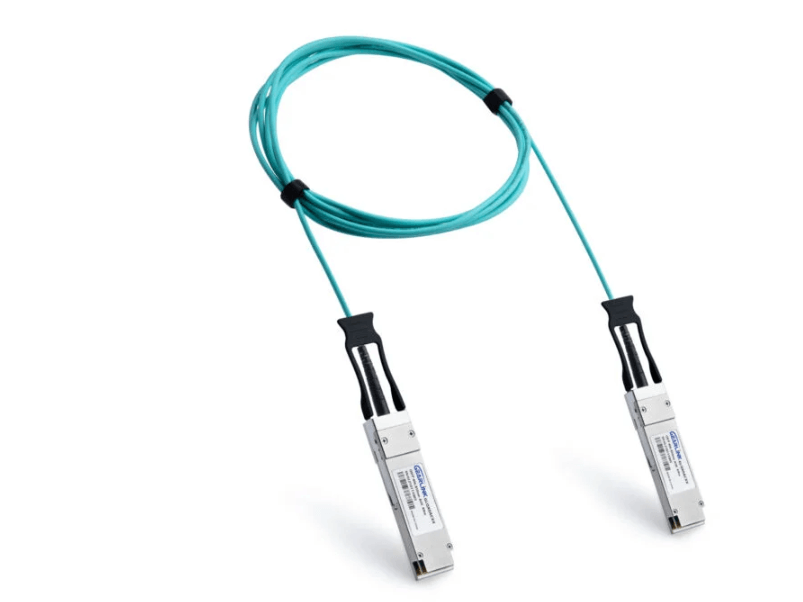
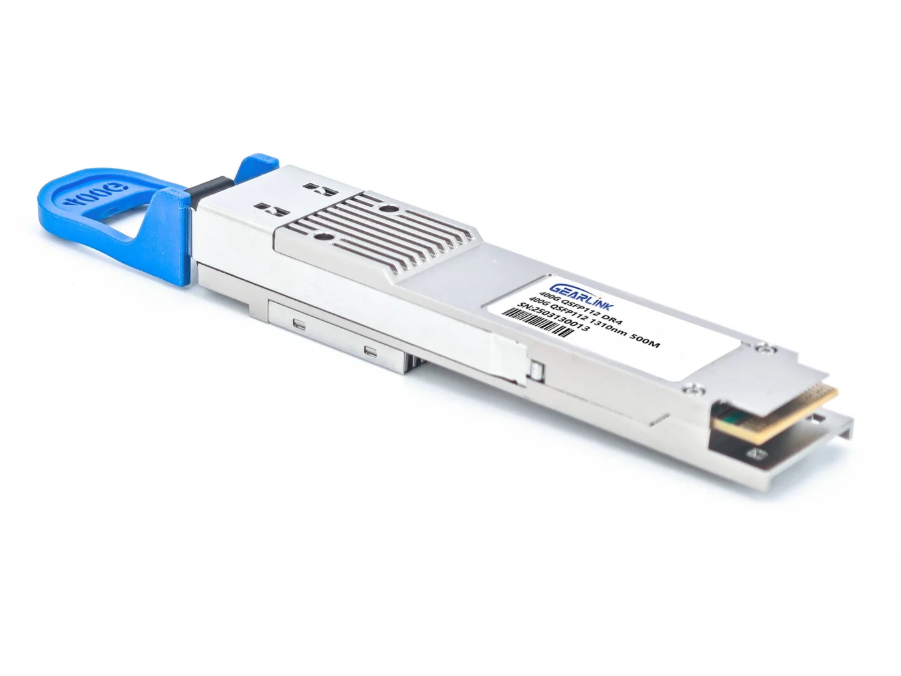
Upgrading a data center to 400G requires more than just swapping out switches. The physical layer, specifically the 400g dac cable, acts as the lifeline for short-reach interconnects within racks. As bandwidth demands surge, choosing the right direct attach copper (DAC) solution becomes a critical B2B procurement decision. You must balance cost, signal integrity, and interoperability across diverse hardware.
Understanding the 400G QSFP-DD DAC Architecture
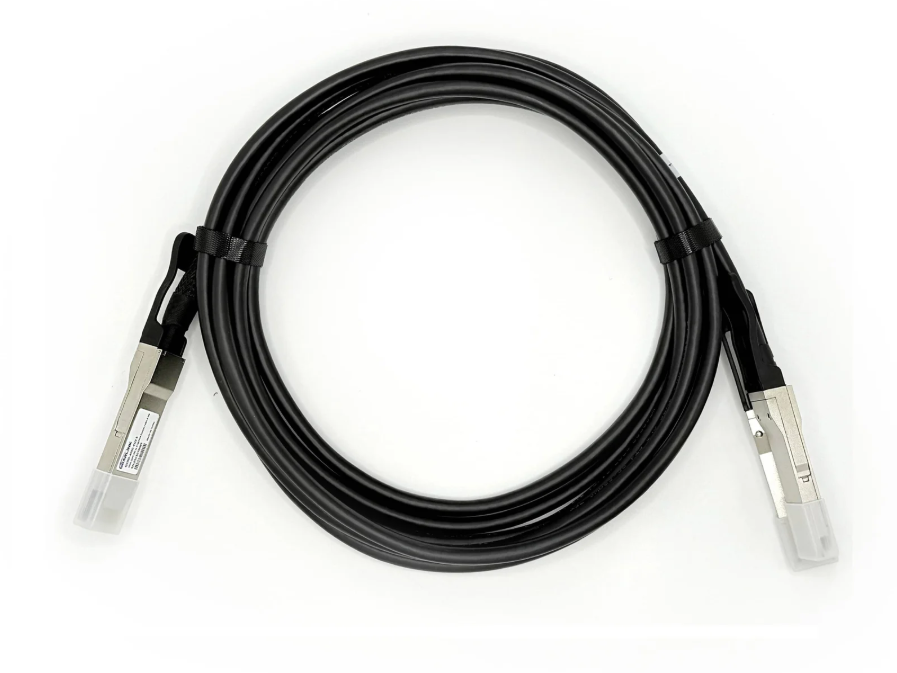
The dominant form factor for 400G copper connectivity is the Quad Small Form-factor Pluggable Double Density (QSFP-DD). According to the QSFP-DD MSA (Multi-Source Agreement), this interface doubles the number of high-speed electrical lanes from four to eight.
A standard 400g qsfp-dd dac utilizes eight lanes of 50Gb/s PAM4 (Pulse Amplitude Modulation 4-level) signaling. This is a significant shift from the NRZ encoding used in previous generations.
For network engineers, this means the cable requires tighter manufacturing tolerances. The IEEE 802.3 standards for Ethernet emphasize that as frequency increases, the margin for error decreases. A high-quality DAC must maintain low crosstalk and minimal insertion loss to ensure the signal reaches the receiver without requiring excessive Forward Error Correction (FEC) overhead.
Identifying a Reliable 400G DAC Cable Manufacture
When vetting a 400g dac cable manufacture, you must look beyond pricing. The manufacturing process directly impacts the Bit Error Rate (BER) of your network.
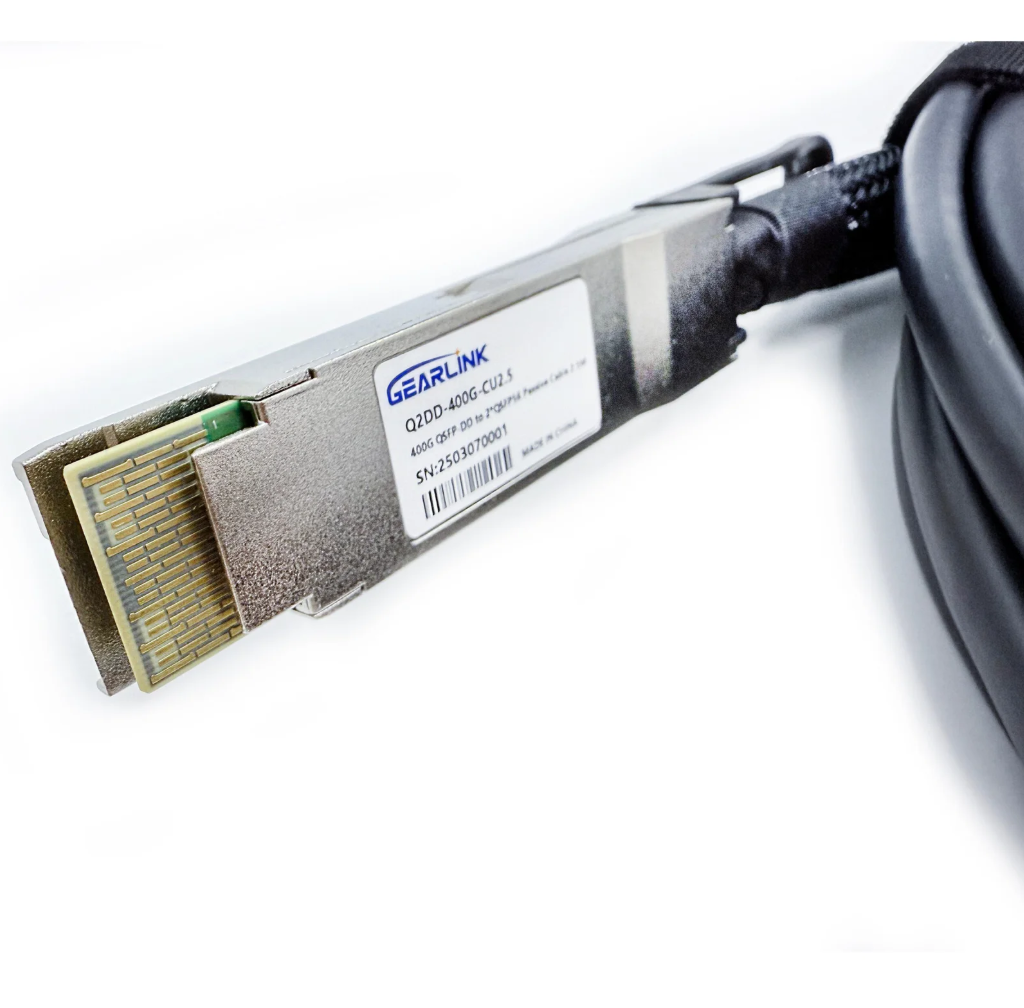
Top-tier manufacturers utilize automated termination processes to ensure consistency. Manual soldering, often found in lower-tier production, can introduce impedance mismatches. These mismatches cause signal reflections, which ruin data transmission at 400G speeds.
Key Technical Indicators to Request:
- Wire Gauge (AWG): Thicker cables (26AWG) offer better signal integrity over longer distances (2m-3m) but are less flexible. Thinner cables (30AWG) are easier to manage but limited to shorter reaches.
- EEPROM Coding: The cable must be coded correctly to be recognized by your specific switch brand (Cisco, Arista, Juniper, etc.).
- Compliance Testing: Ensure the manufacturer tests against IEEE 802.3cd or 802.3ck standards.
The Sweet Spot: 400G DAC 1m Wholesale Procurement
For Top-of-Rack (ToR) deployments, the 400g dac 1m wholesale segment represents the highest volume of purchasing. Passive copper cables at 1 meter provide the optimal balance of power efficiency and cost.
Passive DACs consume zero power, unlike Active Optical Cables (AOCs) or transceivers which draw watts per port. The Ethernet Alliance highlights that passive copper is the most environmentally friendly interconnect option available.
When sourcing 400g dac 1m wholesale quantities, verify the bend radius specifications. High-density racks leave little room for cable management. A cable with a tight bend radius allows for better airflow and easier maintenance. This length is usually sufficient to connect a ToR switch to servers directly below or above it without creating cable slack that blocks exhaust fans.
Evaluating Breakout Options for Scalable Networks
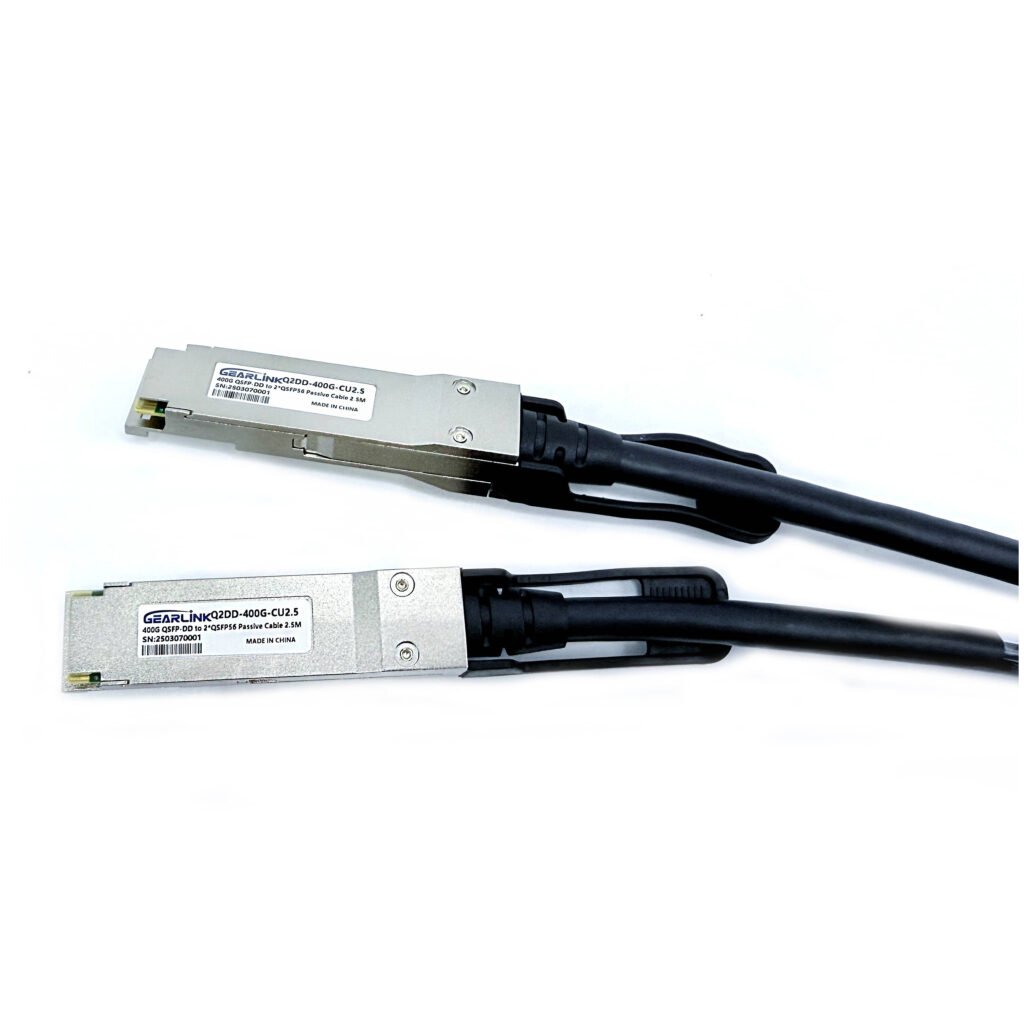
In many B2B scenarios, you aren’t just connecting 400G switches to 400G switches. You are often connecting a 400G spine to multiple 100G or 200G leaf nodes.
This is where breakout cables become essential. Understanding how to split the 400G signal into usable lanes allows you to maximize port density.
Criteria for Choosing Breakout Configurations:
- Lane Assignment: A 400G to 2x200G breakout uses 4 lanes for each 200G end.
- Connector Robustness: The physical strain on a breakout cable is higher. Ensure the junction point is reinforced.
- Application Fit: Verify if your network architecture requires straight connectivity or aggregation.
For specific architectural needs, such as splitting a high-density port into two 200G streams, you need specialized hardware. You can view specifications for a 400G QSFP-DD to 2x200G QSFP56 Breakout DAC to see how these pin configurations are managed in a production environment.
Summary
Selecting the right 400g dac cable involves analyzing the wire gauge, MSA compliance, and the manufacturing precision of the copper termination. Whether you need straight 400G connections or breakout capabilities, prioritizing signal integrity over the lowest initial cost ensures network stability.
FAQ
Q1:What is the maximum distance for a passive 400G DAC cable?
Passive 400G DAC cables are typically effective up to 3 meters; beyond this, you generally require active copper (ACC) or optical solutions due to signal loss.
Q2:Are 400G QSFP-DD DAC cables backward compatible?
Yes, QSFP-DD ports are designed to be backward compatible with existing QSFP28 and QSFP56 modules, though the specific DAC speed depends on the switch configuration.
Q3:Why choose a DAC over an AOC for short distances?
DACs are significantly cheaper, consume zero power, and have a higher reliability rate (MTBF) than AOCs because they contain no active electronic components that can fail.
Q4:What is the difference between QSFP-DD and OSFP for 400G?
QSFP-DD is backward compatible with QSFP form factors, while OSFP is physically larger and offers better thermal management but requires an adapter for backward compatibility.
Reference Sources
QSFP-DD MSA Group (QSFP-DD Hardware Specification)
IEEE Standards Association (IEEE 802.3 Ethernet Standard)
URL: https://standards.ieee.org
The Ethernet Alliance (Ethernet Roadmap and Copper Cabling Resources)