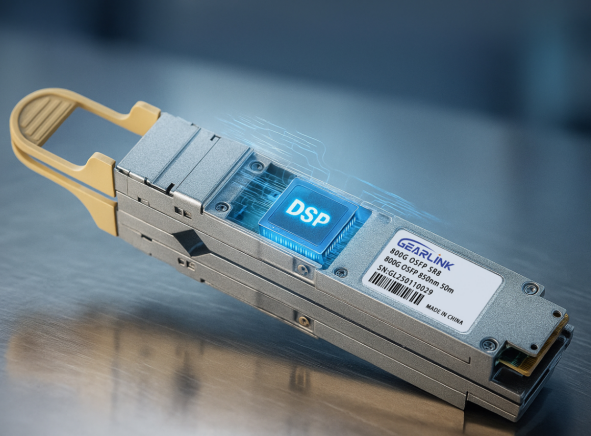
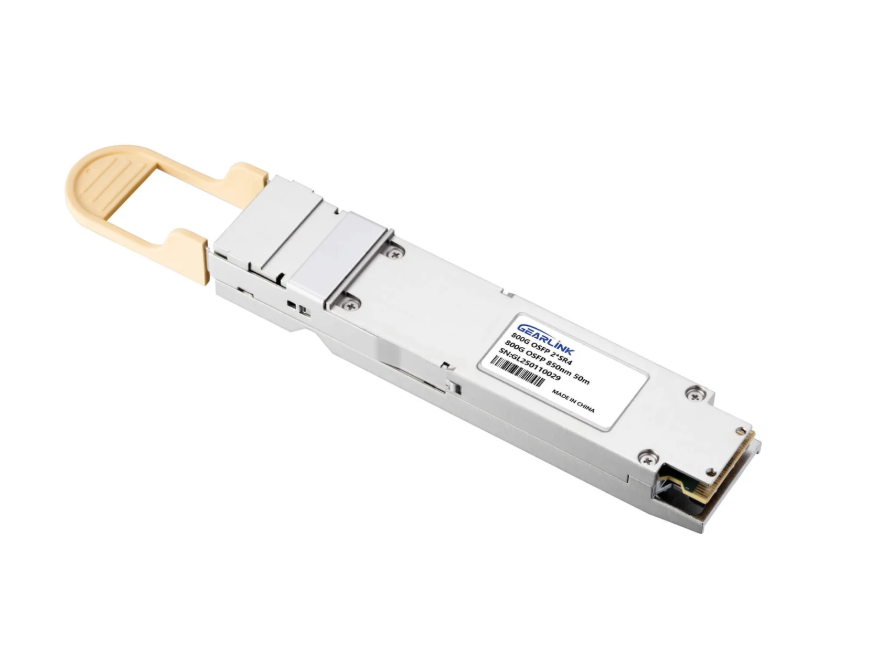
In the rapidly evolving landscape of high-speed networking, data centers, and telecommunications, the demand for increased bandwidth is a constant. As we move beyond 100G and 200G, the 400G generation of optical transceivers has become a critical component for building next-generation network infrastructures. Two of the most prominent and widely adopted form factors in this space are QSFP-DD (Quad Small Form Factor Pluggable Double Density) and OSFP (Octal Small Form Factor Pluggable). Within this category, a specific transceiver, the OSFP 400G SR8, has emerged as a powerhouse, especially for short-reach, high-density applications. But how does it stack up against its primary competitor, the QSFP-DD 400G? This article will delve into the technical nuances, advantages, and applications of both, providing a clear and valuable guide for optical product users.
Understanding the Landscape of 400G Transceivers
Before we directly compare the two, it is crucial to understand the driving forces behind the shift to 400G. The exponential growth of cloud computing, AI, machine learning, and 5G networks has created an insatiable need for greater data throughput and lower latency. As a result, network architects are under pressure to deploy solutions that can handle massive data streams efficiently. The move to 400G and beyond is not just about raw speed; it’s also about optimizing power consumption, thermal management, and port density.
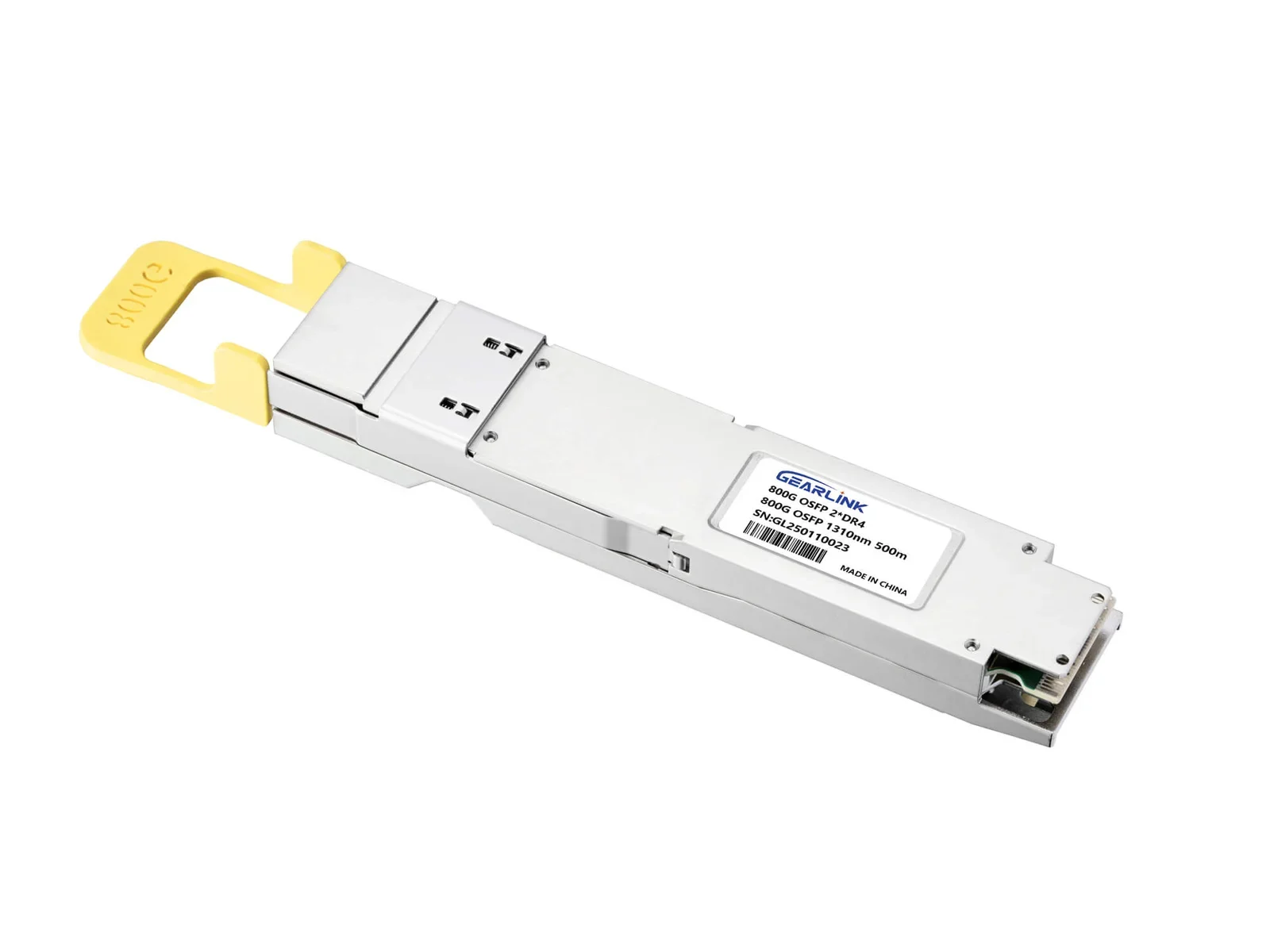
Both the QSFP-DD and OSFP form factors were designed to address these challenges. The QSFP-DD form factor extends the popular QSFP family by adding a second row of electrical contacts, effectively doubling the number of high-speed electrical lanes from four to eight. This design provides a clear upgrade path from 100G and 200G to 400G while maintaining a relatively small footprint. On the other hand, the OSFP form factor was developed from the ground up as a new standard for 400G and future speeds. It’s a slightly larger form factor, designed with thermal and electrical performance as a top priority. Both form factors leverage PAM4 (Pulse Amplitude Modulation 4-level) signaling technology to achieve 400G data rates over eight lanes of 50G.
Deep Dive into OSFP 400G SR8: A Closer Look
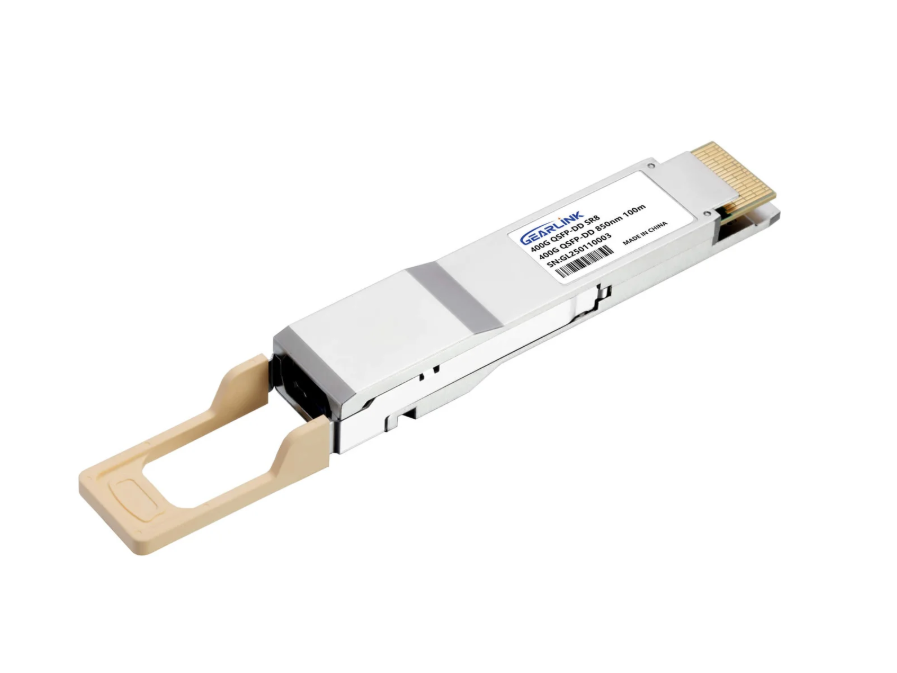
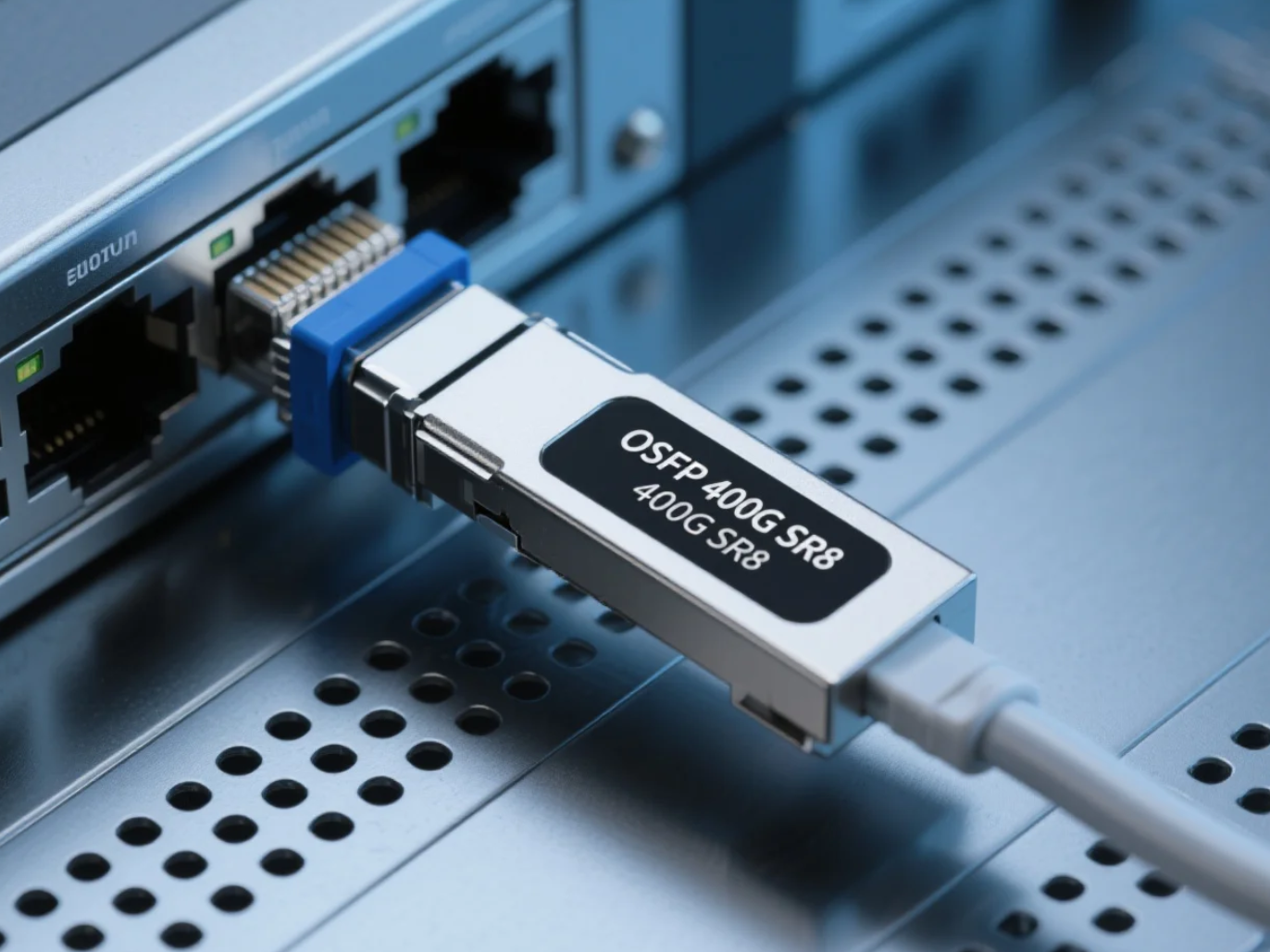
The OSFP 400G SR8 transceiver is an optical module specifically designed for high-density, short-reach interconnects, typically within data centers and enterprise networks. The “SR8” designation signifies that it operates over eight lanes of 50G PAM4 and is used with Multi-Mode Fiber (MMF). This type of transceiver is a workhorse for switch-to-switch and switch-to-server connections over distances up to 100 meters, a common requirement in data center spine-and-leaf architectures.
One of the most significant advantages of the OSFP 400G SR8 is its superior thermal management capabilities. The OSFP form factor, being slightly larger than QSFP-DD, has more surface area for heat dissipation. This allows it to handle higher power consumption, often up to 15W or more, without compromising performance. For network operators, this means the transceiver can operate reliably under demanding conditions, which is especially critical in high-density environments where heat is a major concern.
Beyond its physical and thermal characteristics, the OSFP 400G SR8 also has a distinct edge in high-performance computing (HPC) and AI/machine learning clusters. Many of the latest high-end switches and network cards designed for these applications, particularly from manufacturers like NVIDIA, have adopted the OSFP form factor. The inherent design of OSFP, which prioritizes robust power delivery and cooling, makes it an ideal fit for the intensive, power-hungry workloads of AI training and inference. For businesses building AI clusters, this specific transceiver becomes not just an option but a strategic choice to ensure system stability and performance.
QSFP-DD 400G: A Legacy of Versatility and Compatibility
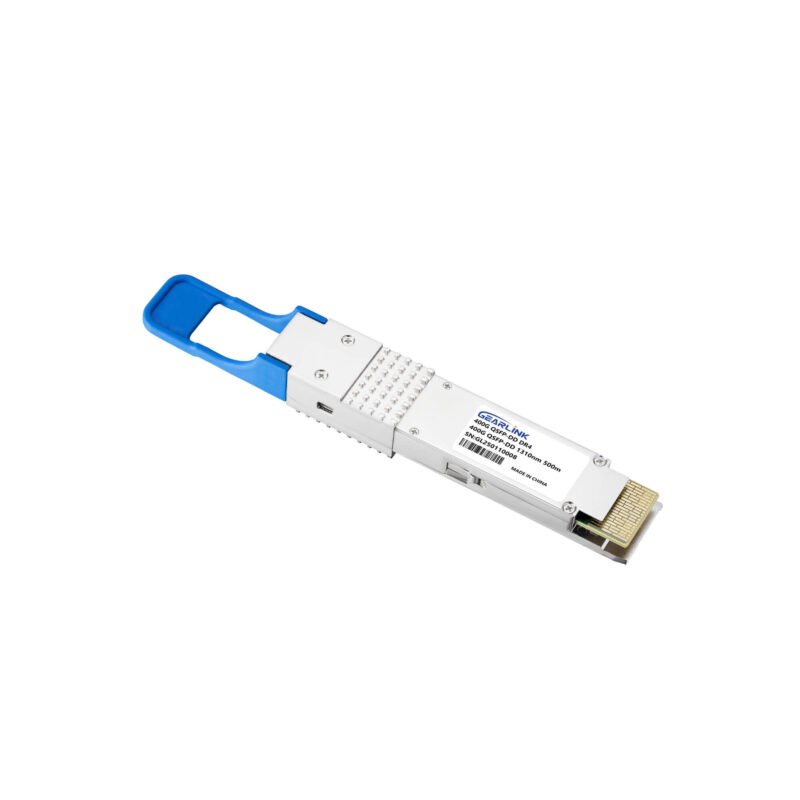
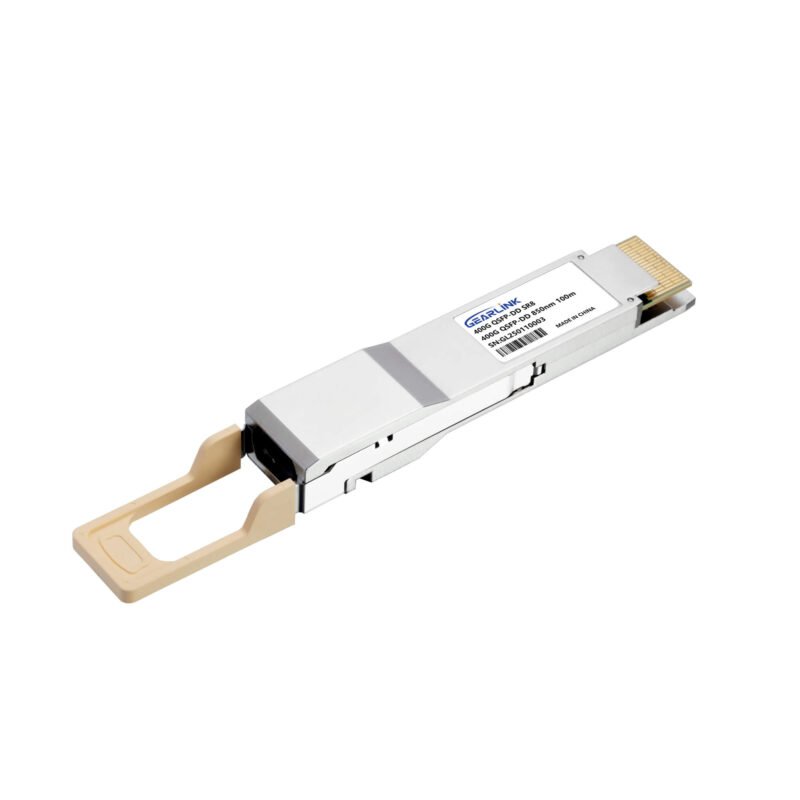
The QSFP-DD 400G transceiver, while also a powerful 400G solution, operates with a different set of design principles. Its primary strength lies in its backward compatibility with previous QSFP modules, including QSFP+, QSFP28, and QSFP56. This feature provides network operators with a seamless and cost-effective upgrade path. You can, for example, plug a 100G QSFP28 module into a 400G QSFP-DD port, albeit with reduced functionality, to utilize existing equipment. This backward compatibility helps to protect previous investments in network hardware and makes the transition to 400G less disruptive.
The QSFP-DD form factor is also known for its high port density. Despite being smaller than OSFP, it can still achieve the same port density on a 1U switch panel, allowing for a compact and space-efficient network design. This makes QSFP-DD a very popular choice for a wide range of applications, from traditional data center interconnects to enterprise networking, where maximizing density is often a key consideration. Its power consumption is typically lower than OSFP, which can be an advantage in environments where power efficiency is a top priority.
The Head-to-Head Comparison: OSFP 400G SR8 vs. QSFP-DD 400G
When it comes to making a choice, it’s not about which transceiver is universally “better,” but rather which one is the right fit for a specific application. The decision depends on several key factors:
Thermal and Power Performance
The OSFP form factor, including the OSFP 400G SR8, has a clear advantage in thermal management. Its larger size allows for a more integrated heat sink and better airflow, enabling it to handle higher power loads and maintain stable performance in hot, high-density environments. If your application involves high-performance computing, AI clusters, or other scenarios with demanding thermal requirements, the OSFP 400G SR8 is often the superior choice. The QSFP-DD, with its lower power consumption, is better suited for situations where energy efficiency is the primary concern, but it may face thermal limitations in extremely power-dense racks.
Backward Compatibility
This is the area where QSFP-DD holds a significant lead. Its design allows it to work with older QSFP modules, which can dramatically simplify network upgrades and reduce overall costs. If you are a network operator looking to gradually transition from 100G to 400G while reusing existing infrastructure, the QSFP-DD is the most practical solution. The OSFP, on the other hand, lacks this direct backward compatibility, requiring the use of OSFP-specific hardware and breakout cables to interface with lower-speed systems.
Ecosystem and Application Focus
The ecosystems for both transceivers are robust, but each has a different focal point. The QSFP-DD is the more widely adopted form factor for general-purpose networking and traditional data center Ethernet applications, supported by a vast number of vendors. Conversely, the OSFP 400G SR8 is gaining significant traction in specialized fields, especially those dominated by AI and HPC. Because of its superior thermal and power handling, it has become the preferred choice for a select group of high-end equipment manufacturers.
Latency and Breakout Capabilities
Both transceivers offer breakout capabilities, allowing a single 400G port to be split into multiple lower-speed channels (e.g., 4x100G). This functionality is crucial for connecting a 400G switch port to multiple 100G servers. However, the internal architecture can differ. The OSFP 400G SR8‘s design is optimized for high-speed, multi-lane operation, making it excellent for point-to-point switch interconnects. For specific short-reach applications, both transceivers provide excellent performance, but the choice often comes down to the host equipment and the desired level of power efficiency.
Conclusion: Making the Right Choice for Your Network
The choice between an OSFP 400G SR8 and a QSFP-DD 400G transceiver is a strategic decision that should be guided by your specific network needs.
Choose OSFP 400G SR8 if…
Your primary application is building high-performance computing (HPC) or AI/machine learning clusters.
You require superior thermal management and are working with high-power, high-density equipment.
Your network is designed for future scalability and you are adopting the latest hardware standards from vendors who have committed to the OSFP form factor.
Choose QSFP-DD 400G if…
You need a seamless and cost-effective upgrade path from 100G or 200G infrastructure.
Backward compatibility with older QSFP modules is a crucial requirement.
Your network prioritizes power efficiency and a smaller physical footprint for general data center applications.
Ultimately, both are incredibly capable transceivers driving the 400G revolution. By carefully evaluating the specific demands of your network, from thermal and power requirements to existing infrastructure and future scalability goals, you can confidently select the transceiver that will provide the most value and performance for your optical network.
Frequently Asked Questions (FAQs)
Q: Can I use an OSFP 400G SR8 module in a QSFP-DD port? A: No, the OSFP and QSFP-DD form factors are physically and electrically incompatible. You must use a transceiver that matches the port on your network switch or equipment.
Q: Is there an adapter to convert a QSFP-DD port to an OSFP port? A: While there are form factor adapters available in the market, they are generally not recommended for high-performance applications like 400G due to potential signal integrity and thermal issues. It is always best to use the native transceiver form factor for your equipment.
Q: What does “SR8” mean? A: SR8 stands for “Short Reach 8-lane.” It indicates that the transceiver is designed for short-distance, multi-mode fiber connections and uses eight parallel lanes of 50G PAM4 to achieve a 400G data rate.
Q: What is the main difference between QSFP-DD and OSFP in terms of future-proofing? A: Both are designed to support future speeds like 800G and beyond. However, OSFP was designed with higher power handling from the outset, which is a key requirement for next-generation coherent optics and advanced signaling, giving it a potential long-term advantage in very high-power applications.