Introduction
The rapid growth of cloud computing, artificial intelligence, and hyperscale data centers has created an urgent demand for faster and more efficient network connectivity. In this environment, QSFP DD MSA has emerged as a critical standard that enables the development of high-speed optical transceivers capable of supporting data rates such as 200G, 400G, and even higher.
The QSFP DD MSA specification was created to ensure interoperability, reliability, and scalability across networking equipment from different manufacturers. Because modern data centers require equipment that can work seamlessly together, standards like QSFP DD MSA have become essential.
Moreover, networking engineers and infrastructure planners rely heavily on the QSFP DD MSA framework when designing next-generation high-speed systems. This standard defines the electrical interface, mechanical dimensions, thermal design, and management interface for QSFP Double Density modules. As a result, products designed under the QSFP DD MSA specification can be deployed across multiple platforms with confidence.
In this comprehensive guide, we will explore the architecture, features, advantages, and real-world applications of QSFP DD MSA. The goal is to explain complex technical concepts in a simple and accessible way while providing a detailed overview of how this standard supports the future of high-speed networking.
Understanding QSFP DD MSA and Why It Matters
What Is QSFP DD MSA?
The QSFP DD MSA (Quad Small Form-factor Pluggable Double Density Multi-Source Agreement) is an industry specification that defines a high-density pluggable module form factor designed for high-speed networking applications.
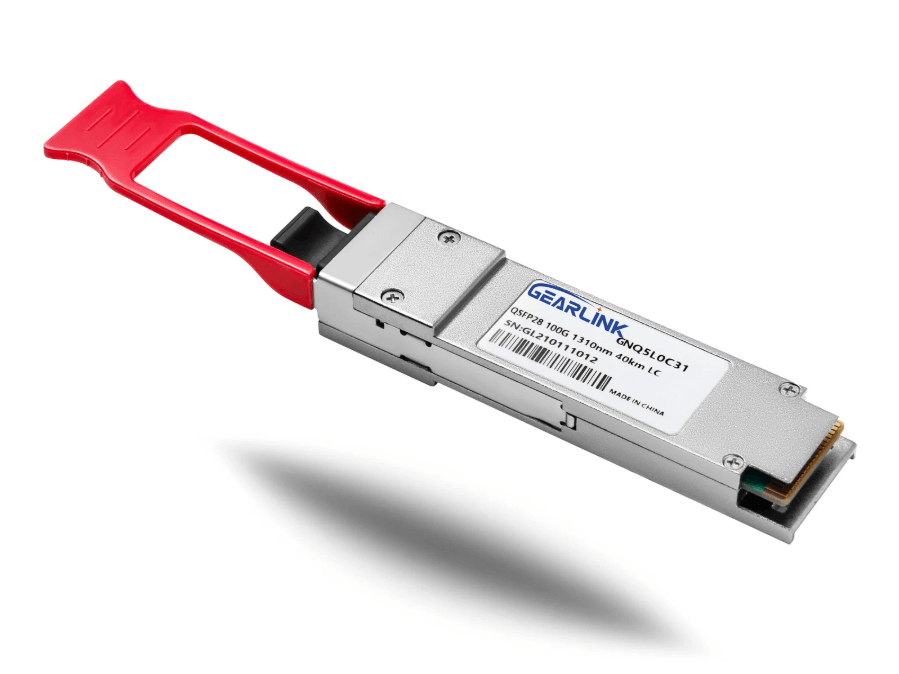
Unlike traditional QSFP modules, the QSFP DD MSA architecture doubles the number of electrical lanes from 4 to 8. This enhancement allows significantly higher bandwidth while maintaining a similar physical footprint.
Key characteristics of QSFP DD MSA
| Feature | Description |
| Form factor | QSFP Double Density |
| Electrical lanes | 8 lanes |
| Lane speed | Up to 50G or higher per lane |
| Maximum bandwidth | Up to 400G and beyond |
| Backward compatibility | Compatible with QSFP28 modules |
| Application areas | Data centers, cloud networks, AI clusters |
Because of these characteristics, the QSFP DD MSA has quickly become a cornerstone of modern high-speed networking infrastructure.
The Evolution of Optical Module Standards Leading to QSFP DD MSA
From SFP to QSFP to QSFP DD MSA
The development of optical transceiver standards has followed a steady path toward higher density and greater bandwidth.
| Generation | Typical Speed | Key Feature |
| SFP | 1G | Early optical networking |
| SFP+ | 10G | Enhanced data rates |
| QSFP+ | 40G | 4-lane architecture |
| QSFP28 | 100G | 25G per lane |
| QSFP DD MSA | 200G/400G | 8 electrical lanes |
The QSFP DD MSA specification was designed specifically to address the limitations of earlier modules, especially when data center traffic began growing exponentially.
Consequently, networking equipment manufacturers quickly adopted QSFP DD MSA as a standard platform for high-capacity transceivers.
The Technical Architecture Defined by QSFP DD MSA
Mechanical Design in QSFP DD MSA
One of the most innovative aspects of the QSFP DD MSA specification is its mechanical design. Although the module maintains a similar width to the QSFP28 form factor, it integrates an additional row of electrical contacts.
Mechanical improvements include
Dual-row electrical interface
Enhanced thermal design
Improved connector durability
Backward compatibility with QSFP modules
This clever design allows network devices to support both legacy modules and QSFP DD MSA modules without significant hardware redesign.
Electrical Interface in QSFP DD MSA
The QSFP DD MSA specification defines eight electrical lanes that operate independently. Each lane can support high-speed signaling technologies such as PAM4.
Electrical performance characteristics
| Parameter | Value |
| Electrical lanes | 8 |
| Lane speed | 25G / 50G |
| Modulation | NRZ / PAM4 |
| Maximum bandwidth | 400G |
Because of these improvements, the QSFP DD MSA architecture enables a massive increase in port density within switches and routers.
Thermal Management in QSFP DD MSA
High-speed optical modules generate significant heat. Therefore, thermal management plays a critical role in the QSFP DD MSA design.
To ensure stable operation, several thermal solutions are commonly implemented:
Advanced heat sink structures
Improved airflow channeling
Optimized module casing materials
As a result, modules designed according to the QSFP DD MSA specification can maintain high performance even under demanding workloads.
Types of Optical Modules Based on QSFP DD MSA
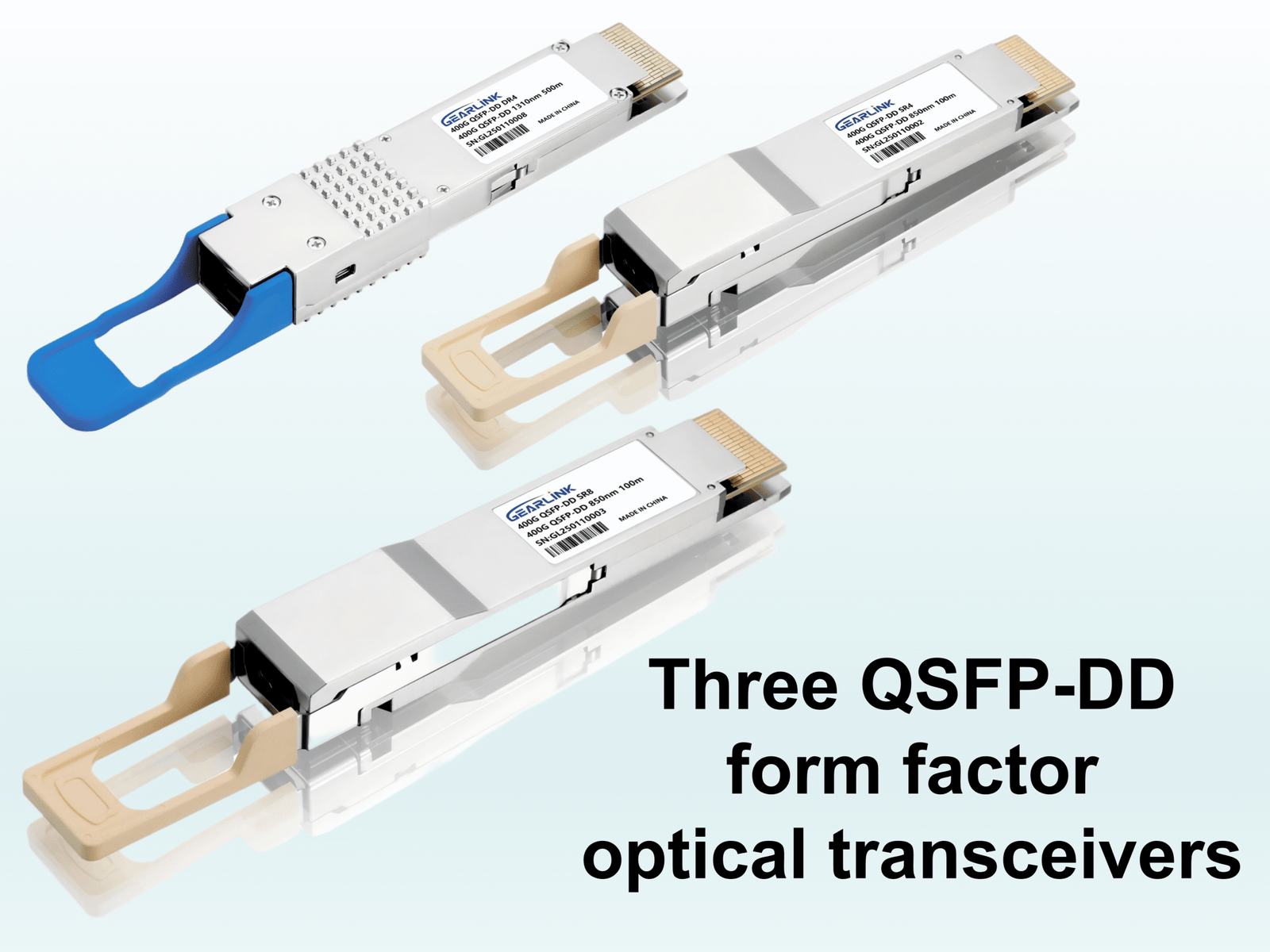
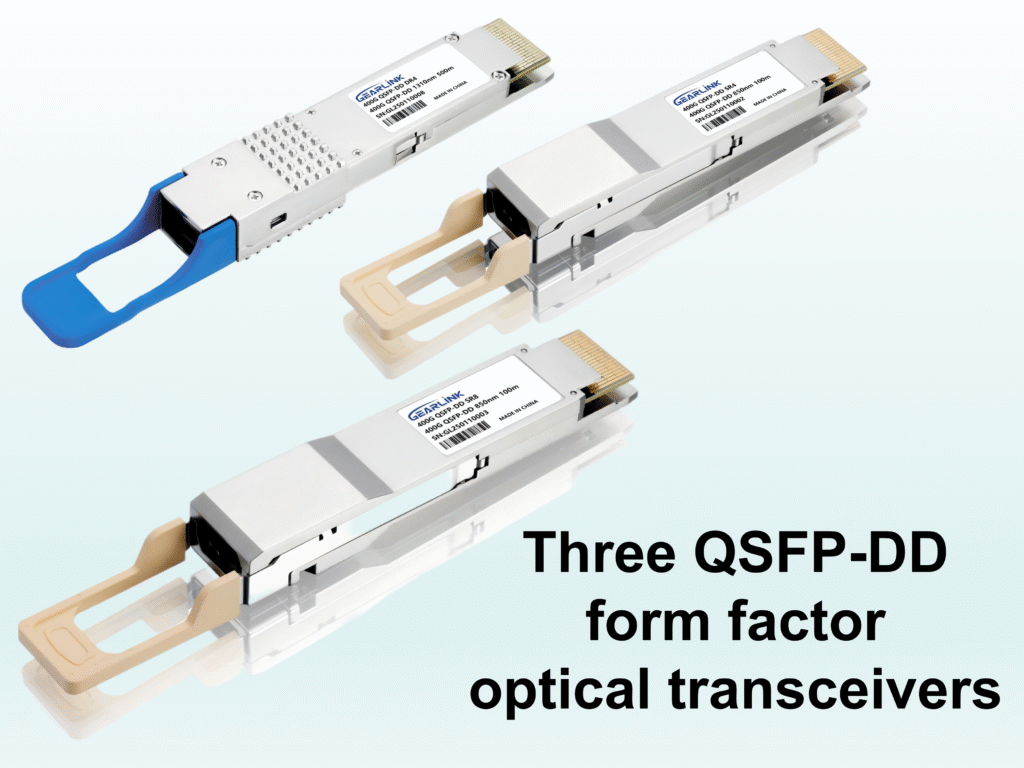
The QSFP DD MSA specification supports multiple optical transceiver types designed for different networking distances and applications.
Short-Reach QSFP DD MSA Modules
Short-reach modules are typically used inside data centers where distances are relatively short.
| Module Type | Medium | Distance |
| 400G SR8 | Multimode fiber | 100m |
| 200G SR4 | Multimode fiber | 100m |
| 400G SR4.2 | Multimode fiber | 70m |
These modules leverage the QSFP DD MSA architecture to deliver extremely high bandwidth for server-to-switch connections.
Long-Reach QSFP DD MSA Modules
Long-reach optical modules support much longer transmission distances.
| Module Type | Fiber Type | Distance |
| 400G DR4 | Single-mode fiber | 500m |
| 400G FR4 | Single-mode fiber | 2km |
| 400G LR4 | Single-mode fiber | 10km |
These modules are widely deployed in large-scale data center interconnect networks.
Key Advantages of the QSFP DD MSA Standard
Higher Bandwidth Capacity
The most obvious advantage of QSFP DD MSA is its ability to deliver significantly higher bandwidth compared with earlier standards.
With eight electrical lanes, modules built under the QSFP DD MSA framework can achieve data rates up to 400G and beyond.
Improved Port Density
Because the physical footprint remains compact, switches can accommodate many QSFP DD MSA ports on a single line card.
For hyperscale data centers, this increased density translates directly into higher network capacity.
Backward Compatibility
Another major benefit of QSFP DD MSA is its backward compatibility with earlier QSFP modules.
This means that existing network infrastructure can gradually transition to QSFP DD MSA technology without requiring immediate full upgrades.
Strong Industry Support
The QSFP DD MSA specification was developed through collaboration between many leading networking companies. As a result, it has received strong industry adoption.
This broad support ensures that equipment built under the QSFP DD MSA standard will remain compatible across multiple vendors.
QSFP DD MSA vs Other High-Speed Transceiver Standards
Although QSFP DD MSA is widely used, it is not the only form factor designed for high-speed networking.
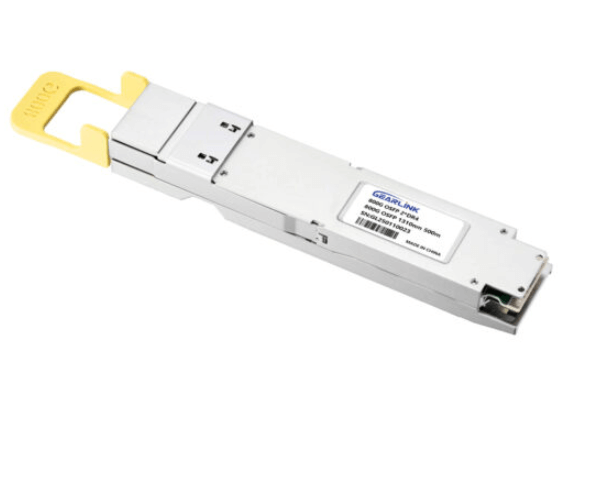
Comparison with OSFP
| Feature | QSFP DD MSA | OSFP |
| Electrical lanes | 8 | 8 |
| Maximum speed | 400G+ | 400G+ |
| Backward compatibility | Yes | No |
| Size | Smaller | Larger |
| Thermal capacity | Moderate | Higher |
Because of backward compatibility, QSFP DD MSA is often preferred by data center operators upgrading existing QSFP-based infrastructure.
Applications of QSFP DD MSA in Modern Networks
Hyperscale Data Centers
The explosive growth of cloud services has significantly increased data center traffic. Consequently, QSFP DD MSA modules are widely deployed in hyperscale environments.
Typical use cases include:
Leaf-spine network architectures
Server aggregation layers
High-capacity switch uplinks
Artificial Intelligence and High-Performance Computing
AI clusters require extremely high bandwidth between GPUs and compute nodes. Therefore, QSFP DD MSA transceivers are frequently used in AI networking fabrics.
Data Center Interconnect (DCI)
For connections between geographically distributed data centers, QSFP DD MSA modules enable high-capacity links over single-mode fiber.
Deployment Considerations for QSFP DD MSA
Before deploying QSFP DD MSA modules, several technical factors should be evaluated.
Compatibility
Network engineers should verify that switches and routers fully support QSFP DD MSA modules.
Power Consumption
High-speed transceivers can consume significant power. Therefore, proper power planning is essential.
Cooling Infrastructure
Adequate airflow must be maintained to ensure stable operation of QSFP DD MSA modules.
Future Trends for QSFP DD MSA Technology
The networking industry continues to evolve rapidly. As data demands increase, the QSFP DD MSA ecosystem is expected to support even higher speeds.
Future developments may include:
800G QSFP-DD modules
Advanced PAM4 modulation
Improved energy efficiency
Enhanced thermal designs
Consequently, the QSFP DD MSA standard will likely remain a key foundation for high-speed networking infrastructure.
Conclusion
The QSFP DD MSA specification represents a major milestone in the evolution of optical transceiver technology. By enabling higher bandwidth, increased port density, and strong interoperability, this standard has become essential for modern networking systems.
As data centers continue to expand and new technologies such as AI and cloud computing drive unprecedented traffic growth, QSFP DD MSA will continue playing a critical role in enabling scalable and efficient connectivity.
For network architects, engineers, and infrastructure planners, understanding the principles and applications of QSFP DD MSA is therefore essential when building next-generation high-performance networks.
Frequently Asked Questions
1. What is QSFP DD MSA?
QSFP DD MSA is an industry standard that defines the form factor and electrical interface for high-speed optical transceivers capable of supporting 200G and 400G networking applications.
2. Why is QSFP DD MSA important for modern data centers?
The QSFP DD MSA specification enables higher bandwidth and improved port density, which are essential for handling rapidly increasing data traffic in hyperscale data centers.
3. Is QSFP DD MSA backward compatible with QSFP28?
Yes. One of the major advantages of QSFP DD MSA is its backward compatibility with QSFP28 modules, allowing gradual network upgrades.
4. What speeds are supported by QSFP DD MSA modules?
Modules designed according to the QSFP DD MSA specification commonly support speeds such as 200G and 400G, with future versions expected to support even higher rates.
5. Where are QSFP DD MSA transceivers typically used?
QSFP DD MSA transceivers are widely used in hyperscale data centers, cloud networks, AI computing clusters, and data center interconnect applications.