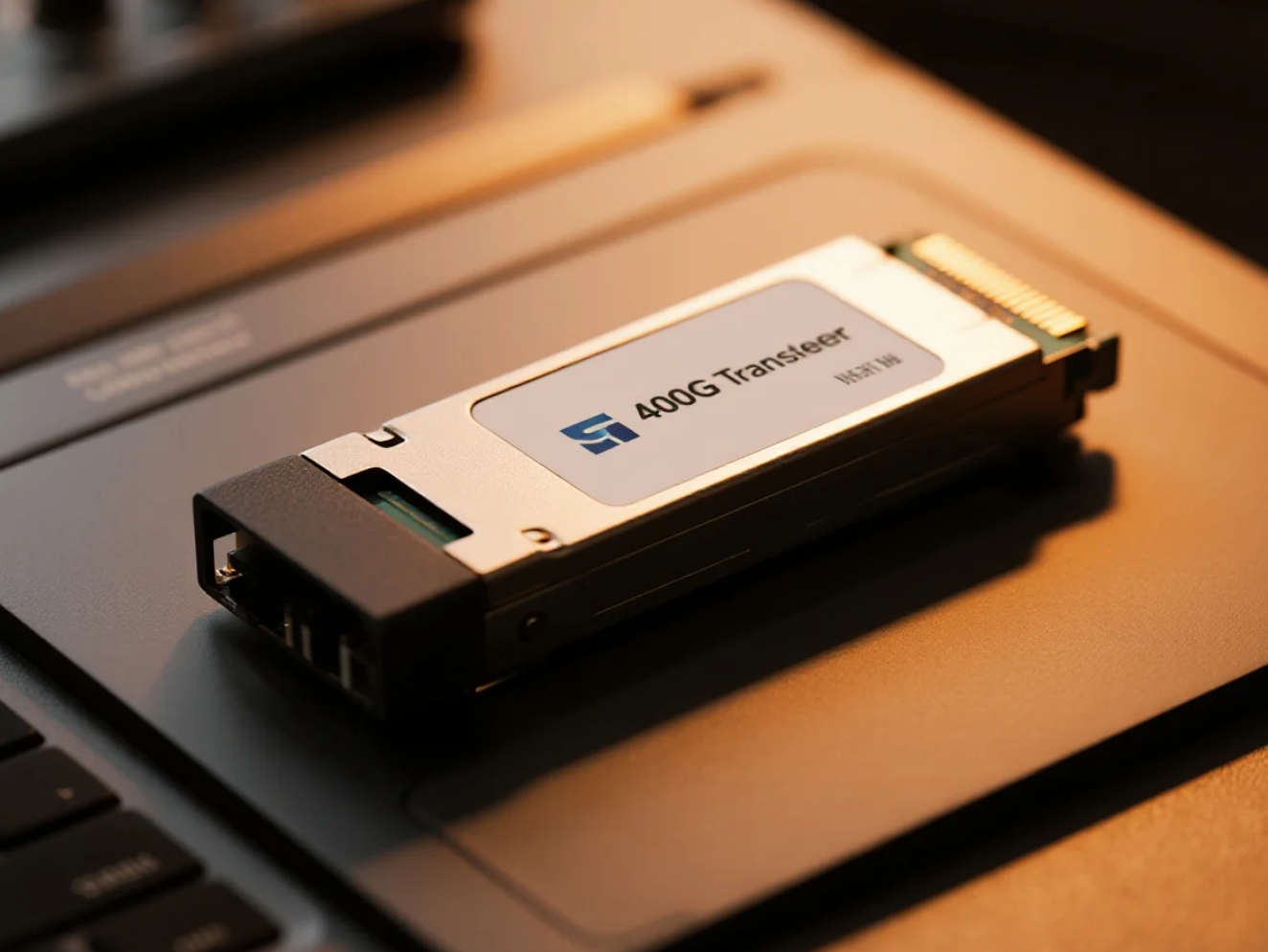
In today’s rapidly evolving data communication landscape, QSFP112 has quickly become one of the most important technologies powering next-generation high-speed networks. As data centers continue to scale and bandwidth demand grows dramatically, networking hardware must evolve accordingly. Consequently, the QSFP112 form factor has been developed to support extremely high data rates while maintaining efficiency, flexibility, and compatibility.
At its core, QSFP112 is an advanced optical transceiver form factor designed for high-performance networking environments such as hyperscale data centers, AI clusters, and cloud infrastructure. Compared with earlier modules like QSFP28 or QSFP56, QSFP112 enables significantly higher per-lane speeds and improved bandwidth efficiency.
Moreover, as network infrastructure transitions toward 400G and 800G Ethernet, the adoption of QSFP112 technology is accelerating. Because of its ability to support 112G PAM4 electrical signaling, the QSFP112 optical transceiver plays a crucial role in modern networking architecture.
Therefore, understanding how QSFP112 modules work, where they are used, and why they matter has become essential for network engineers, IT planners, and technology decision makers.
What Is QSFP112 and Why Is QSFP112 Important?
The term QSFP112 stands for Quad Small Form-Factor Pluggable 112G. It represents an evolution of the widely used QSFP family of optical transceivers.
Unlike earlier versions that supported lower per-lane speeds, QSFP112 modules support 112Gbps electrical lanes, enabling much higher total bandwidth.
Key Characteristics of QSFP112
| Feature | Description |
| Form Factor | QSFP family |
| Electrical Lane Speed | 112Gbps PAM4 |
| Total Bandwidth | Up to 400G |
| Connector Types | MPO-12, MPO-16, LC |
| Application | 400G Ethernet, AI networks |
| Fiber Type | Single-mode or multimode |
In essence, QSFP112 optical transceivers allow network equipment to transmit enormous amounts of data while maintaining energy efficiency.
Furthermore, since hyperscale data centers are continuously expanding, technologies like QSFP112 networking modules help ensure that infrastructure remains scalable and future-proof.
The Evolution Leading to QSFP112 Optical Modules
To fully appreciate the importance of QSFP112, it is helpful to understand the evolution of optical transceiver technologies.
Over the years, networking speeds have increased dramatically. Each generation of QSFP modules has pushed the boundaries of performance.
Optical Module Evolution
| Generation | Per Lane Speed | Total Speed |
| QSFP+ | 10G | 40G |
| QSFP28 | 25G | 100G |
| QSFP56 | 50G | 200G |
| QSFP112 | 112G | 400G |
As shown in the table above, QSFP112 technology represents a major leap in lane speed.
Because of PAM4 modulation, QSFP112 transceivers can transmit twice as much data compared with NRZ signaling used in earlier generations.
Consequently, QSFP112 optical solutions are increasingly deployed in high-performance computing networks.
QSFP112 Architecture and Technical Specifications
Although QSFP112 modules appear physically similar to earlier QSFP transceivers, their internal architecture is far more sophisticated.
Main Components of a QSFP112 Module
A typical QSFP112 optical transceiver contains several important components:
High-speed DSP chip
Laser driver
Optical transmitter
Optical receiver
PAM4 signal processor
Thermal management system
Because QSFP112 modules must process signals at extremely high speeds, advanced signal conditioning and error correction technologies are usually integrated.
QSFP112 Electrical Interface
| Parameter | Specification |
| Lane Rate | 112Gbps |
| Modulation | PAM4 |
| Number of Lanes | 4 |
| Total Data Rate | 400Gbps |
Thanks to this architecture, QSFP112 networking modules can support demanding workloads such as AI training clusters and cloud computing platforms.
Common Types of QSFP112 Optical Transceivers
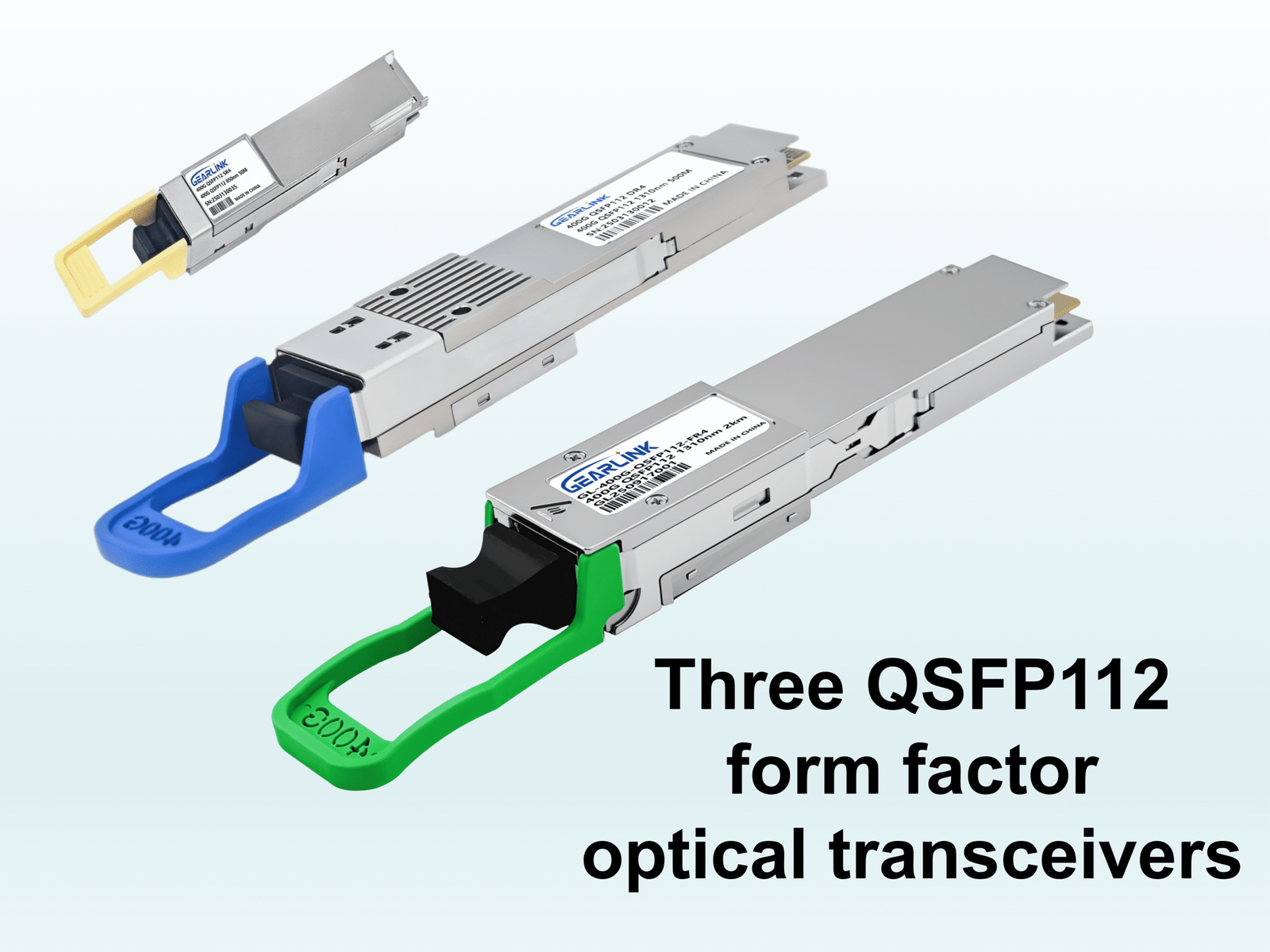
Although the QSFP112 form factor is standardized, several different module types exist to support various transmission distances.
QSFP112 SR4
The QSFP112 SR4 module is designed for short-reach data center connections using multimode fiber.
| Parameter | Value |
| Distance | 100m |
| Fiber | MMF |
| Connector | MPO |
| Application | Data center switching |
This type of QSFP112 transceiver is widely used for high-density rack-to-rack connections.
QSFP112 DR4
The QSFP112 DR4 optical module supports single-mode fiber transmission.
| Parameter | Value |
| Distance | 500m |
| Fiber | SMF |
| Connector | MPO |
| Application | Data center spine networks |
Because of its longer reach, QSFP112 DR4 modules are often deployed in leaf-spine architectures.
QSFP112 FR4
The QSFP112 FR4 module supports longer single-mode fiber transmission.
| Parameter | Value |
| Distance | 2km |
| Connector | LC |
| Wavelength | CWDM |
This type of QSFP112 optical transceiver is particularly useful for inter-building data center links.
Key Advantages of QSFP112 Technology
The growing adoption of QSFP112 modules is largely driven by several technical advantages.
Higher Bandwidth
First and foremost, QSFP112 optical modules dramatically increase bandwidth capacity.
A single QSFP112 port can deliver 400Gbps, enabling networks to handle massive data loads.
Improved Power Efficiency
Although performance has increased, QSFP112 transceivers are designed to maintain reasonable power consumption.
In large data centers, energy efficiency is extremely important.
High Port Density
Because QSFP112 maintains the familiar QSFP form factor, network switches can support a high number of ports.
As a result, network operators can deploy extremely dense infrastructure.
Future Network Readiness
Another key benefit is future compatibility.
Many next-generation networking platforms are already designed to support QSFP112 optical interfaces.
QSFP112 Applications in Modern Networks
Today, QSFP112 networking solutions are widely used in various high-performance environments.
Hyperscale Data Centers
Large cloud providers rely heavily on QSFP112 transceivers to handle massive internal traffic.
AI and Machine Learning Clusters
AI training requires huge data exchange between GPUs. Therefore, QSFP112 optical connectivity plays a vital role.
High-Performance Computing
Scientific computing systems often use QSFP112 networking modules to ensure ultra-fast communication.
Data Center Interconnect
In addition, QSFP112 FR4 modules are commonly used for short-range data center interconnect applications.
QSFP112 vs QSFP56 vs QSFP-DD
Many network engineers often compare QSFP112 with earlier technologies.
Comparison Table
| Feature | QSFP56 | QSFP112 | QSFP-DD |
| Lane Speed | 50G | 112G | 112G |
| Total Speed | 200G | 400G | 800G |
| Modulation | PAM4 | PAM4 | PAM4 |
| Lanes | 4 | 4 | 8 |
From the comparison above, it is clear that QSFP112 modules significantly increase per-lane speed.
Future Trends of QSFP112 Optical Modules
Looking ahead, the role of QSFP112 technology is expected to expand further.
Several major trends are shaping its future.
AI Infrastructure Growth
As AI workloads continue to grow, QSFP112 optical connectivity will be increasingly required.
800G Network Migration
Although 800G networks are emerging, QSFP112 technology will still remain relevant as part of 400G infrastructure.
Silicon Photonics Integration
New QSFP112 optical designs are integrating silicon photonics to improve efficiency and scalability.
How to Choose the Right QSFP112 Module
Selecting the right QSFP112 transceiver depends on several factors.
Consider Transmission Distance
Short-distance connections may use QSFP112 SR4, while longer links require QSFP112 DR4 or FR4.
Check Fiber Type
Different QSFP112 optical modules support different fiber types.
Verify Switch Compatibility
Finally, it is important to ensure that the switch supports QSFP112 interfaces.
Conclusion: Why QSFP112 Is Shaping the Future of High-Speed Networks
Without a doubt, QSFP112 represents a powerful step forward in optical networking technology.
By enabling 112G per-lane signaling, QSFP112 optical transceivers provide the bandwidth needed for modern data-intensive applications.
Furthermore, thanks to their compatibility with existing QSFP ecosystems, QSFP112 modules offer a practical upgrade path for data centers.
As network demand continues to grow, QSFP112 technology will remain a key building block in the evolution of high-speed Ethernet infrastructure.
FAQ
What is QSFP112 used for?
QSFP112 is primarily used in high-speed data center networks to support 400G Ethernet connections. Many cloud and AI infrastructures rely on QSFP112 optical transceivers for fast data transmission.
What speed does a QSFP112 module support?
A QSFP112 module typically supports 400Gbps total bandwidth, using four 112Gbps PAM4 lanes.
What is the difference between QSFP112 and QSFP56?
The main difference is lane speed. QSFP112 optical modules support 112Gbps per lane, while QSFP56 modules support 50Gbps per lane.
What types of QSFP112 optical transceivers exist?
Common types include QSFP112 SR4, QSFP112 DR4, and QSFP112 FR4, each designed for different transmission distances.
Is QSFP112 compatible with QSFP switches?
Some modern switches are designed to support QSFP112 interfaces, but compatibility should always be verified before deployment.