Unpacking the Dominance of QSFP28 in High-Speed Interconnects
The relentless demand for bandwidth driven by data centers, cloud computing, and telecommunications has continuously pushed the boundaries of network infrastructure. In this high-stakes environment, the 100 Gigabit Ethernet (100GbE) standard rapidly became the operational backbone, and at its heart lies the Quad Small Form-factor Pluggable 28 (QSFP28) module. The QSFP28 form factor is not just another optical component; it represents a pivotal shift towards power efficiency and high density in a compact package. This article provides a comprehensive, comparative review of the technology, thoroughly analyzing its continued relevance and application value for optical module users navigating the complexities of 100G network design and migration.
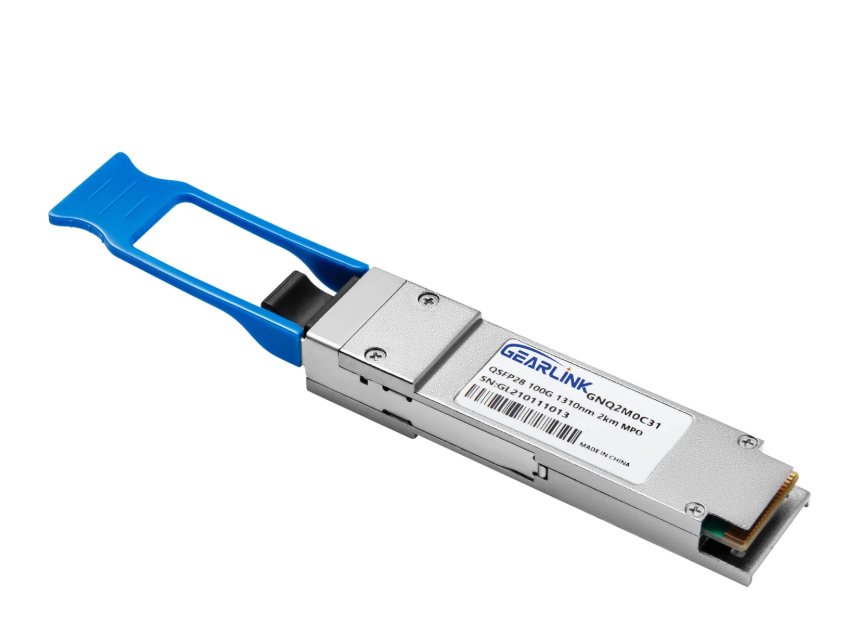
When 100G adoption accelerated, network architects faced critical decisions regarding form factor selection. The QSFP28 module, operating on four electrical lanes each running at 25 Gbps, swiftly marginalized predecessors like the CFP, CFP2, and CFP4 due to its superior power consumption profile and significantly smaller size. This smaller footprint allows for double the port density on a single line card compared to CFP4, resulting in lower operational expenses and a simpler infrastructure footprint. Consequently, the QSFP28 established itself as the de facto standard for achieving 100GbE connectivity across various distances and media types, from short-reach data center links to long-haul carrier networks.
The Core Technology and Distinctive Features of QSFP28
The intrinsic value of the QSFP28 module stems from its ability to deliver 100G performance while maintaining the compact dimensions of the 40G QSFP+ module. This feat is achieved through sophisticated integrated circuit design and advanced optical packaging. The core advantage lies in its electrical interface, which is defined by the four 25G channels. This straightforward architecture simplifies the host board design and reduces the complexity, power usage, and cost associated with transmitting and receiving high-speed signals.
Power Efficiency: A Crucial Comparative Advantage
One of the most compelling arguments for the enduring use of QSFP28 is its unmatched power efficiency in the 100G module landscape. Earlier 100G form factors consumed between 12W and 24W, making dense deployments thermally challenging and economically unsustainable. In stark contrast, standard QSFP28 modules typically operate within a 1.5W to 3.5W range, depending on the specific optical technology (e.g., SR4, LR4). This drastic reduction in power draw translates directly into massive energy savings in hyperscale data centers, where tens of thousands of ports are often deployed. Furthermore, less power consumption also means less heat generated, which ultimately simplifies cooling requirements and lowers the capital expenditure on thermal management systems.
Variety of Optical Standards: Tailored for Every Application
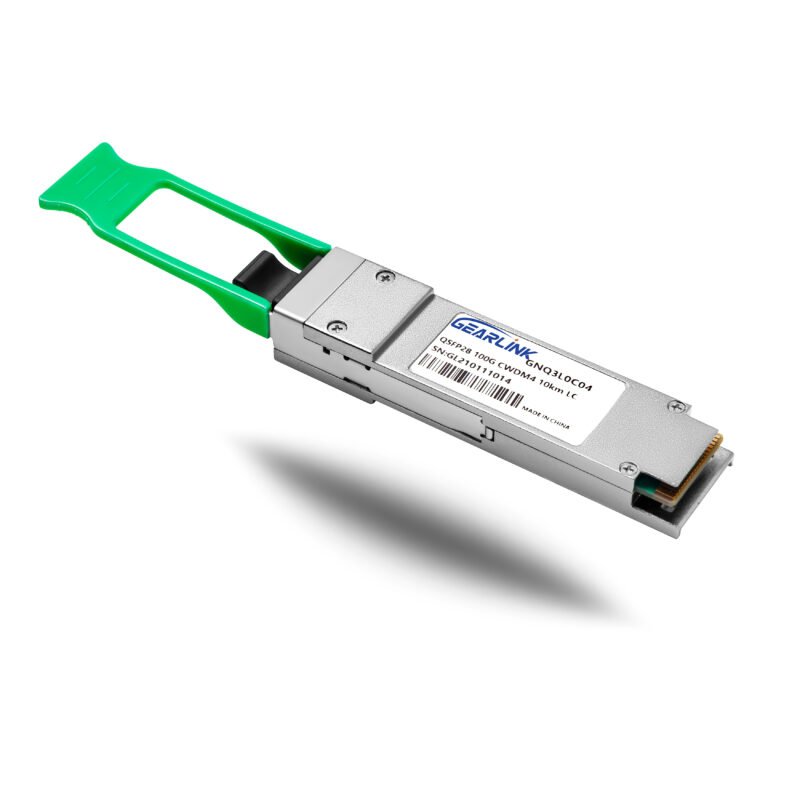
100GBASE-CWDM4 QSFP28 1310nm 2km DOM Duplex LC/UPC SMF Optical Transceiver Module
NT$99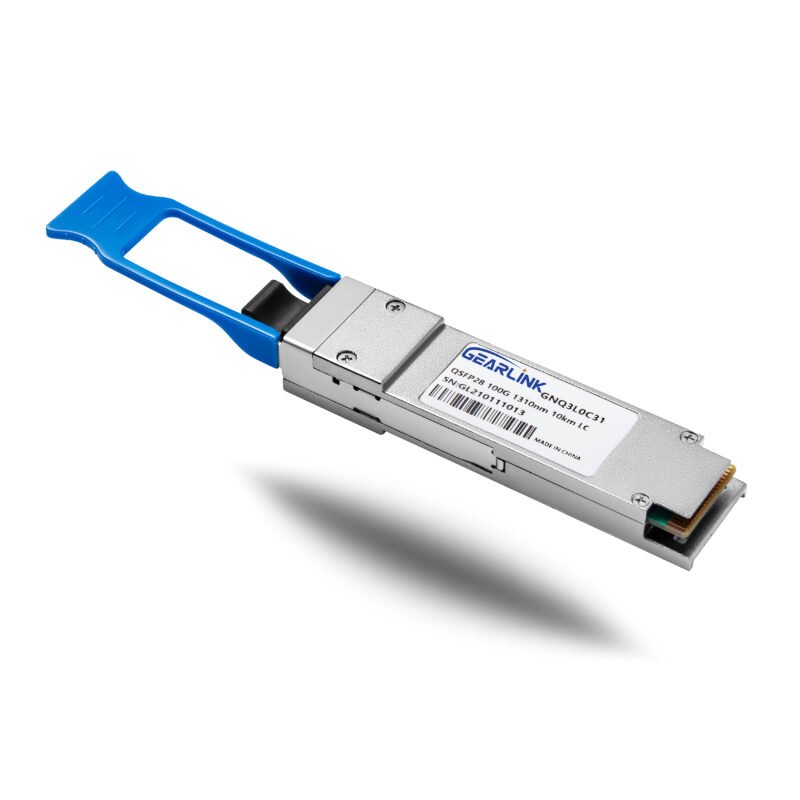
100GBASE-LR4 QSFP28 1310nm 10km DOM Duplex LC/UPC SMF Optical Transceiver Module
NT$179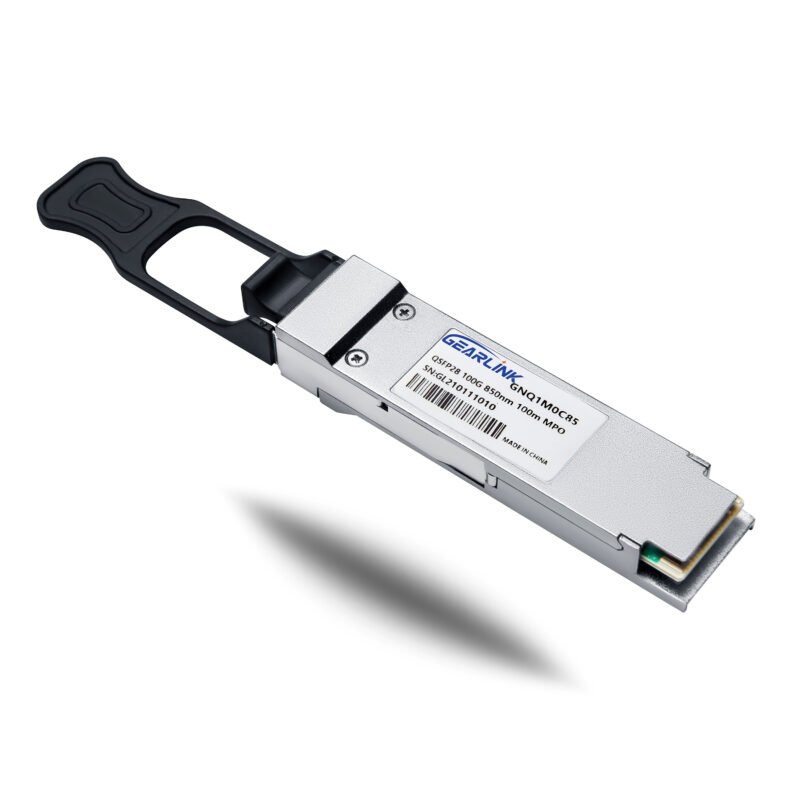
100GBASE-SR4 QSFP28 850nm 100m DOM MPO-12 MMF Optical Transceiver Module
NT$38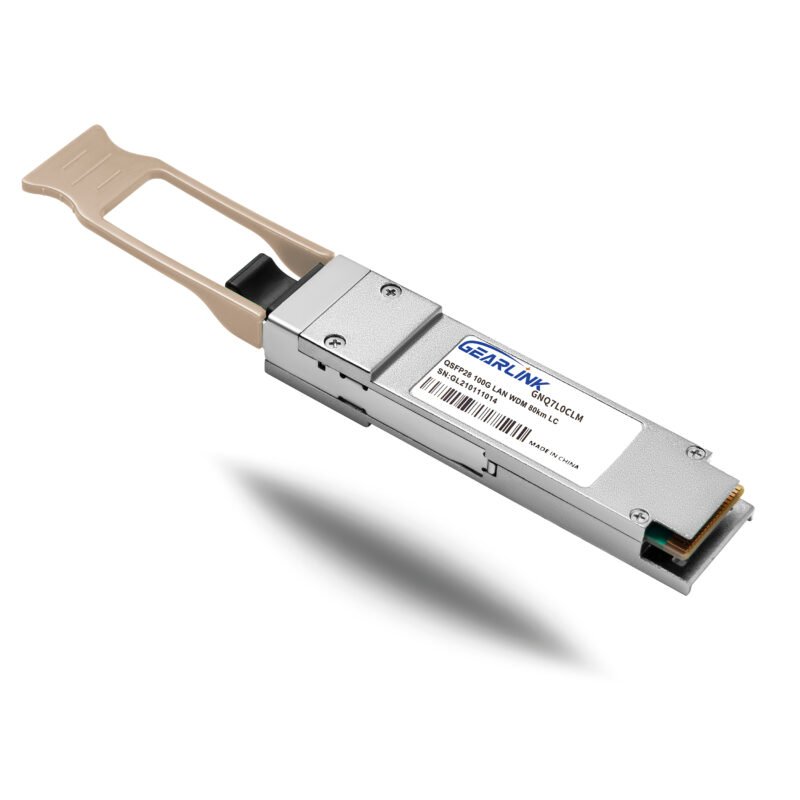
100GBASE-ZR4 QSFP28 1310nm 80km DOM Duplex LC/UPC SMF Optical Transceiver Module
NT$1,500
The versatility of QSFP28 is amplified by the extensive range of optical standards it supports, enabling seamless deployment across diverse network topologies. A thorough understanding of these variants is paramount for product users.
- QSFP28 SR4 (Short Reach): Utilizes multi-mode fiber (MMF) and four parallel 25G channels for distances up to 100 meters, making it the workhorse for server-to-switch and switch-to-switch links within a single data center hall.
- QSFP28 LR4 (Long Reach): Employs single-mode fiber (SMF) and Dense Wavelength Division Multiplexing (DWDM) technology, allowing four distinct 25G wavelengths to be multiplexed onto two fibers. This variant facilitates links up to 10 kilometers, crucial for connecting geographically separated data centers or campus networks.
- QSFP28 CWDM4/PSM4: These are intermediate solutions, catering to distances between 500 meters and 2 kilometers. CWDM4 uses four coarse wavelengths over duplex SMF, while PSM4 uses parallel SMF, offering cost-effective solutions for Metropolitan Area Networks (MANs) and distributed data center architectures.
The availability of this broad portfolio ensures that network designers can select a QSFP28 variant that precisely matches the required distance, fiber type, and budget constraints, thereby optimizing overall network performance and cost structure.
The Competitive Landscape: QSFP28 vs. Alternative Form Factors
While the QSFP28 has secured its position as the preferred 100G solution, it exists within a competitive technology ecosystem. Comparative analysis with past and future form factors is essential for evaluating its long-term viability.
Comparing QSFP28 with its 100G predecessors, CFP/CFP2/CFP4, unequivocally highlights the advantages of the former. The larger CFP modules, though historically important, are now largely relegated to legacy networks or specific applications requiring higher power budgets for extremely long distances. They are substantially less space-efficient and power-hungry than the QSFP28.
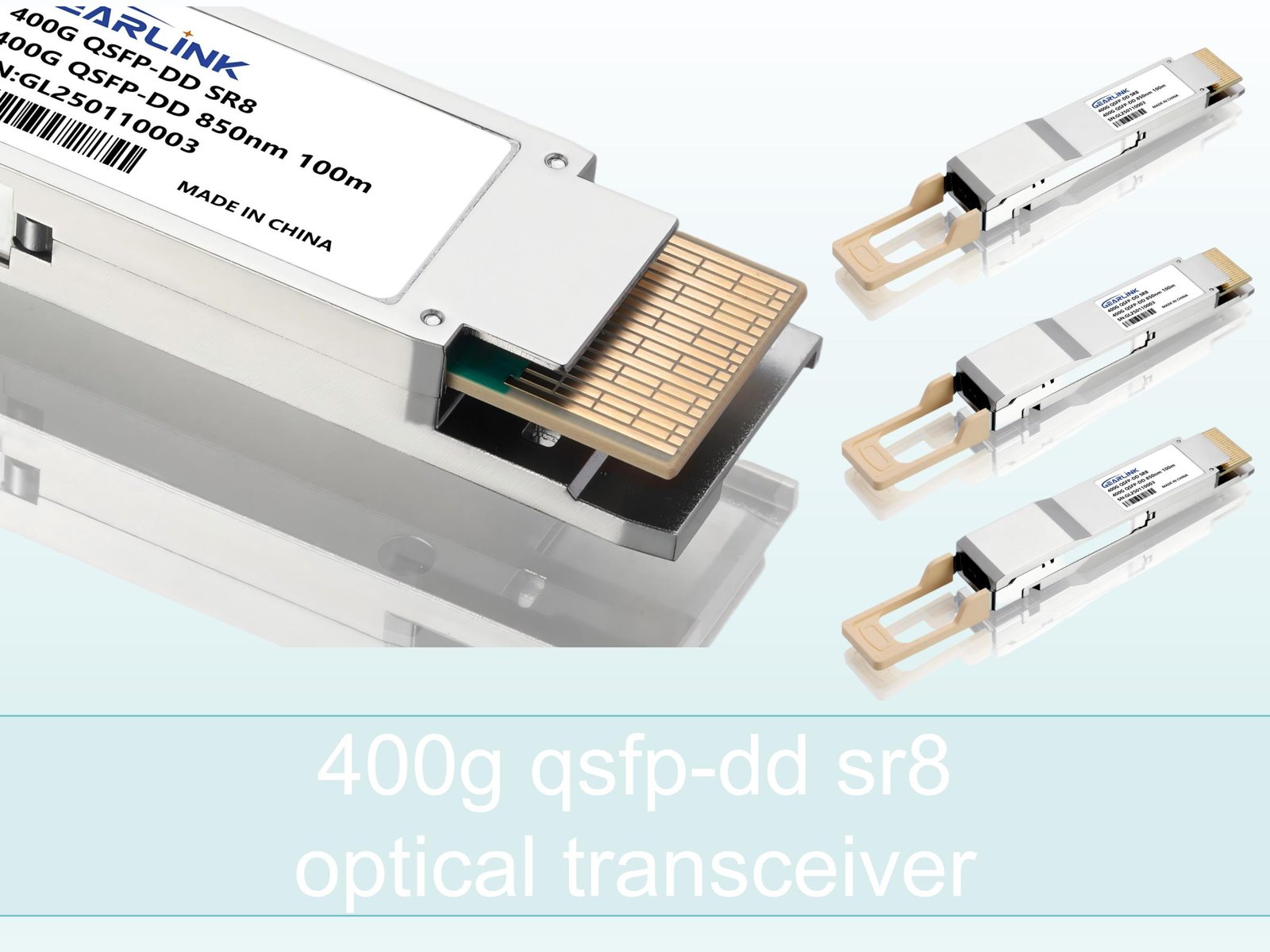
Looking ahead, the discussion shifts to 400G and 800G technologies, primarily embodied by QSFP-DD (Double Density) and OSFP. The QSFP-DD form factor, designed to be backward compatible, can accommodate eight electrical lanes, enabling it to deliver 400G performance in a package size very similar to the QSFP28. This compatibility is a massive benefit for existing QSFP28 users, as network equipment designed for QSFP-DD can seamlessly accept QSFP28 modules, allowing for a phased and cost-effective upgrade path.
In terms of cost and immediate necessity, the QSFP28 remains superior. For network segments that only require 100G capacity—which still constitutes a significant portion of current enterprise and smaller data center deployments—the QSFP28 is demonstrably more cost-effective and provides an excellent price-to-performance ratio. Furthermore, the ecosystem for QSFP28 is mature, with multiple qualified suppliers, ensuring competitive pricing and reliable supply chains, a factor that is highly valued by module procurement specialists.
Strategic Deployment and Future Proofing with QSFP28
For optical module users and network architects, a clear strategy for QSFP28 deployment is critical. It should be understood that while 400G and 800G technologies are gaining traction, the sheer installed base and cost efficiency of QSFP28 mean it will continue to be a standard for at least the next half-decade for most 100G applications.
Strategic deployment often involves leveraging the module’s ability to be broken out. QSFP28 100G can be easily adapted to four independent 25G lanes using break-out cables to connect to legacy 25G switches or servers. This flexibility facilitates granular, pay-as-you-grow upgrades, allowing data centers to incrementally increase network capacity without a rip-and-replace strategy. Conversely, utilizing a 400G QSFP-DD port with a QSFP28 module allows the hardware to be future-proofed, ready for a 400G upgrade when required, while currently operating at 100G. This interoperability maximizes the lifespan and return on investment of network infrastructure.
The correct and ethical use of technology, as promoted by responsible vendors, suggests that users should select the most efficient solution for the task at hand. The QSFP28, with its low power consumption and high density, embodies this principle, delivering 100G performance reliably without over-specifying or over-consuming resources. Consequently, it stands as a responsible choice for modern high-speed optical networking.
Conclusion: QSFP28’s Enduring Relevance
To answer the central question, QSFP28 is undoubtedly still the right choice for current 100G optical networks. Its compelling combination of low power consumption, high port density, cost-effectiveness, and the maturity of its ecosystem ensures its continued dominance. While newer, higher-speed form factors are emerging, the QSFP28 provides a reliable, scalable, and economically sound solution for the vast majority of 100G requirements. Consequently, understanding its various types and deployment strategies is essential for any professional involved in high-speed optical module procurement and network design. Its backward compatibility with future standards also ensures that an investment in QSFP28 infrastructure today will be protected against rapid obsolescence.
Frequently Asked Questions (FAQ)
Q1: What is the main difference between QSFP+ and QSFP28?
QSFP+ is designed to support 40 Gigabit Ethernet (4x10G), whereas the QSFP28 form factor is engineered for 100 Gigabit Ethernet (4x25G). While they share a similar physical size, their electrical and optical components, as well as the supported data rates, are fundamentally different.
Q2: Can I use a QSFP28 module in a QSFP-DD port?
Yes, in many cases, a QSFP28 module can be inserted and operated successfully in a switch port designed for QSFP-DD. This is due to the backward compatibility of the QSFP-DD standard, allowing for flexibility during network upgrades and migrations from 100G to 400G.
Q3: Which QSFP28 variant is best for a 500-meter link using single-mode fiber?
For a 500-meter link over single-mode fiber, the QSFP28 CWDM4 module is typically the most appropriate and cost-effective solution. It is designed specifically to cover distances between 500m and 2km using duplex SMF cables.