Introduction: Why 800G Matters Now
In the modern age of AI, cloud computing, edge data centers, and massive video/data streaming, network capacity demands have surged exponentially. To satisfy that, 800G optical transceivers have become a critical component in pushing the envelope of bandwidth, efficiency, and scalability. This article introduces what an 800G optical transceiver is, how it works, what makes it different from lower-speed modules, where and why it delivers value, and what challenges must be managed. By understanding this, network engineers, data center operators, and optical module product users can make informed decisions and future-proof their infrastructure.
What is an 800G Optical Transceiver
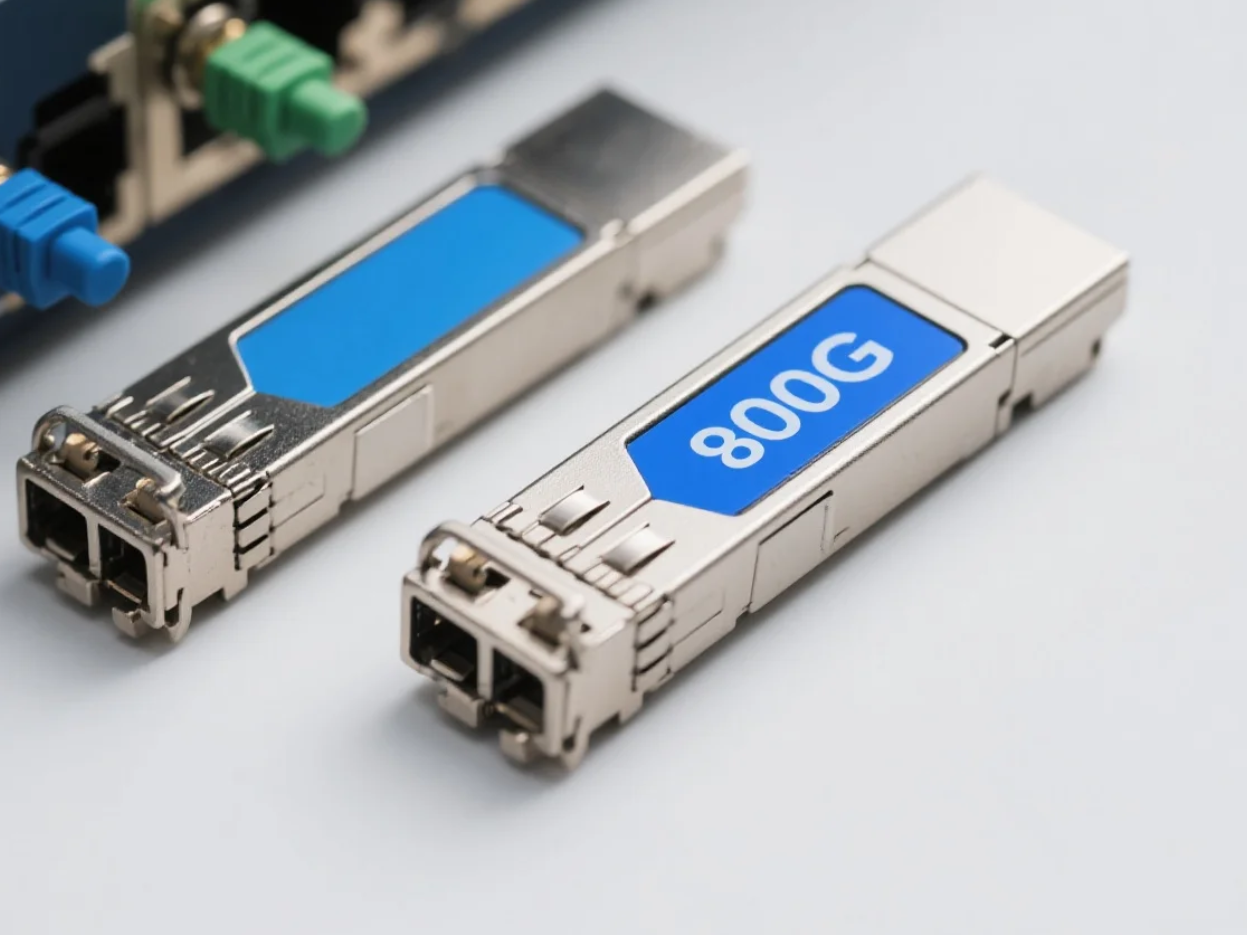
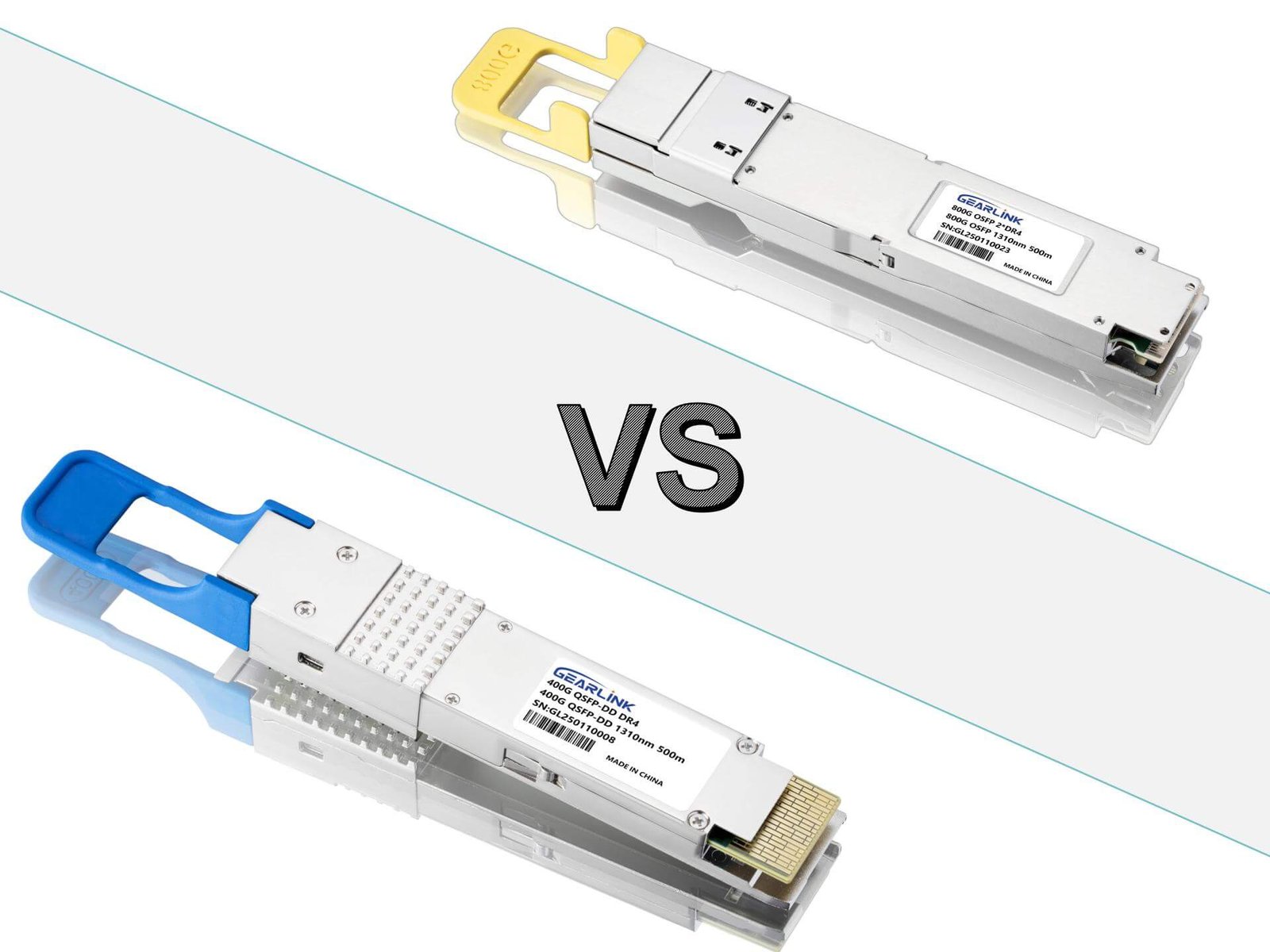
An 800G optical transceiver is a module capable of transmitting and receiving data at 800 gigabits per second over optical fiber. It typically conforms to standards such as IEEE Ethernet, uses advanced form factors like OSFP or QSFP-DD, and supports multiple electrical/optical interface architectures (e.g. 8×100G, 4×200G, coherent or PAM-4 modulation). These modules are designed for ultra-high bandwidth and are used in spine-leaf architectures, data center interconnects, AI clusters, and backhaul networks.
Because transmission at these speeds involves much more stringent requirements for signal integrity, thermal management, and advanced modulation and forward error correction techniques, 800G optical transceivers represent a leap in both complexity and performance over earlier generations.
Key Characteristics of 800G Optical Transceivers
Below are the main technical features and traits that distinguish 800G optical transceivers from earlier modules, and which underpin their benefits.
Modulation & Interface Architectures
PAM-4 (Pulse Amplitude Modulation with four levels) is heavily used in parallel-lane configurations such as 8×100G or 4×200G for shorter distances.
For longer distances, coherent modulation (e.g. higher-order QAM, dual polarization techniques) combined with DSP is adopted to handle noise, dispersion, and nonlinear effects.
Form factors like OSFP and QSFP-DD allow high port density and support in modern switches and routers.
Power, Heat & Signal Integrity
Higher data rate implies greater power draw; managing power efficiency is essential. Module housing, heat sinks, airflow, and internal design must support good thermal dissipation. Without that, performance can degrade or reliability suffer.
Signal integrity issues such as crosstalk, dispersion, jitter, and non-linear effects become more severe. Robust forward error correction, equalization, and high quality optical components are required.
Reach & Fiber Type
Variants are designed for different physical distances: from short reach (inside rack, switch-to-rack) through moderate reach (hundreds of meters to a few kilometers) to longer haul links where coherent optics often become necessary.
Multi-mode fiber is suitable for shorter distances, single-mode fiber for longer ones. Connector types, fiber loss and dispersion are important in choosing the right module.
Standardization & Flexibility
Industry standards and multi-source agreements are evolving, supporting compatibility, breakouts (one 800G port breaking into several lower-speed ports), and backward compatibility.
Flexibility in breakout modes (e.g. 1×800G, 2×400G, 4×200G, 8×100G) enables adapting the same physical module to different usage patterns.
Top Benefits of Using 800G Optical Transceivers
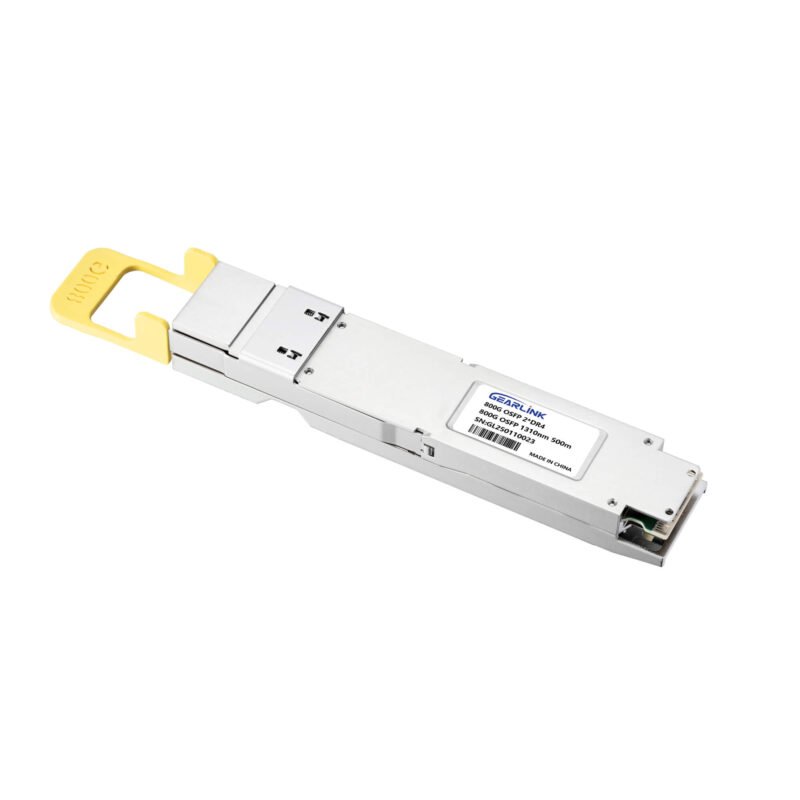
Having understood what makes 800G optical transceivers tick, here are the real, practical benefits that matter to optical module users and network operators.
Dramatically Increased Bandwidth and Throughput
As network traffic continues to explode—AI training/inference, high-definition video, VR/AR, IoT etc.—800G modules allow organizations to handle much greater aggregate throughput without deploying proportionally many more links. This simplifies management, reduces number of separate ports, and reduces cabling complexity.
Breakout support allows an 800G module to serve multiple lower-speed links when needed (for example converting to several 100G or 200G ports), giving both high capacity and flexibility.
Improved Efficiency: Power, Space, and Cost Per Bit
Though each 800G module draws more power than a 100G or 400G, the power per bit is substantially lower when comparing equal total throughput. Fewer modules overall, less cabling, fewer switch ports—this translates to savings in rack space, cooling demands, and energy consumption.
The reduction in space and port count means lower capital expenditures on ancillary infrastructure (racks, cabling trays, cooling systems) and lower ongoing operational expenses.
Future-Proofing and Scalability
Deploying 800G optical transceivers prepares infrastructure for future growth. Growth in bandwidth demand can often be accommodated by adding more traffic on existing high-speed ports rather than wholesale replacement of modules or fibers.
Also, many modules support flexible configurations, firmware upgradeability, and compatibility with evolving standards, making scaling smoother and less disruptive.
Lower Latency and Higher Signal Quality
Higher rate links reduce serialization delays and help avoid bottlenecks caused by oversubscription. For latency-sensitive applications (distributed AI training, real-time video/streaming, large-scale backup, high-performance computing), using 800G optical transceivers helps deliver lower overall latency.
Furthermore, because modern 800G modules include improved error correction (strong FEC), better modulation, and more precise optical/electrical component design, the quality of transmission improves—fewer errors, more consistent throughput, fewer retransmissions.
Supporting Modern Network Architectures & Emerging Use Cases
Emerging architectures—AI clusters, edge computing, high-capacity data center interconnects—place heavy demands on both bandwidth and physical constraints. 800G optical transceivers enable such architectures by providing very high capacity in compact form factors, making efficient use of fiber runs, switch ports, and optical infrastructure.
They are also well suited for data center interconnect (DCI) over medium to long distances, especially when coherent or high-quality SMF optics are used, enabling scalable, high-capacity links between sites.
Sustainability and Lower Total Cost of Ownership (TCO)
When fewer modules, less cabling, lower power per bit, and improved reliability come together, the total cost over lifecycle tends to favor 800G optical transceivers. Energy savings, reduced maintenance, fewer failures, fewer replacements, and more efficient use of space all contribute to better ROI.
Organizations concerned with carbon footprint, energy regulation or corporate sustainability strategies will find networks built with 800G units more favorable in the long term.
Challenges & Considerations When Adopting 800G
It would not be honest to present only benefits: there are real trade-offs and implementation challenges. Understanding these ensures you can deploy wisely.
Power, Heat, Signal Integrity
Higher speeds generate more heat; cooling and power infrastructure must be evaluated and possibly upgraded. Modules must have good thermal design. Signal integrity issues (losses, jitter, nonlinearities) become more critical and may limit usable distance or force higher-cost designs.
Cost, Initial Investment
Upfront cost of modules is higher. Additional costs may include upgraded switch hardware, fiber, connectors, cabling, and cooling. Return on investment may take longer in environments where utilization is not yet high.
Standards, Interoperability, and Ecosystem Maturity
Though many standards exist or are under development, some interface types or breakout modes are newer, and vendor support might be limited in some regions. Firmware, compatibility, and vendor ecosystem can be sources of risk.
Reach vs Complexity
Short and medium distances can use parallel-lane PAM-4 designs, but longer distances often require coherent optics—which bring more complexity, cost, and sometimes slightly higher latency. Trade-offs between what you need vs what you pay must be evaluated.
Best Practices for Deploying 800G Optical Transceivers
To reap the full benefits of 800G optical transceivers, here are guidelines based on what successful users do.
Plan for cooling & power headroom. Ensure that switches, cabinets, ambient environments support extra heat density. Use module housings with heat sinks, or platforms designed to handle higher power and thermal loads.
Select modules with proper form factor and breakout capability. If many lower-speed links are needed, pick modules that support flexible breakouts (such as 8×100G, 4×200G) so one physical port can serve multiple logical channels.
Choose the right fiber type. For short reach, multi-mode fiber is cost effective; for medium/long reach, single-mode fiber or coherent optics may be necessary. Also ensure connector types, loss, dispersion are compatible.
Verify standards compliance and vendor support. Use modules compliant with recognized standards and with good firmware / diagnostics support.
Monitor signal quality and performance regularly. Use tools to track bit error rate, optical power, temperature, jitter. Good error correction and signal-conditioning help maintain performance.
Consider full lifecycle cost. Include more than just module cost: power, cooling, fiber upgrades, potential replacements, and operational expenses.
Summary: Should You Move to 800G Now?
If your organization is facing growing demand for high throughput, lower latency, denser switch interconnects, or planning large scale data center or edge architecture upgrades, adopting 800G optical transceivers is likely a wise investment. They offer significantly higher bandwidth, better efficiency, scalable options, and a clearer path for future growth.
However, if your network is lightly utilized, or you don’t yet need the aggregate throughput, waiting until infrastructure or vendor pricing, maturity, and ecosystem stabilizes may make more economic sense.
In the end, the decision depends on your traffic growth, budget, upgrade timeline, and constraints. Technical and market trends strongly favor 800G optical transceivers as a major part of future optical networks.
FAQ
Q: What architectures are available for 800G optical transceivers?
A: There are parallel lane architectures like 8×100G or 4×200G using PAM-4, and coherent optics for longer distances. Form factors include OSFP, QSFP-DD, etc.
Q: How far can an 800G module reach?
A: It depends: short-reach modules work over tens of meters (MMF), moderate reach over hundreds of meters to a few kilometers (SMF), long haul over many kilometers typically with coherent optics.
Q: Will I need new fiber or cabling when upgrading?
A: Possibly. If current fiber type or connectors are not suitable for the distances needed or for bandwidth/dispersion, upgrades may be needed. But many deployments reuse existing infrastructure for short/medium reach.
Q: What about power consumption and heat?
A: These are major considerations. Modern modules improve efficiency, but planning for good cooling, power supply, ambient temperature is essential to avoid performance degradation.
Q: Is cost per bit lower with 800G compared to using many 100G/400G transceivers?
A: Yes, in most high-utilization scenarios. While individual modules are more expensive, when you factor in power, cooling, port count, cabling, space, maintenance, 800G optical transceivers often deliver better cost per transmitted bit over time.