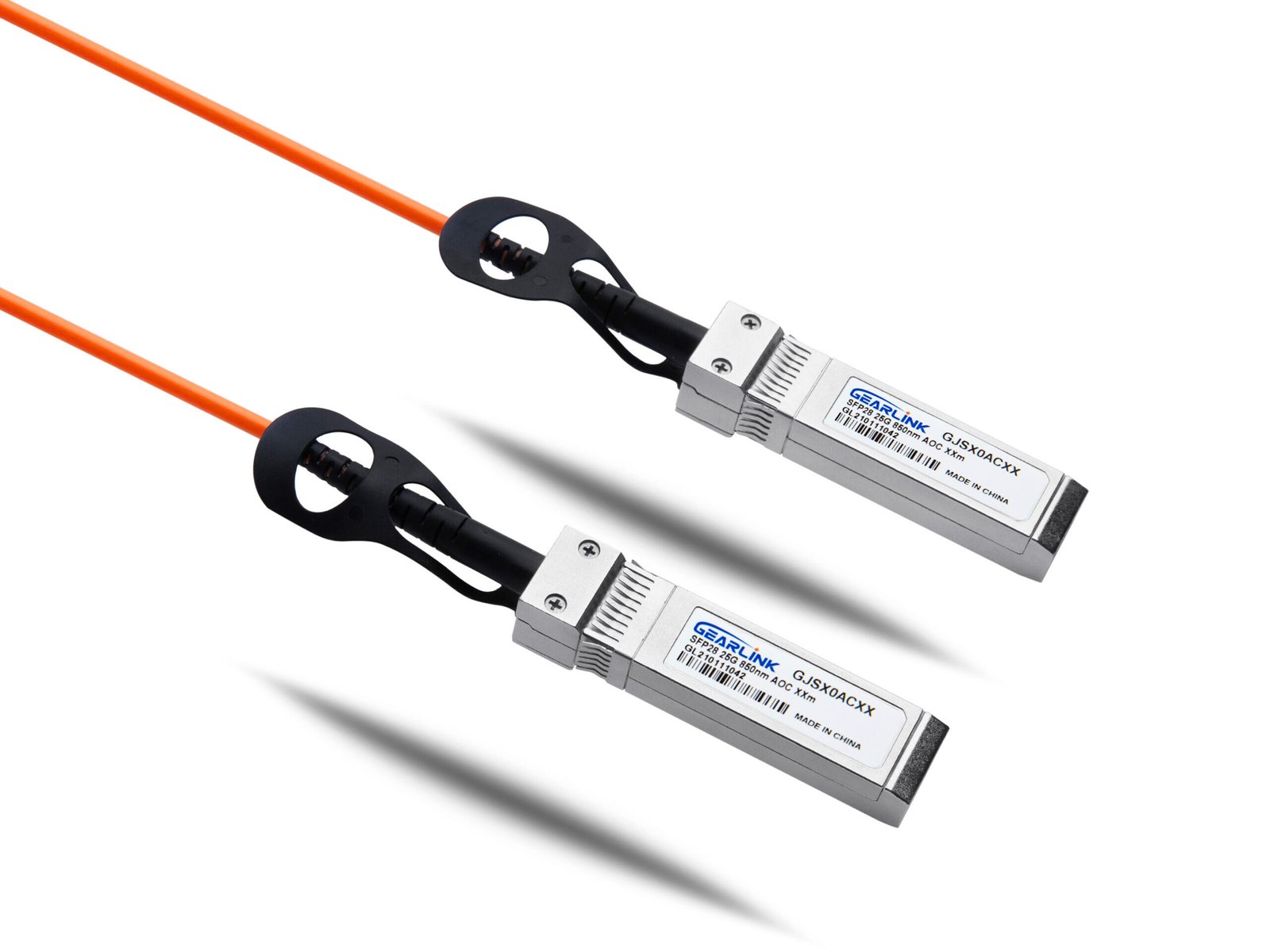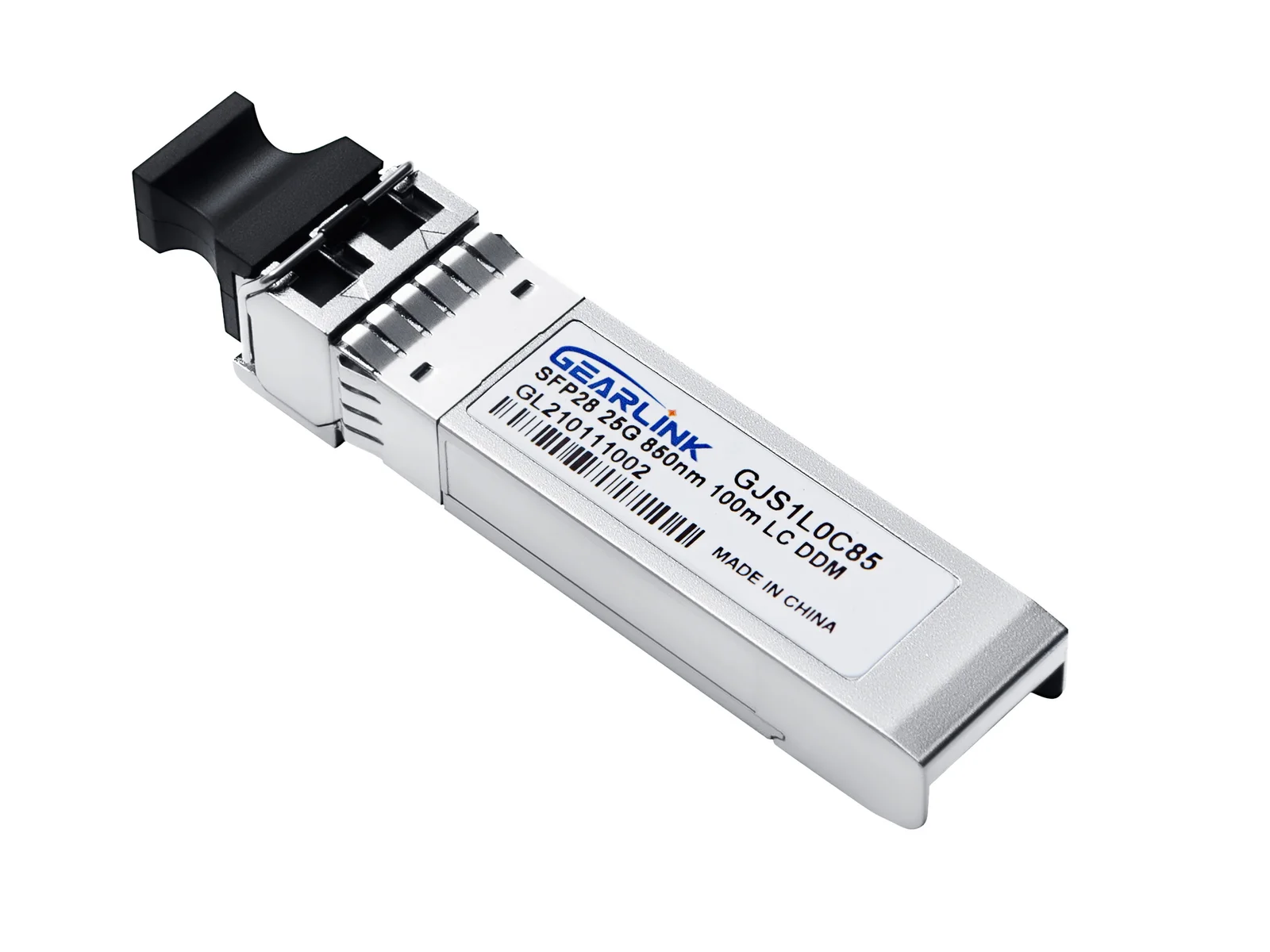
Enterprise network traffic is growing exponentially, rendering legacy 10G backbones insufficient. However, jumping immediately to 40G or 100G often requires costly infrastructure overhauls that strain IT budgets. I believe the 25g optical transceiver offers the most logical upgrade path for modern data centers. It provides 2.5 times the bandwidth of 10G using the same physical footprint. This guide helps you navigate the technical specifications necessary for a successful deployment.
Understanding the 25G SFP28 Optical Transceiver Module
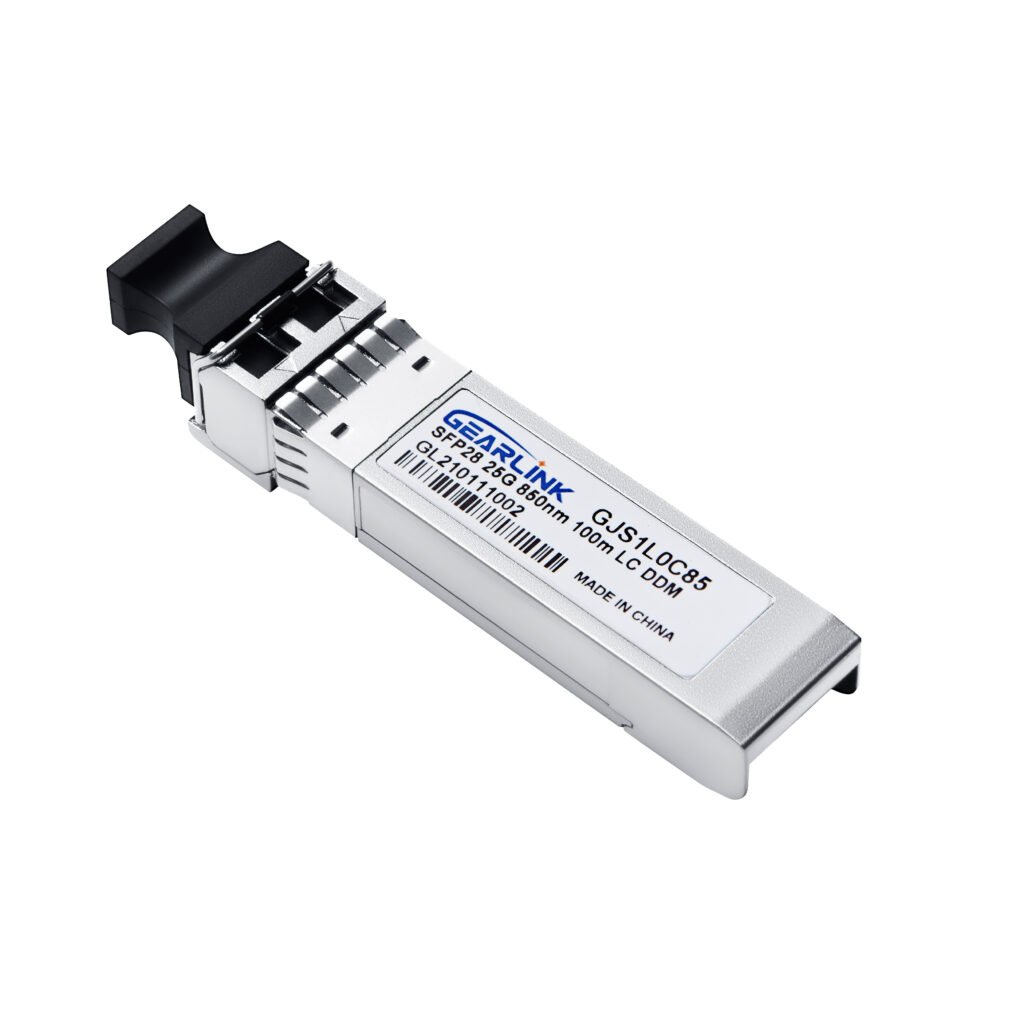
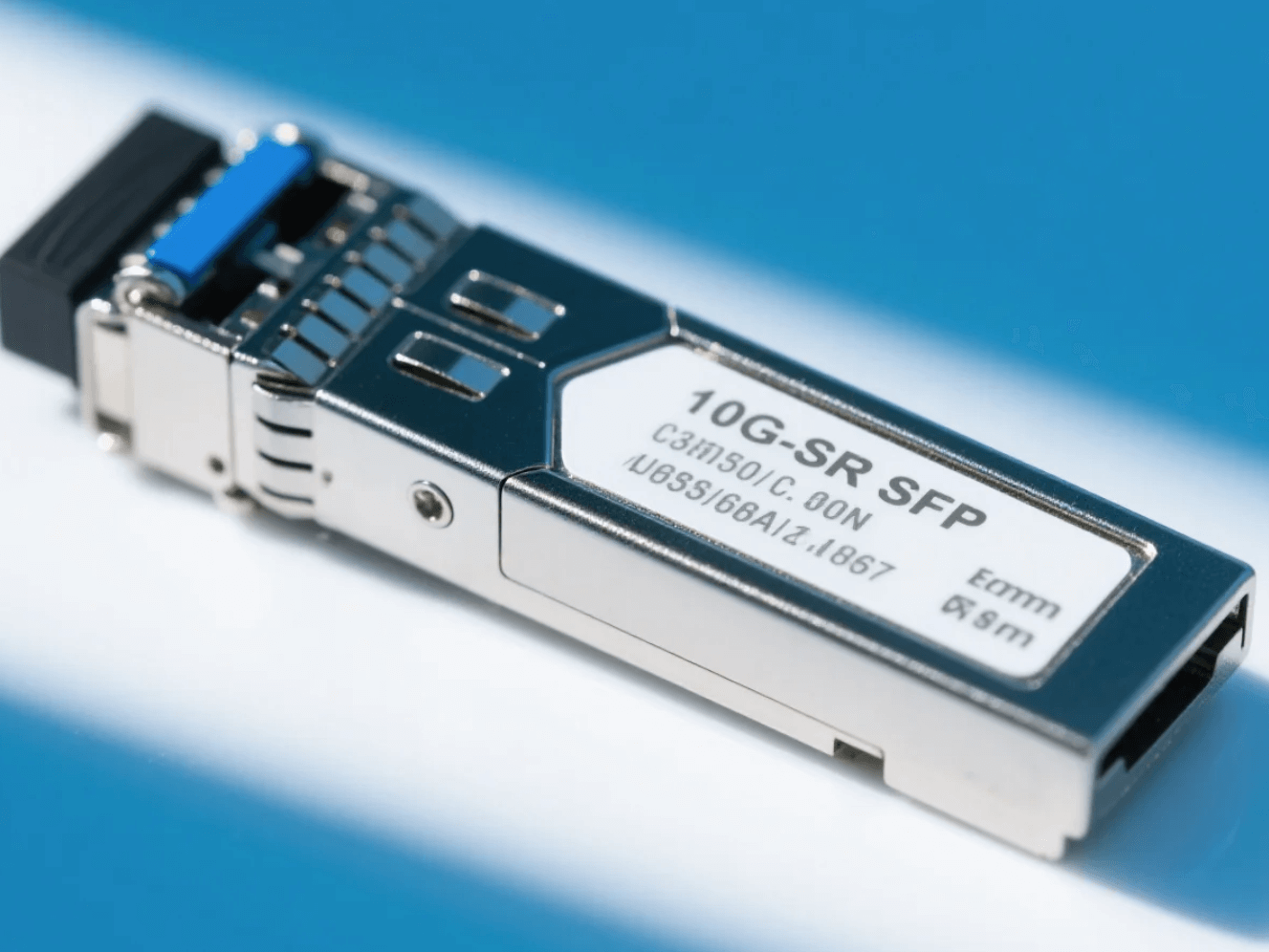
To make an informed purchase, you must understand the form factor. The 25g sfp28 optical transceiver module utilizes the SFP28 (Small Form-Factor Pluggable 28) standard. This is an enhanced version of the ubiquitous SFP+ used for 10G.
The primary advantage here is backward compatibility. Because the SFP28 port shares the same physical dimensions as SFP+, network architects can often plug these modules into existing infrastructure that supports dual rates. According to the SFF Committee (SNIA) specifications, the SFP28 electrical interface handles 25 Gbps per lane.
This single-lane architecture is superior to 40G QSFP+ for server connections. 40G requires four lanes of 10G, which increases cabling complexity and power consumption. By contrast, a 25g sfp28 optical transceiver maximizes switch port density and energy efficiency.
Critical Specifications: Reach and Fiber Compatibility
Selecting the correct transceiver requires matching the module to your specific cabling environment. 25G standards, ratified by the IEEE 802.3 Working Group, define clear distance limitations based on fiber types.
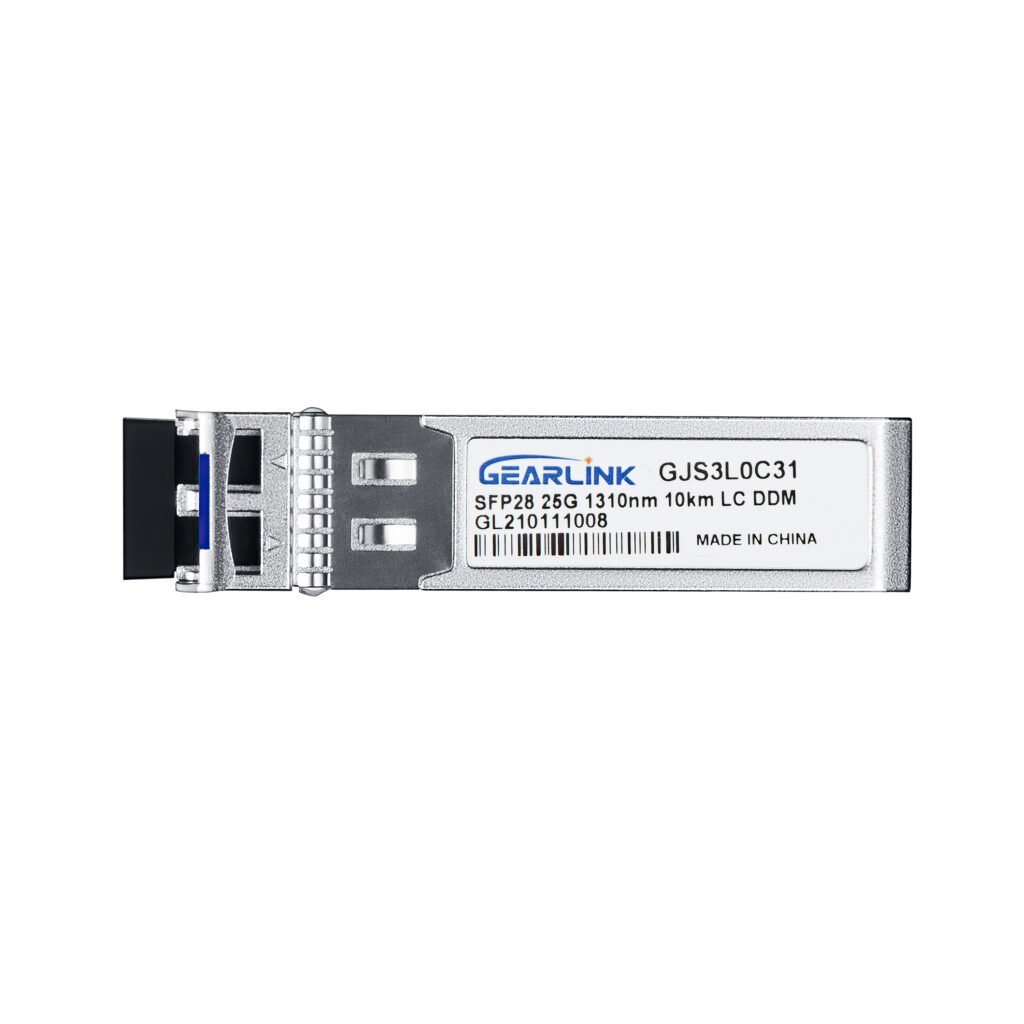
Short Reach (SR) for Data Centers
For connections inside racks or between adjacent cabinets, you will typically use the 25GBASE-SR standard. These modules operate over multimode fiber (MMF).
- Wavelength: 850nm.
- Cabling: OM3 or OM4.
- Distance: Up to 70 meters on OM3 and 100 meters on OM4.
I recommend using OM4 cabling for any new deployments to ensure maximum signal integrity.
Long Reach (LR) for Campus Backbones
When connecting switches across a large facility, the 25g sfp28 optical transceiver usually follows the 25GBASE-LR standard.
- Wavelength: 1310nm.
- Cabling: Single-mode fiber (SMF).
- Distance: Up to 10 kilometers.
You must ensure that your fiber plant matches the transceiver type. Mixing single-mode and multimode equipment will result in immediate link failure.
The Role of Forward Error Correction (FEC)
A critical, often overlooked aspect of 25G networking is Forward Error Correction (FEC). Unlike 10G, where signals are robust enough to travel without heavy correction, 25G transmission is more susceptible to signal degradation.
FEC is a digital signal processing technique used to enhance data reliability. It detects and corrects errors at the receiver end without requiring retransmission. The IEEE 802.3by standard mandates FEC for most 25G copper and multimode optical links.
When purchasing a 25g optical transceiver, you must verify if the host switch requires RS-FEC (Reed-Solomon) or FC-FEC (FireCode). Mismatched FEC settings between the switch and the transceiver—or between two endpoints—will cause the link to stay down. Always check your switch operating system (OS) defaults before installation.
Ensuring Vendor Compatibility and MSA Compliance
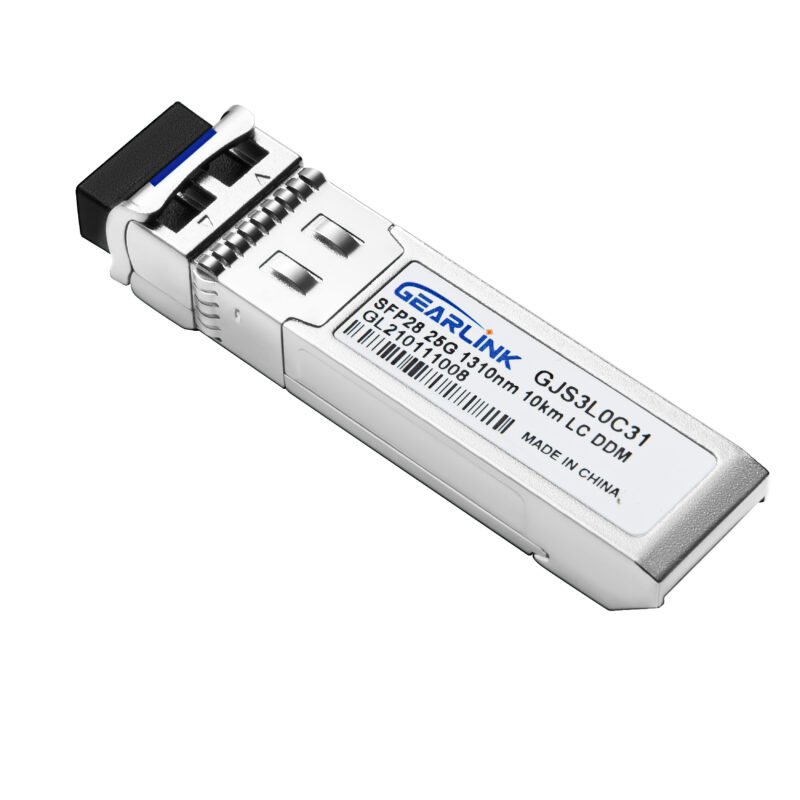
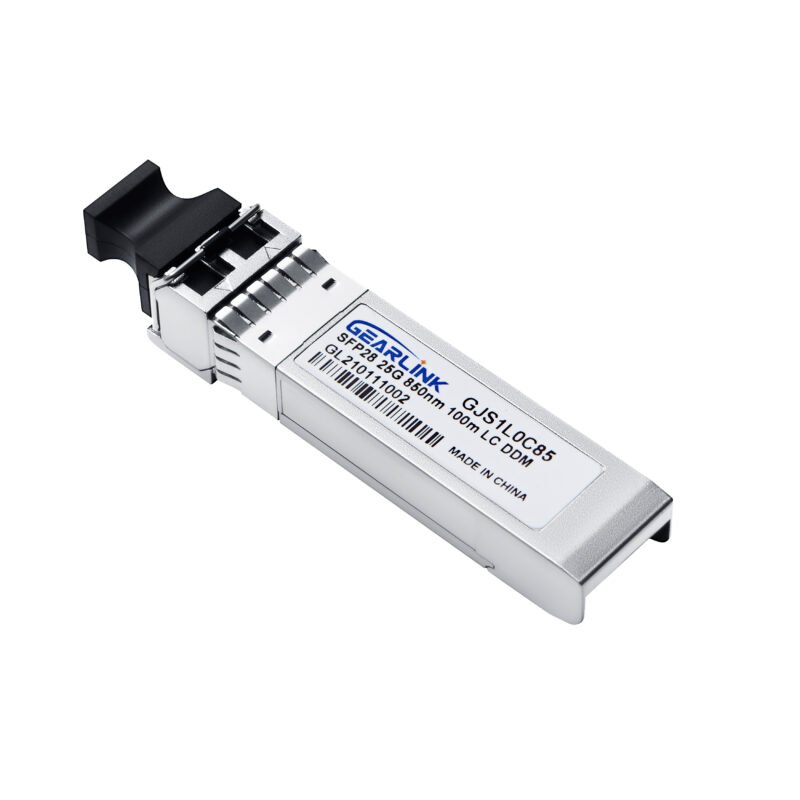
B-end buyers frequently worry about third-party transceivers working with proprietary switches (like Cisco, Arista, or Juniper). The solution lies in the Multi-Source Agreement (MSA) standards.
MSAs are agreements between manufacturers to standardize the physical and electrical characteristics of optical modules. As long as a 25g sfp28 optical transceiver strictly adheres to the SFP28 MSA, it is mechanically and electrically capable of functioning in a compliant port.
The only variable is the EEPROM coding. Switch vendors lock their ports to specific vendor codes. High-quality third-party transceivers mimic these codes perfectly. When sourcing modules, you are not paying for the hardware “secret sauce.” You are paying for the precision of the manufacturing and the accuracy of the EEPROM coding.
How to Assess Optical Transceiver Quality
Price should not be your only metric when sourcing critical infrastructure. You need a reliable method to validate the quality and longevity of the modules you procure.
Testing and Reliability Standards
A reliable supplier must demonstrate rigorous testing protocols.
- Eye Diagram Testing: This ensures the signal quality is compliant and not “jittery.”
- Temperature Cycling: Modules must perform in industrial temperature ranges if your environment is not strictly climate-controlled.
- Real-Device Verification: The module should be tested in the specific switch models you operate.
Navigating the Platform Selection
It is vital to choose a supplier that prioritizes these technical validations over simple box-moving. You need a partner that understands the nuances of SFP28 protocols and offers transparent compatibility data.
For a comprehensive selection of modules that meet these rigorous MSA and compatibility standards, you can explore the options available at OpticTran 25G SFP28 Transceivers.
Reviewing these specific product details will help you confirm which wavelength and distance specifications align with your current network topology.
Summary
Upgrading to 25G Ethernet increases throughput while controlling infrastructure costs. By selecting a 25g optical transceiver that complies with IEEE standards and MSA specifications, you ensure network stability. Focus on matching fiber types (OM4/SMF) and verifying FEC settings to achieve a high-performance, future-proof network.
FAQ
Q1: Can I use a 25G SFP28 transceiver in a 10G SFP+ port?
Generally, SFP28 ports are backward compatible with 10G SFP+ modules, but a 25G module cannot run at 25Gbps in a 10G port; it must support dual-rate operation to function at the lower speed.
Q2: What is the maximum distance for a 25G SFP28 optical transceiver?
Standard 25GBASE-LR modules support up to 10km on single-mode fiber, while specialized 25GBASE-ER modules can reach up to 40km.
Q3: Does a 25G transceiver require special optical cables?
No, it uses standard LC connectors with OM3/OM4 multimode fiber for short distances or OS2 single-mode fiber for long distances, identical to 10G cabling.
Q4: Why is my 25G link not coming up even with the correct cable?
The most common issue is a mismatch in Forward Error Correction (FEC) settings between the two switches or the transceiver capabilities.
Q5: Is a 25G SFP28 transceiver compatible with 100G QSFP28 ports?
Yes, a 100G QSFP28 port can often be configured as 4x 25G lanes, allowing you to connect to four individual 25G SFP28 transceivers using a breakout cable.
Reference Sources
SNIA (Storage Networking Industry Association) – SFF Technology Affiliate Technical Work (SFF-8402, SFF-8431)
https://www.snia.org/sff/specifications
The Fiber Optic Association (FOA) – Reference Guide to Fiber Optics (Transceivers and Bandwidth)
https://www.thefoa.org/