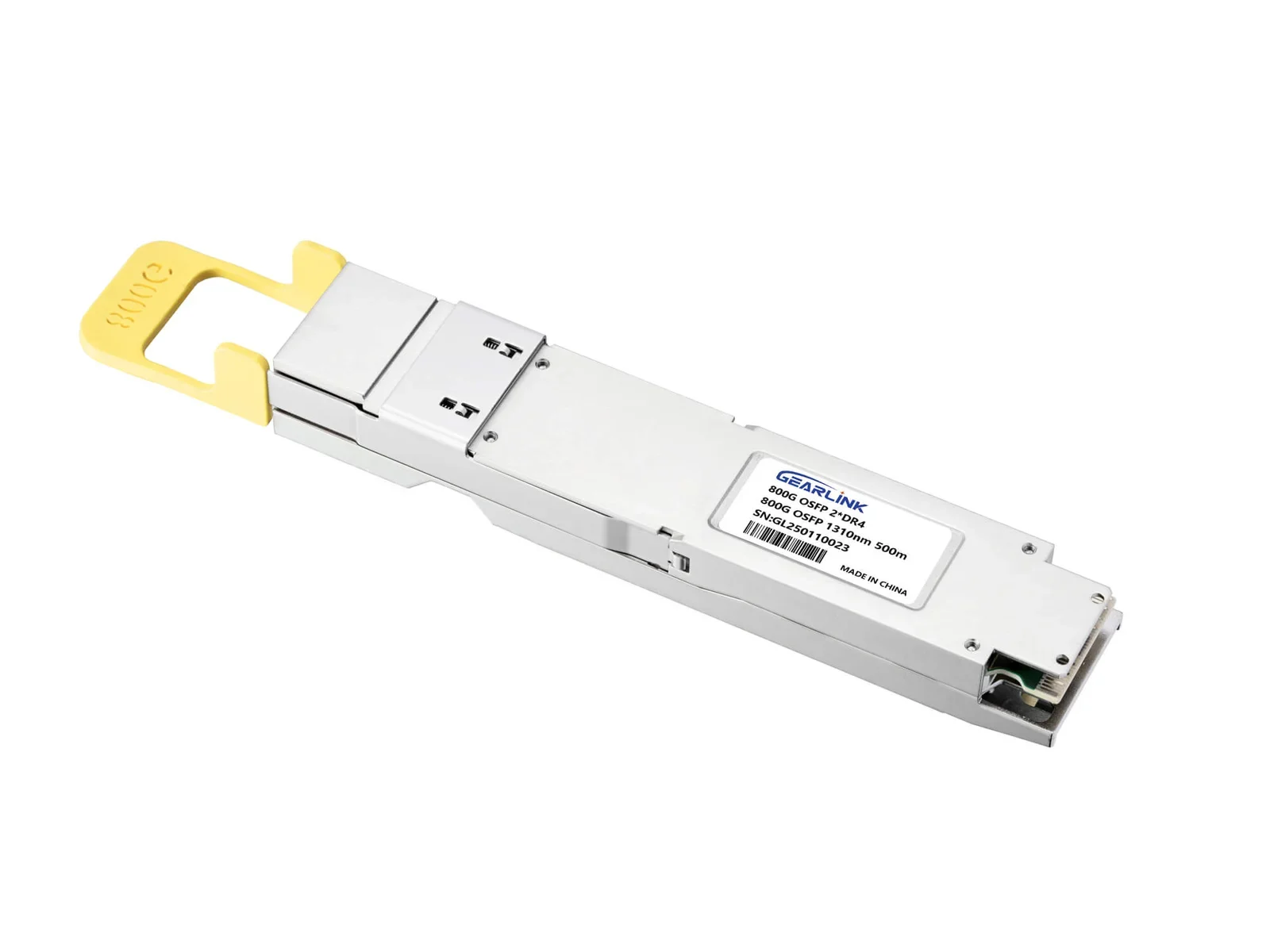
The unprecedented demand for bandwidth, fueled by the explosive growth of Artificial Intelligence (AI), Machine Learning (ML) workloads, and continued cloud hyperscaling, has necessitated an immediate and massive leap in data center interconnectivity speeds. The transition from 400 Gigabit Ethernet (400G) to 800 Gigabit Ethernet (800G) is not just an upgrade; it is a fundamental requirement for maintaining computational performance in modern AI clusters. Central to this paradigm shift is the 800G OSFP DR8 optical transceiver. This module, standing for 800 Gigabit, Octal Small Form-factor Pluggable (OSFP), Directly Routed 8-lane, represents the zenith of contemporary optical engineering, combining extreme speed with robust thermal management and specialized optics. Network architects must now critically evaluate: Does the robust design, superior thermal management, and strategic breakout capability of the 800G OSFP DR8 truly position it as the definitive choice for constructing the highest-performance AI/ML fabrics and hyperscale data center infrastructure? This comprehensive analysis will explore the complex technological layers and strategic deployment scenarios that define its paramount value.
Unpacking the Technology: The Engine Room of the 800G OSFP DR8

Achieving 800G in a pluggable form factor demands sophisticated integration of electrical and optical components, leveraging the latest advancements in signaling and thermal design.
The Power of 100G Electrical Lanes and PAM4
The 800G OSFP DR8 module achieves its massive bandwidth by leveraging eight high-speed electrical lanes, each operating at 100 Gbps. This is a critical evolution from the previous 400G generation (which used 50 Gbps lanes). To fit 100 Gbps signaling through existing channels, the module relies on advanced PAM4 (Pulse Amplitude Modulation 4-level) encoding. PAM4 transmits two bits of data per clock cycle by utilizing four distinct voltage levels, effectively doubling the data rate over the same signaling frequency compared to older NRZ (Non-Return-to-Zero) encoding. This technological core allows the 800G OSFP DR8 to maintain an aggressive speed while maximizing the throughput density achievable in a single module.
The OSFP Form Factor: A Strategic Thermal Advantage
The selection of the OSFP (Octal Small Form-factor Pluggable) form factor for the 800G OSFP DR8 is a defining strategic choice. Physically larger than competing designs, the OSFP frame inherently provides superior surface area for heat dissipation. High-speed 800G transceivers generate substantial heat (often exceeding 20W), and thermal management is paramount for long-term reliability and maintaining signal integrity. The robust integrated heatsink within the OSFP module effectively channels heat away from the internal optics and electronics, allowing the components, particularly the high-speed re-timers and laser diodes, to operate at lower, more stable temperatures. This inherent thermal advantage is a crucial factor that guarantees the sustained high performance expected from the 800G OSFP DR8.
Operational Edge: Strategic Deployment of the 800G OSFP DR8
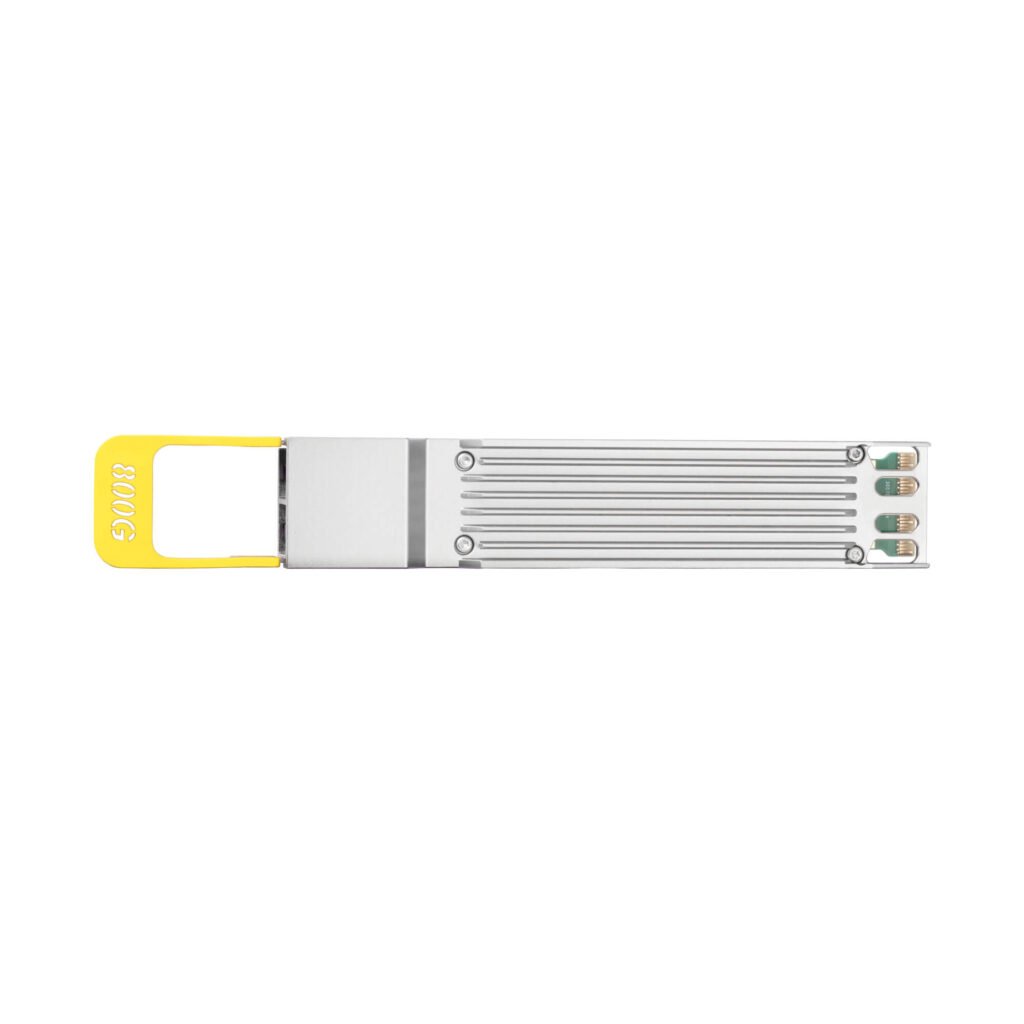
The specific “DR8” designation provides the 800G OSFP DR8 with specialized functionality that is uniquely suited for the current architectural demands of hyperscale computing.
Directly Routed (DR8) for Short-Reach Connectivity
The DR8 standard specifies eight parallel optical channels, each carrying 100 Gbps, transmitted over single-mode fiber (SMF). This architecture is optimized for short to medium reaches, typically up to 500 meters, making it the perfect solution for East-West traffic within large data center campuses, linking core spine switches, or connecting massive AI cluster leaf switches. The parallelism of the DR8 standard is key to its reliability and technical feasibility at this extreme speed. Furthermore, the use of single-mode fiber (SMF), while potentially requiring slightly more precise alignment than multi-mode fiber, offers better scalability and a clearer path to longer distances and future speed upgrades.
The Critical 8x100G Breakout Functionality
The most potent strategic advantage of the 800G OSFP DR8 in deployment is its native support for breakout capability. Since the module transmits data across eight independent 100G optical channels, a single 800G port can be seamlessly converted into eight separate 100G links using an MPO-16 to LC breakout cable. This functionality is absolutely essential for linking new 800G spine switches to the vast installed base of existing 100G servers or leaf switches. This ability to mix and match speeds maximizes port utilization, minimizes the cost of transitional hardware, and allows network operators to scale their core network incrementally, making the 800G OSFP DR8 a highly adaptable tool in hybrid environments.
The AI and ML Imperative: Bandwidth for the Future
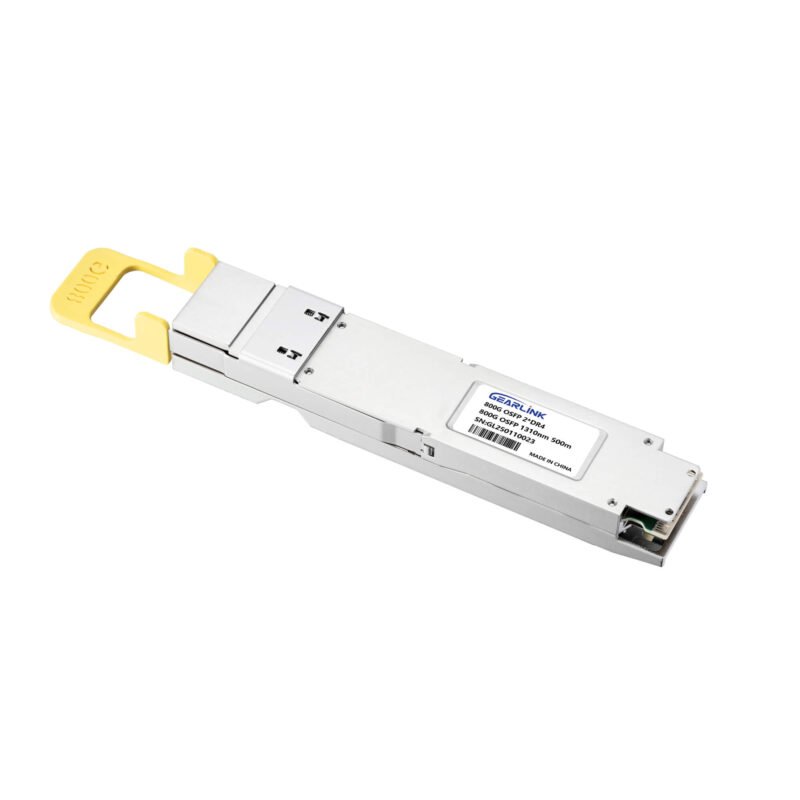
800GBASE 2 x DR4/DR8 OSFP PAM4 1310nm 500m DOM Dual MPO-12/APC SMF Optical Transceiver Module
Price range: NT$1,699 through NT$1,768
The architectural demands of AI and ML clusters—which require massive, non-blocking bandwidth between thousands of GPUs—are the primary drivers accelerating the adoption of the 800G OSFP DR8.
Optimizing Network Fabric for AI Workloads
In an AI cluster, training models involves enormous data transfer volumes between high-powered processing units. Any latency or bottleneck in the network fabric directly slows down the entire training process. The 800G OSFP DR8, with its ultra-high bandwidth and low latency design, ensures that data can move between GPUs and memory with minimal delay. Its superior thermal management contributes directly to the stability of the entire fabric, which is critical during multi-day, high-power training sessions. Deploying the 800G OSFP DR8 ensures the network is not the limiting factor in computational performance, allowing organizations to realize the full potential of their expensive GPU investments.
Power Efficiency and Cost Management
While the 800G OSFP DR8 consumes more power than previous generations, its power-per-bit is dramatically lower. This metric—the true measure of efficiency in hyperscale environments—is what drives cost savings. By consolidating 800G into a single module, a data center reduces the total number of transceivers, host board ports, and associated cabling complexity required to achieve the same total bandwidth. This holistic efficiency gain, coupled with the superior thermal design of the OSFP housing, contributes to a reduced cooling load on the data center, leading to a substantial decrease in the network’s overall operational expenditure (OpEx).
Frequently Asked Questions (FAQ)
Q1: What does the “8” in 800G OSFP DR8 primarily signify?
A: The “8” signifies two things: the module uses eight high-speed electrical lanes, and the DR8 optical standard uses eight parallel 100G optical channels for transmission.
Q2: What is the maximum standard reach of the 800G OSFP DR8 module?
A: The 800G OSFP DR8 standard is typically designed for a maximum reach of 500 meters over single-mode fiber (SMF), making it ideal for intra-data center spine and leaf interconnects.
Q3: Why is the breakout function of the 800G OSFP DR8 important for data centers?
A: The breakout function is critical because it allows a single 800G port to be split into eight separate 100G links. This is essential for efficiently connecting the new 800G spine switches to the large installed base of existing 100G devices and servers.