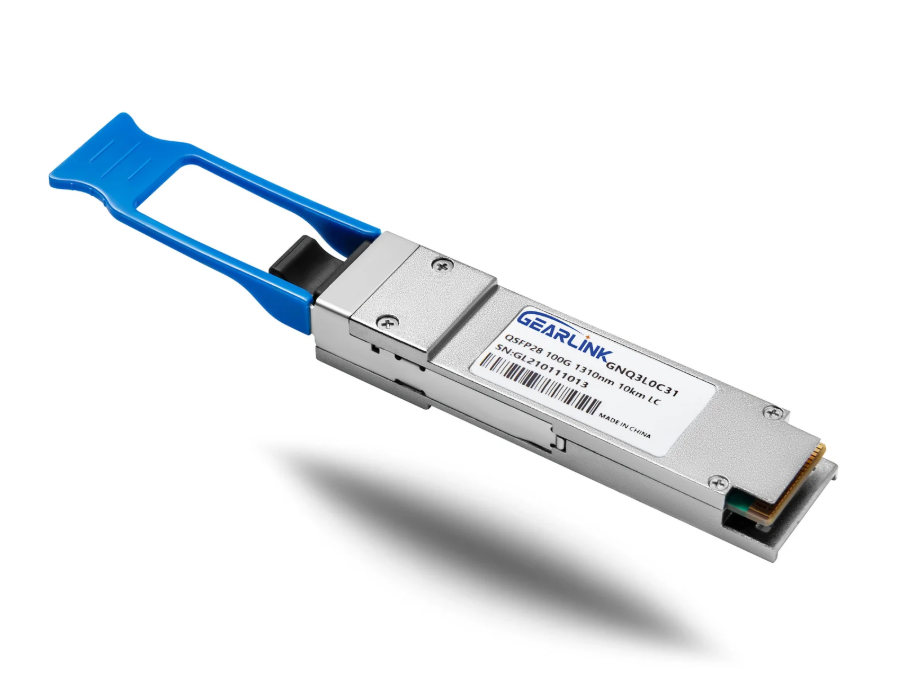
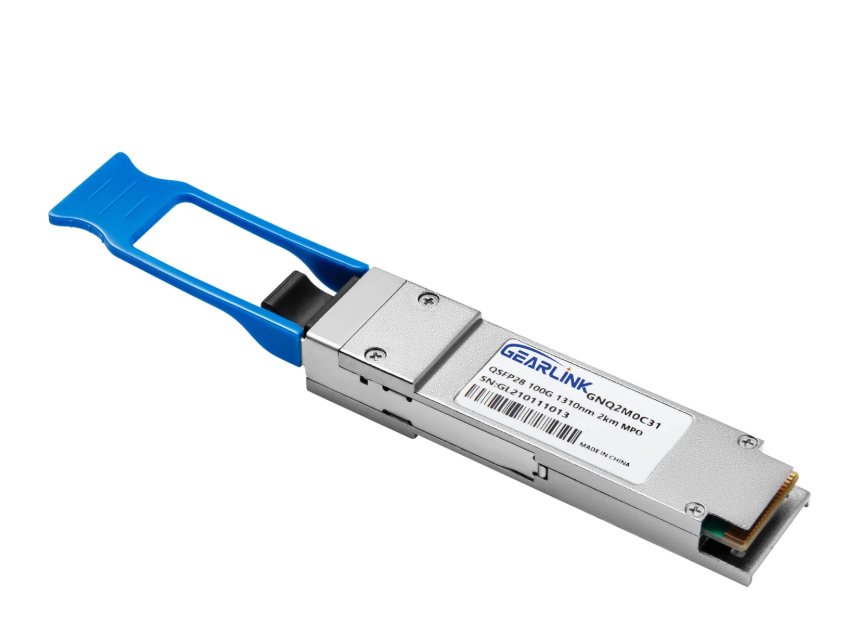
In the world of high-speed optical communication, QSFP-100G-CWDM4, cwdm4, and 100G CWDM4 modules play a crucial role. These modules are designed to deliver reliable 2 km data transmission over single-mode fiber with low power consumption. They have become a standard choice for data centers, enterprise networks, and service providers looking to balance cost and performance efficiently.
Transitioning from older technologies, QSFP-100G-CWDM4 modules enable higher network efficiency. In this article, we will explore their features, advantages, applications, and why they have become essential for modern networks.
What is QSFP-100G-CWDM4?
QSFP-100G-CWDM4 is a type of 100G optical transceiver. It leverages Coarse Wavelength Division Multiplexing (CWDM) technology, which allows multiple wavelengths to be transmitted over a single fiber. Typically, cwdm4 modules operate over a 2 km link using a single-mode fiber, which makes them ideal for short-reach data center applications.
Key Features of QSFP-100G-CWDM4
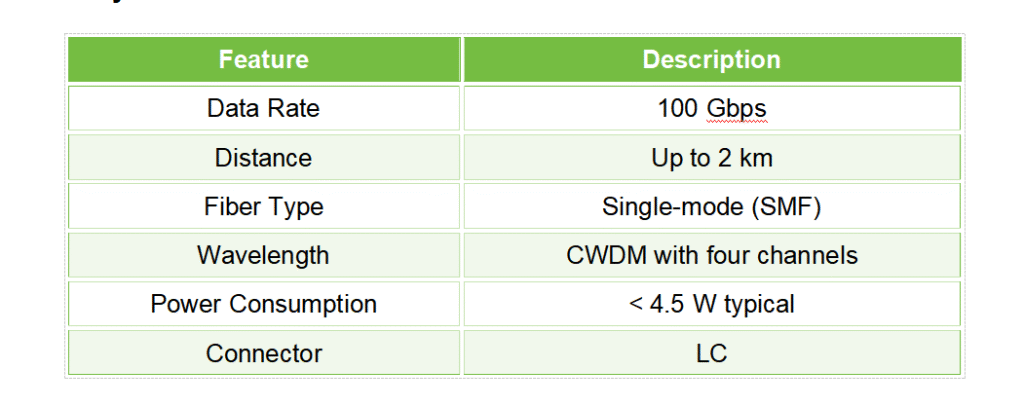
These specifications ensure that 100G CWDM4 modules deliver high-speed connectivity with minimal latency and power consumption. Furthermore, they are compatible with various network switches and routers, making deployment flexible.
How CWDM4 Technology Works
CWDM4 technology allows multiple data channels to be transmitted simultaneously over a single fiber strand using different wavelengths. Typically, QSFP-100G-CWDM4 modules use four wavelengths, each carrying 25 Gbps data streams.
The main advantages include:
Cost Efficiency – fewer fibers are needed compared to parallel single-wavelength solutions.
Simplified Cabling – LC connectors allow lower cost.
Energy Savings – lower power consumption than older 100G modules.
Applications of 100G CWDM4 Modules
The versatility of 100G CWDM4 modules enables deployment across various scenarios:
Data Centers
Modern data centers prioritize high-speed short-reach connectivity. QSFP-100G-CWDM4 modules support 2 km links, making them ideal for intra-rack or inter-rack connections.
Enterprise Networks
Large enterprises rely on cwdm4 for connecting core switches to aggregation layers. The modules provide reliability without the complexity of dense wavelength division multiplexing (DWDM).
Telecom Service Providers
Telecom operators use 100G CWDM4 for metro-area networks (MANs), where moderate distances and high data throughput are essential.
QSFP-100G-CWDM4 vs Other 100G Modules
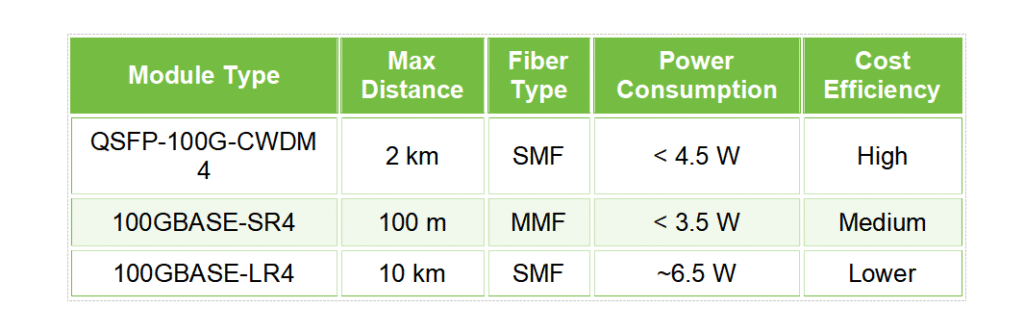
Clearly, QSFP-100G-CWDM4 fills the niche between short-range and long-range modules, offering 2 km reach with high efficiency.
Advantages of QSFP-100G-CWDM4
Reliable Performance – Ensures stable 100 Gbps transmission over 2 km.
Energy Efficiency – Lower power consumption than LR4 modules.
Ease of Deployment – MPO/MTP connectors simplify installation and reduce errors.
Cost-Effective – Reduces fiber and infrastructure costs compared to multiple parallel connections.
Installation and Maintenance Tips
Check Compatibility – Verify that switches support QSFP-100G-CWDM4 transceivers.
Handle Fibers Carefully – Avoid bending single-mode fibers excessively.
Use Certified Cables – MPO/MTP 12 cabling is recommended.
Monitor Performance – Utilize diagnostic tools to ensure signal quality.
Common Questions About 100G CWDM4
1. What is the maximum distance for QSFP-100G-CWDM4?
Answer: Typically, 2 km over single-mode fiber.
2. Can cwdm4 modules interoperate with LR4 modules?
Answer: No, LR4 and CWDM4 use different wavelengths and encoding. Interoperability is not guaranteed.
3. How much power does a 100G CWDM4 module consume?
Answer: Usually less than 4.5 W, making it energy-efficient.
4. Are QSFP-100G-CWDM4 modules hot-swappable?
Answer: Yes, most modules are designed to be hot-swappable for minimal downtime.
5. Which connectors are used with 100G CWDM4?
Answer: LC connectors are standard for CWDM4 deployment.
Future Trends
The demand for high-speed 100G transmission is increasing. While QSFP-100G-CWDM4 modules are currently focused on 2 km links, emerging technologies may extend reach, increase energy efficiency, and enable higher data rates without increasing fiber costs.
Conclusion
QSFP-100G-CWDM4, cwdm4, and 100G CWDM4 modules represent a perfect balance between performance, cost, and energy efficiency. Their 2 km reach, low power consumption, and reliable performance make them a strong choice for data centers, enterprises, and telecom networks. By understanding these modules, network engineers can optimize their infrastructures for high-speed optical communication.
Related Q&A
What is QSFP-100G-CWDM4 used for?
It is used for 2 km high-speed optical data transmission in data centers and enterprise networks.
How does 100G CWDM4 differ from other 100G modules?
It provides a moderate 2 km reach with lower power consumption compared to LR4 modules.
Can cwdm4 modules support 2 km transmission reliably?
Yes, 100G CWDM4 modules are designed specifically for 2 km SMF links.
Are QSFP-100G-CWDM4 modules compatible with MPO connectors?
Yes, these modules typically use LC connectors for easy installation.
What are the main benefits of using 100G CWDM4 in data centers?
Reliable 2 km reach, energy efficiency, and cost-effective deployment.