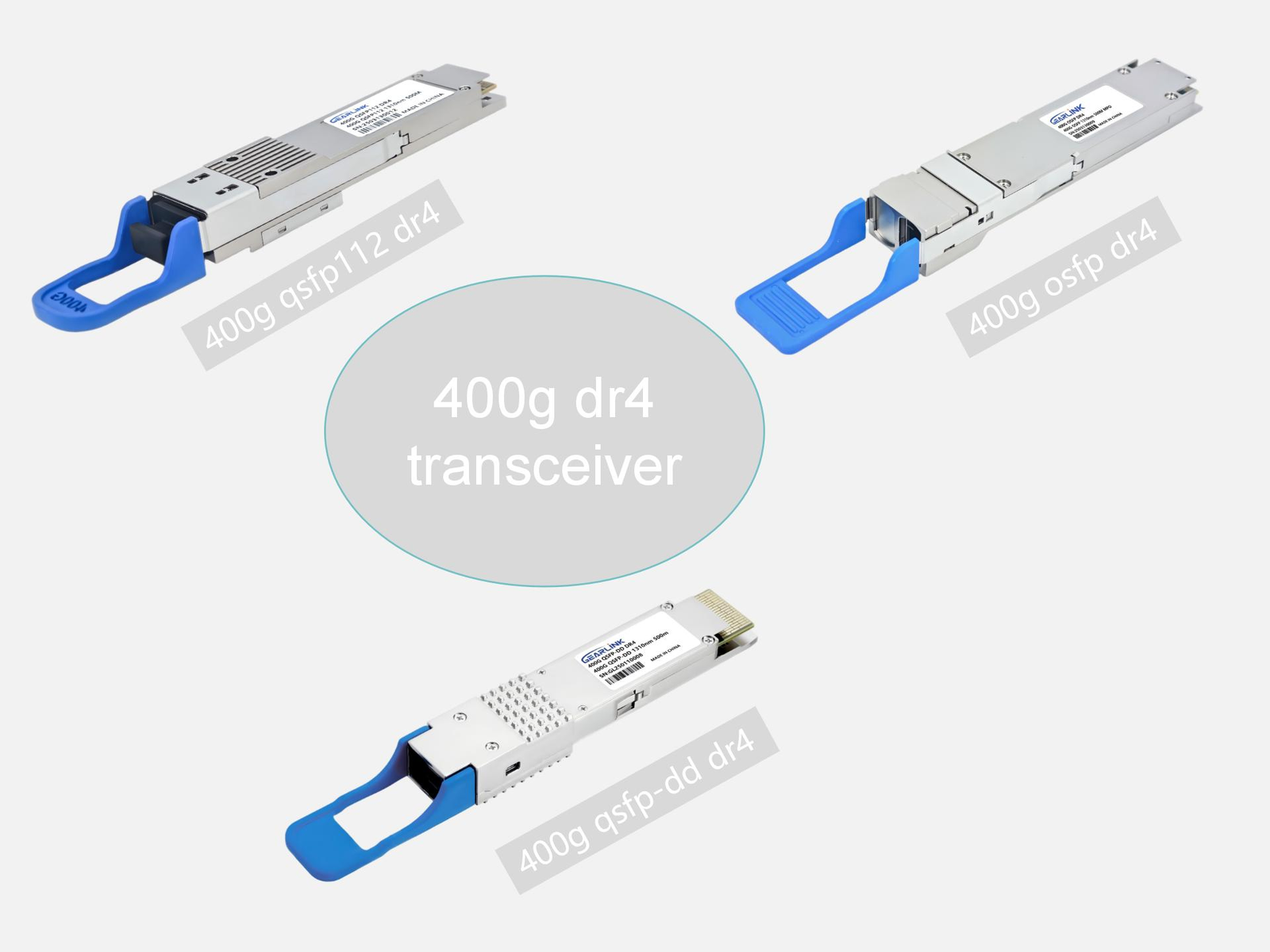
Introduction: OSFP vs QSFP-DD vs QSFP112 in Modern Optical Networks
In today’s rapidly evolving data center and telecom environments, choosing the right optical module form factor is more critical than ever. Among the most discussed options are OSFP, QSFP-DD, and QSFP112.
Each of these standards represents a step forward in bandwidth, density, and efficiency. However, understanding their unique characteristics can be confusing if you are not familiar with how optical transceiver packaging works.
This article will break down the differences between OSFP, QSFP-DD, and QSFP112, explaining their features, advantages, limitations, and best-use scenarios — in clear, simple terms.
Understanding Optical Module Form Factors
Before comparing OSFP, QSFP-DD, and QSFP112 directly, it’s helpful to understand what a form factor means in optical communication.
An optical transceiver’s form factor defines its size, shape, connector type, and electrical interface. It also determines how the module fits into network switches or routers. Over time, as bandwidth demand has grown, form factors have become smaller and more powerful.
Here’s a quick historical overview:
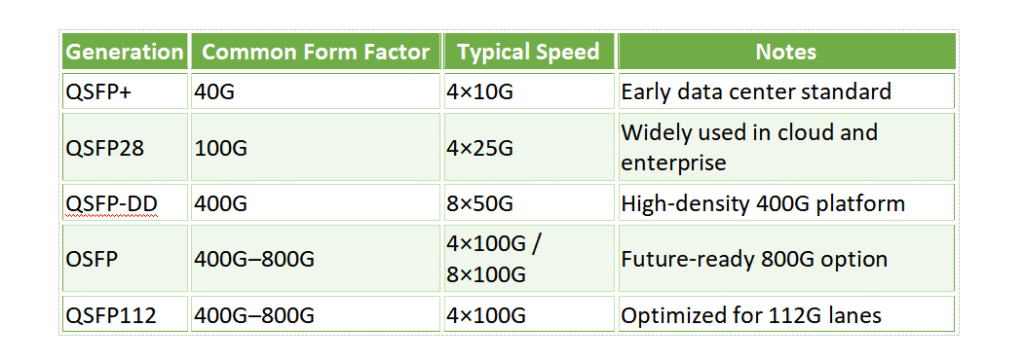
As you can see, OSFP, QSFP-DD, and QSFP112 belong to the latest generations designed to handle 400G and 800G transmission speeds.
What Is OSFP?
Overview of OSFP
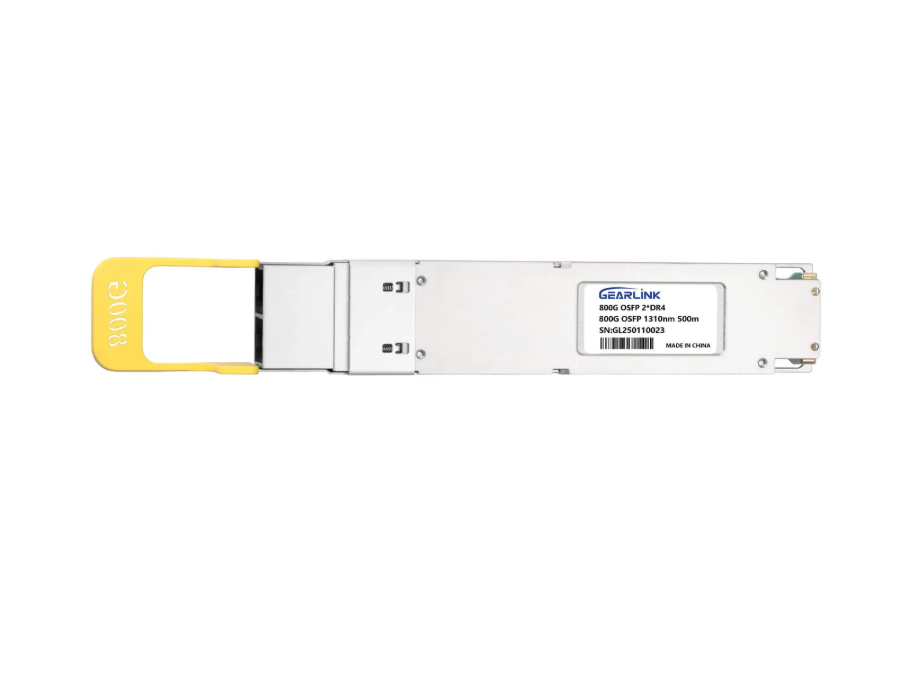
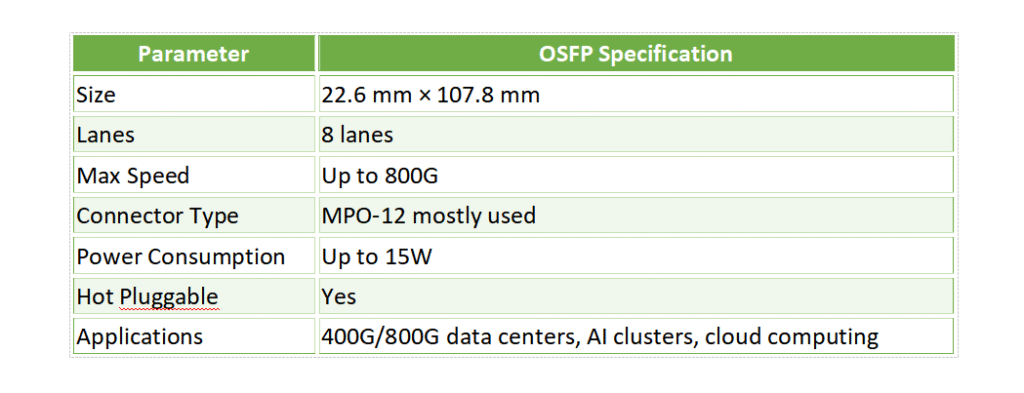
OSFP (Octal Small Form-factor Pluggable) was introduced to support higher transmission rates such as 400G and 800G. It uses 8 electrical lanes, each capable of 50G or 100G per lane, depending on the generation.
Unlike older modules, OSFP offers excellent thermal design and power handling. It is slightly larger than QSFP-DD, which allows for better airflow and heat dissipation — critical for 800G environments.
Advantages of OSFP
High power capacity: Supports modules up to 15W, ideal for 800G DR8 and FR8 optics.
Superior cooling: Larger surface area enhances heat dissipation.
Future scalability: Designed with next-generation (1.6T) in mind.
Compatibility: Can work with QSFP-DD via adapters for backward integration.
Limitations of OSFP
Slightly larger than QSFP-DD, which may limit port density.
Not backward compatible with QSFP-DD cages without an adapter.
Typically used in new hardware platforms, requiring infrastructure updates.
What Is QSFP-DD?
Overview of QSFP-DD
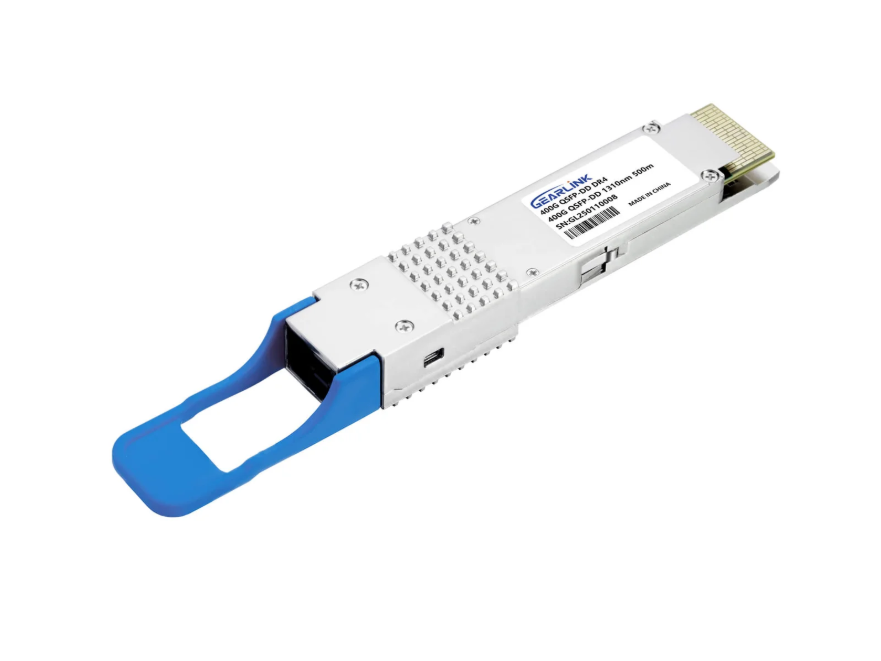
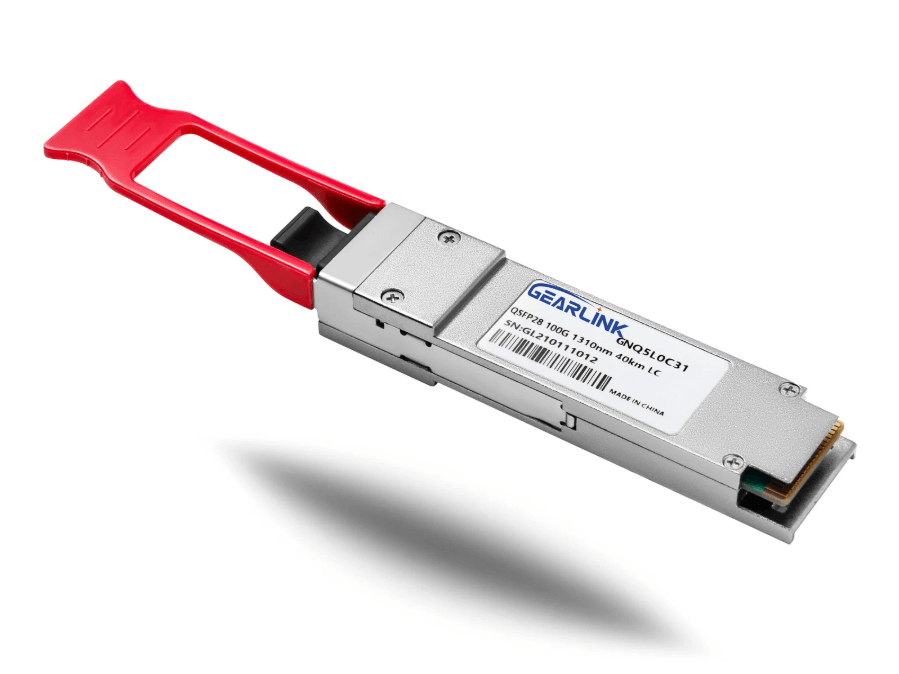
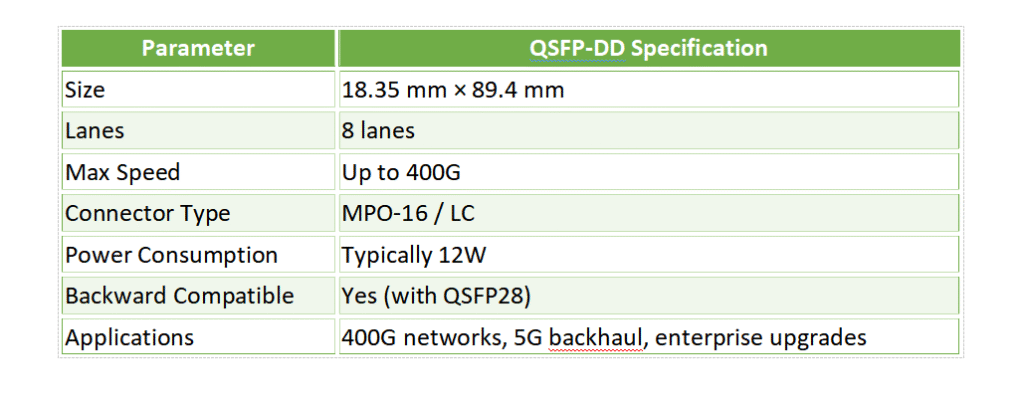
QSFP-DD (Quad Small Form-factor Pluggable Double Density) is an enhanced version of QSFP28. The “Double Density” refers to its 8-lane electrical interface, doubling the 4 lanes of QSFP28.
It retains the same external dimensions as QSFP28, allowing backward compatibility — a major advantage for network operators.
Advantages of QSFP-DD
Compact design: Same footprint as QSFP28, enabling easy upgrade from 100G to 400G.
Backward compatibility: Works with QSFP28 modules in legacy systems.
Wide adoption: Supported by major switch vendors like Cisco, Juniper, and Arista.
Cost-effective: Commonly used in 400G DR4, FR4, and LR4 modules.
Limitations of QSFP-DD
Thermal challenges: Limited cooling capability compared to OSFP.
Future scalability: Less suitable for 800G due to its smaller power envelope.
Mechanical complexity: Denser pin design increases manufacturing cost.
What Is QSFP112?
Overview of QSFP112
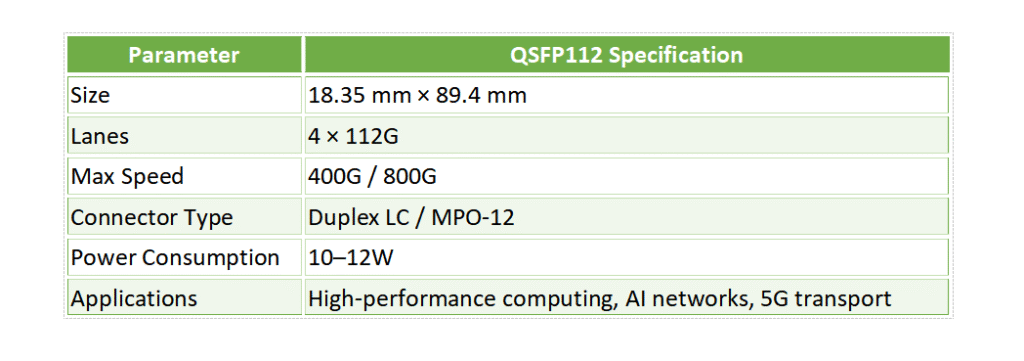
QSFP112 is a newer form factor derived from QSFP28 and QSFP56. The “112” refers to 112G PAM4 electrical lanes, supporting speeds up to 400G and 800G.
It maintains QSFP dimensions, making it ideal for data centers needing high-speed upgrades without changing hardware infrastructure. QSFP112 modules are typically used for next-generation 400G and 800G networks, particularly where energy efficiency and signal integrity matter.
Advantages of QSFP112
Higher signal integrity: Designed for 112G PAM4 electrical channels.
Backward compatibility: Supports previous-generation QSFP modules.
Compact and power-efficient: Smaller footprint for dense rack designs.
Ready for 400G/800G applications.
Limitations of QSFP112
Thermal headroom is limited compared with OSFP.
Adoption still growing, as it’s relatively new in the market.
Electrical design constraints require high-quality PCB materials.
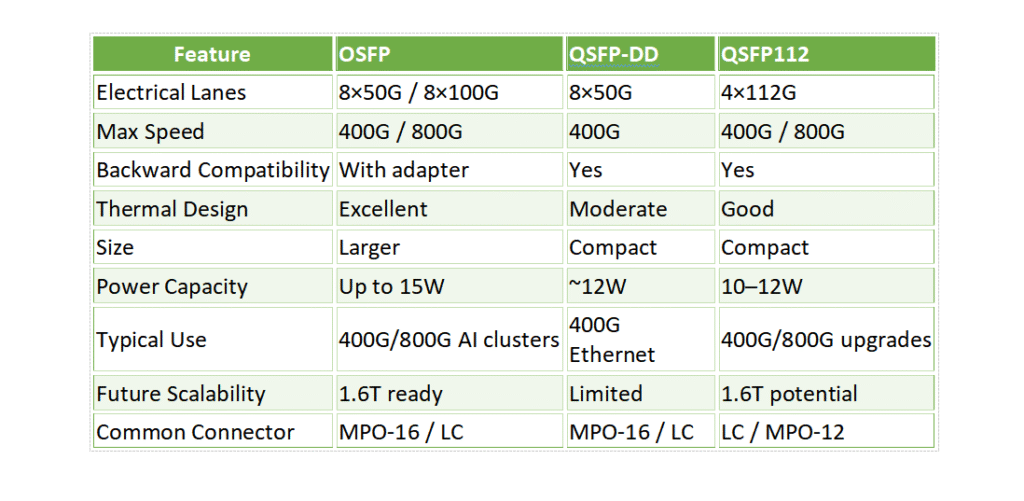
OSFP vs QSFP-DD vs QSFP112 – A Detailed Comparison
Key Takeaways
OSFP is the best option for future-proof 800G and 1.6T systems, offering strong cooling and scalability.
QSFP-DD remains ideal for cost-effective 400G deployments with strong backward compatibility.
QSFP112 provides a balance — compact, efficient, and optimized for 112G signaling.
Which One Should You Choose?
For 400G Networks
If your current infrastructure is primarily 100G QSFP28-based, QSFP-DD is often the simplest upgrade path. It fits existing switch cages and provides reliable performance at 400G speeds.
For 800G or AI Workloads
OSFP is designed with AI clusters and high-performance computing (HPC) in mind. Its larger size and better heat handling make it perfect for dense GPU servers and optical interconnects between AI nodes.
For Future-Ready Designs
QSFP112 represents the next-generation 400G/800G interface, enabling smooth transition toward 112G electrical signaling. For networks that plan to evolve gradually, QSFP112 offers an ideal balance between compatibility and performance.
Power, Cooling, and Compatibility Considerations
When choosing between OSFP, QSFP-DD, and QSFP112, it’s not just about speed. Power consumption, cooling, and cage compatibility all influence performance and cost.
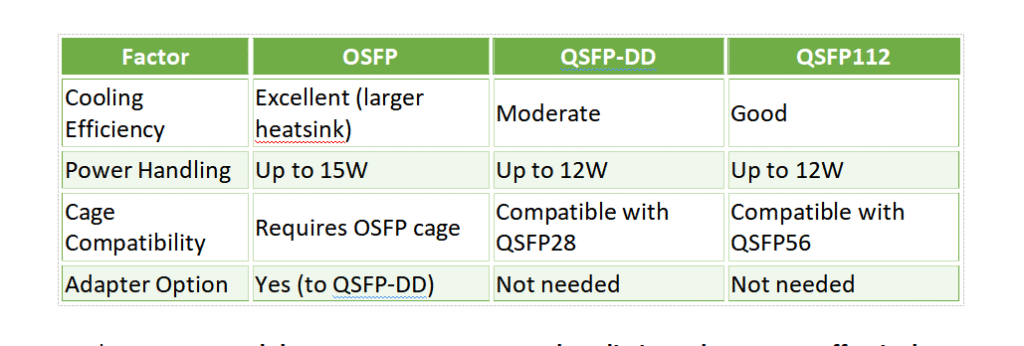
In short, OSFP modules consume more power but dissipate heat more effectively, while QSFP-DD and QSFP112 are smaller but less thermally robust.
The Future of High-Speed Optical Transceivers
The transition from QSFP-DD and OSFP to QSFP112 signals the industry’s move toward 112G-per-lane technology. This step is crucial for achieving 1.6T Ethernet in the near future.
Many vendors are already introducing QSFP112 and OSFP 800G DR8/FR8 modules, setting the foundation for AI-driven and cloud-scale networking.
Emerging technologies like co-packaged optics (CPO) may eventually redefine module design, but for now, OSFP, QSFP-DD, and QSFP112 remain the dominant form factors in high-speed optical communication.
Conclusion: Choosing the Right Module Form Factor
Deciding between OSFP, QSFP-DD, and QSFP112 depends on your network’s current infrastructure, scalability goals, and power design.
Choose QSFP-DD for cost-effective 400G upgrades.
Choose OSFP for next-generation 800G performance and better cooling.
Choose QSFP112 if you need a future-ready, power-efficient 112G-per-lane solution.
Each has its role — understanding them helps build a more scalable and efficient optical network.
Frequently Asked Questions
What is the main difference between OSFP and QSFP-DD?
OSFP offers better heat dissipation and supports 800G transmission, while QSFP-DD is more compact and fully backward compatible with QSFP28 modules.
Can OSFP modules be used in QSFP-DD ports?
Not directly — but an OSFP-to-QSFP-DD adapter can be used in some cases for interoperability.
What makes QSFP112 different from QSFP-DD?
QSFP112 supports 112G PAM4 lanes, providing higher bandwidth and improved signal integrity for future 800G systems.
Which form factor is best for 800G networks?
OSFP is currently the most widely used form factor for 800G optical modules like OSFP DR8 and OSFP FR8.
Is QSFP112 backward compatible with QSFP28?
Yes. QSFP112 maintains the same mechanical dimensions and interface as QSFP28, allowing smooth upgrades.