A Crucial Component for the Data-Driven Era
The insatiable global demand for bandwidth, fueled by cloud computing, streaming services, and AI-driven applications, has necessitated a paradigm shift in how data is transmitted and managed. In the challenging landscape of modern optical networking, one device consistently emerges as the workhorse for high-speed, high-density data center interconnects: the QSFP transceiver module. This cornerstone technology, which stands for Quad Small Form-factor Pluggable, has fundamentally transformed the scalability and efficiency of contemporary network infrastructures. For professionals and engineers focused on building and maintaining these complex systems, understanding the evolution, core capabilities, and application nuances of the QSFP transceiver module is not merely beneficial—it is essential for future-proofing network design. This article will delve into the technical depth of this versatile module, highlighting its key features, discussing its critical role in various applications, and underscoring the substantial value it brings to the realm of high-speed fiber optics.
The Foundational Role of the QSFP Transceiver Module in Optical Networking
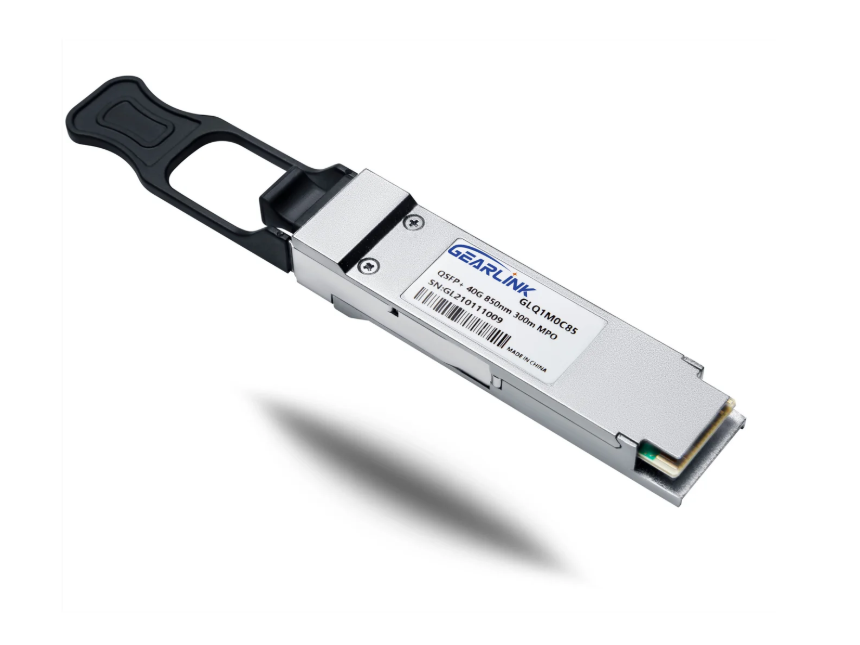
At its core, a QSFP transceiver module is a hot-pluggable device designed to transmit and receive high-speed data signals over optical fiber or copper cables. Its defining characteristic is the “Quad” component, signifying that it supports four independent channels for either transmitting or receiving data. This multi-lane architecture is the primary enabler of the high bandwidth density that has made the QSFP family indispensable in today’s data centers. The industry’s rapid progression from 10 Gigabit Ethernet (10GbE) to 40GbE, and subsequently to 100GbE, 200GbE, and even 400GbE, has consistently relied on the QSFP form factor to meet the ever-increasing speed requirements.
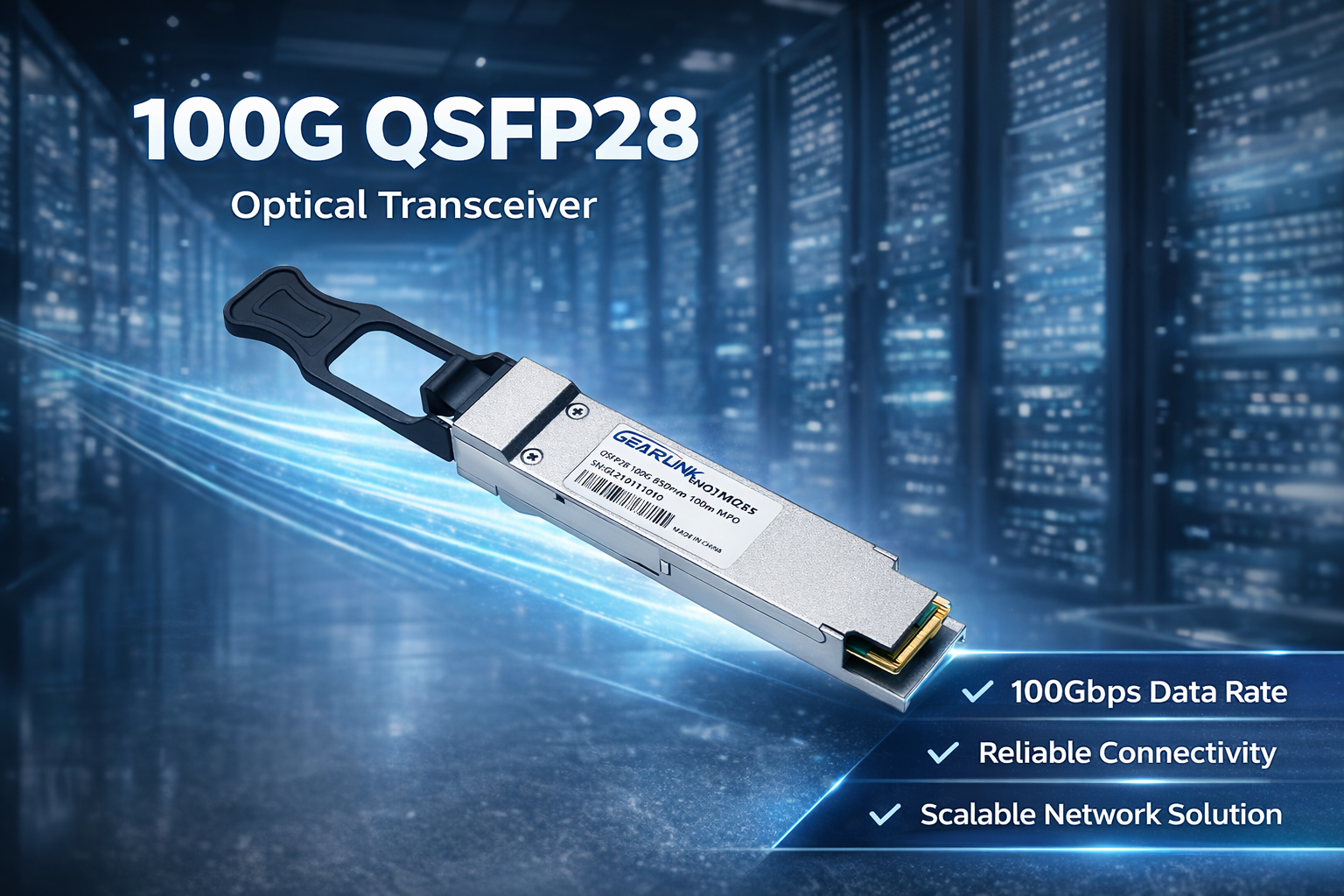
Initially, the QSFP family began with the standard QSFP, which was primarily utilized for 4x10G (40G) applications. However, the introduction of the QSFP28 form factor marked a significant milestone, leveraging enhanced signaling technology to push data rates to 4x25G, thereby enabling seamless 100GbE connectivity within the same compact physical size. This architectural standardization has allowed network operators to drastically increase port density without requiring larger, more power-hungry equipment. Moreover, the inherent flexibility of the QSFP transceiver module allows for breakout configurations, where a single high-speed port, such as 100G, can be divided into four lower-speed ports (e.g., four 25G connections), offering immense flexibility for spine-and-leaf network architectures.
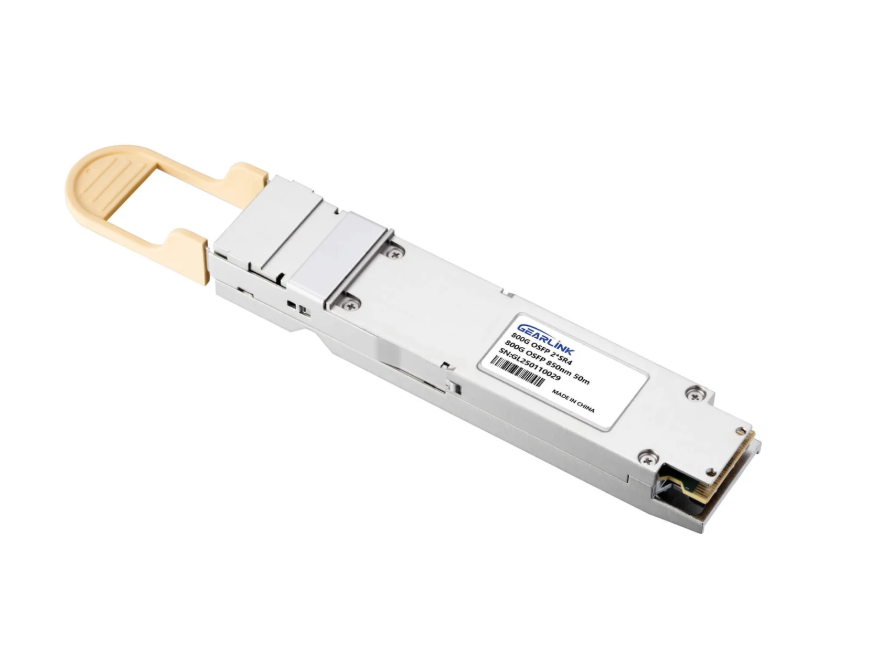
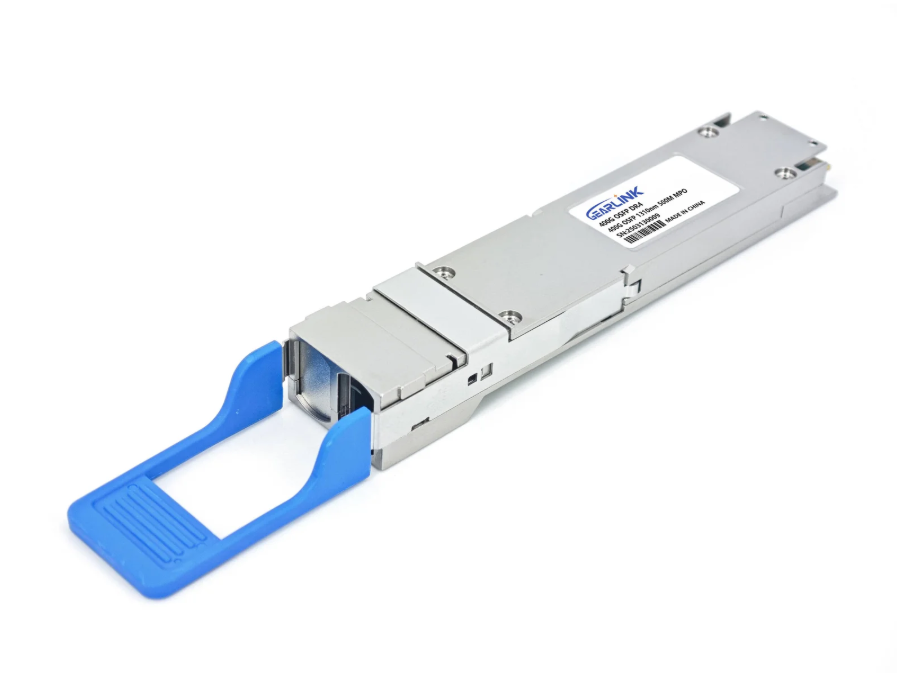
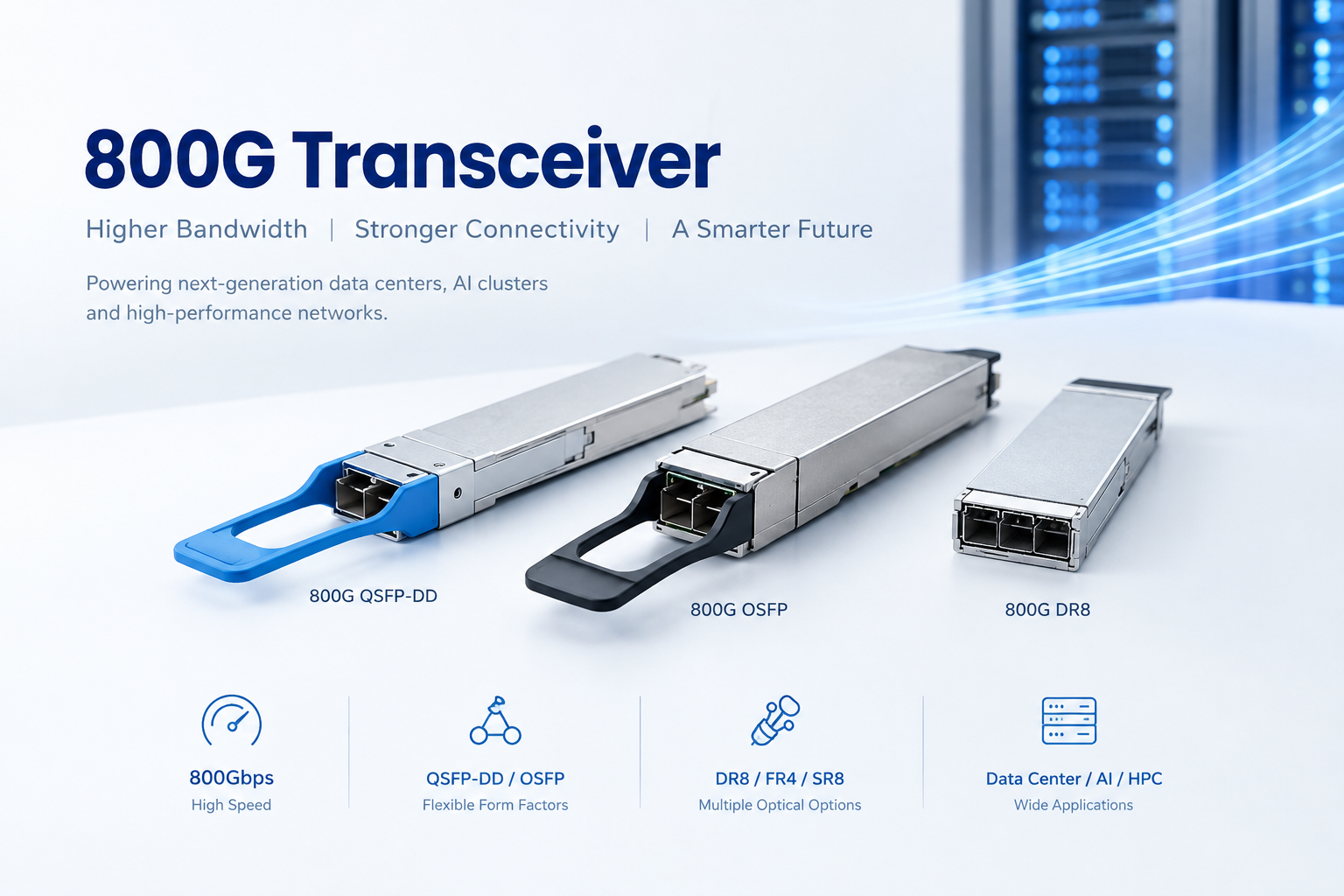
Transitioning to the higher-speed variants, the QSFP-DD (Double Density) form factor was subsequently developed to address the demand for 200G and 400G applications. The QSFP-DD maintains backwards compatibility with the existing QSFP family but doubles the number of high-speed electrical lanes from four to eight, effectively doubling the bandwidth capacity. This relentless pursuit of higher data rates within a standardized form factor illustrates a commitment to both performance and operational efficiency. The technological advancements embedded within the QSFP transceiver module—including sophisticated laser technology, high-speed photodetectors, and complex internal electronic signal processing—are what truly enable this remarkable performance.
Key Technical Features and Differentiators
The profound impact of the QSFP transceiver module is attributable to a specific set of technical features designed for high-performance optical networking. These elements collectively contribute to its dominance in high-density environments.
- Exceptional Port Density and Power Efficiency: The compact size of the QSFP module allows for a high number of ports on a single network switch or router, maximizing the utilization of rack space—a critical metric in space-constrained data centers. Furthermore, the modern QSFP iteration, especially the QSFP28 and QSFP-DD, boasts superior power efficiency per transmitted bit (measured in Watts per Gigabit), directly translating to reduced operational costs and a lower thermal footprint for the entire facility. This efficiency is paramount as networks scale to hundreds of thousands of ports.
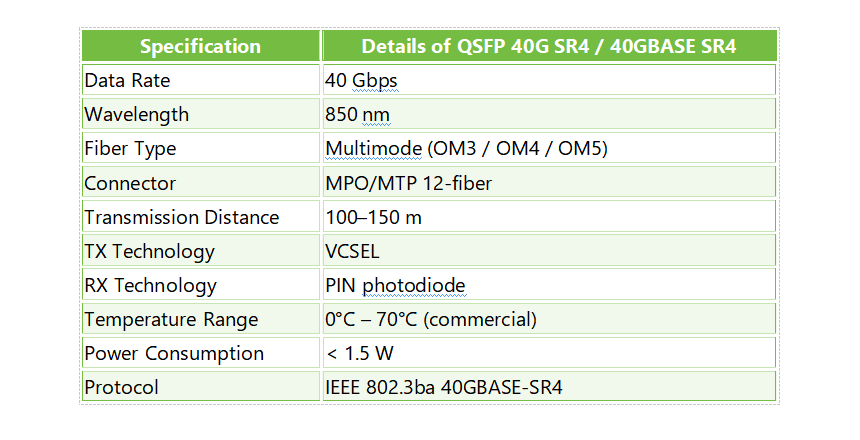
- Diverse Protocol and Media Support: The QSFP form factor is not limited to a single protocol. It supports a wide array of data rates and protocols, including Ethernet (40G/100G/200G/400G), Fibre Channel, InfiniBand, and OTN (Optical Transport Network). Furthermore, the modules are available in various versions tailored for different media and reach requirements. This includes short-reach SR4 (utilizing MPO connectors and multi-mode fiber for up to 100m), long-reach LR4/ER4 (utilizing LC connectors and single-mode fiber for up to 10km/40km), and the highly efficient BiDi (Bi-directional) versions which transmit and receive on two different wavelengths over a single fiber strand, effectively doubling the fiber capacity.
- Advanced Digital Diagnostics Monitoring (DDM): A vital feature for network operations is the integrated DDM capability. DDM allows users to monitor real-time operating parameters of the QSFP transceiver module, including transmitted power, received power, temperature, and supply voltage. This capability is instrumental for proactive maintenance, fault isolation, and ensuring continuous network uptime, providing valuable data that aids in maximizing the module’s lifespan and optimizing network performance.
- A Standardized Ecosystem and Interoperability: The QSFP family is defined by industry standards bodies, ensuring a high degree of interoperability between different vendors’ products. This standardization is crucial for large-scale deployments, allowing network architects to select modules based on technical specifications and competitive pricing, rather than being locked into proprietary solutions. The widespread adoption and mature supply chain for the QSFP transceiver module have solidified its position as the reliable choice for connectivity solutions worldwide.
Critical Applications of the QSFP Transceiver Module
The versatility and high-performance characteristics of the QSFP transceiver module make it the preferred choice across several key sectors of the optical networking industry, particularly where speed, density, and reliability are non-negotiable.
High-Density Data Center Interconnects (DCIs)
The hyperscale and enterprise data center environment is where the QSFP transceiver module finds its most critical and widespread application. Data center networks are typically built on a massive spine-and-leaf architecture, where the modules facilitate the high-bandwidth links between the spine (core) and leaf (access) switches. For example, 100G QSFP28 modules are routinely deployed for internal cluster connections and inter-rack communication. The ability to use different versions of the module, such as SR4 for short links within a single row or LR4 for longer connections across the data center campus, provides network architects with the necessary tools for distance optimization and cost control. Furthermore, in Disaster Recovery (DR) and Business Continuity Planning (BCP), the reliable, long-distance transmission offered by QSFP modules is paramount for ensuring data synchronization between geographically dispersed data centers.
Telecommunications and 5G Infrastructure Backhaul
While data centers are a primary driver, telecommunications companies rely heavily on the QSFP transceiver module for backhauling data from metropolitan and regional aggregation points to core networks. As 5G mobile networks continue to expand, the massive influx of data generated at the cell tower (the “last mile”) must be transported reliably and quickly to the central processing facilities. QSFP modules, particularly the longer-reach ER4 and ZR4 variants, are used in Dense Wavelength Division Multiplexing (DWDM) systems. These DWDM-enabled QSFP modules allow multiple high-speed channels to be transmitted simultaneously over a single optical fiber, drastically increasing the capacity of the existing fiber plant without the costly and time-consuming process of laying new cable. This application demonstrates the module’s ability to operate effectively in non-ideal, carrier-grade environments with stringent reliability requirements.
High-Performance Computing (HPC) Clusters
In the demanding realm of High-Performance Computing, where latency is often as critical as throughput, the QSFP transceiver module enables the necessary tightly-coupled, non-blocking network topology. HPC clusters, used for complex scientific modeling and large-scale AI training, require low-latency interconnects between thousands of processing nodes. InfiniBand, a specialized high-speed communication protocol often used in HPC, utilizes the QSFP form factor to achieve extremely low communication overhead. The combination of high bandwidth and minimal latency offered by these modules is a core enabler for the parallel processing capabilities that define a modern supercomputer. The reliability and consistency of the QSFP are non-negotiable in these environments, where a single link failure can halt massive, multi-day computations.
The Economic and Operational Value Proposition
Investing in high-quality QSFP transceiver module technology delivers tangible operational and economic benefits that extend far beyond simple connectivity.
The fundamental value proposition lies in scalability and flexibility. By standardizing on the QSFP form factor, network operators can seamlessly upgrade their network speed from 40G to 100G (QSFP28) to 400G (QSFP-DD) without needing to overhaul their entire chassis or networking hardware. This backwards compatibility and standardized density significantly reduce CapEx (Capital Expenditure) by extending the useful life of existing switch platforms. Furthermore, the flexibility to use copper QSFP modules for very short links (Active Optical Cables, or AOCs) or various optical standards for different reaches allows for granular control over network topology and overall cost per bit.
From an operational standpoint, the reliability and DDM features mentioned earlier drastically reduce OpEx (Operational Expenditure). The ability to remotely diagnose a failing module based on its temperature or power output before a complete link failure occurs allows for proactive swap-outs, minimizing downtime. The robust, industry-standard design ensures that the deployment process is straightforward, and the risk of interoperability issues is minimized. Ultimately, the QSFP transceiver module acts as a reliable, high-performance bridge, ensuring that the heavy investment made in network switching and routing equipment can be fully utilized to deliver the massive bandwidth that the contemporary digital landscape demands.
Looking Ahead: The Future of High-Speed Interconnects
While the QSFP transceiver module family—particularly the QSFP-DD—is currently addressing the needs of 400G networking, the industry is already looking toward the next evolutionary jump to 800G and beyond. The future will likely see further optimization of the QSFP-DD architecture, potentially integrating co-packaged optics (CPO) to bring optical components even closer to the switching silicon. This move is driven by the necessity to address the escalating power consumption and signal integrity challenges associated with higher-speed electrical interfaces. For users in the optical module space, staying informed about these developments will be key to making strategic procurement decisions that align with the next generation of networking standards.
The QSFP transceiver module is not just a peripheral component; it is an active, intelligent, and highly reliable engine driving the most critical links in global data infrastructure. Its ongoing evolution ensures that the world’s thirst for bandwidth can continue to be met efficiently, reliably, and cost-effectively, maintaining the integrity and performance of high-speed networks globally.
Frequently Asked Questions (FAQ)
Q1: What is the main difference between QSFP, QSFP28, and QSFP-DD?
The primary difference lies in the maximum data rate and the number of electrical lanes supported. The original QSFP typically supports 40G (4x10G lanes). The QSFP28 supports 100G (4x25G lanes) within the same physical form factor, a huge leap in efficiency. The QSFP-DD (Double Density) doubles the electrical lanes to eight, enabling speeds of 200G and 400G while maintaining mechanical compatibility with older QSFP modules.
Q2: Can I use a QSFP28 (100G) module in a QSFP-DD (400G) port?
Yes, the QSFP-DD form factor is designed to be backward compatible. A 100G QSFP28 module can be plugged into a QSFP-DD port, and the port will operate at the lower speed of 100G. However, a 400G QSFP-DD module cannot be used in a port designed only for the QSFP or QSFP28 standard.
Q3: What does the term “Breakout” mean in the context of QSFP modules?
Breakout refers to the ability to split the high-speed channels of a QSFP transceiver module into multiple lower-speed channels. For example, a 100G QSFP28 port can use a breakout cable (often a fan-out MPO to 4xLC) to connect to four separate 25G SFP28 ports on another device. This feature significantly enhances network flexibility and simplifies server connectivity upgrades.
Q4: Are all QSFP modules suitable for both short and long distances?
No. QSFP modules are categorized by their reach (distance). Short-reach modules (e.g., QSFP-SR4) use multi-mode fiber and are limited to short distances (up to 100-300m), typically within a data center. Long-reach modules (e.g., QSFP-LR4 or ER4) use single-mode fiber and specialized optics to cover distances from 10km up to 40km or more. Choosing the correct module type is crucial for link budget and reliable operation.