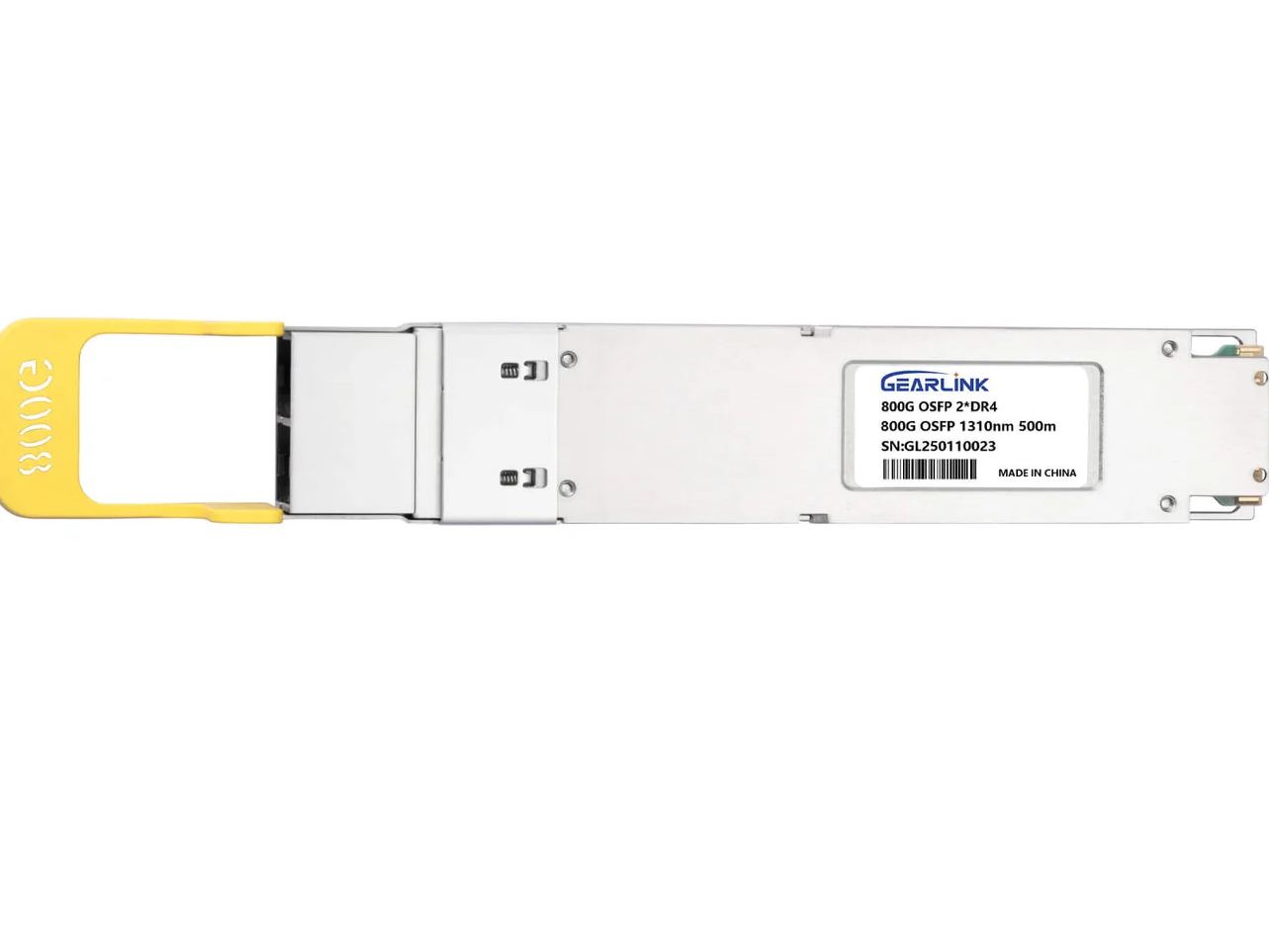
The relentless demand for bandwidth across enterprise and cloud data centers has firmly established 10 Gigabit Ethernet as the foundational layer for high-speed connectivity. Consequently, a single optical component has become the most widely deployed transceiver in this ecosystem. What makes the SFP 10G SR the definitive standard for short-reach deployments? This module, designed for efficiency and reliability, plays an absolutely pivotal role in interconnecting servers, storage arrays, and network switches over short distances. Its compact form factor, combined with exceptional performance, ensures a seamless upgrade path to faster networking speeds, fundamentally transforming how high-volume data is managed and transferred.
The Ubiquity of the SFP 10G SR in Data Center Architecture
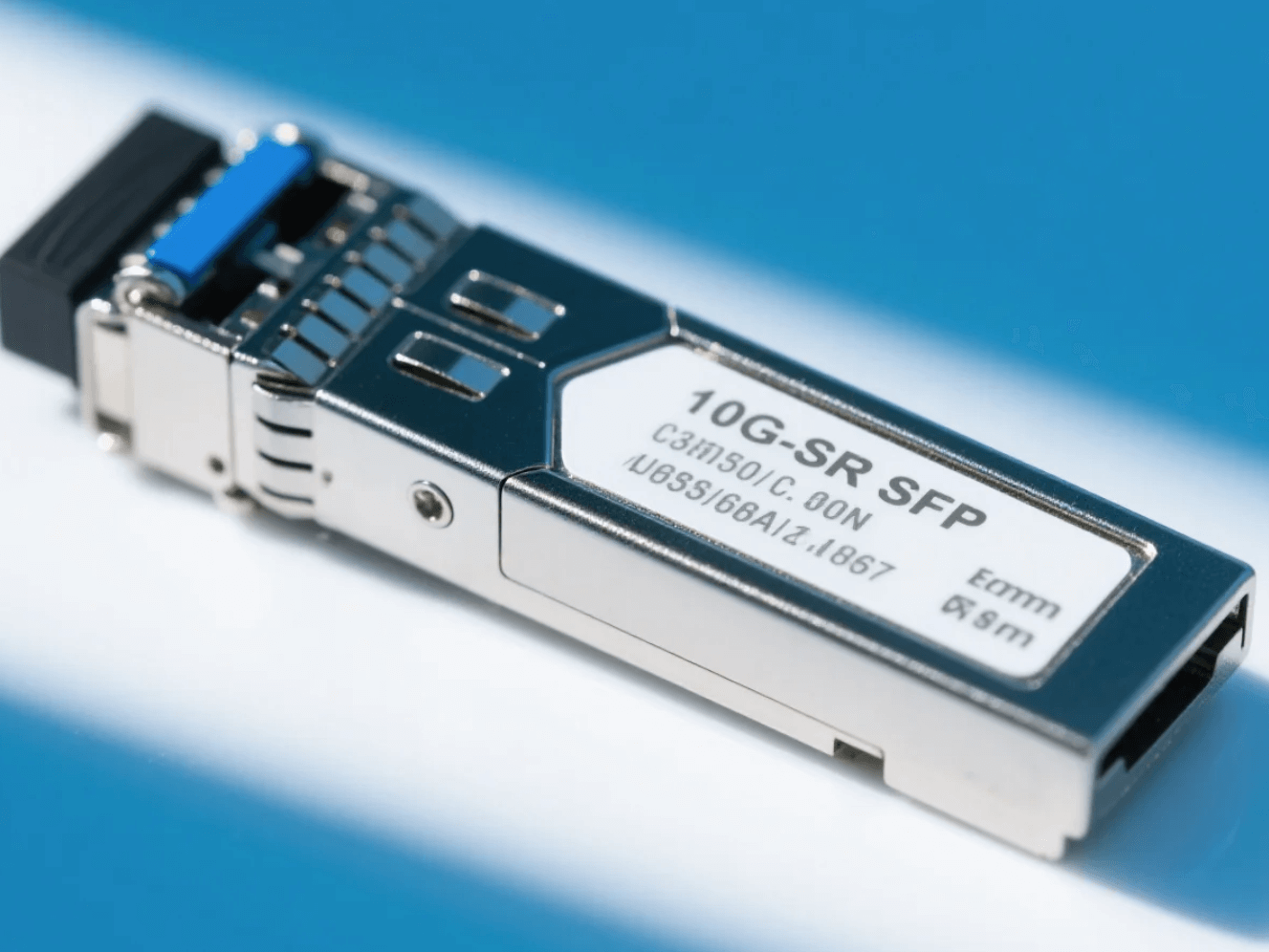
To truly understand the prominence of this transceiver, one must first recognize the fundamental shift toward virtualization and high-density computing. Data centers, whether massive Hyperscale installations or smaller enterprise facilities, primarily consist of short connections—typically less than 100 meters—between the server racks and the top-of-rack (ToR) switches. This is precisely the operational sweet spot for the SFP 10G SR module.
Firstly, its SFP+ form factor, which succeeded the original SFP, enables networks to achieve unprecedented port density. This is a crucial advantage for optical module users who seek to maximize connectivity within limited rack space. Furthermore, the standard’s maturity means that supply chain reliability is high, and multi-vendor compatibility is virtually guaranteed, removing significant integration hurdles that often plague newer technologies. Without question, the widespread adoption of 10G across all legacy and current equipment ensures the ongoing relevance of this particular module for years to come.
Unpacking the Technical Essence of the 10G SR Transceiver
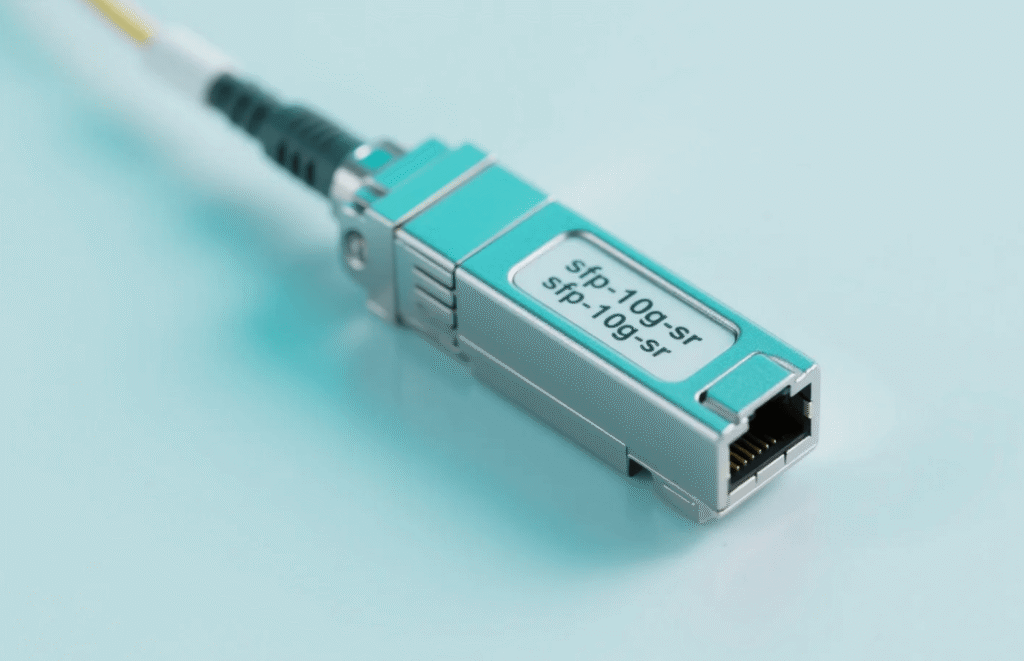
The superior performance and value proposition of the 10G SR are rooted deeply in its technical specifications. Understanding these technical components provides a clearer picture of why it has become the preferred choice for short-haul transmission.
The “SFP+” and “10G” Designation: A Foundation of Form and Speed
The SFP (Small Form-factor Pluggable) part of the name refers to the standardized, hot-swappable physical interface. The ‘Plus’ sign (SFP+) indicates its capability to handle speeds up to 10 Gbps. This standardized interface is paramount in network design, as it allows network engineers to easily swap modules for maintenance or upgrades without powering down the entire system. This simplicity greatly reduces downtime and operational complexity. Moreover, the 10 Gigabit per second speed offers a ten-fold improvement over traditional Gigabit Ethernet (1G), satisfying the immediate bandwidth needs of modern server CPUs and storage arrays.
Decoding the “SR” and VCSEL Technology for Multimode Fiber
The “SR,” which stands for Short Reach, is the key differentiator. It specifies that the module is designed to transmit data over Multimode Fiber (MMF) using an 850-nanometer (nm) wavelength laser. Specifically, it can reach up to 300 meters on OM3 MMF and extends this capability to 400 meters when deployed with higher-quality OM4 or OM5 fiber.
This distance capability is achieved using a specialized type of laser called a Vertical-Cavity Surface-Emitting Laser (VCSEL). VCSEL technology is remarkably efficient. It requires less power to operate and is inherently cheaper to manufacture than the Distributed Feedback (DFB) lasers used in Single-Mode (long-reach) transceivers. This combination—using a low-cost module with readily available, less expensive Multimode fiber—results in a significant reduction in deployment cost, which is a decisive factor for high-volume network builds.
Critical Features and Value Proposition for Optical Module Users
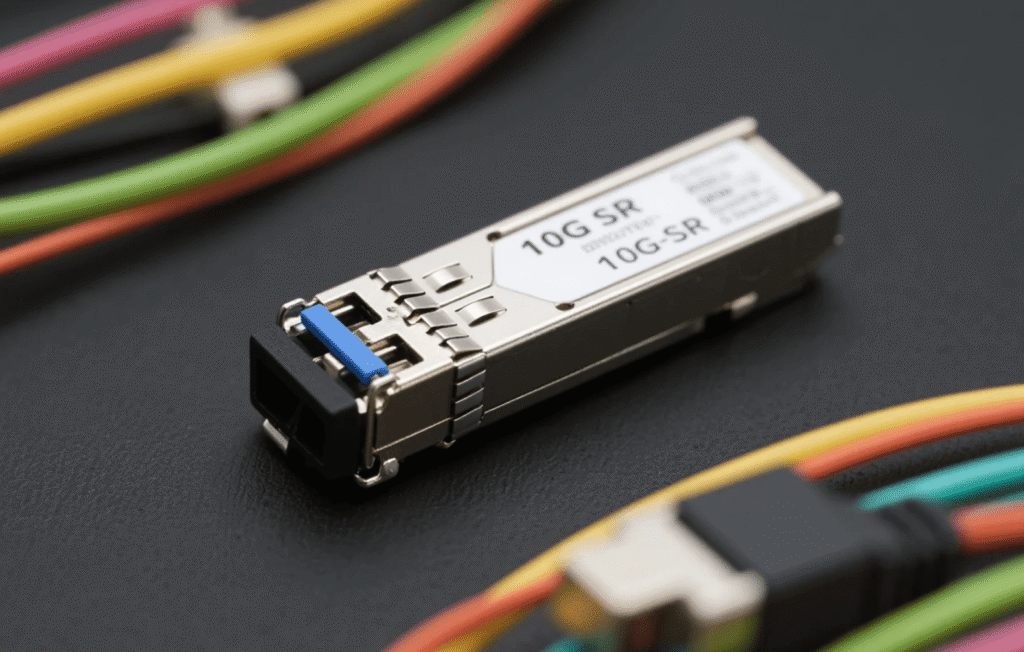
For professionals evaluating optical modules, the selection criteria extend beyond mere speed. The true value of the SFP 10G SR lies in its economic and operational advantages.
Firstly, the most significant advantage is Cost Efficiency. When designing a network, the cost of fiber optic cable installation can quickly become substantial. Multimode fiber, while distance-limited, is considerably less expensive to purchase, terminate, and manage for short runs compared to Single-Mode Fiber (SMF). This material saving, combined with the module’s optimized VCSEL components, makes the overall deployment one of the most cost-effective methods for achieving 10G connectivity.
Secondly, Low Power Consumption translates directly into massive operational savings. This transceiver typically operates at less than one watt of power. In a data center containing thousands of these modules, this minimal power draw aggregates into enormous energy conservation, simultaneously reducing the cooling load on HVAC systems. This focus on efficiency aligns perfectly with modern data center sustainability goals and reduces the Total Cost of Ownership (TCO).
Finally, the Reliability and Interoperability afforded by its compliance with the IEEE 802.3ae standard guarantees a high Mean Time Between Failures (MTBF) and ensures that equipment purchased from diverse manufacturers will communicate flawlessly. This standardization is a non-negotiable asset for large organizations managing complex, multi-vendor network infrastructures.
Core Applications: Where the SFP 10G SR Defines Connectivity
The widespread applicability of this module ensures its central role in modern data transfer. The applications are focused squarely on the most demanding areas of high-performance computing.
Server-to-Switch and Switch-to-Switch Interconnections
This is the primary deployment environment. Any modern server equipped with a 10GbE Network Interface Card (NIC) is typically connected to a Top-of-Rack (ToR) switch using an SFP 10G SR transceiver and a multimode patch cable. This reliable link forms the essential backbone for virtualized environments and cloud services, where low latency and guaranteed bandwidth are paramount. Similarly, it is the favored choice for interconnecting core and distribution switches within a single room or building where distances permit.
Storage Area Networks (SANs) and High-Performance Computing (HPC)
Protocols like Fibre Channel over Ethernet (FCoE) and iSCSI, which are foundational to modern Storage Area Networks, rely on the robust and low-latency links provided by the 10G SR. Furthermore, in HPC clusters—where computational nodes must communicate instantaneously—the short, high-throughput connections guaranteed by this module are non-negotiable. It ensures that the speed of data transfer does not become the bottleneck for complex, parallel processing tasks.
Breaking Down the 40G/100G Breakout Architecture
Despite the rise of higher speeds, the module retains its relevance through the concept of “breakout” connectivity. When a network utilizes a high-density, multi-lane port like a QSFP+ (40G) or QSFP28 (100G), the module often acts as the critical link for connecting to legacy 10G equipment. For example, a 40G QSFP+ port can be broken out into four individual 10G SFP+ channels using MPO/MTP to LC fanout cables, each of which is terminated by a standard SFP 10G SR. This feature provides network engineers with unmatched flexibility when migrating or integrating new network segments.
Future-Proofing Networks with the 10G SR Standard
Though 25G and 100G technologies are increasingly present, the SFP 10G SR maintains its status as an exceptionally relevant component. Its continued use is driven by two main factors: vast legacy infrastructure and the cost-effectiveness of short-reach upgrades. The transceiver is often the most sensible and financially sound choice for businesses upgrading from 1G, ensuring that networking budgets are optimized for performance gains exactly where they are needed most—at the access layer. The module represents a standardized, reliable investment for any data center aiming for high-performance, short-haul connectivity.
Frequently Asked Questions (FAQ)
Q: Can I use an SFP 10G SR in an SFP (1G) port? A: No. While the SFP+ module fits into the physical SFP slot, the SFP+ module is rated for 10Gbps and will not operate at its full speed, or may not function at all, in a port designed only for 1Gbps.
Q: What is the maximum distance for the SFP 10G SR on OM3 cable? A: The maximum supported distance for the SFP 10G SR using OM3-rated Multimode Fiber is 300 meters. This distance can be extended to 400 meters when utilizing higher-grade OM4/OM5 fiber.
Q: Is the SFP 10G SR compatible with single-mode fiber? A: No, the SFP 10G SR is specifically designed with an 850nm VCSEL laser optimized for Multimode Fiber (MMF). Using it with Single-Mode Fiber (SMF) will result in high signal loss and transmission failure. You would need an SFP 10G LR (Long Reach) module for SMF applications.