Introduction to QDD 400G DR4 S in Modern Networks
As digital infrastructure continues to expand, the need for faster and more efficient data transmission is becoming increasingly critical. In particular, hyperscale data centers, cloud platforms, and AI-driven workloads demand higher bandwidth and lower latency.This article will provide a brief introduction to the QDD 400G DR4 S product.
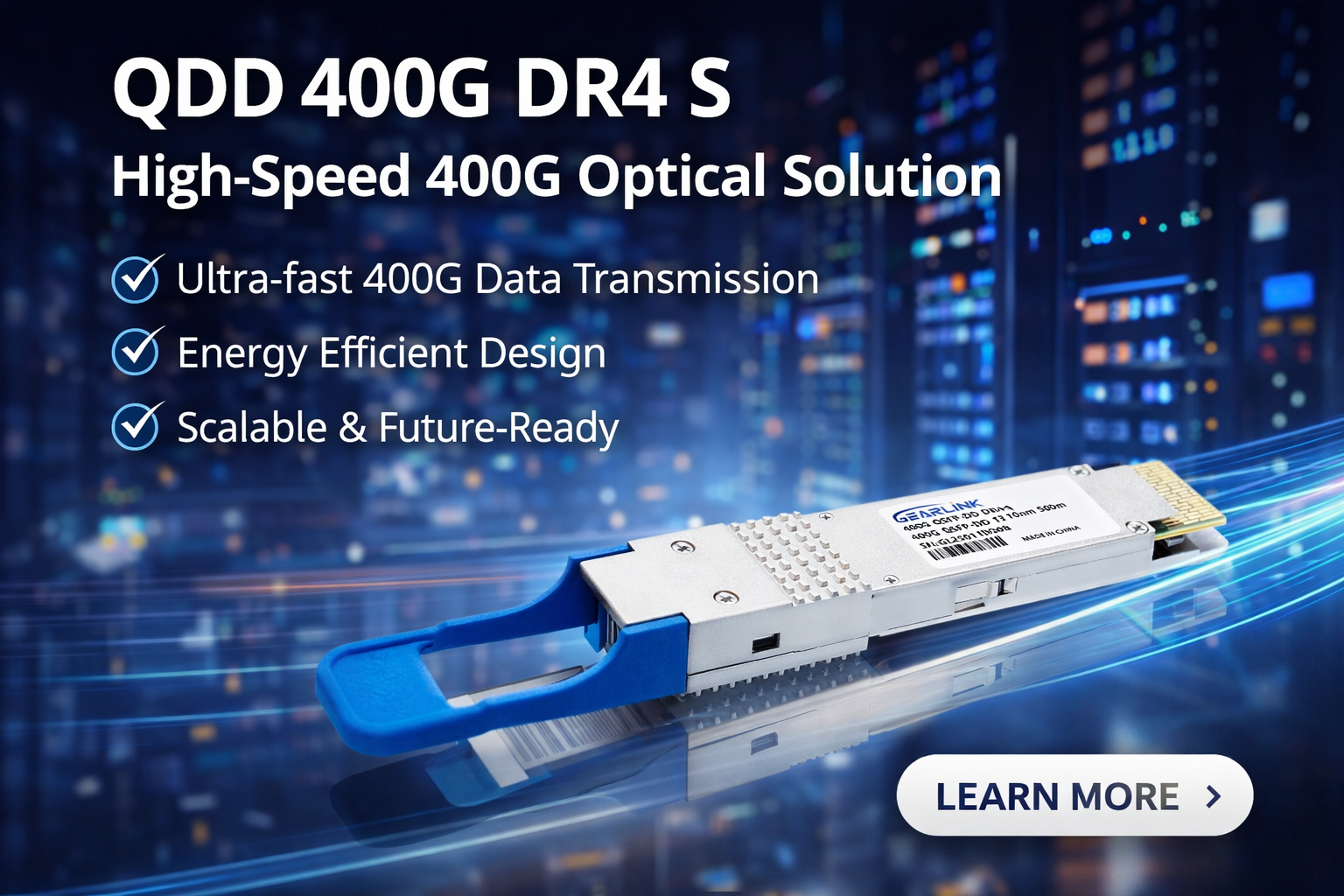
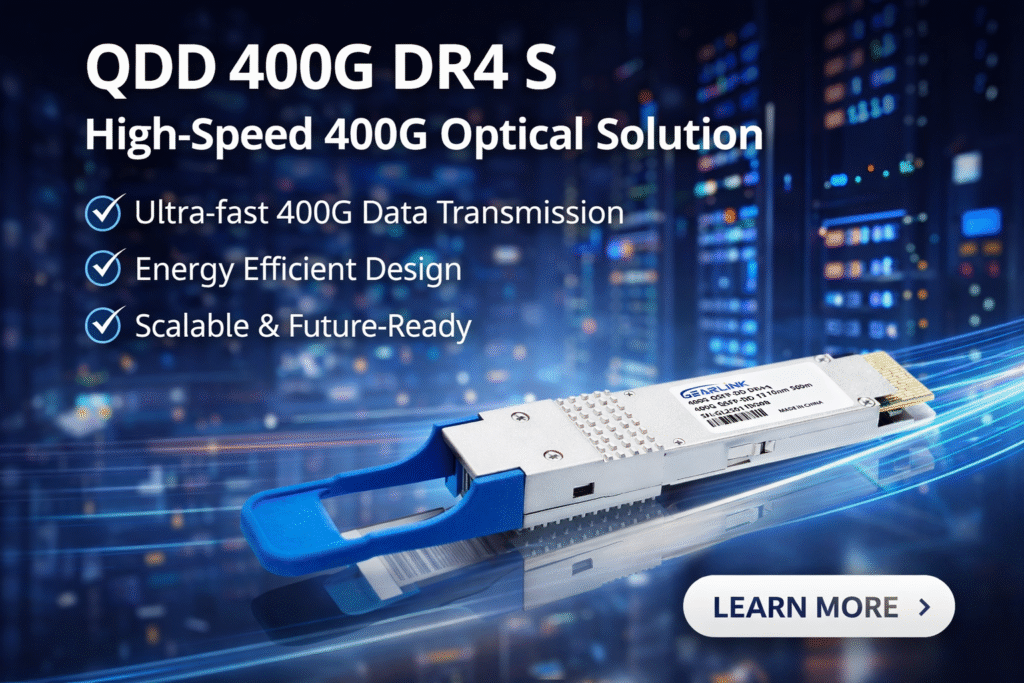
Against this backdrop, QDD 400G DR4 S has become a reliable solution for high-speed optical connectivity. It is designed to support 400G Ethernet while maintaining energy efficiency and scalability. Moreover, it enables seamless integration into existing network architectures, making it highly attractive for operators.
At the same time, this 400G DR4 optical module is widely adopted because it balances performance, cost, and deployment flexibility.
Understanding the Architecture of 400G DR4 S
Core Design of QDD 400G DR4 S
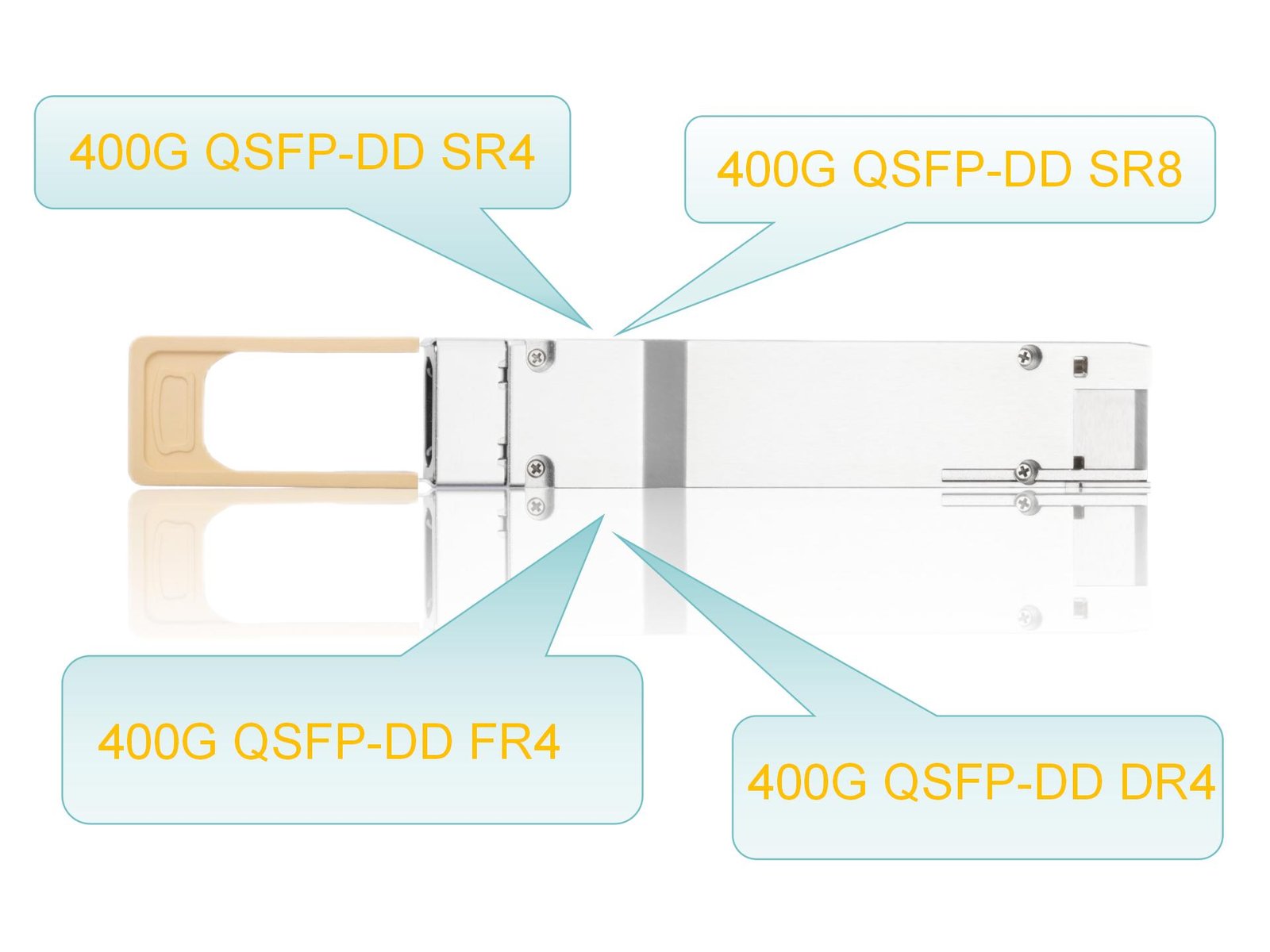
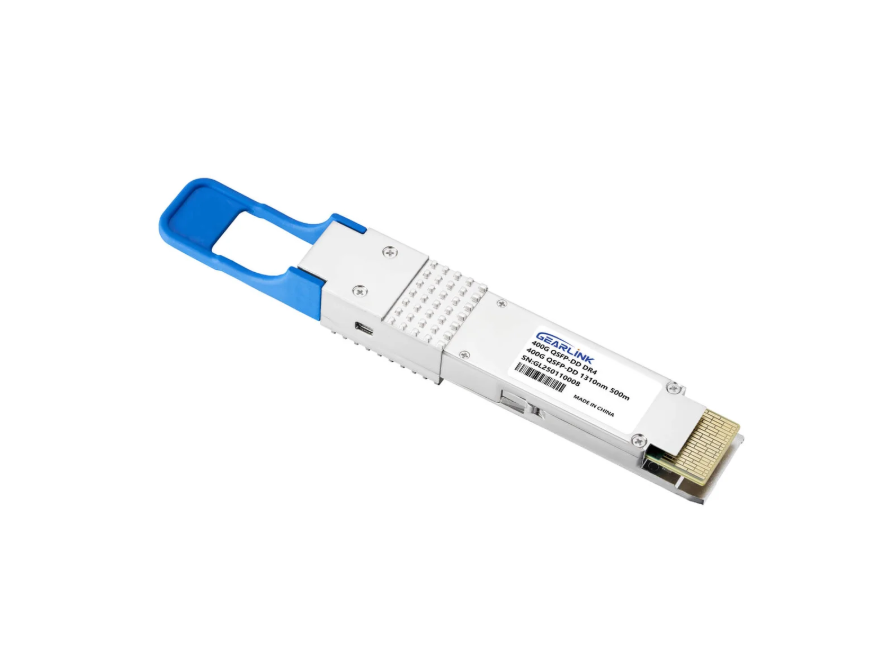
The 400G DR4 S module is based on the QSFP-DD form factor, which allows higher port density compared to traditional designs. It operates using four parallel optical lanes, each delivering 100Gbps.
In addition, PAM4 modulation technology is used to double the data rate per lane. As a result, higher throughput is achieved without increasing the number of fibers.
How the 400G DR4 Optical Module Works
To ensure stable transmission, several technologies are integrated:
Parallel single-mode fiber transmission
Advanced signal processing for PAM4
MPO-12 optical interface
Built-in digital diagnostics monitoring
Because of these features, reliable performance is delivered even in demanding environments.
Key Features of QDD 400G DR4 S
High-Speed Capability
First of all, 400G DR4 S supports a total bandwidth of 400Gbps. Therefore, it is ideal for large-scale data traffic scenarios.
Energy-Efficient Design
In addition, power consumption is optimized. Compared with older 100G or 200G solutions, energy usage per bit is significantly reduced.
Compact and Scalable Form Factor
Furthermore, QSFP-DD packaging allows more ports to be deployed within the same switch panel. Consequently, network scalability is greatly improved.
Reliable Signal Integrity
Because advanced modulation and error correction are applied, signal degradation is minimized during transmission.
Technical Specifications of QDD 400G DR4 S
The following table summarizes the essential parameters:
| Parameter | Specification |
| Form Factor | QSFP-DD |
| Data Rate | 400Gbps |
| Modulation | PAM4 |
| Fiber Type | Single-mode fiber (SMF) |
| Connector | MPO-12 |
| Transmission Distance | Up to 500 meters |
| Wavelength | 1310 nm |
| Power Consumption | < 12W |
| Temperature Range | 0°C to 70°C |
As shown above, 400G DR4 S is engineered for both performance and stability.
Applications of QDD 400G DR4 S
Data Center Interconnects
In modern data centers, massive volumes of data are exchanged between servers and switches. Therefore, QDD 400G DR4 S is widely used in spine-leaf architectures.
Cloud Computing Environments
Additionally, cloud platforms require scalable and high-throughput networking. This 400G DR4 transceiver ensures fast and efficient data exchange.
Artificial Intelligence and HPC
Moreover, AI training clusters and high-performance computing systems rely on ultra-fast interconnects. In such cases, low latency is achieved using advanced optical modules.
Advantages of Using QDD 400G DR4 S
Improved Network Efficiency
Because higher bandwidth is provided, bottlenecks are reduced. As a result, overall system performance is enhanced.
Lower Operational Costs
Although the initial investment may be higher, long-term costs are reduced due to better energy efficiency and simplified infrastructure.
Future-Ready Infrastructure
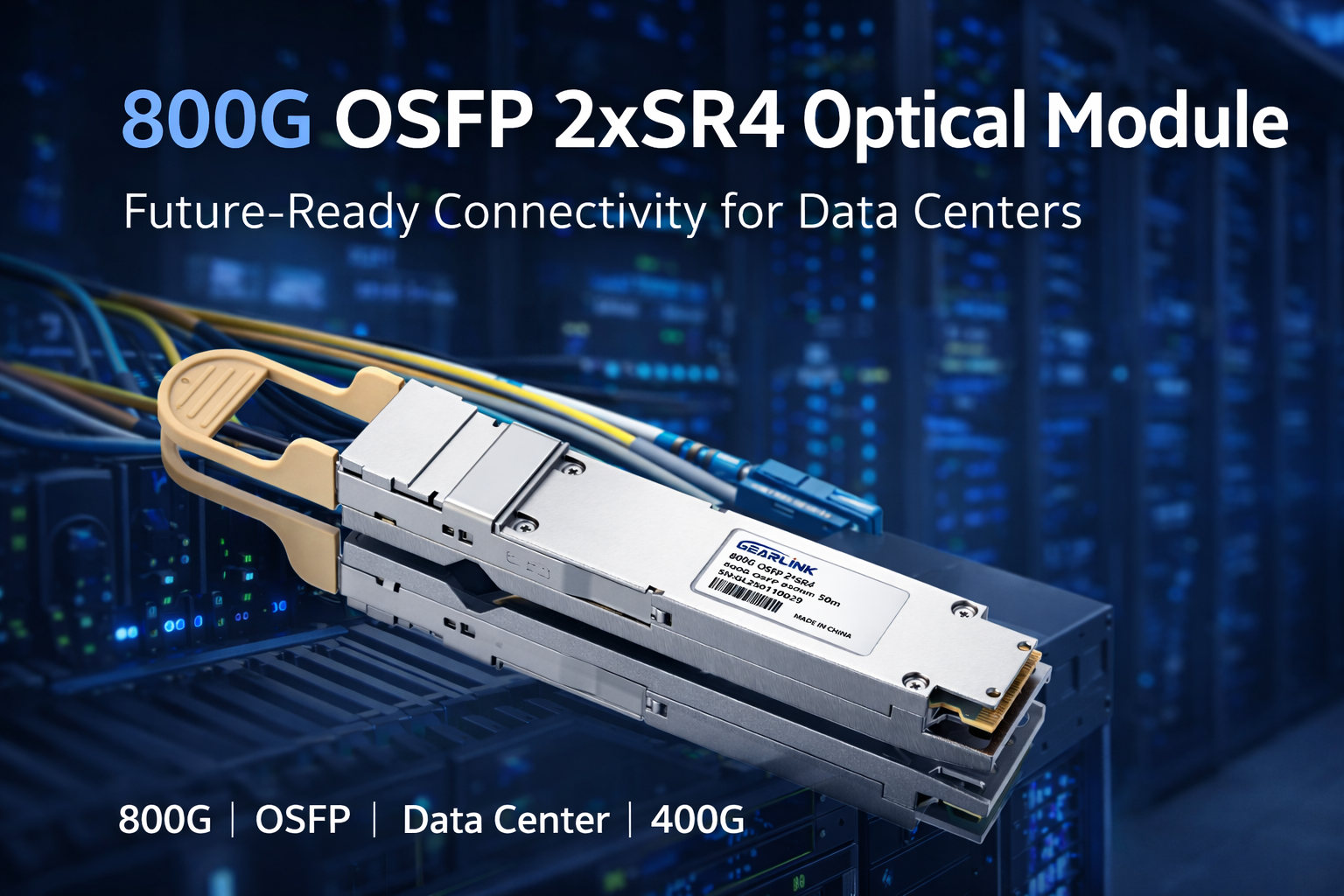
Importantly, 400G DR4 S supports the transition toward 800G networks. Therefore, it helps organizations prepare for future upgrades.
Comparison: QDD 400G DR4 S vs Other 400G Modules
To better understand its positioning, a comparison is provided below:
| Feature | 400G DR4 S | 400G FR4 | 400G SR8 |
| Fiber Type | SMF | SMF | MMF |
| Distance | 500m | 2km | 100m |
| Connector | MPO-12 | LC | MPO-16 |
| Use Case | Data Center | Metro Networks | Short Reach |
From this table, it can be seen that the DR4 solution offers a balanced approach between cost and performance.
Deployment Considerations
Compatibility Requirements
Before deployment, switch compatibility should be verified. Fortunately, most modern devices support QSFP-DD interfaces.
Cabling Infrastructure
Since single-mode fiber is required, proper cabling must be prepared in advance.
Thermal Management
Because heat is generated during operation, adequate cooling systems should be implemented to maintain stability.
Future Trends of 400G DR4 Technology
Looking ahead, the demand for high-speed connectivity will continue to grow. Consequently, solutions like QDD 400G DR4 S will remain essential in next-generation networks.
Furthermore, integration with 800G and even higher-speed technologies is expected. As a result, data centers will become more efficient and scalable.
Conclusion
In conclusion, QDD 400G DR4 S provides a powerful combination of performance, efficiency, and scalability. It is well suited for modern data centers, cloud environments, and AI-driven workloads.
By adopting this technology, organizations can achieve faster data transmission and improved network reliability. Therefore, it represents a strong foundation for future infrastructure development.
FAQ
1. What is QDD 400G DR4 S used for?
QDD 400G DR4 S is used in high-speed data centers to enable 400Gbps transmission over single-mode fiber.
2. How far can QDD 400G DR4 S transmit?
QDD 400G DR4 S supports distances up to 500 meters, making it ideal for intra-data center connections.
3. What connector does QDD 400G DR4 S use?
QDD 400G DR4 S typically uses an MPO-12 connector for parallel optical transmission.
4. Is QDD 400G DR4 S energy efficient?
Yes, QDD 400G DR4 S is designed to reduce power consumption while maintaining high performance.
5. How does QDD 400G DR4 S compare with FR4?
QDD 400G DR4 S offers shorter reach but simpler structure and lower cost for data center deployments.