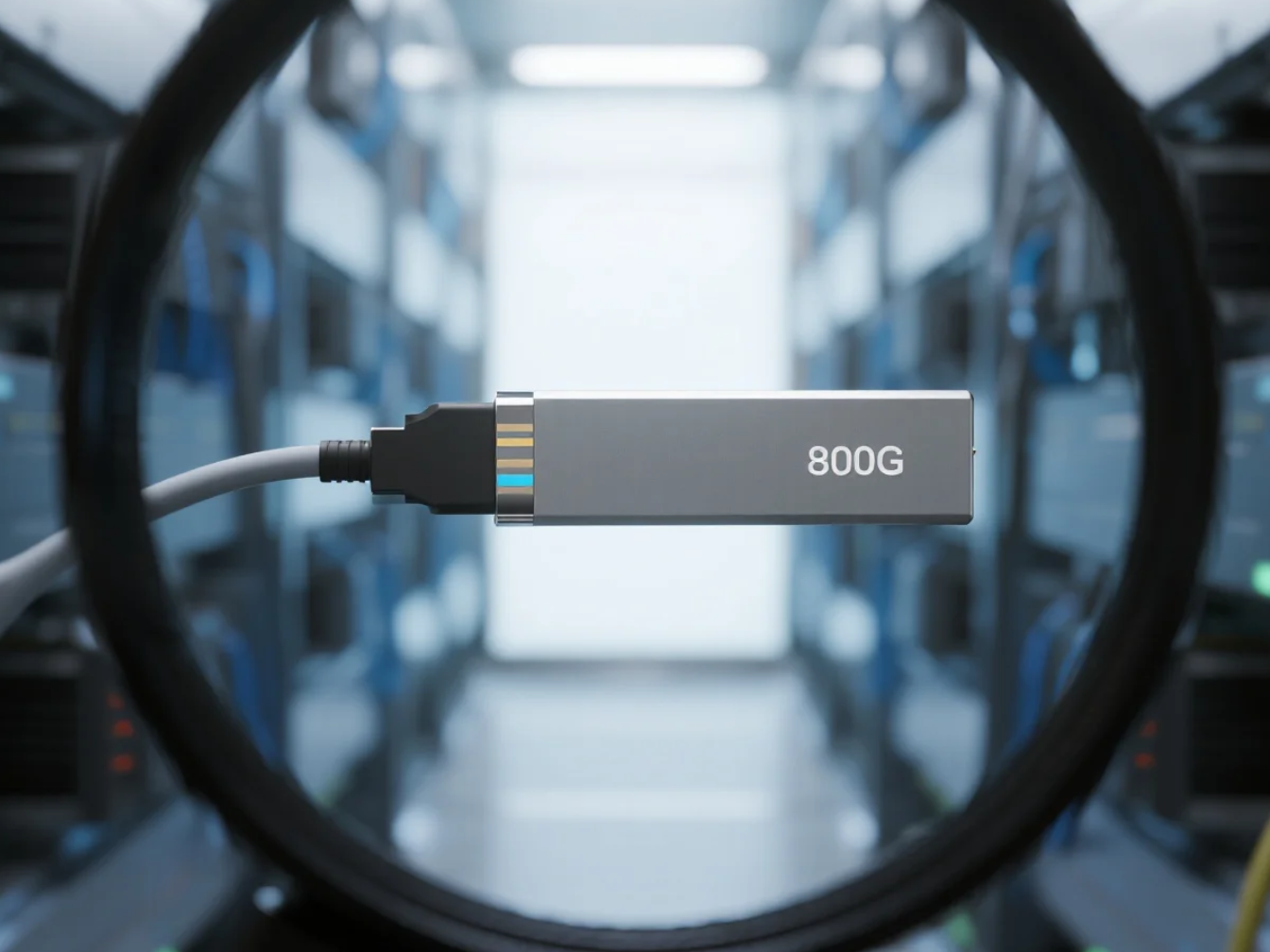
The relentless expansion of cloud computing, artificial intelligence, and hyperscale data centers has placed enormous strain on networking infrastructure, driving the necessary leap from 100 Gigabit Ethernet (100G) to 400 Gigabit Ethernet (400G). At the heart of this transition lies a new generation of optical transceivers, designed to manage unprecedented bandwidth density and power efficiency. Among the competing form factors and technical standards, the OSFP-400G-DR4 module has emerged as a key contender, defining the architecture for intra-data center connectivity over specific distances. Its name itself encapsulates its complexity and capability: Octal Small Form-factor Pluggable (OSFP), delivering 400 Gigabit speed, utilizing a Directly Routed (DR4) optical standard. This combination of high density and specialized optical technology makes the OSFP-400G-DR4 indispensable for spine and leaf architectures.
Decoding the Technology: The Foundation of OSFP-400G-DR4
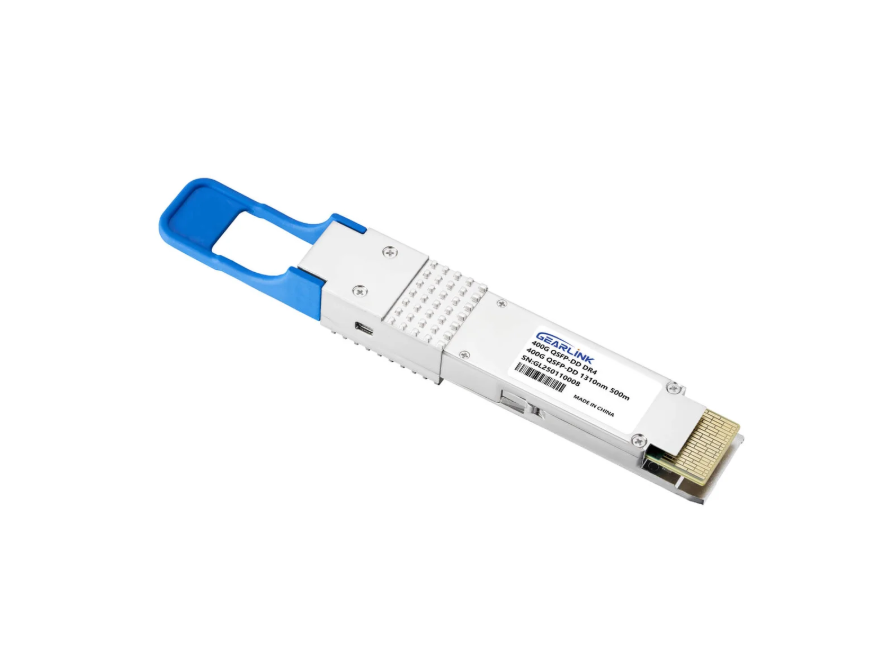
Understanding the strategic value of the OSFP-400G-DR4 requires a deep dive into the engineering decisions underpinning its form factor and optical specification.
The OSFP Form Factor Advantage
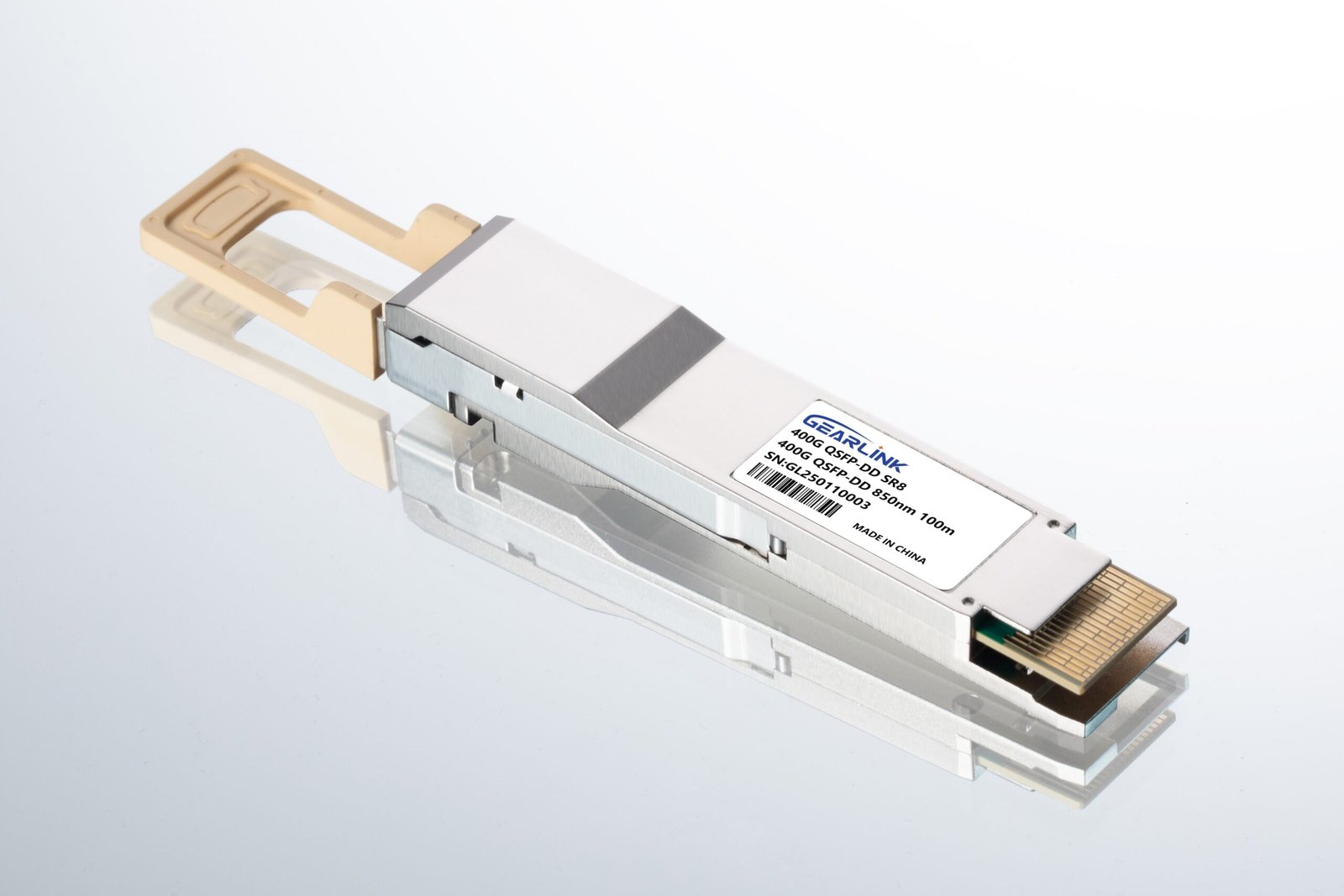
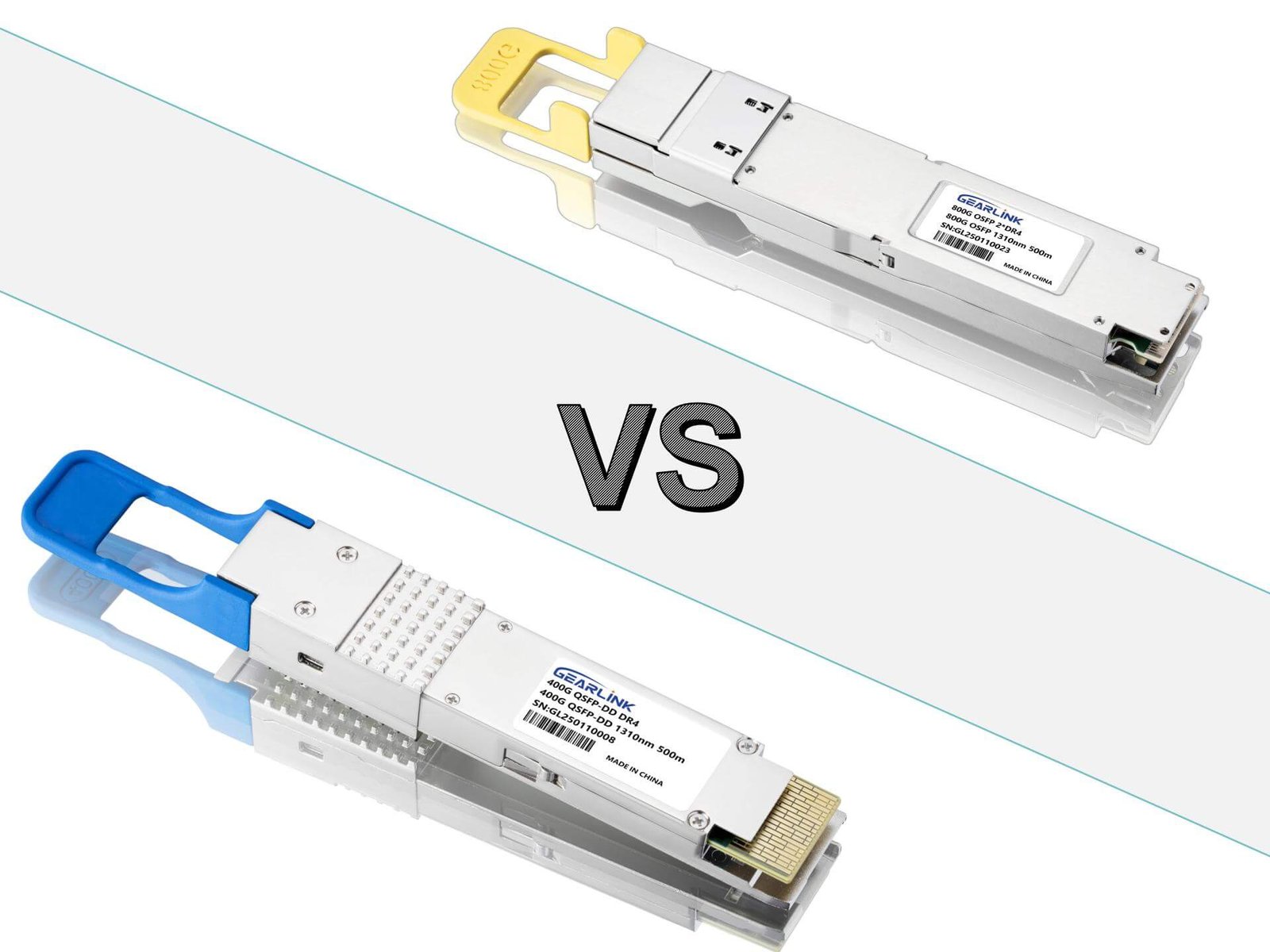
The OSFP (Octal Small Form-factor Pluggable) form factor is defined by the OSFP Multi-Source Agreement (MSA). Physically, the OSFP module is slightly larger and wider than its main competitor, the QSFP-DD (Quad Small Form-factor Pluggable Double Density). This increased size is a conscious design choice, serving two critical functions. First, it accommodates eight high-speed electrical lanes (hence ‘Octal’), each operating at 50 Gbps using PAM4 modulation to achieve 400G total bandwidth, with a clear roadmap to 800G. Secondly, and perhaps more importantly, the larger body provides superior surface area and a robust integrated heatsink. This thermal advantage is crucial, as 400G modules generate significant heat, and efficient heat dissipation is essential for maintaining performance and long-term reliability in high-density switching environments. The OSFP’s design supports higher power consumption (up to 15W) than competing modules, enabling more advanced features and greater reach.
The DR4 Optical Standard and PSM4 Comparison
The DR4 designation within the OSFP-400G-DR4 module refers to the specific optical standard for achieving 400G over single-mode fiber (SMF). DR4 utilizes four independent, uncooled optical channels, each operating at 100 Gbps, using PAM4 (Pulse Amplitude Modulation 4-level). This specification allows for reliable transmission up to 500 meters over SMF and is typically deployed using MPO-12 (or MPO-8) connectors, facilitating simple cable management. A key feature of DR4 is its direct mapping, meaning each of the four optical channels can be broken out into four individual 100G-DR links. This capability is vital for connecting a 400G spine switch port to four distinct 100G leaf switch ports using breakout cables. Furthermore, the DR4 standard shares much of its technical architecture with the PSM4 (Parallel Single-Mode 4-lane) standard used at 100G, leveraging familiar and proven component technology.
Operational Superiority: Deployment Scenarios for OSFP-400G-DR4

The unique technical specifications of the OSFP-400G-DR4 make it the optimal choice for several mission-critical data center applications.
High-Density Spine-and-Leaf Interconnect
In modern hyperscale and enterprise data centers, traffic is dominated by East-West (server-to-server) communication, managed by a spine-and-leaf topology. The OSFP-400G-DR4 is perfectly suited for the short-to-medium reach links between the spine and leaf layers. Its 500-meter reach capability covers the vast majority of distances required within a single, large data center campus. The primary operational benefit here is the ability to leverage its breakout functionality. A single 400G port on a spine switch can feed four 100G ports on different leaf switches using a single, cost-effective MPO-to-LC breakout cable harness. This maximizes port density on the spine while simplifying cable management and reducing the total number of transceivers required compared to using separate 100G modules for every link.
Future-Proofing for 800G and Beyond
Choosing the OSFP form factor offers a distinct advantage in terms of future scalability. Due to its larger physical size and superior thermal design, the OSFP MSA has a clear and robust path to 800G and even 1600G speeds. The form factor’s inherent ability to manage higher power dissipation means that as chip technologies advance and generate more heat, the OSFP chassis can accommodate the necessary components and thermal solutions. For facility managers making procurement decisions today, investing in a platform that supports the OSFP-400G-DR4 provides a guaranteed upgrade path to the next generation of speeds without requiring an overhaul of the host hardware, thereby protecting long-term capital expenditure.
The Thermal and Power Efficiency Edge
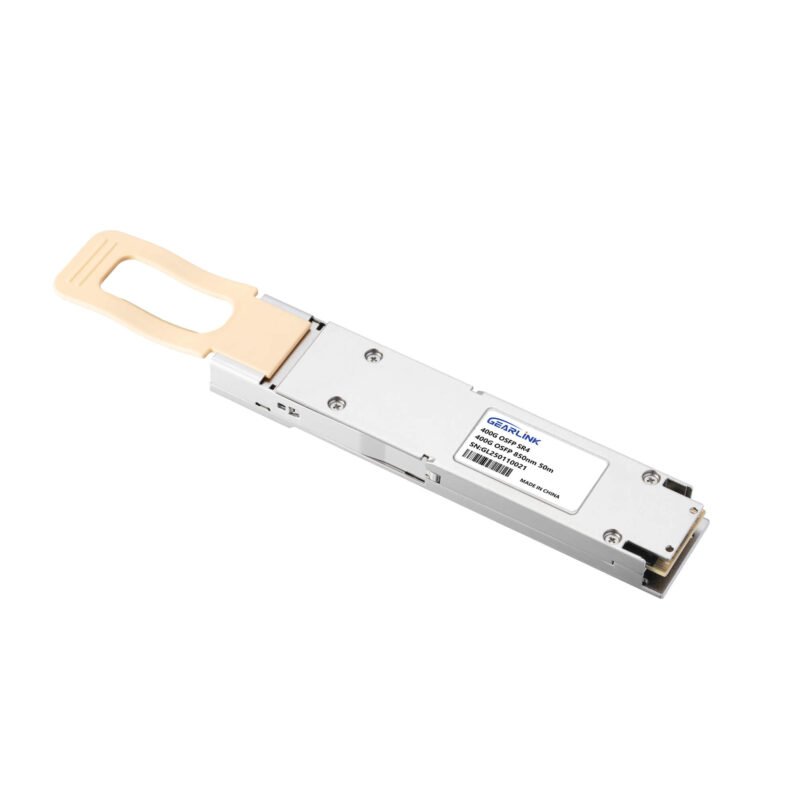
400GBASE-SR4 OSFP 850nm 50m DOM MPO-12/APC MMF Optical Transceiver Module
Price range: NT$499 through NT$898
In hyperscale environments, power consumption and thermal management are not secondary concerns—they are primary drivers of infrastructure cost and reliability. The design of the OSFP-400G-DR4 specifically addresses these challenges.
Managing Power Consumption in High-Density Ports
While the OSFP-400G-DR4 has a higher maximum power tolerance, manufacturers work diligently to ensure that the module operates efficiently at lower typical power levels. The superior heat dissipation capabilities of the OSFP housing allow the internal components (like the TOSA/ROSA optical sub-assemblies and the retimers) to operate at lower, more stable temperatures. Lower operating temperatures directly correlate with extended component life and improved signal integrity. This translates into fewer component failures and less network disruption, which is a major factor in calculating the Total Cost of Ownership (TCO) for large network deployments.
Comparison to QSFP-DD in Performance Density
The physical size difference translates to a trade-off in the data center. QSFP-DD allows for higher port density on the switch faceplate (more ports per rack unit), but the OSFP-400G-DR4 can often achieve higher power per port and superior thermal performance, enabling longer reach and higher reliability, especially in challenging environments. For many engineers prioritizing cooling efficiency and stability over absolute front-panel port count, the enhanced thermal management provided by the OSFP-400G-DR4 makes it the more reliable and strategically sound choice for mission-critical core links.
Frequently Asked Questions (FAQ)
Q1: What does the “DR4” in OSFP-400G-DR4 mean in simple terms?
A: DR4 stands for Directly Routed, 4 lanes. It means the 400G bandwidth is achieved using four separate 100G optical lanes, each capable of operating independently. This enables the module to be easily broken out into four separate 100G links.
Q2: What is the main advantage of the OSFP form factor over the QSFP-DD?
A: The main advantage is the superior thermal management due to the OSFP’s larger physical size. This allows it to support higher power consumption and dissipate heat more effectively, which is critical for long-term reliability and scalability to 800G and higher speeds.
Q3: Can the OSFP-400G-DR4 connect to four 100G switches?
A: Yes, the breakout functionality of the DR4 standard is a key feature. The OSFP-400G-DR4 can be connected to four separate 100G-DR transceivers using a single MPO-to-LC breakout cable, a configuration widely used to connect 400G spine switches to 100G leaf switches.