Data centers are rapidly migrating to 400G architectures to handle hyperscale traffic demands. However, selecting the right interface for spine-leaf connectivity often creates confusion. You might be evaluating the qdd-400g-dr4-s module and wondering if it supports your specific breakout requirements. In this guide, I will deconstruct the technical specifications and procurement criteria for this critical component.
Deconstructing the QSFP DD 400G DR4 Specification
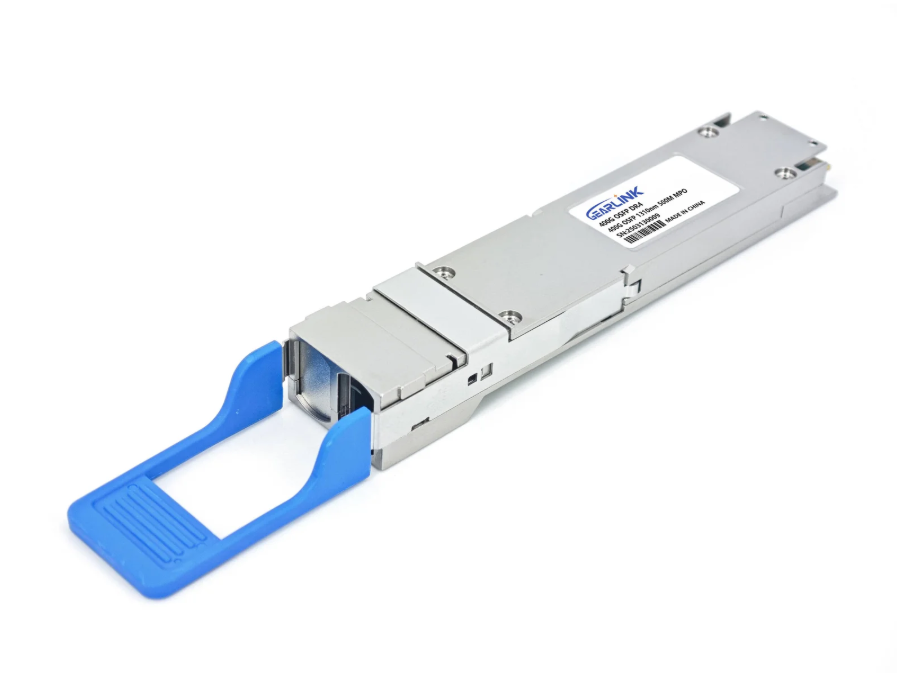
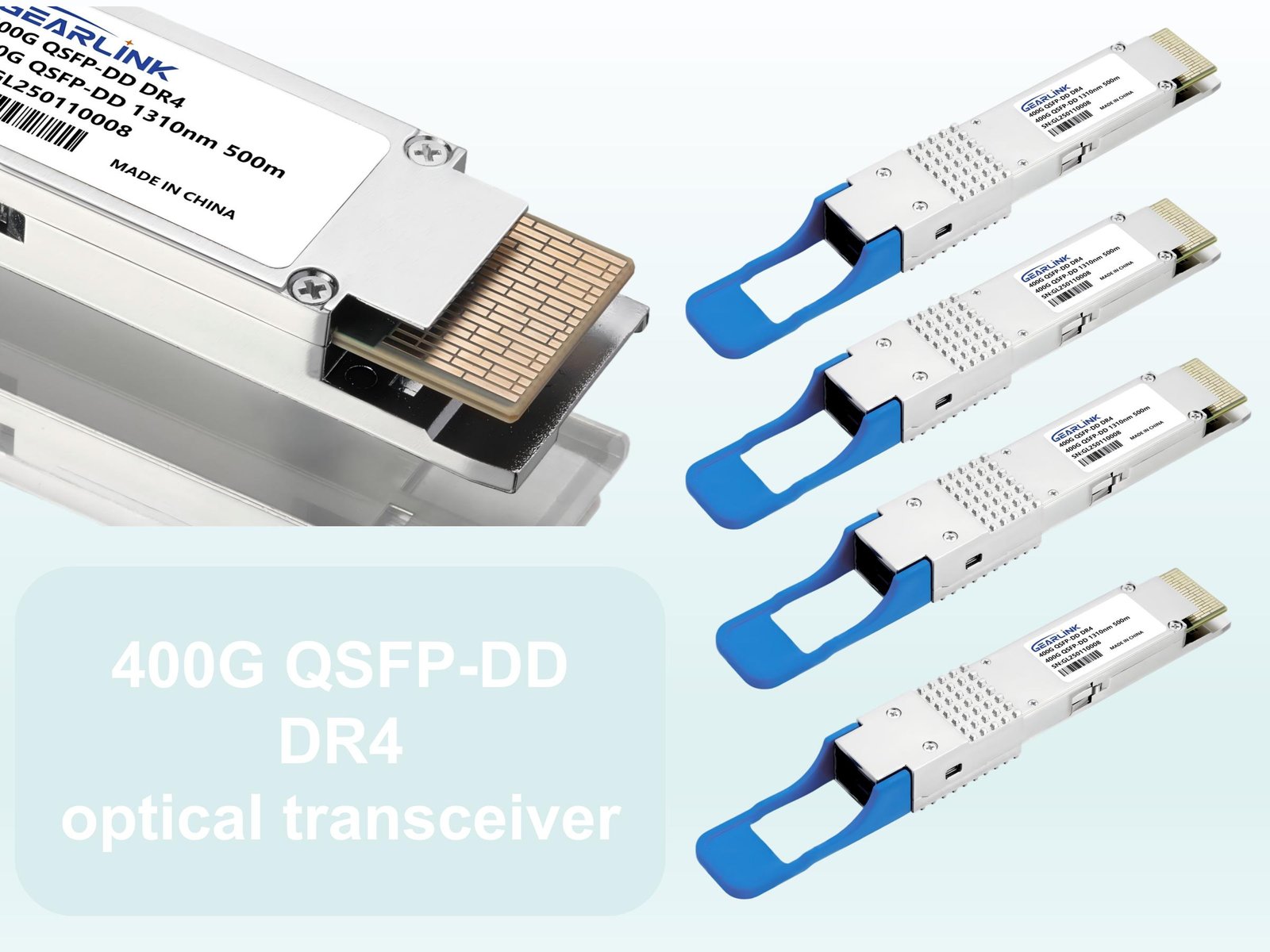
To make an informed purchase, we must first validate the technical baseline of the qsfp dd 400g dr4 module. Based on the IEEE 802.3bs standard, the “DR4” designation indicates a specific reach and modulation type. This module uses PAM4 modulation to achieve 400 Gbps over parallel single-mode fiber.
The “S” suffix often denotes specific enterprise-grade compatibility or temperature tolerances found in high-end OEM equipment. Specifically, this transceiver operates on four parallel lanes, each running at 100 Gbps. According to the QSFP-DD MSA (Multi-Source Agreement), the “Double Density” form factor ensures backward compatibility while doubling the electrical lanes.
Key specifications usually include:
- Reach: Up to 500 meters on single-mode fiber (SMF).
- Wavelength: 1310nm.
- Connector: MPO-12/APC (Angled Physical Contact).
- Power Consumption: Typically <12W, crucial for high-density switches.
Understanding these parameters ensures you do not confuse DR4 with FR4, which uses multiplexing rather than parallel fibers.
Implementing 400G DR4 Breakout Architectures
The primary commercial value of the qdd-400g-dr4-s lies in its flexibility. Network architects often utilize 400g dr4 breakout capabilities to connect a single 400G port to four 100G servers or switches. This effectively quadruples your port density without replacing existing rack infrastructure.
In this configuration, the optical signal is split into four distinct 100G-DR streams. You would typically use an MPO-12 to 4x Duplex LC breakout cable or an MPO to 4x MPO harness. The Fiber Optic Association (FOA) notes that MPO polarity is critical in these setups to ensure Tx matches Rx.
Why this matters for your ROI:
- It delays the need for full 400G endpoint upgrades.
- It maximizes the utilization of high-performance 400G switch ASIC capacity.
- It simplifies cable management in high-density racks.
Criteria for Choosing a 400G DR4 Transceiver Supplier
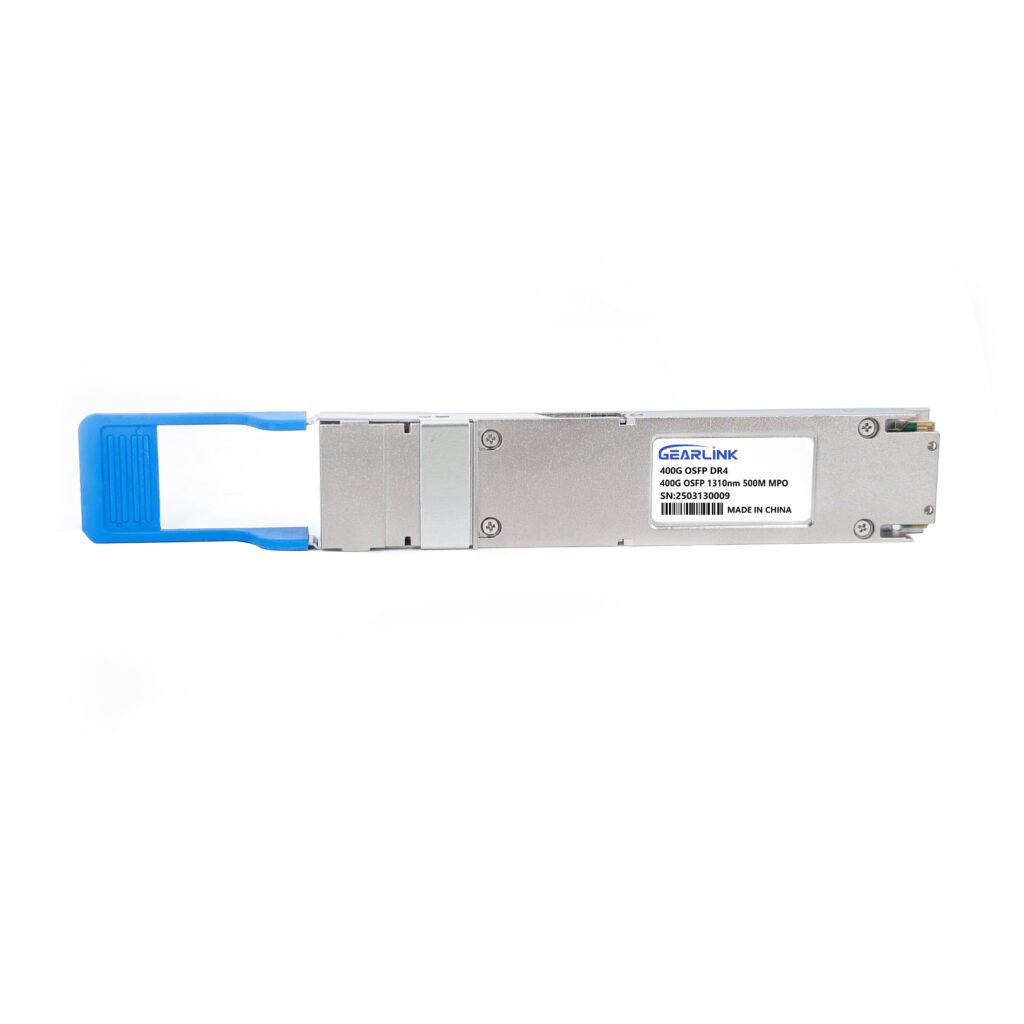
When sourcing these modules, the gap between a generic vendor and a reliable 400g dr4 transceiver supplier is significant. For B-end users and procurement managers, price is important, but interoperability is non-negotiable.
I recommend verifying three specific factors before committing to a 400g dr4 wholesale order. First, the supplier must demonstrate rigorous testing on intended switch platforms (e.g., Cisco, Arista, Juniper). Coding errors are the most common cause of link failure.
Second, verify the warranty and replacement policy. 400G optics run hotter than 100G optics; thermal dissipation design is critical for longevity. Finally, ensure they adhere strictly to the QSFP-DD hardware specifications regarding EEPROM coding.
How to Validate Module Compatibility
Choosing the correct optical module involves more than just matching part numbers. You need to ensure the specific 400g dr4 specification aligns with your switch’s operating system (NOS). Third-party transceivers must contain specific manufacturer IDs in their memory map to avoid “unsupported transceiver” errors.
I suggest looking for suppliers who offer specific “S-class” or enterprise-coded versions. These modules emulate the rigorous identification protocols required by top-tier networking hardware. This ensures the switch enables all features, including digital optical monitoring (DOM).
For detailed specifications on compatible modules, you can review the technical data for the QDD-400G-DR4-S Optical Transceiver Module.
Summary
The qdd-400g-dr4-s is a cornerstone for modern data center fabrics, offering vital 400g dr4 breakout functionality. By strictly adhering to IEEE and MSA standards, you ensure network stability. Always prioritize suppliers who provide verified interoperability testing over those simply offering the lowest price.
FAQ
Q1: What is the maximum distance for a QDD-400G-DR4-S module?
The standard maximum reach is 500 meters over parallel single-mode fiber (SMF).
Q2: Can I use a 400G DR4 module to connect to four 100G DR modules?
Yes, the DR4 is designed specifically for breakout applications connecting to four 100G-DR or 100G-DR1 transceivers.
Q3: What connector type does the 400G DR4 use?
It typically uses an MPO-12 APC (Angled Physical Contact) connector to handle the 8 fibers (4 Tx, 4 Rx).
Q4: Why is the “S” suffix important in the model name?
The “S” usually indicates compatibility with specific enterprise-grade standards or rigorous temperature and coding requirements often associated with Cisco-compatible lines.
Q5: Is the QSFP-DD form factor backward compatible?
Yes, QSFP-DD ports are generally backward compatible with QSFP28 (100G) and QSFP+ (40G) modules, though the DR4 module itself is 400G only.
Reference Sources
IEEE Standards Association (IEEE 802.3bs Standard for Ethernet)
https://standards.ieee.org/
QSFP-DD MSA Group (QSFP-DD Hardware Specification)
http://www.qsfp-dd.com/
The Fiber Optic Association (MPO/MTP Connector Guide)
https://www.thefoa.org/