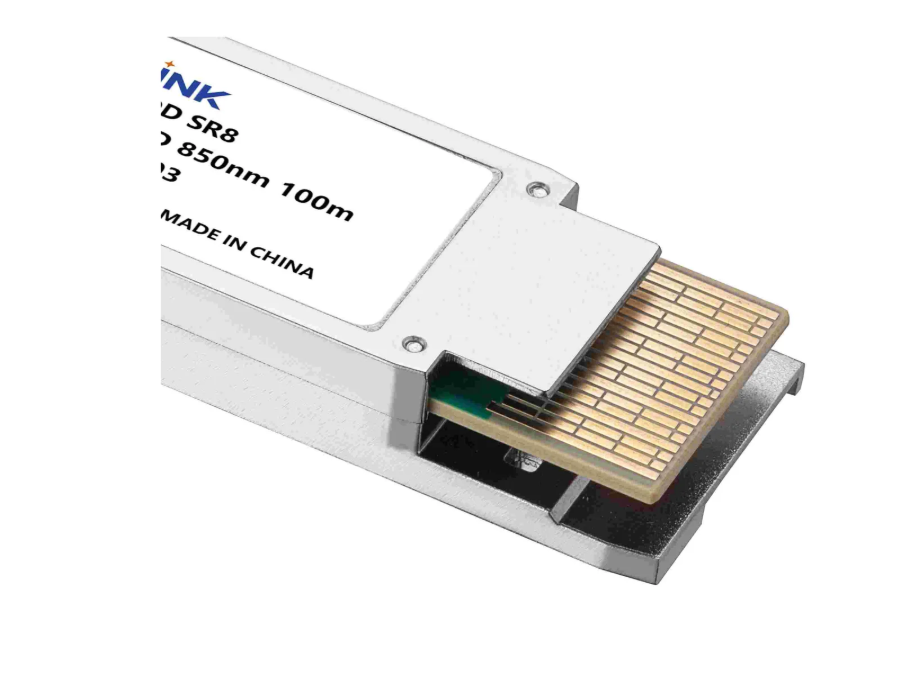
Introduction: Navigating the 40G Transition in Modern Data Centers
As the demands of high-bandwidth applications continue to skyrocket, modern data centers and enterprise networks are rapidly transitioning to higher-speed interconnects. Among the most pivotal technologies facilitating this shift is the QSFP 40G (Quad Small Form-factor Pluggable) optical transceiver. This compact, hot-pluggable module is the backbone of 40 Gigabit Ethernet (40GbE) connectivity, enabling robust and efficient data transmission across various distances and fiber types. While the term QSFP 40G is used universally, it represents a family of distinct transceivers, each engineered for specific network topologies and distance requirements. Choosing the right module is not merely a technical decision; it is a critical factor impacting a network’s performance, scalability, and long-term operational cost. Consequently, understanding the core differences between the primary QSFP 40G types is indispensable for network engineers and procurement managers focused on maximizing fiber optic deployment value. This in-depth comparison serves as a vital resource for navigating these critical choices within the demanding optical module landscape.
The Versatile Landscape of QSFP 40G Transceivers
The QSFP 40G standard, defined by its small footprint and capability to aggregate four 10 Gbps lanes into a single 40 Gbps channel, offers unparalleled versatility. The fundamental value proposition of this technology lies in its ability to deliver high density and low power consumption, making it an ideal choice for connecting switches, routers, and servers in both spine/leaf architectures and traditional core networks.
However, the suitability of a QSFP 40G module is dictated by its underlying optical technology and interface, which are optimized for different transmission distances. The major variants commonly deployed in the field include:
- 40GBASE-SR4 (Short Reach): Predominantly utilized for short-distance, intra-rack, or inter-rack connections within a data center.
- 40GBASE-LR4 (Long Reach): Designed for longer-haul connections, typically deployed for connecting multiple data center facilities or campus networks.
- 40GBASE-ER4 (Extended Reach): Engineered for maximum distance applications, often used for metropolitan area network (MAN) or long-distance campus links.
- 40GBASE-CR4 (Copper Cable): Not an optical module, but a direct attach copper cable assembly (DAC) offering a cost-effective solution for very short reaches.
It is through the careful assessment of these diverse specifications that the true efficiency of a fiber optic network can be realized.
In-Depth Technical Comparison: SR4 vs. LR4 vs. ER4
The most crucial selection process involves contrasting the three primary optical standards: SR4, LR4, and ER4. The technical divergence among these modules is significant, centering on the type of fiber used, the maximum achievable distance, and the underlying signaling mechanism.
40GBASE-SR4: The Workhorse of the Data Center
The SR4 module operates over Multimode Fiber (MMF), specifically using 8 fibers (4 transmit and 4 receive) and an MPO/MTP connector. This architecture necessitates parallel optics technology, where four separate 10 Gbps data streams are transmitted and received simultaneously. Because of the higher attenuation and dispersion characteristics of MMF, the reach is inherently limited. Typically, using OM3 fiber, a maximum distance of 100 meters is supported, while OM4 fiber extends this to 150 meters. The SR4 is the most cost-effective solution for high-volume, short-link applications, as its reliance on VCSEL (Vertical Cavity Surface Emitting Laser) technology keeps manufacturing costs low.
40GBASE-LR4: Bridging the Distance Gap
In contrast, the LR4 standard is designed for single-mode fiber (SMF) connections, capable of reaching distances up to 10 kilometers. This significant increase in reach is achieved through a different technological approach known as Wavelength Division Multiplexing (WDM). The LR4 module uses four distinct wavelengths (channels) that are optically multiplexed onto a single pair of SMF strands (Duplex LC connector) and then demultiplexed at the receiving end. This mechanism maximizes the utility of the fiber infrastructure, making it the preferred choice for interconnecting buildings, data halls, or points-of-presence (PoPs) across a larger geographic area. The use of DML (Directly Modulated Laser) or EML (Electro-absorption Modulated Laser) technology for the longer wavelengths contributes to a higher unit cost compared to the SR4.
40GBASE-ER4: Maximizing Transmission Range
For applications requiring transmission over distances up to 40 kilometers, the ER4 standard provides the ultimate solution. Like the LR4, the ER4 employs WDM technology over SMF, but utilizes high-performance, higher-power EML lasers and integrated semiconductor optical amplifiers (SOAs) to compensate for the significantly increased fiber attenuation across the extended link. This robust engineering ensures signal integrity over challenging distances, making the QSFP 40G ER4 an indispensable component for telecommunications carriers and large metropolitan networks. The complexity and power requirements associated with this extended reach capability naturally position the ER4 at the high end of the cost spectrum within the QSFP 40G family.
Performance, Power Consumption, and the Value Proposition
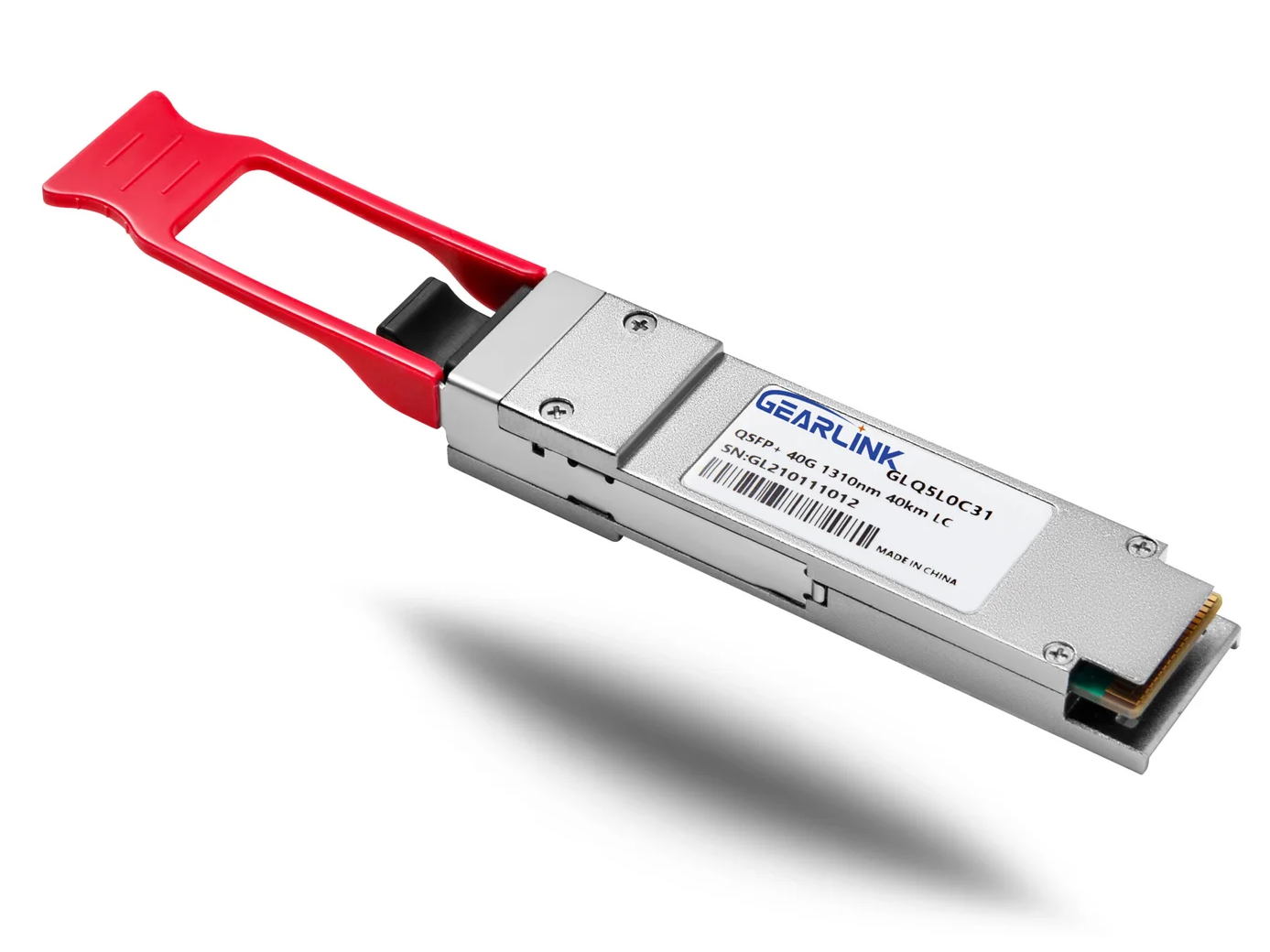
The decision-making process for network operators must extend beyond simple distance specifications to include power consumption and overall network architecture impact.
The SR4 typically exhibits the lowest power draw, a crucial advantage in power-constrained, high-density data centers where thermal management is paramount. Its parallel nature also allows for easy “breakout” configuration, where the four 10 Gbps lanes can be channeled to four separate SFP+ modules at the other end, facilitating a transition from 40G to 10G infrastructure. This feature alone offers significant operational flexibility.
Conversely, the LR4 and ER4 modules, due to their WDM technology and more sophisticated laser components, inherently consume more power. However, this trade-off is often justified by their immense value in conserving fiber strands. While the SR4 uses 8 fibers, the LR4 and ER4 utilize only 2 fibers (one pair), which is a massive advantage in fiber-scarce environments where trenching or installing new fiber is prohibitively expensive. The consolidation of four channels onto a single fiber pair represents a major economic and strategic benefit for long-haul infrastructure deployment.
The emphasis should always be placed on choosing the QSFP 40G module that perfectly aligns with the required link length and the existing fiber plant, ensuring that capital expenditure is optimized without compromising network performance. A thorough cost-benefit analysis of fiber savings versus module unit cost is essential for making an informed decision.
Conclusion: Selecting the Optimal QSFP 40G for Future-Proofing
The QSFP 40G form factor is unequivocally a cornerstone technology in contemporary high-speed networking. The underlying choice between the SR4, LR4, and ER4 variants hinges entirely on the specific application environment and distance requirement.
For the vast majority of intra-data center links, where distances are minimal and fiber abundance is not an issue, the high-density, low-power 40GBASE-SR4 module stands out as the most economical and logical choice. Where campus or metro links necessitate distances of up to 10km, the 40GBASE-LR4 provides a superior solution by conserving fiber and offering a reliable, standards-compliant link. Finally, for those demanding ultra-long distances, the 40GBASE-ER4 module delivers the required reach, albeit at a higher cost.
Ultimately, the optimal QSFP 40G transceiver for your network is the one that minimizes operational expense, maximizes fiber efficiency, and meets the required link budget with an appropriate performance margin. By carefully evaluating these factors, network professionals are positioned to build robust, scalable, and future-proof fiber optic infrastructures.
Frequently Asked Questions (FAQ)
Q: What is the primary difference between QSFP 40G SR4 and LR4 fiber usage?
A: The QSFP 40G SR4 uses parallel optics over Multimode Fiber (MMF) and requires 8 strands of fiber (4 Tx, 4 Rx) via an MPO/MTP connector. Conversely, the QSFP 40G LR4 uses Wavelength Division Multiplexing (WDM) over Single-Mode Fiber (SMF) and only requires 2 strands of fiber (1 pair) via a Duplex LC connector.
Q: Can a 40GBASE-SR4 module be used to connect to four 10G SFP+ ports?
A: Yes. The 40GBASE-SR4 module is commonly used in “breakout” configurations. A single SR4 port on a 40G switch can be connected to a fan-out cable that splits the signal into four separate 10G channels, which then terminate in four 10GBASE-SR SFP+ transceivers on a 10G switch.
Q: Why does the 40GBASE-ER4 module cost significantly more than the LR4?
A: The increased cost of the 40GBASE-ER4 is attributed to the specialized components required for extended reach. It typically incorporates more powerful, high-quality DFB/EML lasers and often includes integrated semiconductor optical amplifiers (SOAs) to boost the optical signal, ensuring reliable transmission over distances