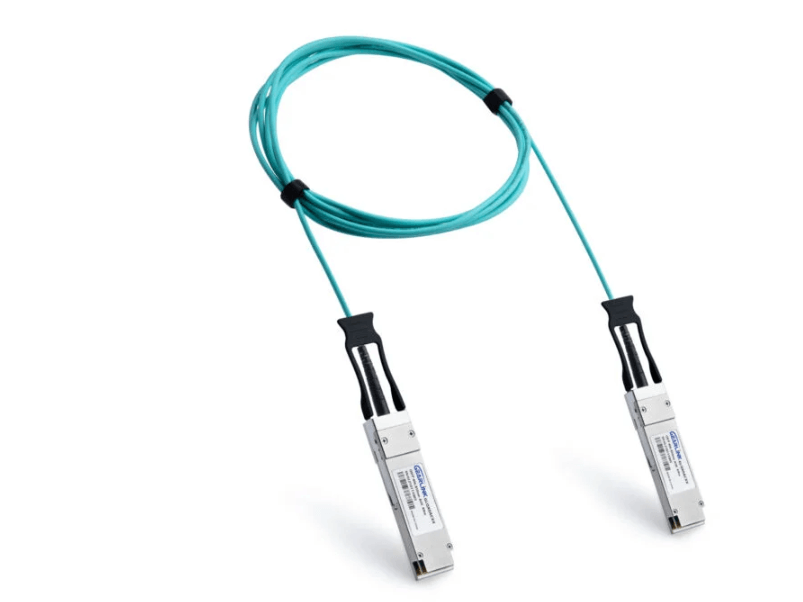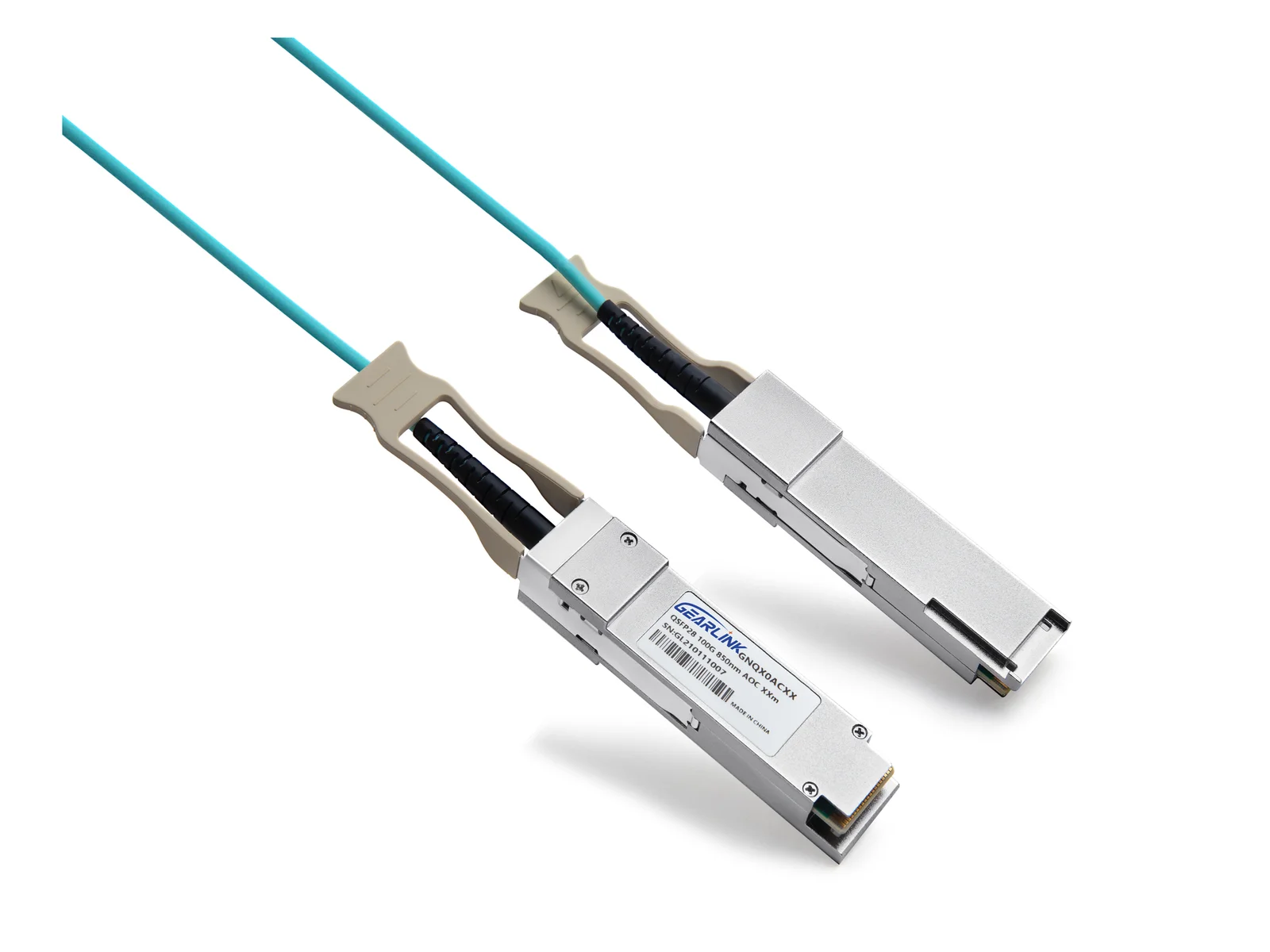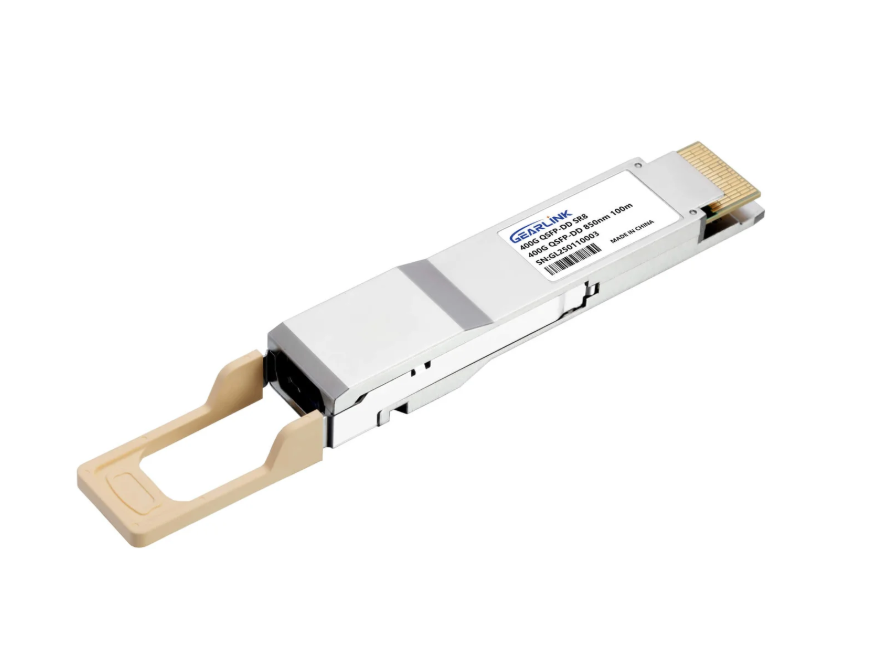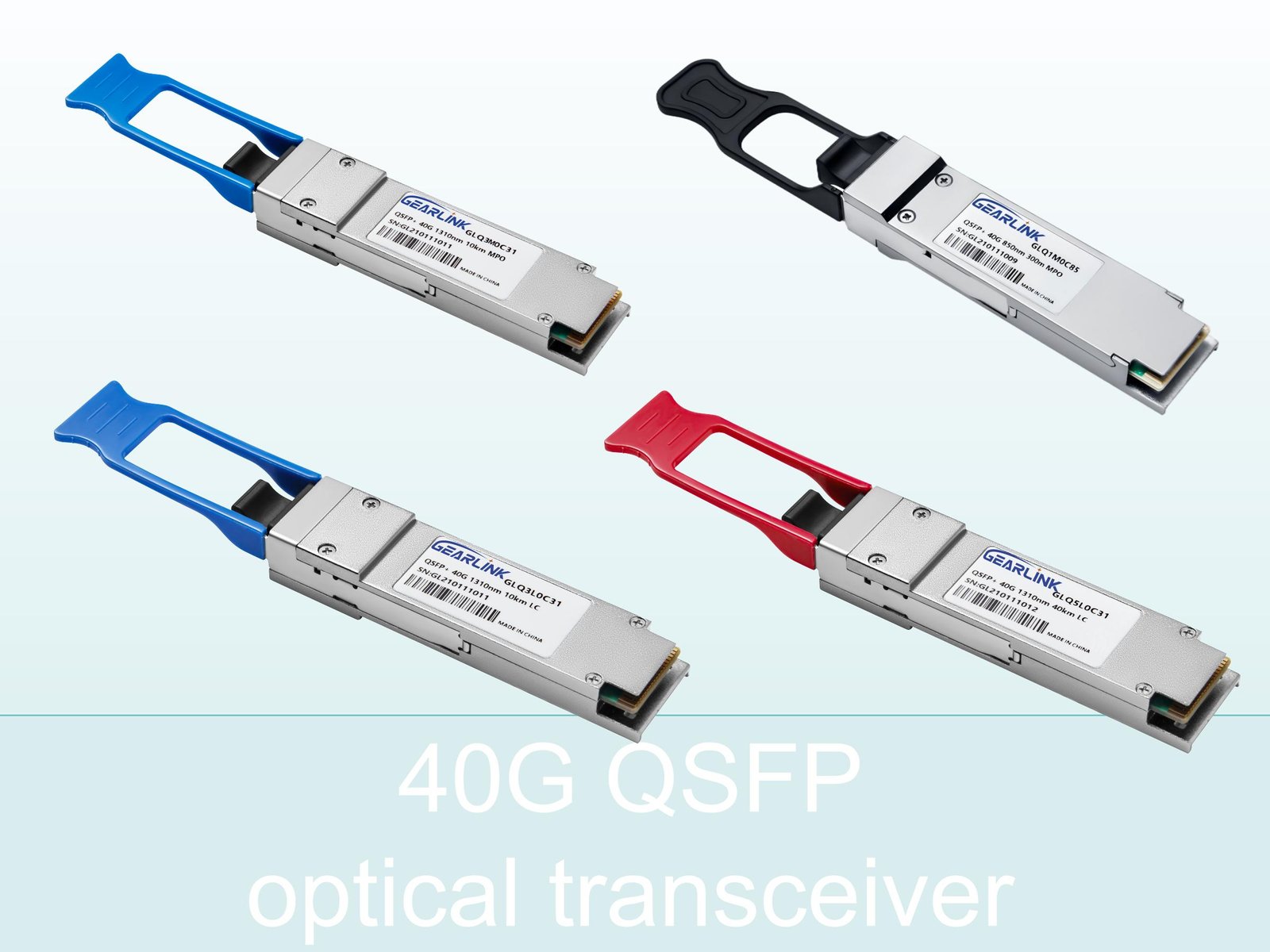
In today’s fast-moving networking world, the term QSFP transceiver is often used interchangeably with 40G QSFP or 40G transceiver, because typically the 40 Gigabit optical modules are packaged in the QSFP form-factor. Therefore, when we speak of a 40G transceiver in many contexts, we are referring to a QSFP-based 40G optical module. In this article we will dive into what these terms mean, how they work, where they are used, and what you should consider when selecting one. Our aim is to make this somewhat technical subject accessible and practical.
What is a QSFP Transceiver?
(And why it often means a 40G transceiver)
A QSFP transceiver is an optical or copper pluggable module that fits a QSFP (Quad Small Form-Factor Pluggable) port on networking equipment. In many modern deployments, the 40G QSFP module is the standard for 40 Gigabit Ethernet links, so the term “QSFP transceiver” generally refers to a 40G transceiver.
The “40G QSFP” is the module designed to support a 40 Gigabit data rate, often via four lanes of 10 Gb/s each, aggregated.
For instance, one module might support 40GBASE-SR4 or 40GBASE-LR4 formats.
Because this packaging has become very common for 40G links, most engineers will refer to “40G transceiver” and mean the QSFP form.
In short: when you read about a 40G transceiver and the context is data-centre optical networks, it’s quite likely referring to a QSFP transceiver (i.e., 40G QSFP).
Why Choose 40G QSFP Modules?
(Key benefits and typical use-cases)
When deciding on modules for 40 Gigabit Ethernet, the 40G QSFP format offers several compelling advantages:
Higher port density: A single QSFP port handles 40 Gb/s, reducing the number of ports needed compared to multiple 10 Gb/s links.
Cost-effectiveness: When compared to older architectures, using a QSFP transceiver for 40G links can lower cost per gigabit of bandwidth.
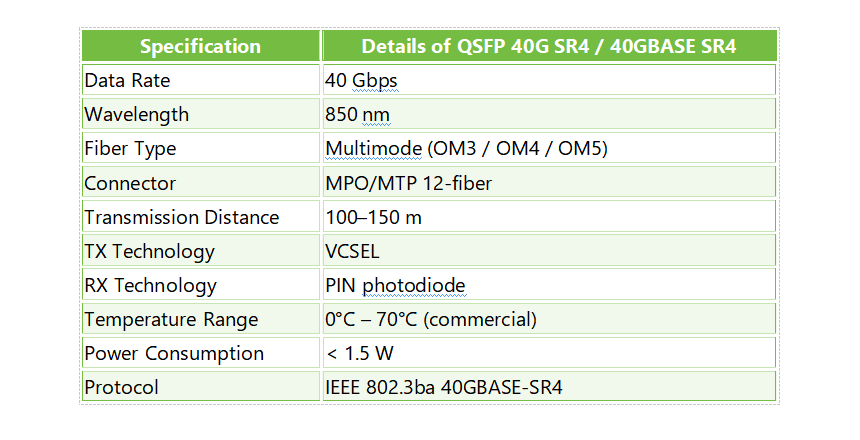
Simplified cabling: Many 40G QSFP modules use MPO/MTP multi-strand fibre or duplex connectors, and standards like 40GBASE-SR4 support multimode fibre up to e.g. 100 m on OM3.
Flexibility in breakout mode: Some QSFP modules allow breakout into four 10G links — useful when migrating infrastructure gradually.
Typical use-cases include:
Data centre leaf-spine networks where 40G uplinks connect switches.
High-performance computing clusters requiring high throughput between nodes.
Enterprise aggregation links deploying 40G for future-proofing.
Understanding Key Formats of 40G Transceivers
(What distinctions you should know)
Not all 40G QSFP modules are identical — understanding the variants helps you pick the right one. Here are common formats:
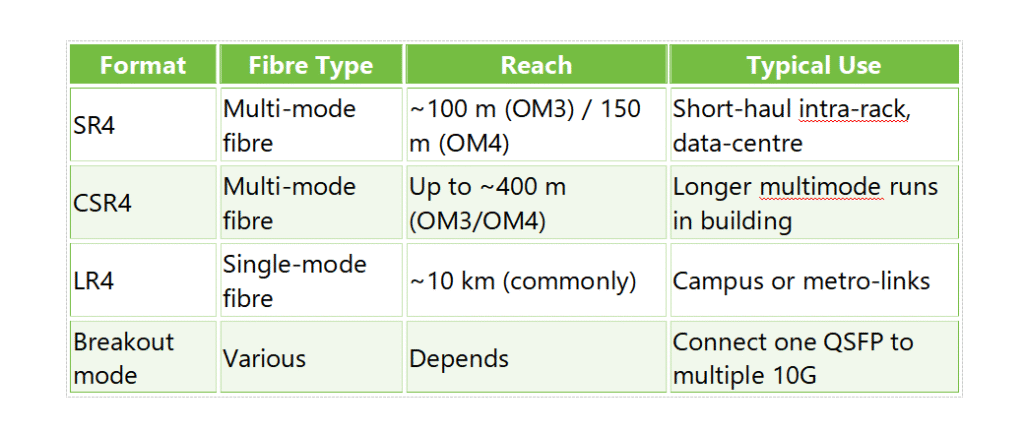
Key details to review when selecting a module: supported fibre type, connector (MPO/MTP vs LC), distance (reach), and whether digital diagnostic monitoring (DDM) is supported. For example, the QSFP-40G-SR4 series uses MPO/MTP connector with multimode fibre and supports up to ~100 m.
How Does a 40G QSFP Transceiver Work?
(Simple explanation of mechanism)
Although the internals are technical, here’s a straightforward breakdown:
A QSFP transceiver designed for 40G has four optical lanes (in many cases) each carrying ~10 Gb/s.
On the transmit side, each of those lanes sends optical signals (wavelengths) via a fibre connector (often an MPO/MTP bundle for SR4).
On the receive side, it aggregates the returned optical lanes into a 40 Gb/s electrical signal inside the module.
The module is hot-pluggable, meaning it can be inserted or removed without shutting down the switch.
Many modules provide digital diagnostic monitoring (DDM) to check optical power, temperature, voltage, etc., enabling proactive maintenance.
By using this approach, a single port on a switch (with a QSFP transceiver inserted) can provide a full 40 Gigabit link, simplifying physical and logical network design.
Practical Selection Checklist for a 40G Transceiver
(Key considerations before purchase or deployment)
When choosing a 40G QSFP module (i.e., the transceiver), use this checklist to ensure you get the right one:
Port compatibility: Confirm your switch or server has a QSFP port that supports 40G and the required form-factor.
Link distance and fibre type: Decide how far the link needs to run — short intra-rack (<100 m) or longer (hundreds of metres to kilometres).
Connector type: Determine whether MPO/MTP or LC (for breakout etc) is required.
Supported standard: Ensure the module supports the correct IEEE standard (e.g., 40GBASE-SR4, LR4, etc).
Vendor compatibility: Some equipment requires modules to be certified or pre-programmed for the brand; check third-party compatibility. For example, a module might be pre-programmed for a specific brand’s switch.
Temperature and environment: For data-centre racks vs industrial environments, check operating temperature range.
Breakout or native 40G: Some use the QSFP in 4x10G breakout mode — if you plan to split the 40G into four 10G links, ensure the module supports it.
Diagnostics and monitoring: DDM support can help monitor health and performance over time.
By carefully addressing each point, you reduce risk of mismatched modules, interoperability issues, or overspending on unnecessary reach.
Common Issues & Best Practices for Deployment
(Avoid these pitfalls, and apply these tips)
Although 40G QSFP transceivers offer many benefits, common issues can arise. Here are best practices:
Issue: Choosing a module with too much reach (and cost) when your link is short.
Tip: Match reach to real need — e.g., if you only need <100 m, a 40GBASE-SR4 multimode is enough and cheaper.
Issue: Mismatched fibre type or connector (e.g., using single-mode module with multimode fibre).
Tip: Verify fibre deployment type (OM3/OM4 vs single-mode) before selecting module.
Issue: Vendor lock-in or compatibility issues with unmanaged modules.
Tip: Choose modules known to work with your switch brand, or certified third-party modules.
Issue: Cabling congestion or airflow problems in high-density racks.
Tip: Use modules and cables rated for the data-centre environment; shorter, thinner fibre/ribbon cabling helps.
Issue: Under-estimating future growth and network re-design.
Tip: While planning the 40G transceiver deployment, consider modularity and potential upgrade to 100G or 400G in the future.
By adopting these best practices, your deployment of a QSFP transceiver (for 40G) will be smoother and more reliable.
Future Trends: Beyond 40G – What’s Next?
(How the 40G transceiver fits in future networks)
While the 40G QSFP transceiver is widely used today, network speeds continue to scale. It’s valuable to understand how the 40G format fits the longer-term picture.
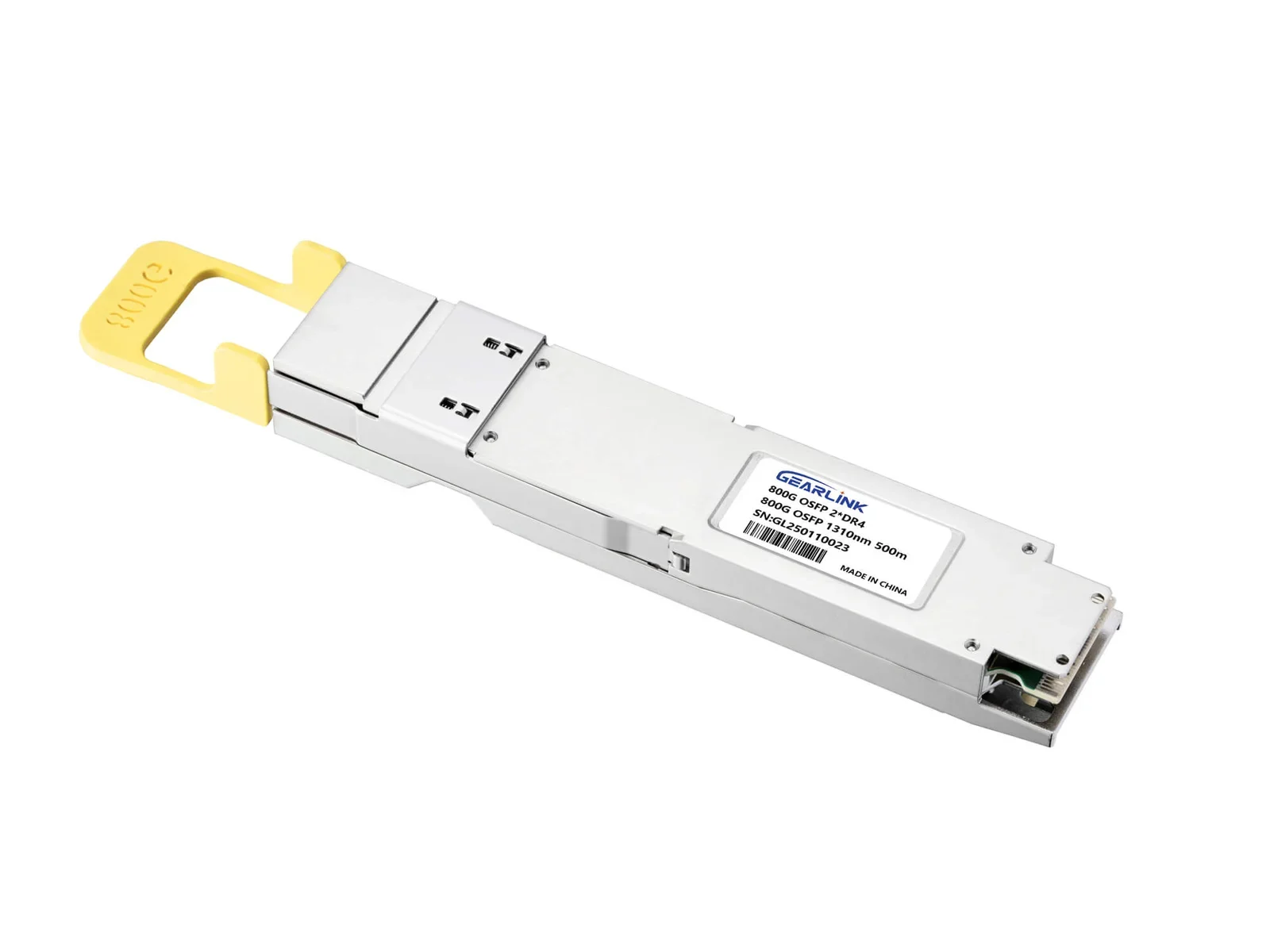
Many data centres now move toward 100G, 400G, or even 800G modules and new form-factors (such as QSFP28, QSFP56, QSFP112).
However, the 40G QSFP format remains relevant for many applications because it offers a good balance of cost and performance and can serve as a stepping-stone in upgrade paths.
In some upgrade strategies, existing QSFP ports might be used temporarily while newer form-factors are deployed, making the 40G transceiver a pragmatic choice today.
Therefore, when selecting a 40G QSFP module, it makes sense to consider future re-use or upgrade paths — e.g., will the port later support breakout into higher-speed modules?
In summary: the 40G QSFP transceiver remains a strong choice now and can integrate into networks evolving toward higher speeds.
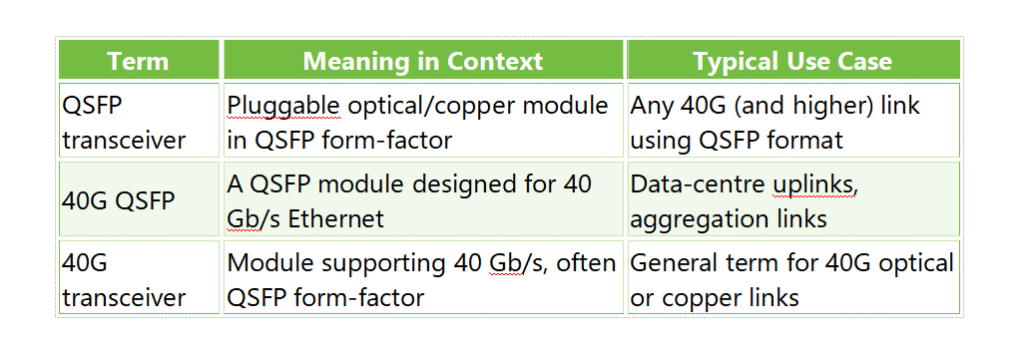
Summary Table of Key Concepts
Final Thoughts
To wrap up, when you hear terms like QSFP transceiver, 40G QSFP, or 40G transceiver, know that they are often referring to essentially the same thing in a modern network: a QSFP-form optical module carrying 40 Gigabit data links. Understanding the distinctions in formats, choosing the right module for your reach and deployment environment, and planning for future expansion will ensure your network remains flexible, cost-effective and high performing.
If you want, I can prepare a detailed comparison of several popular 40G QSFP modules (brands, specs, price tiers) to help you shortlist. Would you like that?
Related Q&A
What is the difference between a QSFP transceiver and a 40G transceiver?
The term QSFP transceiver refers to the form-factor (Quad Small Form-Factor Pluggable) while 40G transceiver refers to the data-rate (40 Gigabit) module. In practice many 40G transceivers are QSFP form-factor, so the two often mean the same thing in context.
Can a 40G QSFP module be broken out into four 10G links?
Yes — some modules and ports support breakout mode (4 × 10G) using a QSFP port and appropriate breakout cable. This allows flexible use of a 40G transceiver for multiple 10G links.
How far can a standard 40G QSFP transceiver reach?
It depends on the format: for example, a 40GBASE-SR4 multimode module supports ~100 m on OM3 or ~150 m on OM4. Single-mode variants (e.g., LR4) extend much further (several kilometres).
Do I need to worry about vendor compatibility for a 40G transceiver?
Yes — while many modules follow standards, some equipment may restrict use to certified modules. It’s prudent to check that your chosen module is compatible with your networking gear.
Is using a 40G QSFP module still future-proof?
Absolutely — even though higher speeds exist, deploying 40G QSFP modules today gives a strong performance baseline, and many networks will use 40G links for years. Choosing modules with good specifications and upgrade paths can extend their usefulness.