Introduction: The Indispensable Role of QSFP-40G-SR4 in High-Speed Data Centers
In the rapidly evolving landscape of network infrastructure, the demand for higher bandwidth and faster data throughput is relentless. At the heart of this transition lies the optical transceiver, a tiny yet incredibly powerful component. Among the myriad of available modules, the QSFP-40G-SR4 has firmly established itself as a foundational element for achieving 40 Gigabit Ethernet (40GbE) connectivity over short distances. This article will delve into the technical specifications, pivotal features, and crucial applications of this module, providing optical product users with a comprehensive and valuable understanding of why the QSFP-40G-SR4 is not merely a component, but a truly essential part of contemporary data center and enterprise networking.
The core significance of the QSFP-40G-SR4 stems from its unique ability to efficiently aggregate four 10 Gbps channels into a single 40 Gbps link. This multi-channel approach, combined with the module’s small form factor, enables unprecedented port density and performance crucial for scaling modern data centers. Consequently, understanding its operational nuances is paramount for network architects and product professionals seeking optimized, cost-effective, and high-performance solutions. Therefore, we will meticulously explore the technology that defines this critical piece of hardware.
Unpacking the Technology: The Distinctive Features of the QSFP-40G-SR4
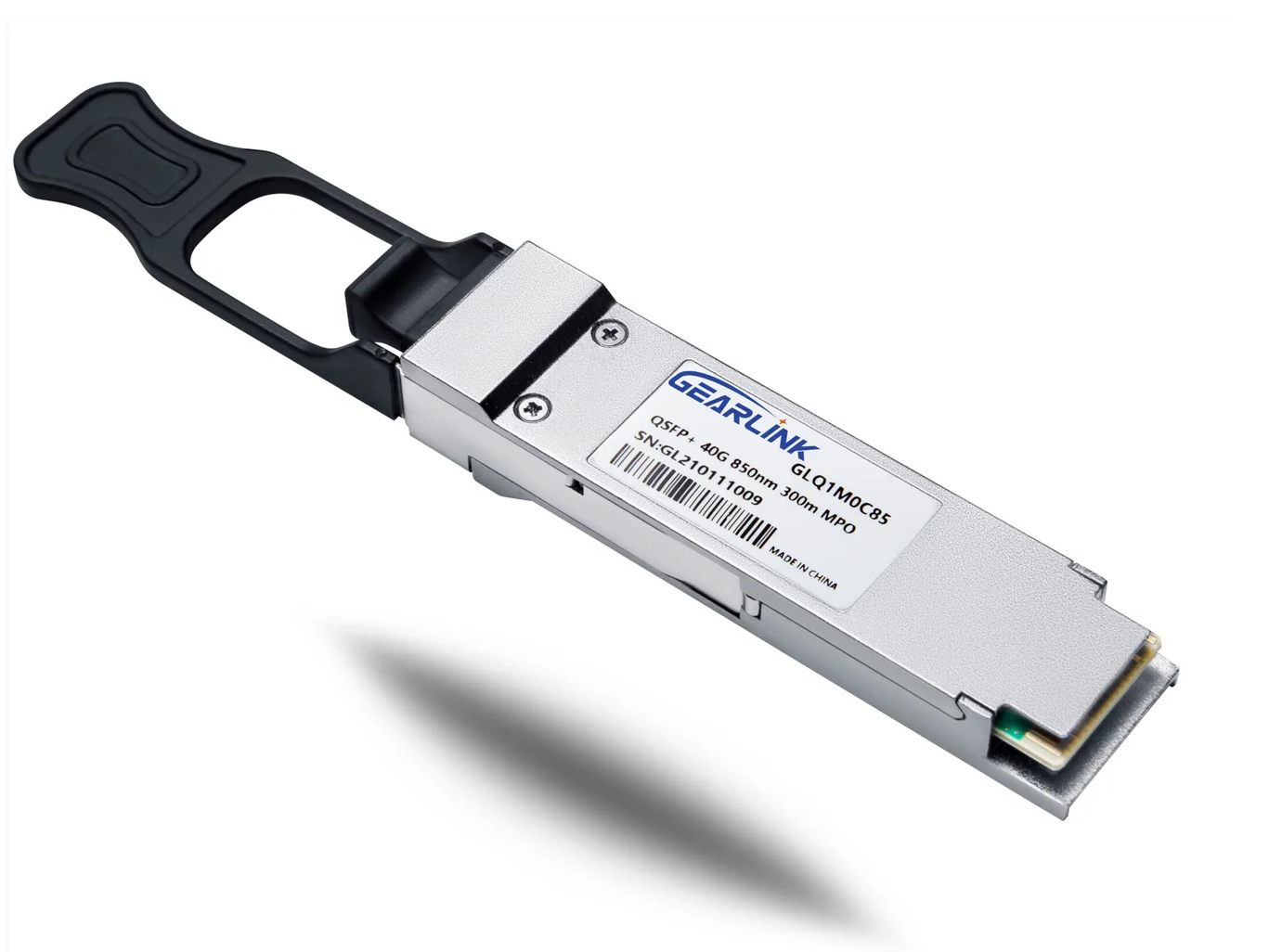
The name QSFP-40G-SR4 itself is an abbreviation that encapsulates the module’s primary characteristics. QSFP stands for Quad Small Form-factor Pluggable, indicating its compact size and hot-pluggable capability, which facilitates easier maintenance and upgrades without system downtime. The “40G” signifies the maximum data rate of 40 Gigabits per second. Finally, “SR4” denotes Short Reach (SR) and the use of four (4) lanes.
A key defining characteristic of this module is its reliance on Multi-Mode Fiber (MMF) and an MPO/MTP connector. Unlike single-mode solutions that utilize a single laser for transmission, the QSFP-40G-SR4 employs four independent transmit and receive channels, each operating at 10 Gbps. These channels are typically implemented using Vertical-Cavity Surface-Emitting Lasers (VCSELs). This architecture allows the module to transmit 40GbE over a parallel ribbon fiber. Specifically, when connected via OM3 fiber, it typically reaches distances of up to 100 meters, and up to 150 meters when using OM4 fiber. Crucially, this parallel optic structure is what gives the module its robust short-reach performance, making it ideal for rack-to-rack and intra-data center connections.
Furthermore, the electrical interface of the module adheres to the standard specifications, enabling seamless integration with the host system’s circuitry. In addition, most modern QSFP-40G-SR4 transceivers are designed with Digital Diagnostics Monitoring (DDM) support. This essential feature allows network administrators to monitor real-time parameters such as optical output power, input power, temperature, and supply voltage. As a result, DDM significantly aids in proactive network maintenance, fault isolation, and ensuring optimal operational integrity.
Core Applications in Optical Networking: Where QSFP-40G-SR4 Excels
The primary domain where the QSFP-40G-SR4 truly shines is within the confines of data center interconnectivity. Its short-reach capabilities and high bandwidth density perfectly address the intense data demands of modern cloud computing environments, hyper-scale facilities, and enterprise data centers.
One of the most frequent applications is Switch-to-Switch Interconnection. High-density aggregation switches and core routers often need to communicate across server racks or within the same row. The QSFP-40G-SR4 provides the necessary bandwidth to link these critical network devices efficiently and reliably. Similarly, it is extensively used for Server-to-Switch Connections, particularly when high-performance servers, such as those used for deep learning, virtualization, or high-frequency trading, require a 40GbE uplink to the top-of-rack (ToR) switch.
Beyond simple interconnection, the QSFP-40G-SR4 module plays a significant role in 40G to 10G Breakout Applications. This is perhaps one of its most valuable features for system migration. By utilizing a breakout MPO/MTP-to-LC harness cable, the 40G signal from the module can be optically separated into four independent 10G links. Consequently, one QSFP-40G-SR4 port on an aggregation switch can connect to four distinct 10G SFP+ ports on four separate servers or switches. This strategic flexibility allows users to maximize port utilization and perform cost-effective, gradual upgrades from 10G to 40G infrastructure, avoiding a costly and disruptive forklift upgrade of the entire network.
The module’s robust performance over MMF, which is often pre-installed in older data centers, further enhances its value proposition. Thus, the QSFP-40G-SR4 represents a logical and financially sound choice for bridging the gap between legacy 10G systems and the next generation of 100G and beyond.
Valuing the QSFP-40G-SR4: A Vision of Efficiency and Value
Adopting the QSFP-40G-SR4 is not merely a technical decision; it is a strategic business choice driven by efficiency, density, and cost-effectiveness. The Quad Small Form-factor Pluggable design allows for an increase in port density, which is a key metric in data center design. In other words, more bandwidth can be squeezed into a smaller physical space, leading to reduced capital expenditure on infrastructure and better utilization of expensive rack space.
From a reliability standpoint, the use of established VCSEL technology ensures a high level of performance stability. Moreover, the hot-pluggable capability, as mentioned, minimizes the risk of service interruption during maintenance, directly contributing to higher network uptime and reduced operational expenses. Therefore, the total cost of ownership (TCO) for a 40G network built around this module is often highly favorable when compared to alternative, more complex solutions.
The enduring success of the QSFP-40G-SR4 lies in its perfect balance of high performance and manageable cost structure for short-reach applications. Ultimately, for any optical product user looking to build or upgrade a robust, scalable, and high-speed data center fabric, the QSFP-40G-SR4 transceiver stands out as an indispensable and foundational component. Its technical prowess and operational flexibility underscore a correct value proposition: providing powerful, high-density connectivity solutions that serve as the backbone of the global digital infrastructure, thereby fostering innovation and ensuring reliable data access worldwide.
Frequently Asked Questions (FAQ)
Q1: What is the maximum distance the QSFP-40G-SR4 can reliably transmit data?
The maximum distance depends on the type of Multi-Mode Fiber (MMF) used. It can typically reach 100 meters over OM3 fiber and up to 150 meters over the higher-performance OM4 fiber.
Q2: Can a QSFP-40G-SR4 module connect directly to a 10G SFP+ module?
No, a direct connection is not possible as they operate at different speeds and wavelengths. However, a QSFP-40G-SR4 can be used in a breakout configuration with an MPO/MTP-to-LC harness cable to connect its four 10G lanes to four separate ports that use 10G SFP+ modules.
Q3: What is the main difference between QSFP-40G-SR4 and other 40G modules like 40GBASE-LR4?
The main difference is the fiber type and reach. The QSFP-40G-SR4 uses Multi-Mode Fiber (MMF) and is designed for short distances (SR, up to 150m). Conversely, the 40GBASE-LR4 (Long Reach) uses Single-Mode Fiber (SMF) and is designed for much longer distances, typically up to 10 kilometers.