Introduction to QDD 400G SR8 S
As global data traffic continues to surge, faster and more efficient network infrastructure is being demanded across industries. In this context, QDD 400G SR8 S has become a reliable solution for high-speed, short-reach optical interconnects.
This advanced module is widely deployed in hyperscale data centers, cloud platforms, and AI clusters. More importantly, it enables stable 400G transmission over multimode fiber while maintaining low latency and high density.
In the following sections, we will explore how this technology works, its key advantages, and why it is increasingly preferred in modern networking environments.
What is QDD 400G SR8 S?
Understanding QDD 400G SR8 S Architecture
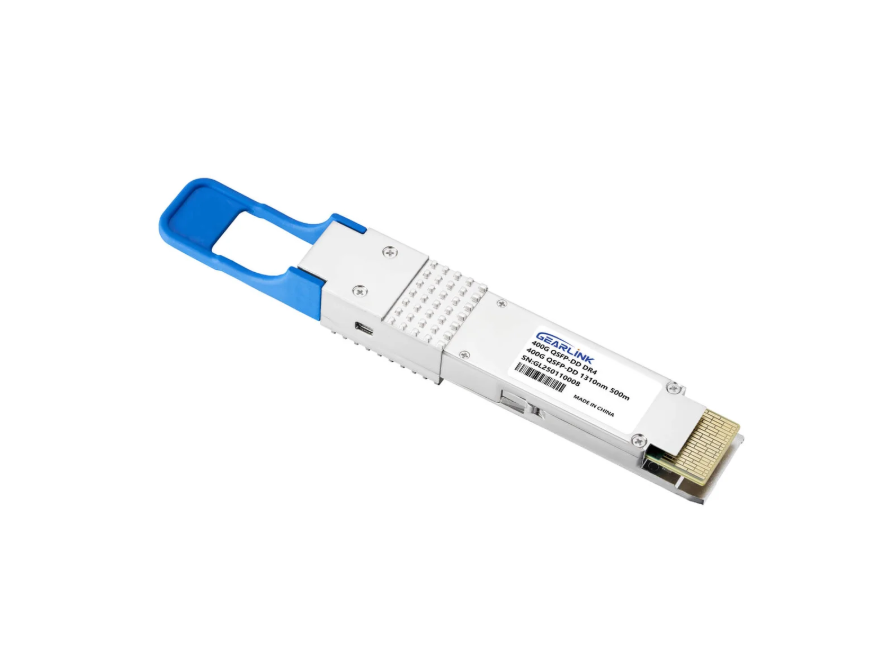
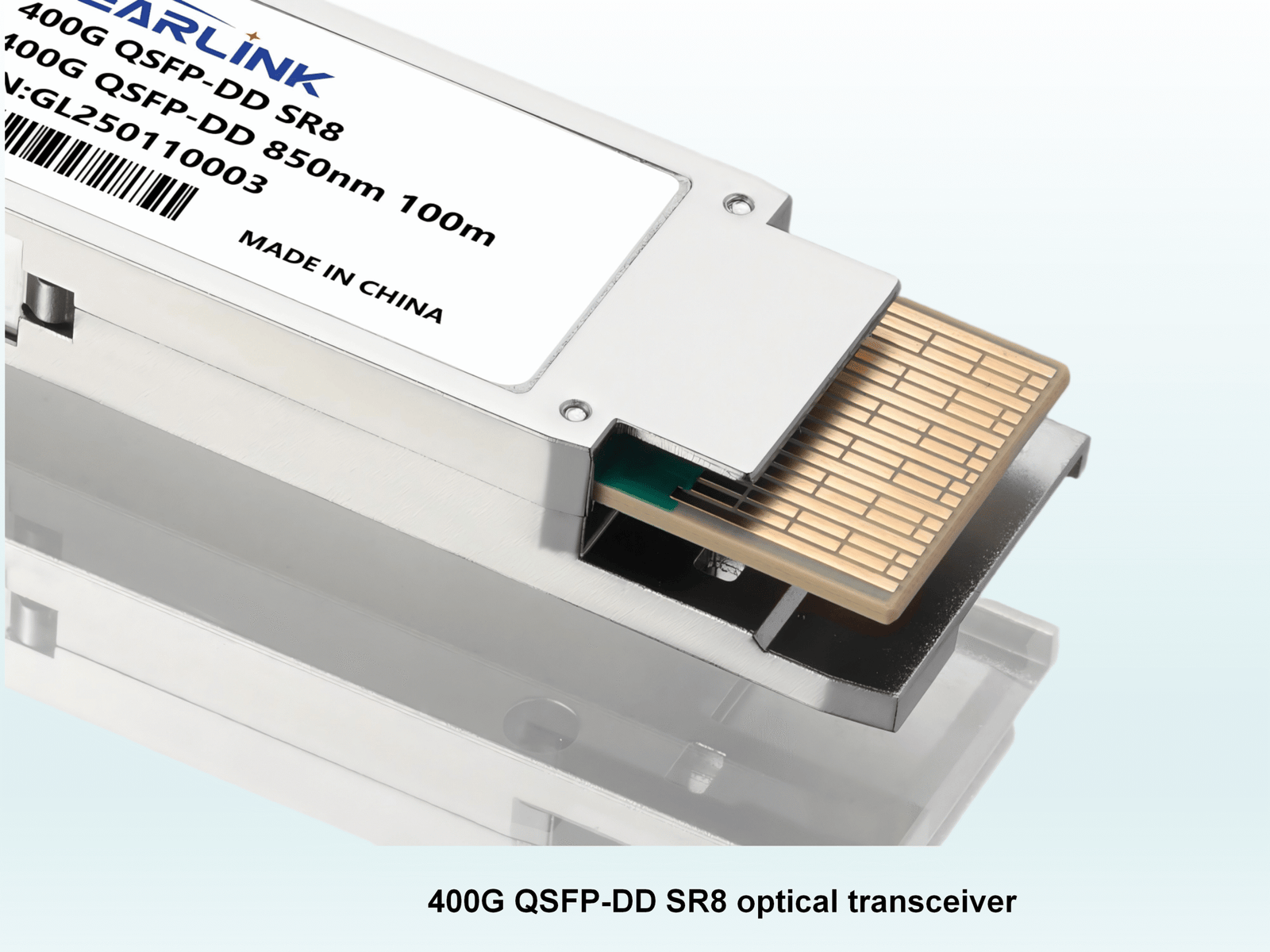
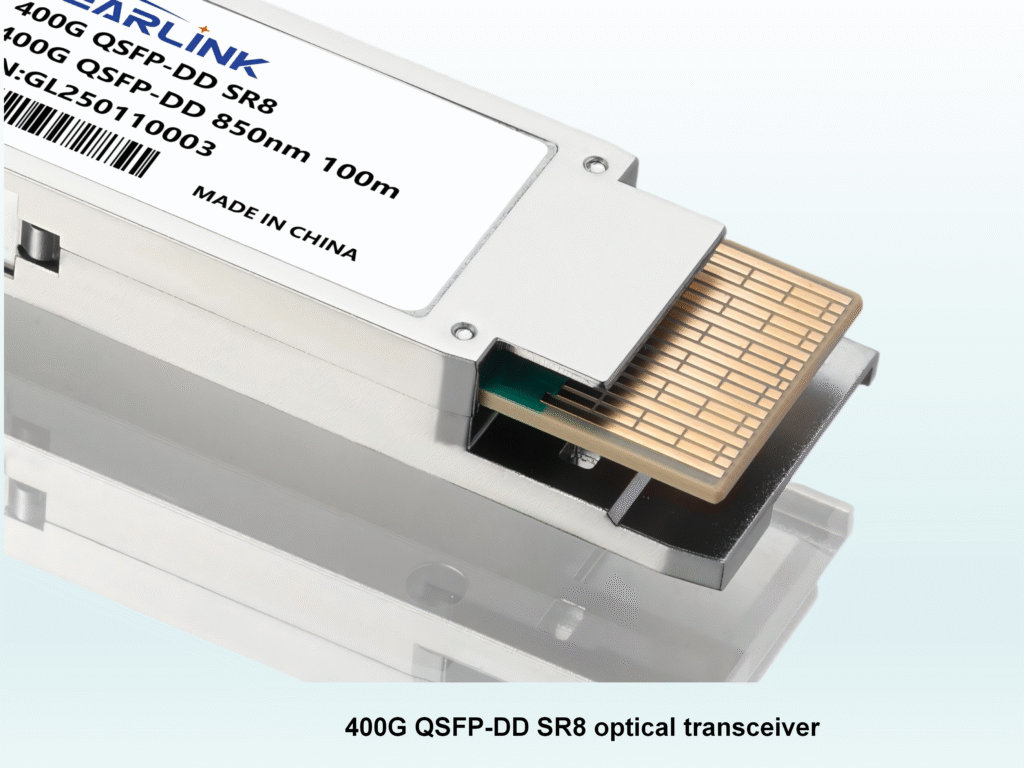
QDD 400G SR8 S is a 400G optical transceiver based on the QSFP-DD form factor. It uses 8 parallel optical lanes with PAM4 modulation to achieve high data throughput.
Key characteristics include:
8×50Gbps PAM4 channels
Multimode fiber transmission (OM3/OM4)
MPO-16 interface
Short-reach application (typically up to 100m)
Because of this architecture, the module is able to deliver high bandwidth while keeping system complexity manageable.
How QDD 400G SR8 S Works in Practice
Instead of relying on a single high-speed channel, this 400G SR8 module distributes data across multiple lanes. As a result, signal integrity is improved and transmission becomes more stable.
| Parameter | Specification |
| Total Data Rate | 400Gbps |
| Modulation | PAM4 |
| Fiber Type | Multimode |
| Connector | MPO-16 |
| Reach Distance | Up to 100m |
Therefore, it is particularly suitable for short-distance, high-density deployments.
Key Features of QDD 400G SR8 S
High-Speed Performance
First of all, QDD 400G SR8 S delivers a total bandwidth of 400Gbps. Compared with earlier 100G and 200G solutions, it significantly improves transmission efficiency.
Optimized Port Density
Thanks to the QSFP-DD design, more ports can be integrated into the same panel space. Consequently, data centers can scale their capacity without expanding physical infrastructure.
Energy Efficiency
Although high-speed optics often consume more power, this module has been optimized for efficiency. Typically, power consumption remains within 10–12W.
As a result, operational costs can be effectively reduced over time.
Flexible Compatibility
In many cases, QSFP-DD ports support backward compatibility. This means existing systems using 100G or 200G modules can be upgraded smoothly.
Advantages of QDD 400G SR8 S in Data Centers
Improved Transmission Efficiency
With PAM4 modulation, each lane carries more data compared to traditional NRZ signaling. Therefore, fewer physical connections are required to achieve higher bandwidth.
Scalability for Future Networks
Modern applications such as artificial intelligence and big data analytics require massive bandwidth. In this scenario, 400G SR8 optical solutions provide a scalable foundation for future expansion.
Reduced Cost per Bit
Even though initial deployment may require investment, the overall cost per transmitted bit is lower. This is mainly due to:
Reduced cabling complexity
Higher throughput per port
Lower power consumption per Gbps
Typical Applications of QDD 400G SR8 S
Data Center Internal Interconnects
This technology is commonly used in:
Spine-leaf architectures
Switch-to-switch links
High-speed aggregation layers
Cloud Computing Infrastructure
As cloud services continue to expand, efficient data transmission becomes essential. 400G multimode modules support large-scale virtualized workloads and distributed systems.
AI and High-Performance Computing
AI training clusters and HPC environments require extremely fast communication between nodes. In such cases, SR8-based solutions provide the necessary bandwidth and low latency.
Comparison with Other 400G Optical Modules
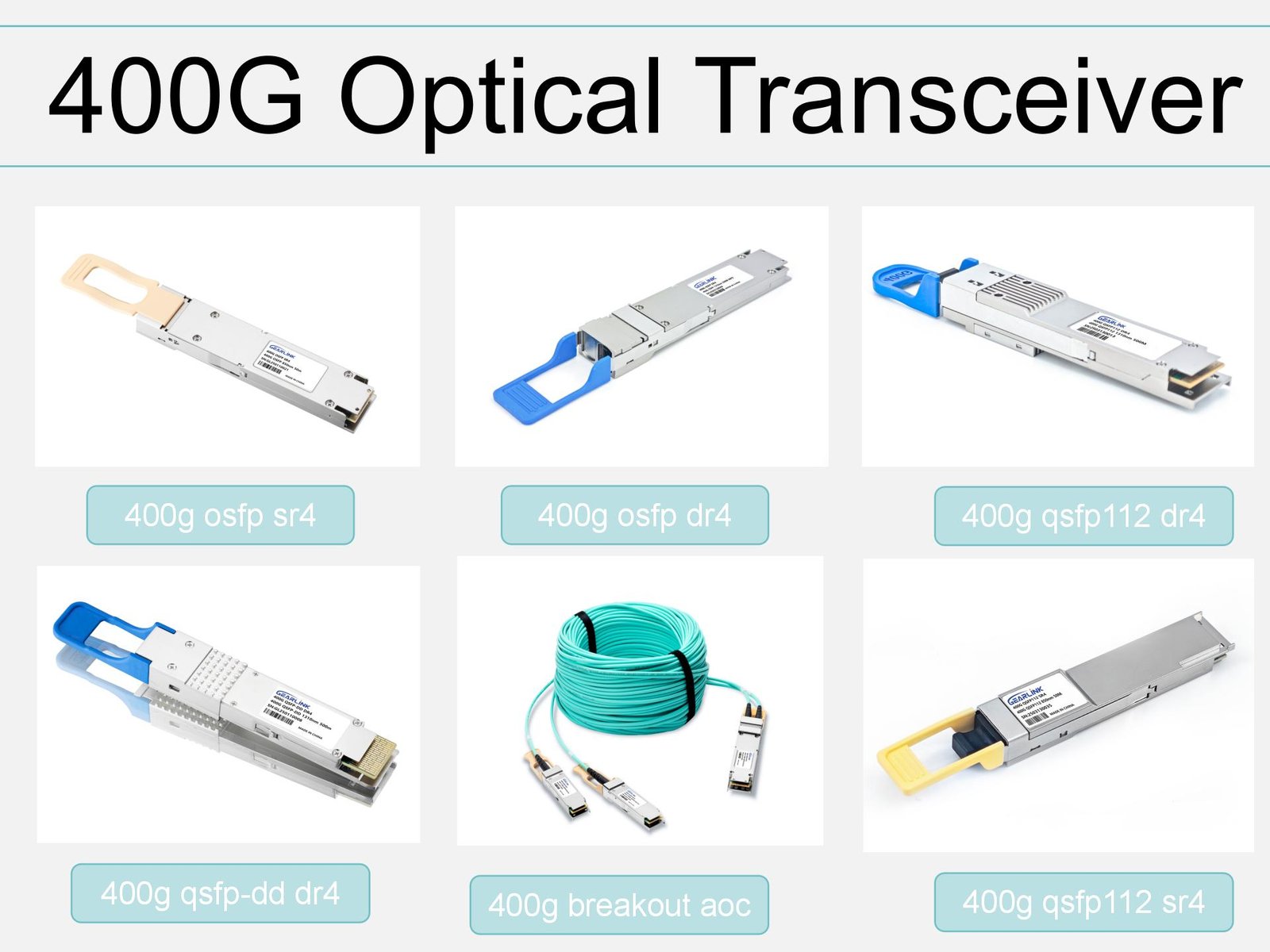
SR8 vs DR4 vs FR4
| Feature | 400G SR8 (QDD) | 400G DR4 | 400G FR4 |
| Fiber Type | Multimode | Single-mode | Single-mode |
| Reach | ≤100m | 500m | 2km |
| Connector | MPO-16 | MPO-12 | LC |
| Deployment Cost | Lower | Medium | Higher |
| Use Case | Short range | Medium | Long range |
Clearly, SR8 modules are ideal for short-distance, high-density environments.
Deployment Considerations
Fiber Cabling Requirements
Before deployment, it is important to ensure:
MPO-16 cabling is available
Fiber quality meets OM3/OM4 standards
Proper polarity management is implemented
Thermal Design
Heat management should not be overlooked. Although the module is efficient, proper airflow and cooling are still required for stable operation.
Compatibility Testing
To ensure seamless integration, interoperability testing is recommended. In many cases, modules are validated with mainstream switches before deployment.
Future Outlook
Transition Toward Higher Speeds
Although 800G technologies are emerging, 400G solutions remain widely deployed. They serve as a stable foundation for current infrastructure.
Growing Demand in AI Networks
As AI continues to evolve, the need for high-speed interconnects will only increase. Therefore, SR8-based designs are expected to remain highly relevant.
Conclusion
In summary, QDD 400G SR8 S provides a balanced combination of performance, efficiency, and scalability. It is particularly suitable for short-reach, high-density environments such as modern data centers.
By adopting this solution, organizations can significantly improve network capacity while maintaining cost efficiency. As a result, it stands out as a practical choice for current and future deployments.
FAQs
1. What is QDD 400G SR8 S used for?
QDD 400G SR8 S is used for short-range 400G transmission in data centers, especially for high-density switch connections.
2. What fiber does a 400G SR8 module use?
A 400G SR8 optical module typically uses multimode fiber such as OM3 or OM4 with MPO-16 connectors.
3. How does QDD 400G SR8 S compare with DR4?
QDD 400G SR8 S is designed for short distances using multimode fiber, while DR4 supports longer distances over single-mode fiber.
4. Is QDD 400G SR8 S suitable for AI clusters?
Yes, it is widely used in AI and HPC environments due to its high bandwidth and low latency performance.
5. What is the maximum reach of QDD 400G SR8 S?
The typical reach is up to 100 meters over OM4 multimode fiber.