Introduction to QSFP28 in High-Speed Networks
In today’s digital era, data traffic is growing at an unprecedented pace. As businesses increasingly rely on cloud computing, artificial intelligence, and big data analytics, the need for high-speed and stable connectivity has become essential. Under these circumstances, qsfp28 has become a widely adopted solution for modern networking environments.
At the same time, network architects are under pressure to deliver higher bandwidth without dramatically increasing costs. Therefore, solutions that combine performance, scalability, and efficiency are being prioritized. Because of these factors, qsfp28 is often selected as a practical standard for 100G deployments.
Moreover, as data centers evolve toward higher density and lower latency, this technology continues to play a crucial role. It allows organizations to upgrade infrastructure while maintaining compatibility with existing systems.
QSFP28: A POWERFUL GUIDE TO 100G OPTICAL CONNECTIVITY SOLUTIONS
INTRODUCTION TO QSFP28 IN HIGH-SPEED NETWORKS
In today’s digital era, data traffic is growing at an unprecedented pace. As businesses increasingly rely on cloud computing, artificial intelligence, and big data analytics, the need for high-speed and stable connectivity has become essential. Under these circumstances, qsfp28 has become a widely adopted solution for modern networking environments.
At the same time, network architects are under pressure to deliver higher bandwidth without dramatically increasing costs. Therefore, solutions that combine performance, scalability, and efficiency are being prioritized. Because of these factors, qsfp28 is often selected as a practical standard for 100G deployments.
Moreover, as data centers evolve toward higher density and lower latency, this technology continues to play a crucial role. It allows organizations to upgrade infrastructure while maintaining compatibility with existing systems.
What Is QSFP28 and Why It Matters
Understanding the Core CONCEPT OF QSFP28
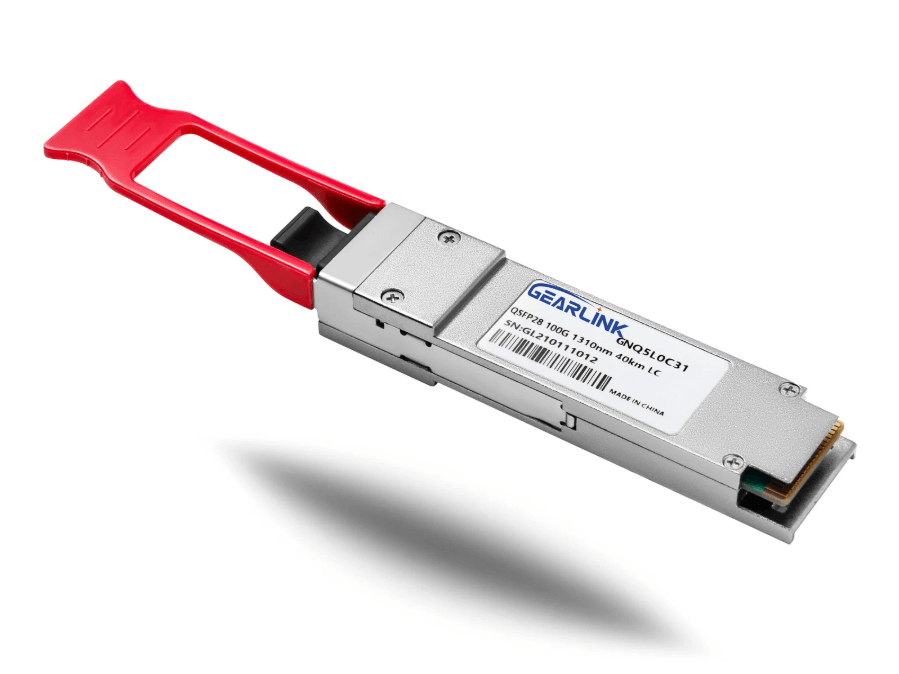
The term qsfp28 refers to a compact, hot-pluggable transceiver designed for 100Gbps data transmission. It is based on a four-lane architecture, where each lane operates at 25Gbps.
This structure enables efficient bandwidth aggregation. As a result, high-speed transmission can be achieved without requiring additional physical space. In many cases, improved network density is achieved through this design.
How QSFP28 Works in Real Scenarios
In practical applications, electrical signals are converted into optical signals for transmission through fiber optic cables. Then, at the receiving end, these signals are converted back into electrical form.
Because of this process, high-speed data transmission is maintained with minimal signal loss. Furthermore, advanced encoding techniques are used to ensure data integrity.
In large-scale deployments, stable performance is often observed even under heavy workloads.
Key Technical Features and BENEFITS OF QSFP28
Several characteristics contribute to the widespread adoption of qsfp28.
High-Speed Performance
First and foremost, it supports 100G Ethernet, which significantly increases network throughput. Compared to legacy solutions, this represents a substantial improvement.
Energy Efficiency
Another important advantage is low power consumption. In most deployments, power usage is kept within a limited range, which helps reduce operating costs.
Additionally, less heat is generated, which simplifies cooling requirements.
Compact Form Factor
Because the design is compact, more ports can be installed within a single switch. Consequently, higher density is achieved without expanding hardware size.
Flexibility and Scalability
Flexible configurations are supported, including breakout options. This allows one port to serve multiple connections, which improves scalability.
Comprehensive Overview of Module Types
Different deployment scenarios require different module types. Therefore, understanding these variations is essential.
Short-Distance Connectivity
For short-range applications, SR4 modules are commonly used. These are typically deployed within data centers where distances are relatively limited.
Because multimode fiber is used, the cost is generally lower.
Long-Distance Transmission
For longer distances, LR4 modules are more suitable. These operate over single-mode fiber and support extended reach.
As a result, they are often used for inter-building or campus connections.
Mid-Range Solutions
CWDM4 and PSM4 modules provide balanced options.
| Module Type | Fiber Type | Distance | Typical Scenario |
| SR4 | MMF | ≤100m | Rack-to-rack |
| LR4 | SMF | ≤10km | Metro links |
| CWDM4 | SMF | ≤2km | Cost-efficient |
| PSM4 | SMF | ≤500m | Parallel links |
Each type is optimized for specific use cases, ensuring flexibility in deployment.
Advantages QSFP28 in Modern Data Centers
Improved Bandwidth Utilization
With qsfp28, higher throughput can be achieved within the same infrastructure. Therefore, network efficiency is significantly improved.
Cost-Effective Upgrade Path
Although newer technologies are available, this solution remains cost-effective. Because of its maturity, it is widely supported by vendors.
Simplified Network Architecture
Fewer cables and ports are required to achieve the same bandwidth. As a result, network complexity is reduced.
Comparison with Other Technologies
Compared with 40G Solutions
Earlier solutions provide lower speeds and are gradually being phased out. In contrast, modern deployments benefit from higher bandwidth and efficiency.
Compared with 400G Technologies
While 400G solutions offer greater capacity, they also involve higher costs and power consumption. Therefore, many organizations still rely on qsfp28 for mainstream applications.
| Technology | Speed | Cost | Adoption Level |
| 40G | Lower | Low | Declining |
| 100G | High | Moderate | Mainstream |
| 400G | Very High | High | Growing |
Real-World Applications
Data Center Environments
High-speed interconnects are required between switches and servers. In such cases, reliable performance is critical.
Cloud Infrastructure
Scalability is essential for cloud providers. Therefore, flexible and efficient connectivity solutions are preferred.
Telecommunications Networks
Long-distance transmission is often required. Because of this, stable and high-capacity modules are deployed.
Deployment Considerations
When selecting a module, several factors should be evaluated.
Distance Requirements
Different distances require different solutions. Therefore, proper planning is necessary.
Fiber Infrastructure
Existing fiber types will influence the choice. Compatibility must be ensured.
Budget Constraints
Cost considerations often determine the final decision. Balanced solutions are typically preferred.
Installation and Maintenance Best Practices
Handling and Installation
It is recommended that modules be handled with care. Proper procedures should be followed to avoid damage.
Cleaning and Inspection
Connectors should be cleaned before use. This helps maintain signal quality.
Ongoing Monitoring
Performance should be monitored regularly. Potential issues can be identified early.
QSFP28 Future Development Trends
Although newer technologies continue to emerge, qsfp28 remains highly relevant. Many organizations are still upgrading to 100G infrastructure.
Furthermore, improvements in optical components are enhancing performance and efficiency. Therefore, continued adoption is expected.
QSFP28 Conclusion
Overall, qsfp28 provides a reliable, efficient, and scalable solution for modern networking needs. Its balance of performance and cost makes it a strong choice across multiple industries.
As demand for higher bandwidth continues to grow, this technology will remain an important part of network evolution.
FAQS QSFP28
1. What is QSFP28 mainly used for?
It is mainly used for high-speed 100G data transmission.
2. What distance can it support?
Depending on the module type, distances range from short to long reach.
3. Is it still widely used today?
Yes, it remains a mainstream solution in many networks.
4. What are the common module types?
SR4, LR4, CWDM4, and PSM4 are commonly used.
5. Is it suitable for data centers?
Yes, it is widely deployed in high-density environments.