Introduction: Why QSFP 200G SR4 S Is Transforming Data Center Networking
The QSFP 200G SR4 S optical module has quickly become a crucial component in modern high-speed networking environments. As data centers continue to expand and cloud services generate enormous traffic, network infrastructure must evolve to support faster speeds, higher density, and greater reliability. Consequently, technologies like QSFP 200G SR4 S are increasingly adopted to meet these growing demands.
In particular, hyper-scale data centers, enterprise networks, and high-performance computing clusters require efficient short-reach connectivity solutions. The QSFP 200G SR4 S module provides exactly that: high bandwidth, low latency, and energy-efficient performance over short distances using multi-mode fiber.
Moreover, the demand for 200G connectivity is growing rapidly. Organizations that previously relied on 40G or 100G links are now upgrading their infrastructure to support higher throughput. As a result, the QSFP 200G SR4 S optical transceiver has become one of the most practical and cost-effective solutions for high-speed data center interconnects.
In this comprehensive guide, we will explore everything you need to know about QSFP 200G SR4 S, including its technology, architecture, advantages, specifications, deployment scenarios, and compatibility considerations. By the end of this article, you will have a clear understanding of why this optical module plays such a critical role in modern networking.
Understanding QSFP 200G SR4 S Technology
What Is QSFP 200G SR4 S?
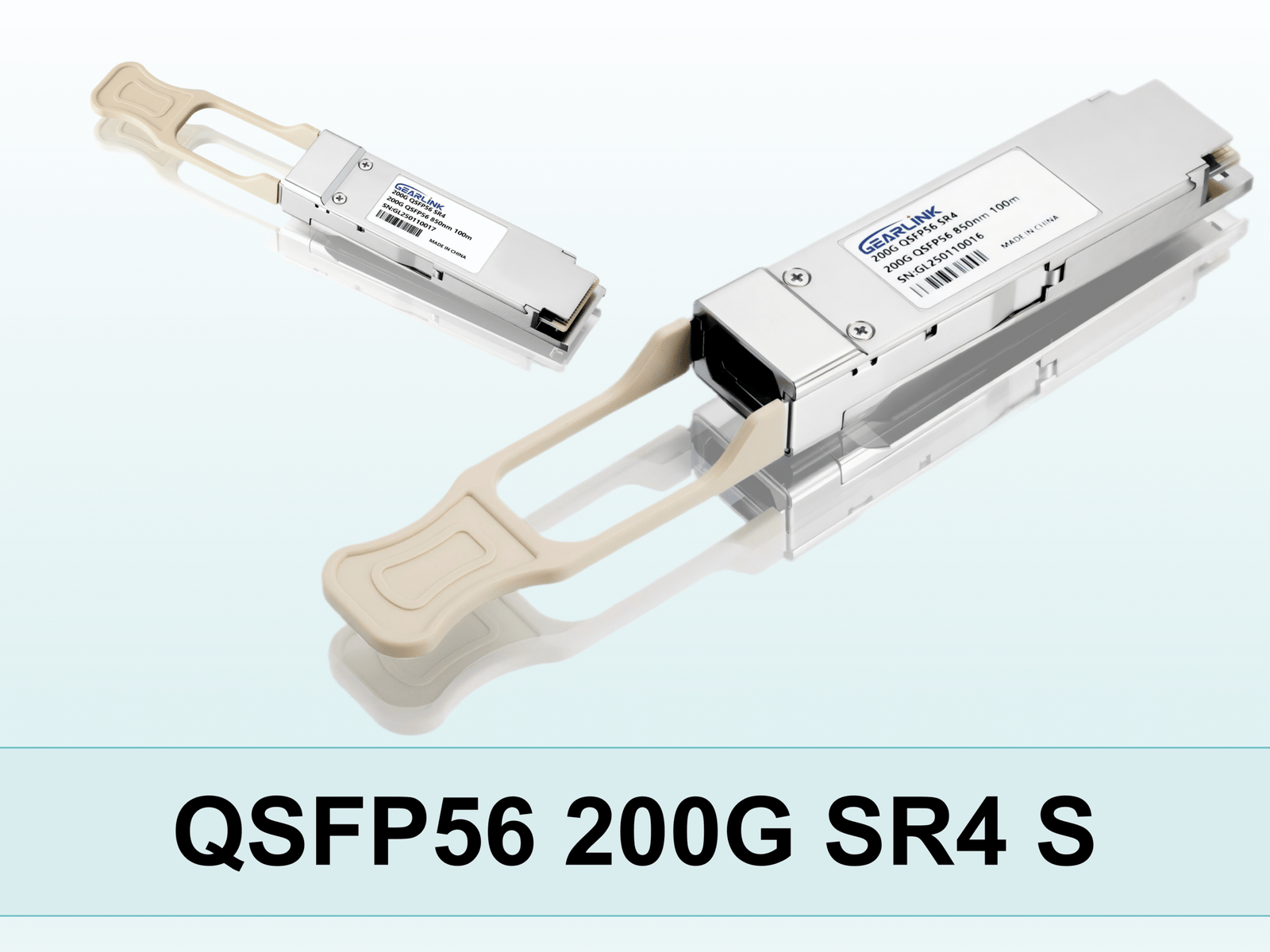
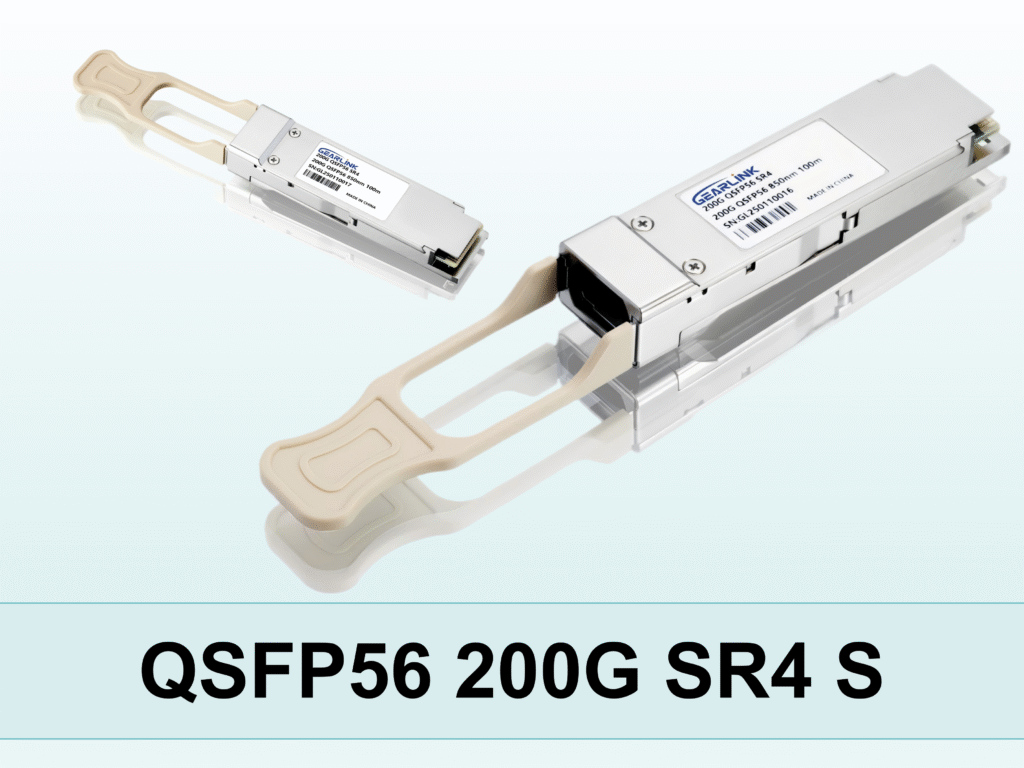
The QSFP 200G SR4 S is a high-speed optical transceiver designed to support 200-gigabit Ethernet transmission over multimode fiber (MMF). The module uses the QSFP56 form factor, which supports four electrical lanes, each operating at 50Gbps using PAM4 modulation technology.
Therefore, the total aggregated bandwidth reaches 200Gbps. This design enables efficient high-speed communication between switches, servers, and storage devices within data centers.
Typically, the QSFP 200G SR4 S module uses an MPO-12 connector and operates at 850nm wavelength, which is ideal for short-reach multimode fiber communication.
Key Characteristics
| Feature | Description |
| Form Factor | QSFP56 |
| Data Rate | 200Gbps |
| Transmission Technology | PAM4 |
| Fiber Type | Multimode Fiber (OM3 / OM4 / OM5) |
| Wavelength | 850 nm |
| Connector | MPO-12 |
| Maximum Distance | Up to 100m (OM4) |
| Application | Data Center Interconnect |
Because of these features, QSFP 200G SR4 S is widely deployed in modern data center switch architectures.
Architecture of QSFP 200G SR4 S Modules
How QSFP 200G SR4 S Achieves 200G Transmission
The internal architecture of QSFP 200G SR4 S modules is designed to maximize efficiency while minimizing power consumption. Instead of transmitting data over a single optical lane, the module splits the traffic across four parallel channels.
Each lane transmits data simultaneously using PAM4 encoding, which effectively doubles the data rate compared to traditional NRZ modulation.
As a result, QSFP 200G SR4 S modules can deliver higher throughput without significantly increasing hardware complexity.
Advantages of QSFP 200G SR4 S
Why Data Centers Prefer QSFP 200G SR4 S
There are several reasons why the QSFP 200G SR4 S optical transceiver has become so popular.
1. High Bandwidth Capacity
First of all, QSFP 200G SR4 S provides a full 200Gbps bandwidth, which allows data centers to handle massive data traffic efficiently.
Consequently, network congestion can be significantly reduced.
2. Cost-Effective Short-Reach Solution
Compared with long-reach optical modules, QSFP 200G SR4 S offers a much more economical option for short-distance connections.
Therefore, organizations can upgrade their network capacity without dramatically increasing costs.
3. High Port Density
Another major advantage is the QSFP form factor, which supports high port density in switches.
For example:
| Switch Ports | Total Bandwidth |
| 32 QSFP ports | 6.4 Tbps |
| 64 QSFP ports | 12.8 Tbps |
Thus, network operators can scale their infrastructure more efficiently.
4. Low Power Consumption
Energy efficiency is increasingly important in large data centers. Fortunately, QSFP 200G SR4 S modules typically consume less than 4.5W, which helps reduce operational costs.
5. Seamless Upgrade Path
Finally, QSFP 200G SR4 S provides a smooth migration path from 40G and 100G networks.
Many modern switches support backward compatibility, making network upgrades easier.
Technical Specifications of QSFP 200G SR4 S
Detailed Specification Overview
The technical specifications of QSFP 200G SR4 S modules ensure reliable high-speed communication.
| Parameter | Specification |
| Form Factor | QSFP56 |
| Interface | MPO-12 |
| Fiber Type | MMF |
| Transmission Distance | OM3: 70m |
| OM4: 100m | |
| OM5: 150m | |
| Operating Wavelength | 850nm |
| Modulation | PAM4 |
| Power Consumption | <4.5W |
| Operating Temperature | 0°C to 70°C |
Because of these specifications, QSFP 200G SR4 S modules are ideally suited for high-performance computing and data center networking.
QSFP 200G SR4 S vs Other 200G Optical Modules
Comparing Different 200G Transceivers
Although QSFP 200G SR4 S is widely used, several other 200G optical modules are also available.
Comparison Table
| Module Type | Fiber | Distance | Application |
| QSFP 200G SR4 S | MMF | 70-100m | Data Centers |
| QSFP 200G DR4 | SMF | 500m | Data Center Interconnect |
| QSFP 200G FR4 | SMF | 2km | Metro Networks |
| QSFP 200G LR4 | SMF | 10km | Long Distance |
From this comparison, it is clear that QSFP 200G SR4 S is optimized specifically for short-reach high-density data center environments.
Deployment Scenarios for QSFP 200G SR4 S
Where QSFP 200G SR4 S Is Commonly Used
The QSFP 200G SR4 S module is most commonly used in high-performance networking environments.
Typical Applications
Leaf-Spine Data Center Architecture
In modern leaf-spine architectures, QSFP 200G SR4 S modules are used to connect leaf switches to spine switches.
High-Performance Computing Clusters
HPC clusters generate extremely high data traffic. Therefore, QSFP 200G SR4 S modules provide fast communication between compute nodes.
AI and Machine Learning Infrastructure
AI training systems require massive data throughput. Consequently, QSFP 200G SR4 S optical modules are widely deployed in GPU clusters.
Cloud Computing Platforms
Major cloud providers rely on high-bandwidth connections. As a result, QSFP 200G SR4 S plays a vital role in cloud infrastructure.
Cabling Requirements for QSFP 200G SR4 S
Fiber Infrastructure Considerations
When deploying QSFP 200G SR4 S, the correct fiber infrastructure must be selected.
Supported Fiber Types
| Fiber Type | Maximum Distance |
| OM3 | 70m |
| OM4 | 100m |
| OM5 | 150m |
Using high-quality OM4 or OM5 fiber can significantly improve performance.
Additionally, MPO-12 cables are typically required to connect QSFP 200G SR4 S modules.
Compatibility and Interoperability
Vendor Compatibility for QSFP 200G SR4 S
Another important consideration when selecting QSFP 200G SR4 S modules is compatibility with network equipment vendors.
Many optical transceivers are designed to be compatible with switches from manufacturers such as:
Cisco
Arista
Juniper
NVIDIA
Huawei
In most cases, compatibility firmware can be programmed so that QSFP 200G SR4 S modules operate seamlessly with different networking platforms.
Installation and Best Practices
How to Deploy QSFP 200G SR4 S Modules
To ensure reliable operation, proper installation procedures should be followed when deploying QSFP 200G SR4 S modules.
Recommended Steps
Verify switch compatibility
Use certified MPO cables
Maintain clean fiber connectors
Monitor optical power levels
Ensure adequate cooling within switches
By following these best practices, network operators can maximize the performance and lifespan of QSFP 200G SR4 S modules.
Future Trends of QSFP 200G SR4 S Technology
The Role of QSFP 200G SR4 S in Next-Generation Networks
Although 400G and 800G technologies are emerging, QSFP 200G SR4 S continues to play an important role in networking infrastructure.
This is mainly because many existing networks still require cost-efficient mid-range bandwidth solutions.
Furthermore, 200G connectivity provides a balanced combination of performance, power consumption, and cost.
Therefore, QSFP 200G SR4 S modules are expected to remain widely used in data centers for many years.
Conclusion
In summary, the QSFP 200G SR4 S optical module represents a powerful solution for high-speed short-reach data center connectivity. With its 200Gbps bandwidth, efficient PAM4 modulation, and compact QSFP56 form factor, the module enables modern data centers to scale their infrastructure efficiently.
Moreover, its cost efficiency, high port density, and reliable performance make QSFP 200G SR4 S an ideal choice for cloud computing, AI workloads, and high-performance computing environments.
As data traffic continues to grow worldwide, technologies like QSFP 200G SR4 S will remain essential for building faster, more efficient networking systems.
Frequently Asked Questions About QSFP 200G SR4 S
1. What is QSFP 200G SR4 S used for?
QSFP 200G SR4 S is mainly used for short-distance high-speed connections in data centers, typically connecting switches, servers, and storage devices using multimode fiber.
2. What distance can QSFP 200G SR4 S support?
The QSFP 200G SR4 S optical module usually supports up to 70m on OM3 fiber and 100m on OM4 fiber, making it ideal for data center environments.
3. What connector does QSFP 200G SR4 S use?
Most QSFP 200G SR4 S modules use an MPO-12 connector, which allows four parallel optical channels for 200G transmission.
4. Is QSFP 200G SR4 S compatible with QSFP56 switches?
Yes, QSFP 200G SR4 S modules are designed for QSFP56 interfaces, making them compatible with many modern 200G switches.
5. How does QSFP 200G SR4 S differ from QSFP 200G DR4?
The main difference is fiber type and transmission distance. QSFP 200G SR4 S uses multimode fiber for short distances, while DR4 modules use single-mode fiber for longer distances up to 500 meters.