Introduction to QSFP 100G LR4 S in Modern Networks
In today’s rapidly evolving data infrastructure landscape, qsfp 100g lr4 s has emerged as a highly reliable solution for long-distance optical transmission. As network demands continue to grow, enterprises and data centers are increasingly turning to advanced optical modules to ensure stable, high-speed connectivity. Therefore, understanding how it works—and why it is widely adopted—has become essential.
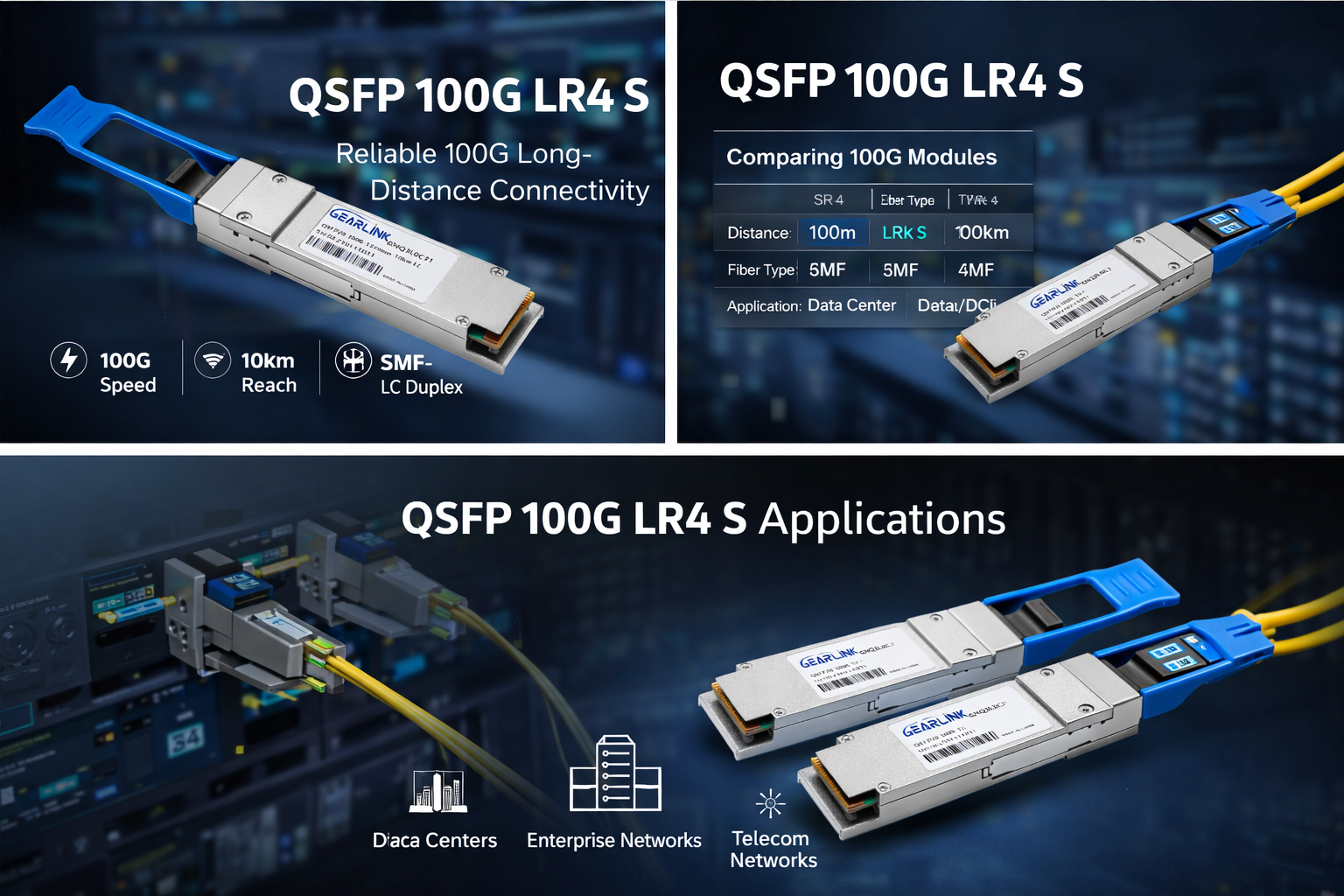
The module is specifically designed for 100G Ethernet applications over single-mode fiber. Typically, transmission distances of up to 10 km can be achieved, which makes it ideal for inter-data center connections and metro networks. Moreover, improved energy efficiency and compact form factors have made it a preferred choice.
At the same time, performance stability is ensured through wavelength multiplexing technology. As a result, four separate wavelengths are transmitted over a single fiber pair. This not only reduces fiber usage but also enhances overall efficiency.
What is QSFP 100G LR4 S and How It Works
QSFP 100G LR4 S Overview
The transceiver is a pluggable optical transceiver module that complies with 100GBASE-LR4 standards. It uses CWDM (Coarse Wavelength Division Multiplexing) technology to transmit four 25Gbps signals over different wavelengths.
| Feature | Description |
| Data Rate | 100Gbps |
| Transmission Distance | Up to 10 km |
| Fiber Type | Single-mode fiber (SMF) |
| Connector | Duplex LC |
| Wavelength | 1310 nm range |
| Form Factor | QSFP28 |
Because of these characteristics, qsfp 100g lr4 s is widely deployed in high-speed backbone networks.
Working Principle of QSFP 100G LR4 S
To better understand this transceiver, it is helpful to break down its operation:
Signal Conversion
Electrical signals are converted into optical signals.
Wavelength Multiplexing
Four wavelengths are combined into one optical stream.
Transmission
Signals are transmitted over single-mode fiber.
Demultiplexing and Reception
The receiver separates wavelengths and converts them back into electrical signals.
Consequently, efficient data transmission is achieved with minimal signal loss.
Key Advantages of QSFP 100G LR4 S
High-Speed Long-Distance Transmission
One of the most notable benefits of this transceiver is its ability to support long-distance communication without compromising speed. Compared to short-range modules, it offers significantly extended reach.
Reduced Fiber Infrastructure Costs
Because CWDM technology is used, fewer fibers are required. Therefore, infrastructure costs can be reduced substantially.
Energy Efficiency and Compact Design
Additionally, qsfp 100g lr4 s modules are designed with low power consumption in mind. This makes them suitable for high-density deployments.
QSFP 100G LR4 S vs Other 100G Modules
Comparison Table
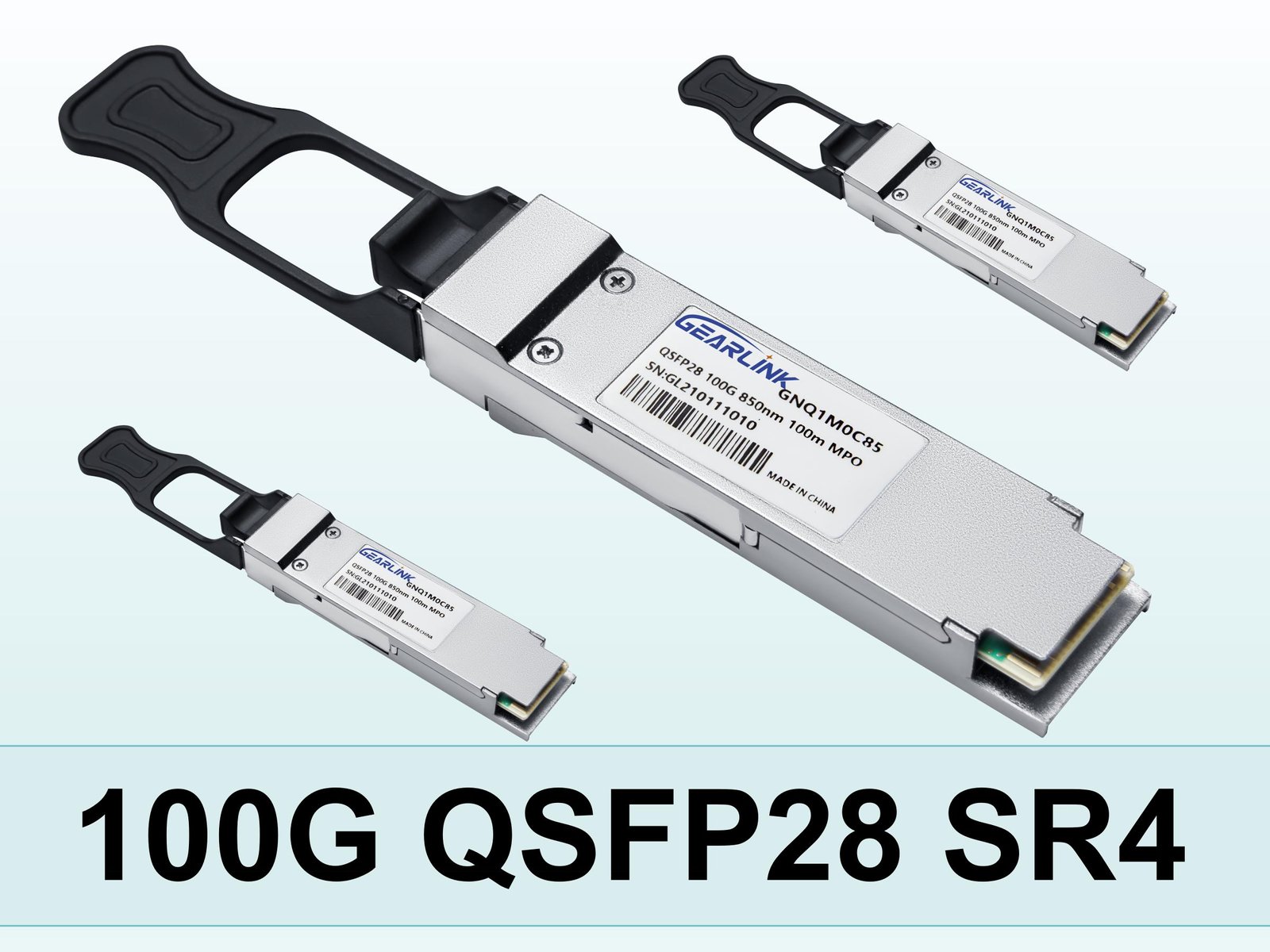
| Parameter | QSFP 100G LR4 S | QSFP 100G SR4 | QSFP 100G ER4 |
| Distance | 10 km | 100 m | 40 km |
| Fiber Type | SMF | MMF | SMF |
| Cost | Medium | Low | High |
| Application | Metro/DCI | Data Center | Long Haul |
From the table above, it can be seen that the module provides a balanced solution between cost and performance.
Applications of QSFP 100G LR4 S
Data Center Interconnect (DCI)
In modern data centers, this optical transceiver is frequently used for connecting geographically separated facilities. As data traffic increases, reliable long-distance modules become essential.
Enterprise Networks
Enterprises benefit from stable and high-speed connections. Therefore, this transceiver is often deployed in core network layers.
Telecommunication Infrastructure
Telecom operators rely on this module for metro network expansion. Because of its efficiency, it helps reduce operational costs.
Technical Specifications of QSFP 100G LR4 S
Detailed Specifications Table
| Specification | Value |
| Standard | 100GBASE-LR4 |
| Modulation | NRZ |
| Power Consumption | < 3.5W |
| Operating Temperature | 0°C to 70°C |
| Laser Type | DFB |
| Receiver Type | PIN |
These specifications clearly demonstrate why this module is suitable for demanding environments.
Installation and Deployment Guidelines
Proper Installation Steps
First, ensure compatibility with network equipment
Then, carefully insert the module
After that, connect LC fiber cables
Finally, verify signal performance
If these steps are followed, optimal performance can be achieved.
Common Deployment Mistakes
Although deployment is straightforward, mistakes can occur:
Incorrect fiber type selection
Poor cable management
Overlooking compatibility checks
Therefore, careful planning is required.
Performance Optimization Tips
Improve Signal Quality
To maximize the efficiency of qsfp 100g lr4 s, the following practices are recommended:
Use high-quality single-mode fiber
Maintain clean connectors
Avoid excessive bending
As a result, signal loss can be minimized.
Monitoring and Maintenance
Regular monitoring is essential. In many cases, performance issues can be detected early if proper tools are used.
Future Trends of QSFP 100G LR4 S
Although newer technologies such as 400G and 800G are emerging, qsfp 100g lr4 s continues to play a critical role. In fact, it is expected that demand will remain stable due to its cost-effectiveness.
Moreover, backward compatibility ensures that existing infrastructure can still benefit from this technology.
Conclusion
In summary, qsfp 100g lr4 s offers a powerful combination of performance, reliability, and efficiency. Whether used in data centers, enterprise networks, or telecom environments, it provides a dependable solution for long-distance connectivity.
As network demands continue to grow, solutions like qsfp 100g lr4 s will remain essential. Therefore, investing in this technology can be considered a smart and future-proof decision.
FAQs
1. What is QSFP 100G LR4 S used for?
The module is used for long-distance 100G data transmission over single-mode fiber, commonly in data centers and telecom networks.
2. How far can QSFP 100G LR4 S transmit?
Typically, this module supports transmission distances up to 10 kilometers.
3. What fiber is required for QSFP 100G LR4 S?
The module requires single-mode fiber with LC connectors.
4. Is QSFP 100G LR4 S suitable for data centers?
Yes, this transceiver is widely used in data center interconnect applications due to its reliability and efficiency.
5. What are the advantages of QSFP 100G LR4 S?
The transceiver offers long-distance transmission, reduced fiber usage, and stable high-speed performance.