Introduction to QSFP56 DD Technology
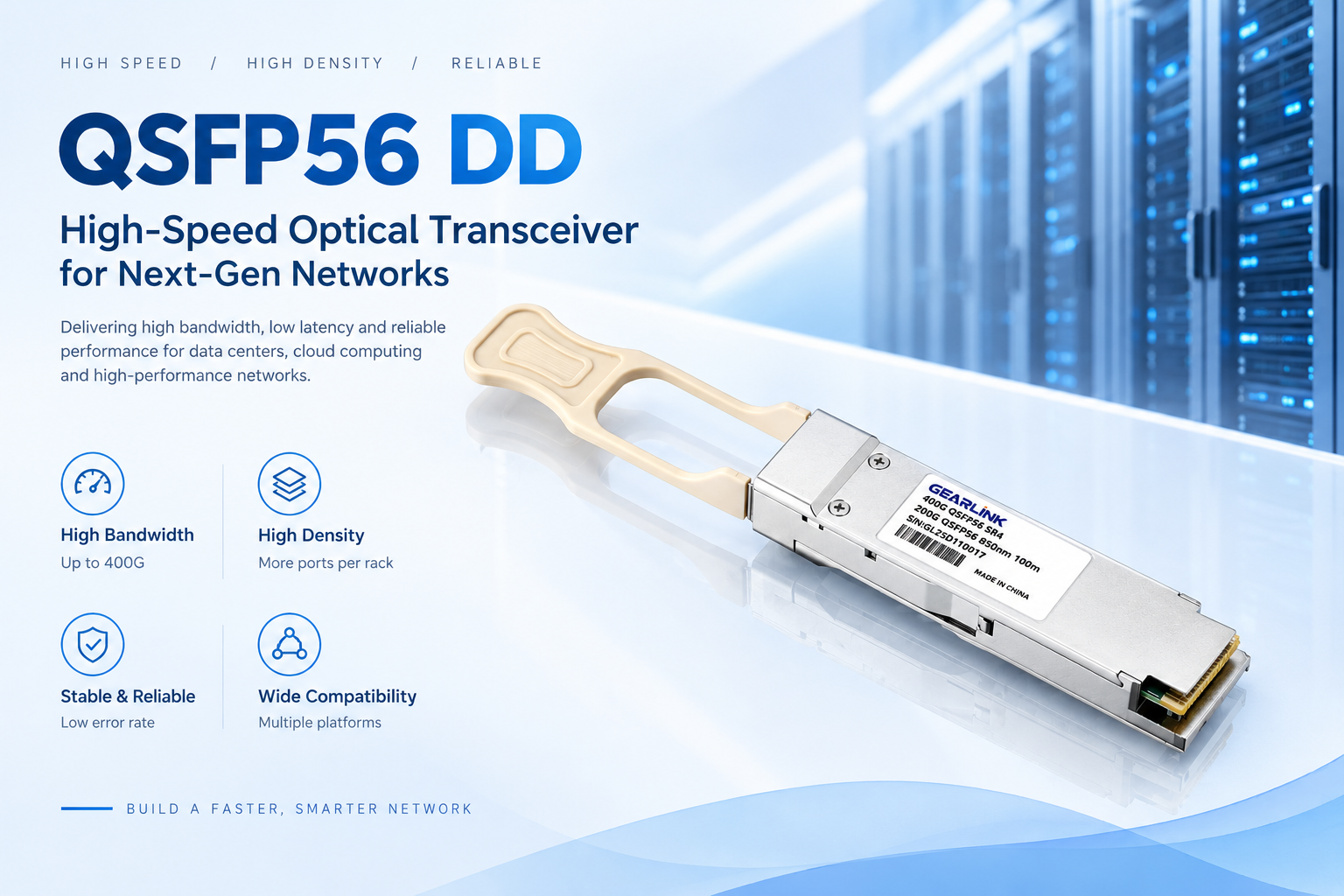
QSFP56 DD is a search term often used when researching high-speed optical transceivers, high-density network connections, and next-generation data center hardware. However, buyers should understand one important detail before choosing a product: QSFP56 and QSFP-DD refer to different module interfaces, even though their names are closely related.
As cloud computing, artificial intelligence, and large-scale data processing continue to grow, network operators need faster connections without using more rack space. Consequently, high-density pluggable transceivers have become an important part of modern network design.
In this guide, we explain the technology behind QSFP56 DD, clarify the differences between QSFP56 and QSFP-DD, and explore how these interfaces fit into high-speed Ethernet networks. In addition, we cover module selection, fiber connections, compatibility, and common purchasing questions.
Whether you are a network engineer, system integrator, or optical transceiver distributor, this overview will help you make a more informed decision.
What Is QSFP56 DD?
The term QSFP56 DD combines two closely related naming conventions. QSFP56 is a quad small form-factor pluggable interface designed for data rates of up to 200G in common implementations. QSFP-DD, on the other hand, stands for Quad Small Form Factor Pluggable Double Density.
The QSFP-DD interface was developed to increase electrical lane density while maintaining a compact pluggable form factor. Standard 400G QSFP-DD modules commonly use eight electrical lanes operating at approximately 50 Gb/s each. Newer QSFP-DD800 designs support higher per-lane signaling rates to deliver up to 800G.
Therefore, the exact product specification matters more than the name alone. A product described as QSFP56-DD may refer to a 400G QSFP-DD module in some catalogs, but the designation should always be verified against its datasheet.
QSFP56 DD and the Meaning of Double Density
Double density describes the use of additional electrical lanes compared with earlier four-lane QSFP interfaces. By increasing the number of lanes, a module can support greater aggregate bandwidth without requiring a completely different general connector family.
For example, a conventional QSFP56 module can deliver 200G using four electrical lanes operating at 50 Gb/s each. A 400G QSFP-DD module commonly uses eight lanes at 50 Gb/s per lane.
This approach makes it possible to increase bandwidth while keeping the module compact. As a result, network equipment manufacturers can build switches with higher throughput and more connections per rack unit.
QSFP56 DD Specifications and Key Features
When evaluating a QSFP56 DD product, buyers should first identify its actual interface, data rate, optical configuration, and host compatibility. These details determine whether the module will work in the intended network.
The following table provides a general comparison of the related interfaces.
| Parameter | QSFP56 | QSFP-DD 400G |
| Typical maximum aggregate rate | 200G | 400G |
| Electrical lane count | 4 | 8 |
| Typical lane signaling rate | 50 Gb/s | 50 Gb/s |
| Common modulation | PAM4 | PAM4 |
| Main purpose | 200G connections | 400G connections |
| Module interface | QSFP56 | QSFP-DD |
| Typical applications | High-speed server and switch links | Data center spine, leaf, and high-capacity links |
These values describe common implementations rather than every possible product. Optical lane count, connector type, power consumption, and supported distance vary according to the transceiver design.
Data Rate and Lane Configuration
Data rate is one of the most important specifications when selecting a transceiver. A 200G connection and a 400G connection require different host capabilities, even when the product names look similar.
For a 200G QSFP56 module, four electrical lanes operating at 50 Gb/s can provide an aggregate rate of 200 Gb/s. By comparison, a 400G QSFP-DD module can use eight electrical lanes at the same nominal lane rate.
However, the electrical interface does not always match the optical interface one-to-one. A transceiver may convert electrical signals into optical signals through a DSP or other signal-processing components.
Consequently, buyers should check both the host electrical interface and the optical specifications before placing an order.
Optical Interfaces and Fiber Types
Optical transceivers are available with different optical interfaces, wavelengths, and transmission distances. The correct choice depends on the distance between devices and the installed fiber infrastructure.
| Optical connection | Fiber type | Typical use |
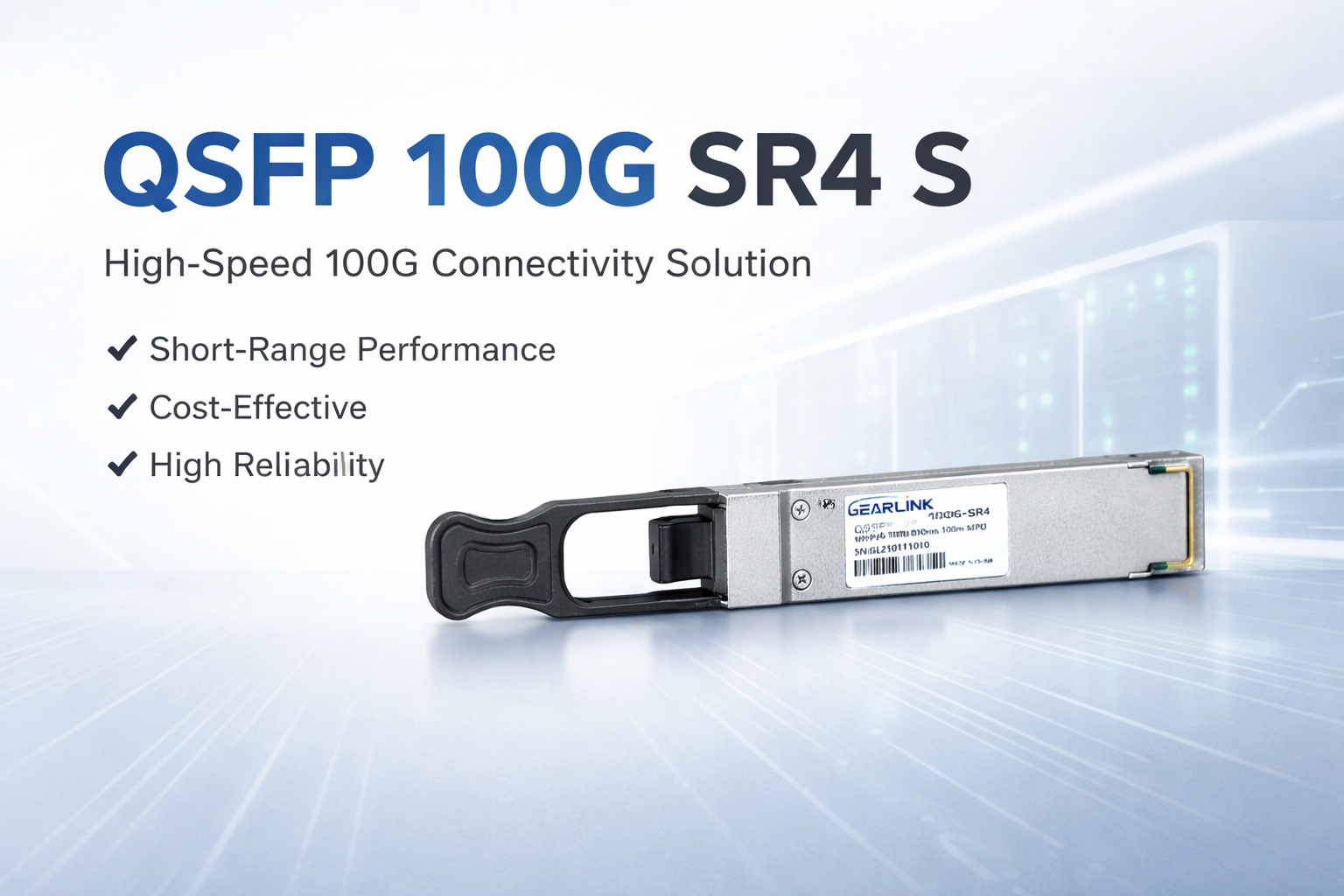
| SR-family optics | Multimode fiber | Short links inside data centers |
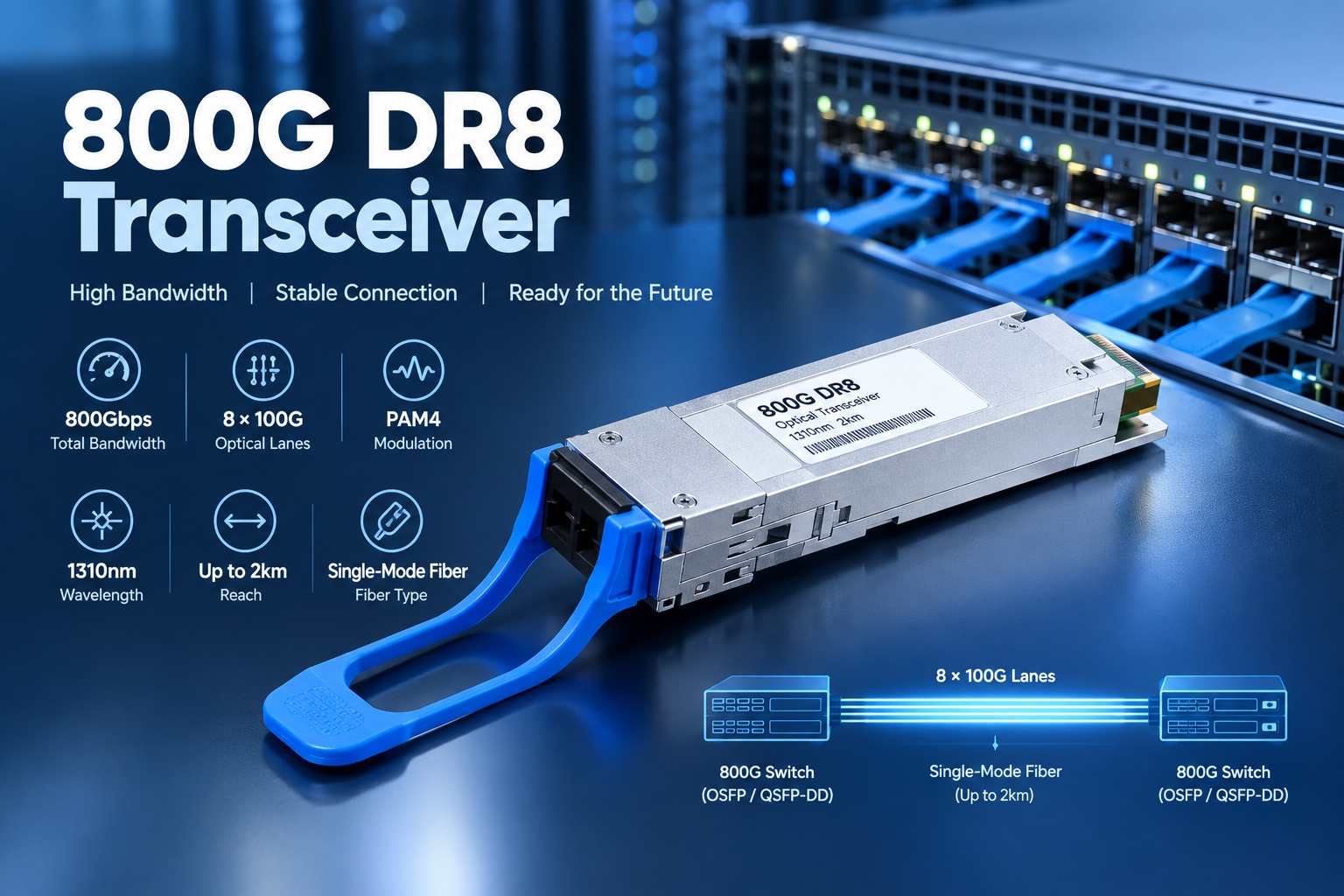
| DR-family optics | Single-mode fiber | Short-reach data center interconnects |
| FR-family optics | Single-mode fiber | Longer links within or between facilities |
| LR-family optics | Single-mode fiber | Longer-distance network connections |
These categories cover multiple standards, so the exact reach must be confirmed for each product. For example, many DR4 modules support approximately 500 meters, while common FR4 implementations support approximately 2 kilometers.
Moreover, optical lane configuration and connector type must match the corresponding fiber assembly. A module with an MPO connector cannot automatically replace one with a duplex LC connector.
How QSFP56 DD Supports Modern Data Centers
Modern data centers must move large volumes of information between servers, storage systems, and network switches. As workloads become more demanding, network bandwidth can become a bottleneck.
High-density transceivers help address this challenge by increasing the capacity available through each switch port. In addition, pluggable modules make maintenance and network upgrades easier because individual components can be replaced without changing the entire switch.
High-Performance Computing and AI Clusters
AI training and high-performance computing workloads often require rapid communication between many servers and accelerators. Therefore, high-speed Ethernet and InfiniBand connections play an important role in cluster design.
A 200G or 400G optical link may be suitable for different parts of the network, depending on the switch architecture and required bandwidth. QSFP56 is relevant to 200G connectivity, while 400G QSFP-DD products can provide greater aggregate throughput.
Nevertheless, the transceiver must match the network adapter, switch port, and protocol requirements. Optical speed alone does not guarantee that a connection will operate correctly.
Cloud Computing and Enterprise Networks
Cloud providers need scalable infrastructure that can handle changing traffic demands. Likewise, large enterprises may need higher bandwidth for virtualization, distributed storage, backup systems, and private cloud environments.
In these deployments, the right module can help increase port capacity and make better use of existing rack space. Furthermore, selecting a suitable optical reach can reduce unnecessary equipment costs.
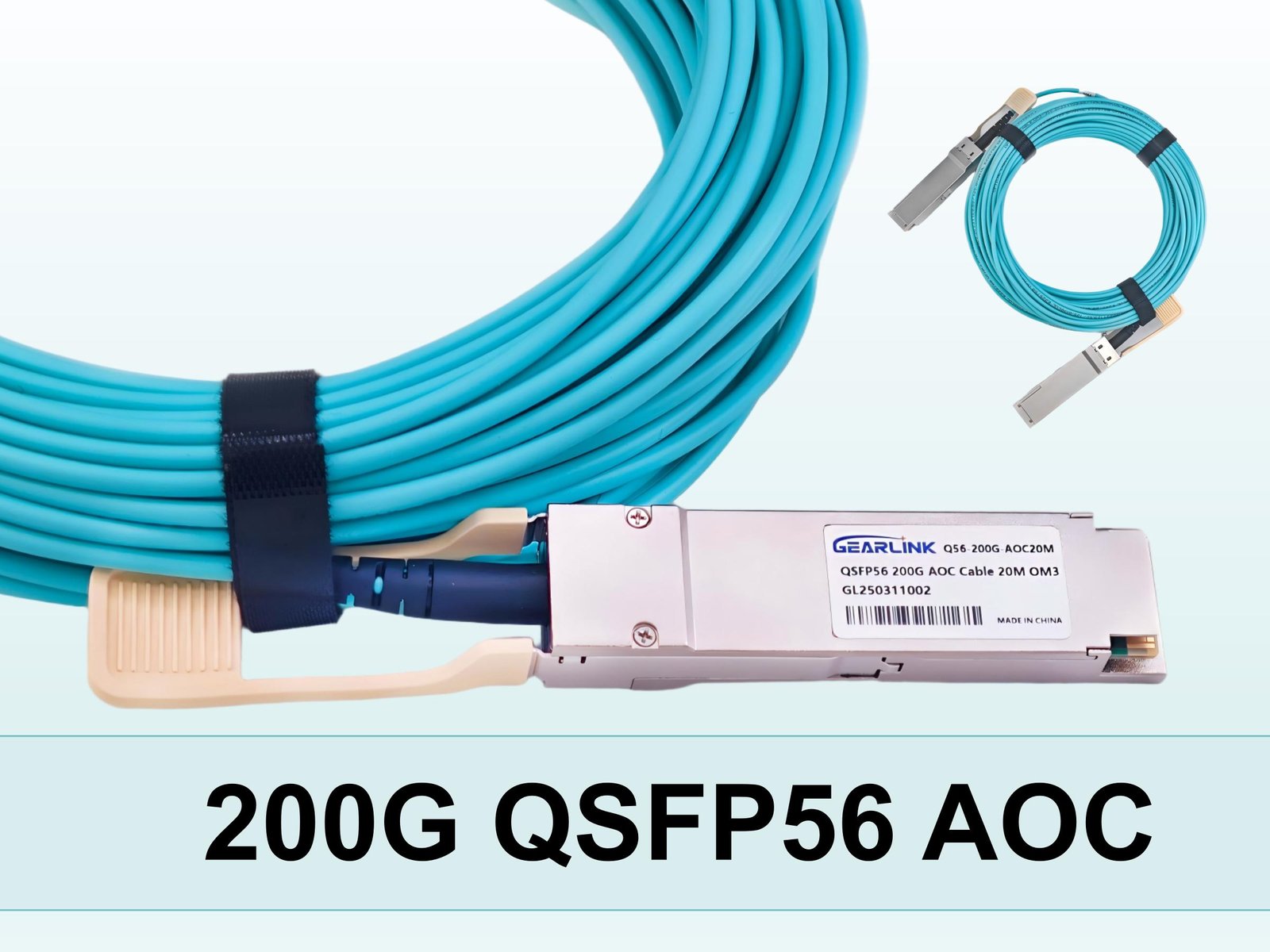
For example, short connections within a rack may use DAC cables, while connections between racks may require AOC assemblies or separate optical transceivers and fiber.
QSFP56 DD vs. QSFP-DD: What Are the Differences?
The difference between QSFP56 and QSFP-DD is particularly important because these names are frequently used together in product descriptions.
QSFP56 commonly supports up to 200G, whereas QSFP-DD is a double-density interface family that includes 200G and 400G implementations, as well as higher-speed variants such as QSFP-DD800.
The following comparison summarizes the main distinctions.
| Feature | QSFP56 | QSFP-DD |
| Common data rate | 200G | 200G, 400G, and other defined variants |
| Electrical lanes | 4 | 8 in standard double-density designs |
| 400G support | Not typical for standard QSFP56 | Supported by 400G QSFP-DD |
| Interface design | Four-lane QSFP-family interface | Double-density QSFP interface |
| Upgrade considerations | Depends on host capability | Depends on the specific QSFP-DD generation |
| Typical selection factor | 200G host requirements | Higher bandwidth and port density |
Although the interfaces share a similar name, they should not be treated as interchangeable products. Physical fit, electrical signaling, thermal limits, and host software support must all be considered.
Can QSFP56 and QSFP-DD Modules Be Interchanged?
Not automatically. Even if two products appear similar, their electrical lane configurations and intended data rates may differ.
A QSFP-DD port may support certain earlier QSFP-family modules, depending on the host design and the applicable specifications. However, this does not mean that every module can operate at every supported speed.
Before installation, check the switch compatibility list, supported module types, port configuration, firmware version, and breakout options. These checks help prevent link failures and unnecessary replacement costs.
QSFP56 DD vs. DAC, AOC, and Optical Transceivers
The choice between a pluggable transceiver and a cable assembly depends on distance, installation requirements, and the equipment at both ends.
A direct attach copper cable (DAC) provides a simple connection for short distances. An active optical cable (AOC) combines optical transmission components and fiber in one assembly. A separate optical transceiver, by contrast, connects to a fiber cable that can be selected independently.
| Solution | Main advantage | Typical application |
| DAC | Simple and often economical | Short server-to-switch links |
| AOC | Lightweight cable with integrated optical components | Short to medium data center links |
| Optical transceiver plus fiber | Flexible reach and fiber routing | Rack-to-rack and longer links |
| QSFP56 transceiver | Suitable for supported 200G interfaces | 200G switching and computing |
| QSFP-DD transceiver | Higher bandwidth options, including 400G | High-capacity switching |
The best option depends on the complete link design rather than the transceiver alone. In particular, verify the required distance, cable type, connector, and supported data rate.
How to Choose the Right QSFP56 DD Product
Selecting a suitable product starts with the equipment at both ends of the connection. A module may meet the required optical specifications but still fail because the host does not support its interface or firmware profile.
Use the following checklist when evaluating products.
1. Confirm the Exact Form Factor
First, determine whether the required module is QSFP56, QSFP-DD, or another interface. Do not rely only on a shortened catalog description.
Ask the supplier for the full part number and datasheet. If the product is described as QSFP56-DD, request confirmation of its standards compliance and physical interface.
2. Match the Required Data Rate
Next, identify the required link speed. A 200G connection does not automatically support 400G, and a higher-rated transceiver may not operate in a lower-speed port unless the host explicitly supports the relevant configuration.
Also, confirm whether the application requires a native high-speed connection or a breakout configuration.
3. Select the Correct Transmission Distance
Estimate the distance between the connected devices and identify the available fiber type. Short-reach multimode links and single-mode links use different optical designs.
For longer distances, review the supported reach, wavelength, connector, and any required forward error correction (FEC).
4. Check Switch Compatibility
Compatibility is more than a question of whether a module fits into the port. The switch must support its electrical interface, data rate, management functions, and thermal requirements.
For third-party modules, check the supplier’s compatibility information and confirm the target switch model and operating system.
5. Compare Power and Thermal Requirements
High-speed transceivers generate heat, particularly when DSP-based signal processing is used. Therefore, verify the module’s maximum power consumption and the host’s cooling capacity.
Poor airflow or an unsuitable thermal design may lead to elevated temperatures and unstable operation.
6. Evaluate Supplier Quality and Support
Finally, compare product documentation, test procedures, warranty terms, and technical support. A dependable supplier should be able to provide a clear datasheet and explain the intended application.
For system integrators and distributors, consistent product specifications and repeatable compatibility testing are especially valuable.
Common Questions About QSFP56 DD
Is QSFP56 DD a Standard Optical Transceiver Form Factor?
QSFP56 and QSFP-DD are established interface names. However, QSFP56-DD is not as consistently used as a standalone standards designation. Buyers should verify the exact product interface, applicable MSA specification, and manufacturer documentation.
Does QSFP56 DD Support 400G?
A standard QSFP56 module is commonly associated with 200G. A 400G connection is commonly implemented using QSFP-DD. If a supplier lists a product as QSFP56-DD 400G, request its datasheet to confirm the actual interface and specifications.
What Fiber Does QSFP56 DD Use?
The fiber type depends on the specific transceiver. Short-reach optical modules may use multimode fiber, while DR, FR, and LR products commonly use single-mode fiber. Always match the fiber and connector to the product specification.
Is QSFP56 DD Compatible With Cisco, Arista, or Juniper Switches?
Compatibility depends on the specific switch model, port type, firmware, and module coding. A product should not be considered compatible with every switch from a manufacturer simply because the connector appears to fit.
How Can I Choose the Best QSFP56 DD Supplier?
Look for complete datasheets, clear compatibility information, documented test procedures, and responsive technical support. Before ordering, provide the supplier with the original part number, switch model, target data rate, and transmission distance.
Conclusion
QSFP56 DD is a useful search term for buyers researching high-speed QSFP-family interfaces, but the exact product designation should always be verified. QSFP56 is commonly associated with 200G connectivity, while QSFP-DD provides a path to 400G and other higher-bandwidth implementations.
By checking the interface, data rate, fiber type, transmission distance, host compatibility, and thermal requirements, network engineers can make better purchasing decisions and avoid costly deployment problems.
For data center operators, system integrators, and optical networking distributors, a well-matched transceiver can help improve bandwidth, simplify network planning, and support future infrastructure growth. Always use the manufacturer’s datasheet and the host equipment documentation as the final references when selecting a product.