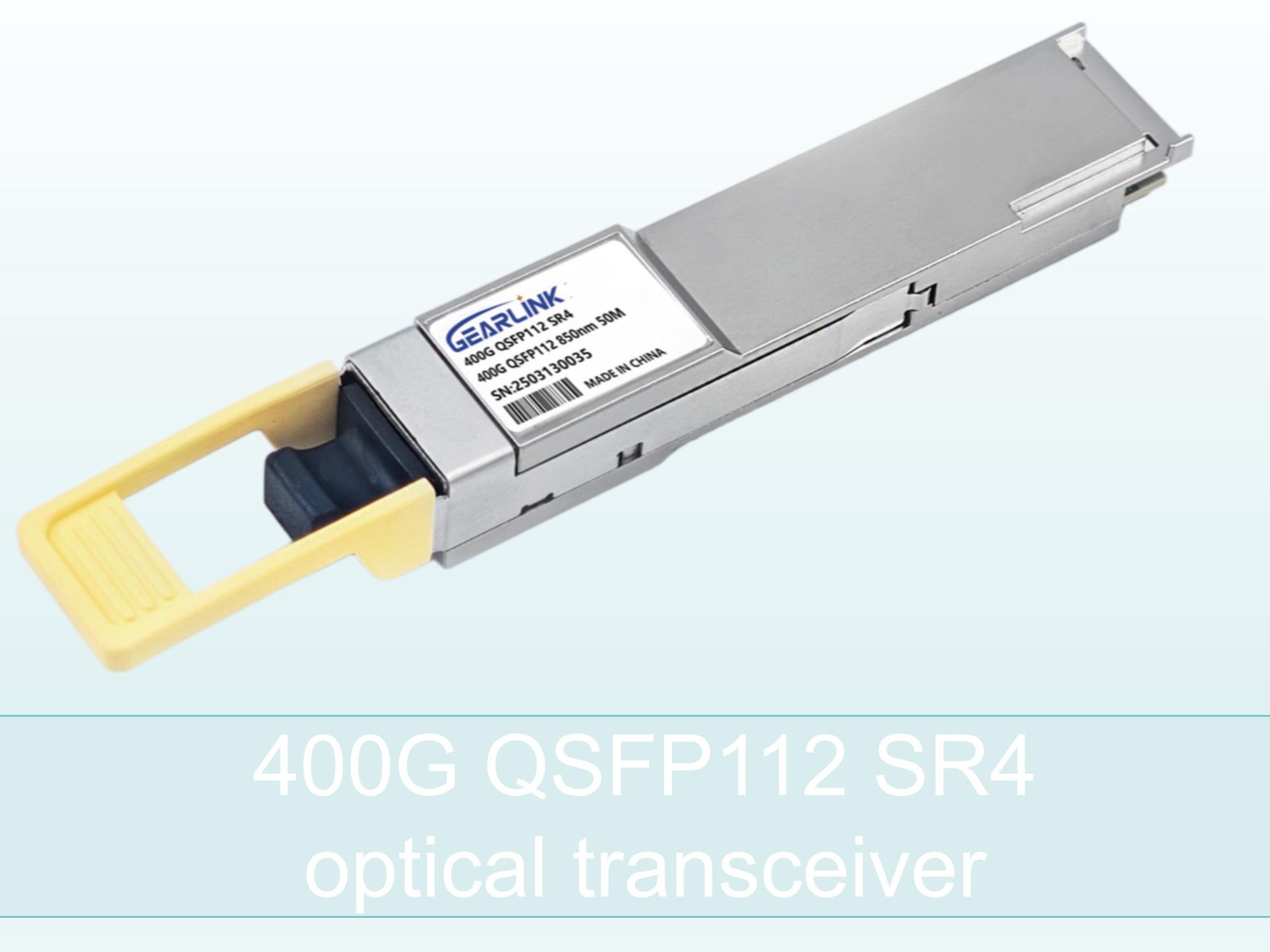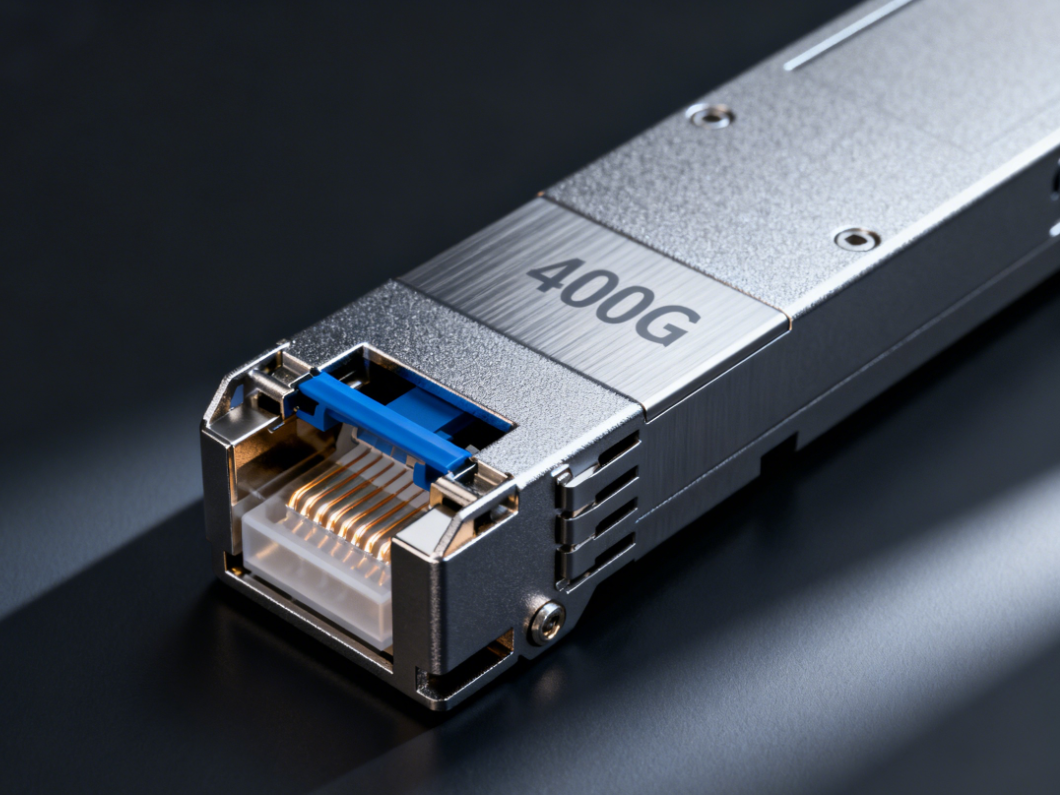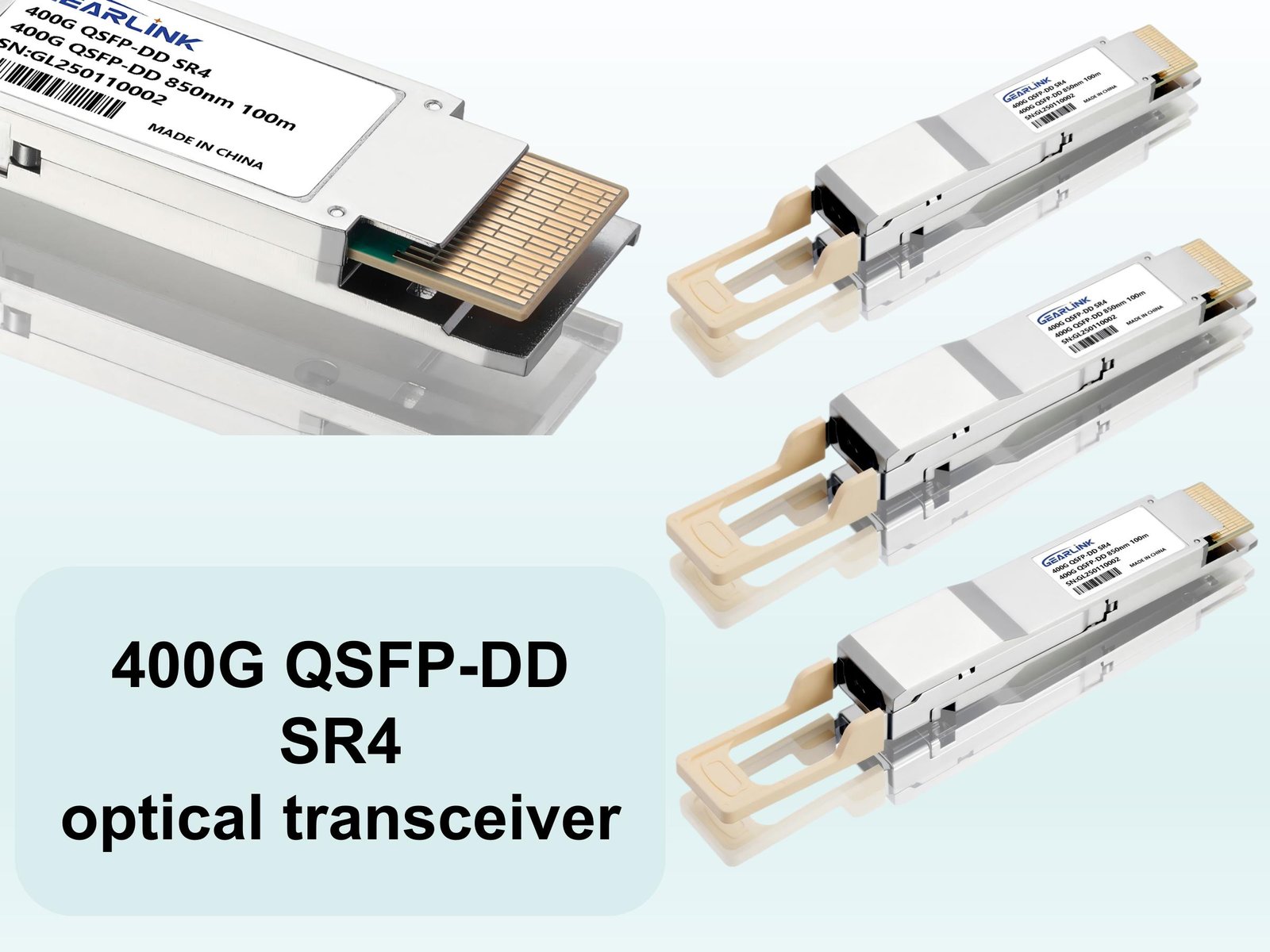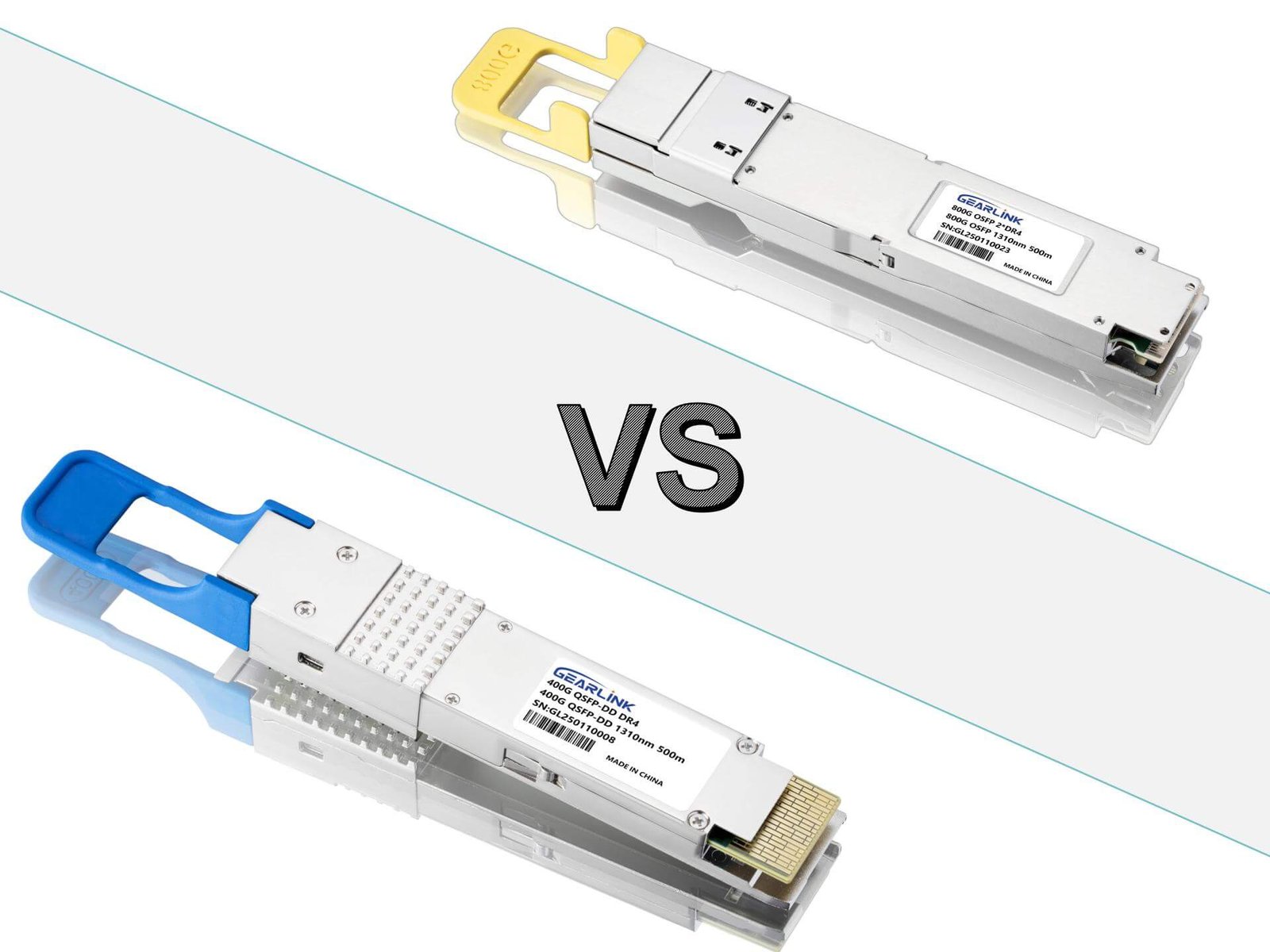
As cloud computing, artificial intelligence, and high-performance computing continue to grow, data centers need faster and more efficient network connections. An 800g transceiver provides a practical solution for moving huge amounts of data between switches, servers, and other network equipment. Compared with older 400G solutions, 800G technology can provide twice the aggregate bandwidth while helping modern data centers handle increasingly demanding workloads.
In particular, AI clusters are creating new pressure on network infrastructure. Large language models, distributed computing, GPU clusters, and real-time data processing all require extremely high-speed connections. Therefore, the 800g transceiver has become an important part of the transition toward next-generation data center networks.
However, choosing an 800G optical module is not simply about selecting the highest speed. Transmission distance, optical technology, connector type, form factor, power consumption, switch compatibility, and fiber infrastructure all need to be considered.
This guide explains how 800G optical transceivers work, the major form factors available today, common optical configurations, applications, and the most important factors to consider when selecting a solution.
What Is an 800G Transceiver?
An 800g transceiver is a high-speed optical networking device designed to transmit and receive data at an aggregate rate of up to 800 gigabits per second.
In simple terms, a transceiver performs two jobs:
It converts electrical signals into optical signals.
It converts optical signals back into electrical signals.
This allows network devices to communicate through optical fiber.
For example, an 800G module can be installed in a high-performance data center switch. The switch sends an electrical signal to the module, and the module converts that signal into light. The optical signal then travels through fiber to another network device, where another transceiver converts it back into an electrical signal.
How 800G Transceiver Technology Works
The total 800G bandwidth is normally achieved by combining multiple high-speed electrical and optical lanes.
A simplified example is:
| Configuration | Lane Structure | Aggregate Speed |
| 8 × 100G | 8 lanes × 100G | 800G |
| 4 × 200G | 4 lanes × 200G | 800G |
| 2 × 400G | 2 lanes × 400G | 800G |
Depending on the product architecture, different electrical and optical lane configurations can be used.
Modern 800G solutions commonly use PAM4 modulation. PAM4 allows two bits of information to be transmitted per symbol, which helps increase data rates without simply doubling the physical signaling frequency.
As a result, high-speed optical modules can achieve greater bandwidth while remaining compatible with practical data center architectures.
Why 800G Transceiver Technology Matters
The rapid growth of AI and cloud computing has changed the requirements of data center networks.
Traditional server applications generally generated moderate amounts of traffic. However, modern GPU clusters can exchange enormous volumes of data between computing nodes. Consequently, network bandwidth can become a major limitation.
An 800g transceiver helps address this problem by increasing the bandwidth available between network devices.
Higher Network Bandwidth
The most obvious advantage is bandwidth.
An 800G connection provides approximately twice the aggregate bandwidth of a 400G connection. Therefore, fewer physical ports may be required to achieve the same total network capacity.
For large-scale data centers, this can simplify network architecture and reduce the number of connections required between high-performance switches.
Better Support for AI Networks
AI workloads often involve communication between many GPUs. During model training, GPUs may continuously exchange parameters and intermediate data.
Therefore, network performance can directly affect overall computing efficiency.
An 800G optical connection can provide the high bandwidth needed for these environments. As AI clusters continue to become larger, 800G connectivity is increasingly being adopted as an important part of the network architecture.
Improved Data Center Scalability
Network traffic rarely stays at the same level.
As businesses add servers, GPUs, storage systems, and cloud services, traffic grows. For this reason, network operators need infrastructure that can support future expansion.
800G technology provides a larger bandwidth foundation, allowing data centers to prepare for higher traffic requirements.
800G Transceiver Form Factors
Several form factors can be used for 800G optical networking.
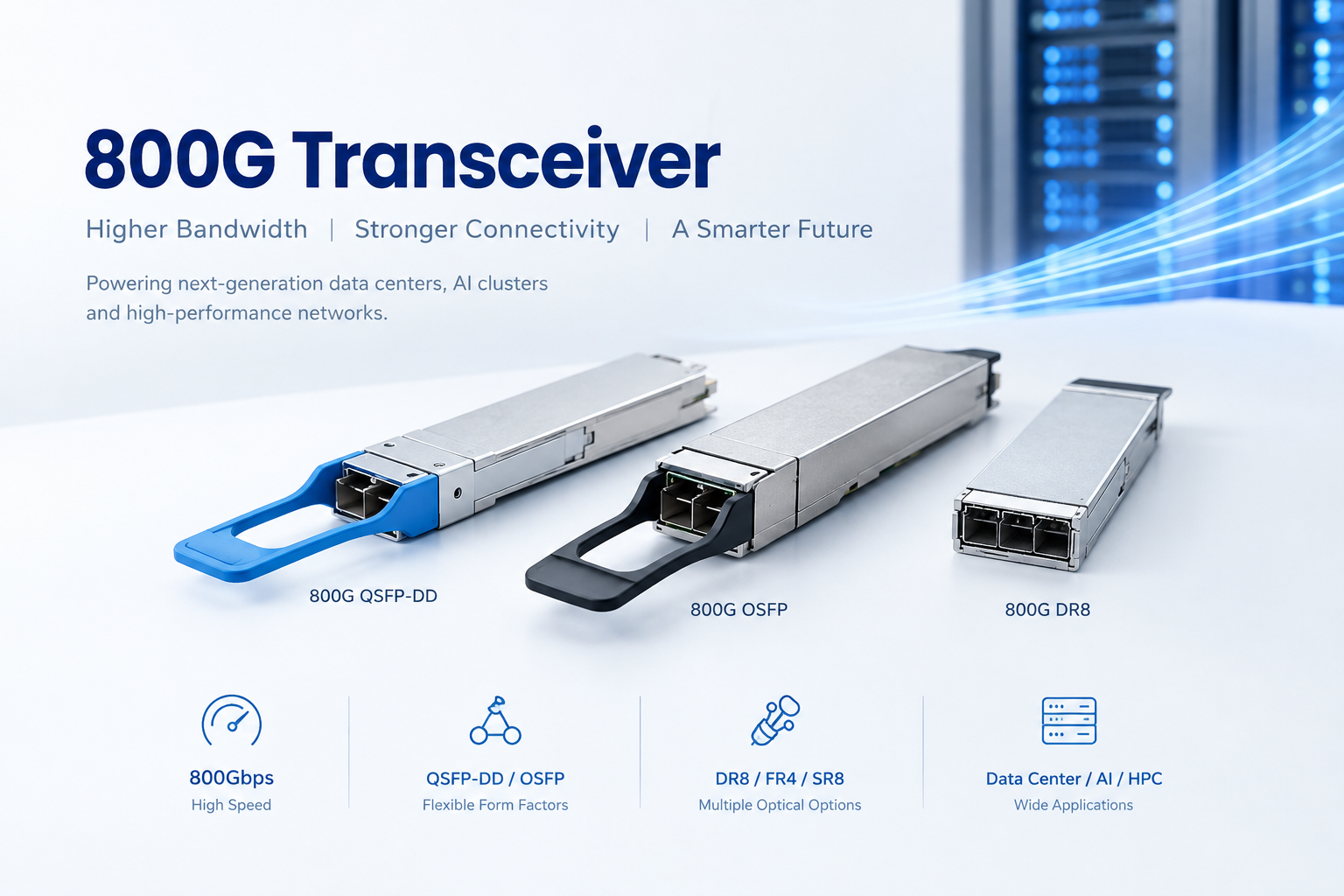
The two major designs commonly discussed are 800G QSFP-DD and 800G OSFP. They use different mechanical and thermal designs, although both can support very high-speed networking.
800G QSFP-DD
The QSFP-DD family is based on the Quad Small Form-factor Pluggable Double Density design.
An 800G QSFP-DD module is designed to provide high bandwidth while maintaining a relatively compact form factor. This makes it attractive for high-density data center environments.
Depending on the implementation, an 800G QSFP-DD module can use multiple electrical lanes and optical lanes.
For example, an 800G QSFP-DD solution may use an architecture based on eight 100G PAM4 lanes.
800G OSFP
OSFP stands for Octal Small Form-factor Pluggable.
The OSFP form factor was designed specifically for high-speed networking and provides additional physical space compared with some smaller form factors. This can be useful for high-power optical components and thermal management.
An 800G OSFP transceiver is commonly considered for high-performance switches, especially in large AI and data center networks.
QSFP-DD vs. OSFP
The two form factors should not be considered identical.
| Feature | 800G QSFP-DD | 800G OSFP |
| Main purpose | High-density networking | High-performance networking |
| Physical design | Compact | Larger |
| Thermal space | Limited compared with OSFP | More physical space |
| Port density | Generally favorable | Generally lower than smaller designs |
| Typical application | Data centers | AI/HPC and high-speed switching |
| Compatibility | Depends on switch | Depends on switch |
Most importantly, form factor compatibility must be checked before purchasing an 800g transceiver. An optical module cannot simply be selected based on transmission speed alone.
800G Transceiver Optical Configurations
Different applications require different optical designs.
For example, a short connection inside a data center may use multimode fiber, while a longer connection between switches may require single-mode fiber.
Common 800G optical configurations include DR8, 2×DR4, 2×FR4, and other emerging architectures.
800G DR8
800G DR8 is one of the important configurations for high-speed data center networking.
A typical DR8 architecture uses eight optical lanes. Each lane can operate at approximately 100G, resulting in an aggregate bandwidth of 800G.
A simplified architecture looks like this:
8 × 100G optical lanes = 800G
DR8 solutions generally use single-mode fiber and are designed for short-reach data center connections.
For example, an 800G DR8 module can be used to connect high-speed switches within a data center fabric.
800G 2×DR4
Another approach is to divide the 800G connection into two 400G DR4-style interfaces.
This architecture can be useful where network equipment needs to connect an 800G port with two 400G connections.
The basic concept is:
800G = 2 × 400G
This approach can provide flexibility when migrating from 400G infrastructure toward 800G networking.
800G 2×FR4
800G 2×FR4 solutions use two 400G FR4 optical groups.
FR4 technology generally uses four optical wavelengths around the 1310 nm region. Each group provides 400G, so two groups together can provide an aggregate 800G connection.
This architecture can be attractive when longer reach is required compared with some parallel-lane solutions.
Comparison of Common 800G Configurations
| Type | Optical Technology | Typical Fiber | Main Advantage |
| 800G DR8 | 8 × 100G | Single-mode | High-density short reach |
| 800G 2×DR4 | 2 × 400G | Single-mode | Flexible 400G migration |
| 800G 2×FR4 | 2 × 400G | Single-mode | Longer reach architecture |
| 800G SR8 | Parallel optics | Multimode | Short data center links |
Actual reach and compatibility depend on the specific module design, switch, fiber type, and optical budget.
800G Transceiver and PAM4 Technology
PAM4 is an important technology behind modern 800G networking.
Traditional NRZ signaling uses two signal levels. In contrast, PAM4 uses four signal levels.
This allows PAM4 to transmit two bits per symbol.
A simplified comparison is:
| Technology | Signal Levels | Bits per Symbol |
| NRZ | 2 | 1 |
| PAM4 | 4 | 2 |
Because PAM4 carries twice as many bits per symbol, it can support higher data rates without requiring the same increase in symbol rate.
However, higher-speed signaling also creates engineering challenges.
For example, PAM4 systems are more sensitive to signal noise and distortion. Therefore, forward error correction and careful electrical design become increasingly important.
The Role of FEC
Forward Error Correction, commonly called FEC, helps detect and correct certain transmission errors.
At 800G speeds, maintaining signal integrity is extremely important. Therefore, the network system and optical module need to work together properly.
When selecting an 800G solution, buyers should check:
FEC requirements
Switch compatibility
Host electrical interface
Module firmware
Optical specifications
Link budget
These details can make the difference between a stable connection and an unreliable one.
Where Is an 800G Transceiver Used?
The 800g transceiver is primarily designed for environments where extremely high bandwidth is required.
AI Data Centers
AI is one of the biggest drivers of 800G adoption.
Modern AI clusters may contain hundreds or thousands of GPUs. These GPUs need to communicate rapidly with each other, creating enormous east-west traffic inside the data center.
As a result, high-speed optical links are increasingly important.
An 800G module can be used between:
AI switches
GPU clusters
Spine switches
Leaf switches
High-performance computing systems
Cloud Data Centers
Cloud service providers operate large networks containing massive numbers of servers.
When millions of users access cloud applications, traffic is distributed across many servers and switches.
Therefore, higher-speed optical links help increase the capacity of the network fabric.
High-Performance Computing
Scientific computing and simulation applications can generate very large data sets.
For example, weather modeling, scientific research, financial calculations, and engineering simulations may require rapid communication between computing nodes.
In these environments, 800G networking can help reduce network bottlenecks.
Data Center Interconnect
800G technology can also be used for high-capacity connections between data center systems.
Depending on the optical design and transmission distance, different modules may be selected for:
Intra-rack connections
Inter-rack connections
Data center switching
Campus data center links
Data center interconnect applications
How to Choose the Right 800G Transceiver
Selecting the correct module requires more than checking the 800G label.
First, identify the switch or network platform. Then, determine the required distance, fiber type, connector, and optical architecture.
1. Check Switch Compatibility
This should be the first step.
Different switches support different form factors and module specifications.
Before ordering, verify:
Switch model
Port type
Supported form factor
Supported optical standards
Host electrical interface
Firmware requirements
For example, an 800G OSFP module should not automatically be assumed to work with an 800G QSFP-DD port.
2. Determine Transmission Distance
Transmission distance is another important factor.
A short data center link has very different requirements from a longer interconnection.
| Application | Typical Requirement |
| Rack-to-rack | Short reach |
| Switch-to-switch | Short to medium reach |
| Data center interconnect | Medium to long reach |
| Campus network | Longer reach |
The module should provide enough optical budget for the actual fiber link.
3. Choose Single-Mode or Multimode Fiber
Fiber type must match the optical module.
Single-mode fiber is commonly used for longer distances, while multimode fiber is often selected for short-range data center connections.
Using the wrong fiber type can prevent the link from operating correctly.
4. Check Connector Type
Connector design also matters.
Different 800G modules may use different optical interfaces depending on their architecture.
For example, an MPO/MTP interface can be used for parallel optical lanes, while other designs may use duplex or multi-fiber configurations.
Therefore, the module connector should match the existing fiber infrastructure.
5. Consider Power Consumption
Power consumption becomes increasingly important as network speeds increase.
An individual module may consume only a relatively small amount of power. However, a large data center can contain thousands of optical modules.
Therefore:
Total optical power = module power × number of modules
Reducing power consumption at the module level can produce meaningful savings at data center scale.
800G Transceiver vs. 400G Transceiver
The transition from 400G to 800G is not simply a matter of doubling speed.
The electrical interface, optical architecture, thermal management, switch design, and network topology may all change.
| Feature | 400G | 800G |
| Aggregate bandwidth | 400G | 800G |
| Typical high-speed signaling | PAM4 | PAM4 |
| Data center demand | High | Very high |
| AI adoption | Growing | Rapidly expanding |
| Port capacity | Lower | Higher |
| Power considerations | Important | Critical |
| Network density | High | Very high |
For organizations already using 400G equipment, an 800G upgrade may provide a practical path toward higher network capacity.
However, the entire link should be evaluated rather than replacing only the optical module.
Common Challenges of 800G Transceiver Deployment
Although 800G technology offers major advantages, deployment also introduces challenges.
Signal Integrity
At very high data rates, electrical signal quality becomes more difficult to maintain.
PCB traces, connectors, cables, and switch components all influence signal quality.
Therefore, the complete system must be designed carefully.
Thermal Management
Higher bandwidth can result in higher power consumption.
Consequently, cooling becomes increasingly important in high-density switch environments.
A data center operator should consider airflow, switch design, module power, and rack-level thermal density.
Compatibility
Not every 800G module works with every 800G switch.
Even modules using the same basic form factor can have different requirements.
Therefore, compatibility testing is highly recommended before large-volume deployment.
Fiber Infrastructure
An 800G upgrade may also require changes to the existing fiber infrastructure.
The number of fibers, connector type, fiber polarity, and optical loss should all be checked.
800G Transceiver Deployment Checklist
Before purchasing an 800G optical module, network engineers can use the following checklist:
| Item | What to Check |
| Switch | Exact switch model |
| Port | 800G port type |
| Form factor | QSFP-DD or OSFP |
| Fiber | SMF or MMF |
| Distance | Required transmission range |
| Connector | MPO/MTP, duplex, etc. |
| Optical type | DR8, FR4, SR8, etc. |
| Wavelength | Required optical wavelengths |
| FEC | Host and link requirements |
| Power | Maximum module consumption |
| Temperature | Operating temperature range |
| Compatibility | Vendor and firmware support |
This simple checklist can significantly reduce compatibility problems.
The Future of 800G Transceiver Technology
The demand for high-speed optical connectivity is expected to continue as AI, cloud computing, and distributed computing expand.
At the same time, network speeds are moving beyond 800G toward 1.6T and higher.
However, this does not mean that 800G will immediately become obsolete.
Instead, 800G is likely to remain an important generation in the transition toward higher-speed networks.
As optical components improve, manufacturers are working on better performance in several areas:
Higher bandwidth
Lower power consumption
Better thermal efficiency
Longer transmission distance
Smaller form factors
Improved manufacturing consistency
Better interoperability
Meanwhile, the growing use of AI clusters will continue to increase the demand for high-capacity switch-to-switch connections.
Why 800G Optical Connectivity Is Important for AI
AI workloads are different from traditional applications.
A conventional application may mainly exchange information between a user and a server. In contrast, an AI cluster can require continuous communication among many computing devices.
For this reason, network bandwidth can become a critical part of overall system performance.
An 800g transceiver provides a high-capacity optical connection that can help AI infrastructure scale.
For example, a large AI network may use high-speed optical modules between leaf and spine switches. Each connection provides substantial bandwidth, while many connections can operate simultaneously.
This creates a high-capacity network fabric capable of supporting distributed computing workloads.
How 800G Can Improve Data Center Network Density
One major benefit of higher-speed optics is improved port efficiency.
Suppose a network needs to transport 6.4 Tbps of aggregate traffic.
With 400G connections, the theoretical requirement would be:
6.4 Tbps ÷ 400G = 16 ports
With 800G connections:
6.4 Tbps ÷ 800G = 8 ports
Therefore, the same aggregate bandwidth can theoretically be delivered with half as many ports.
Actual network architecture will depend on the switch design and traffic requirements, but the example illustrates why higher-speed optical modules are attractive for large-scale networks.
800G Transceiver Buying Considerations
When sourcing 800G modules, price should not be the only consideration.
A low-cost module that fails compatibility testing can create additional costs through troubleshooting, replacement, and network downtime.
Instead, buyers should evaluate the complete solution.
Important considerations include:
Compatibility
Optical performance
Transmission distance
Power consumption
Operating temperature
Manufacturing quality
Testing procedures
Warranty
Technical support
Supply stability
For large projects, sample testing before volume purchasing is strongly recommended.
Frequently Asked Questions About 800G Transceiver
1. What is an 800g transceiver?
An 800g transceiver is a high-speed optical networking module designed to provide up to 800Gbps of aggregate data transmission. It converts electrical signals into optical signals and converts received optical signals back into electrical signals.
2. What is the difference between 800G QSFP-DD and 800G OSFP?
The main difference is the physical form factor and system design. QSFP-DD focuses on compact, high-density connectivity, while OSFP provides a larger physical package that can offer additional thermal and electrical design space. Compatibility depends on the switch platform.
3. What is 800G DR8?
800G DR8 is an 800G optical configuration typically based on eight optical lanes operating around 100G per lane. It is commonly designed for high-speed, short-reach single-mode fiber connections in data centers.
4. Is an 800g transceiver suitable for AI data centers?
Yes. AI clusters generate extremely high levels of east-west traffic between GPUs and switches. An 800g transceiver can provide the bandwidth required by many modern AI and high-performance computing networks.
5. What should I check before buying an 800G transceiver?
You should check the switch model, form factor, optical configuration, fiber type, transmission distance, connector, power consumption, FEC requirements, operating temperature, and compatibility. Testing a sample before volume deployment is also recommended.
Conclusion
The rapid growth of AI, cloud computing, and high-performance computing is pushing data center networks toward higher bandwidth. In this environment, the 800g transceiver has become an important technology for building high-capacity optical connections.
From 800G DR8 and 800G FR4 to QSFP-DD and OSFP designs, different solutions are available for different network requirements. Therefore, there is no single module that is ideal for every application.
Instead, the right solution should be selected according to the switch platform, transmission distance, fiber infrastructure, optical architecture, power budget, and compatibility requirements.
As network traffic continues to increase, 800G technology provides a practical bridge between today’s 400G networks and tomorrow’s 1.6T systems. For data centers preparing for the next generation of AI and cloud infrastructure, high-speed optical connectivity will remain a critical part of the network.