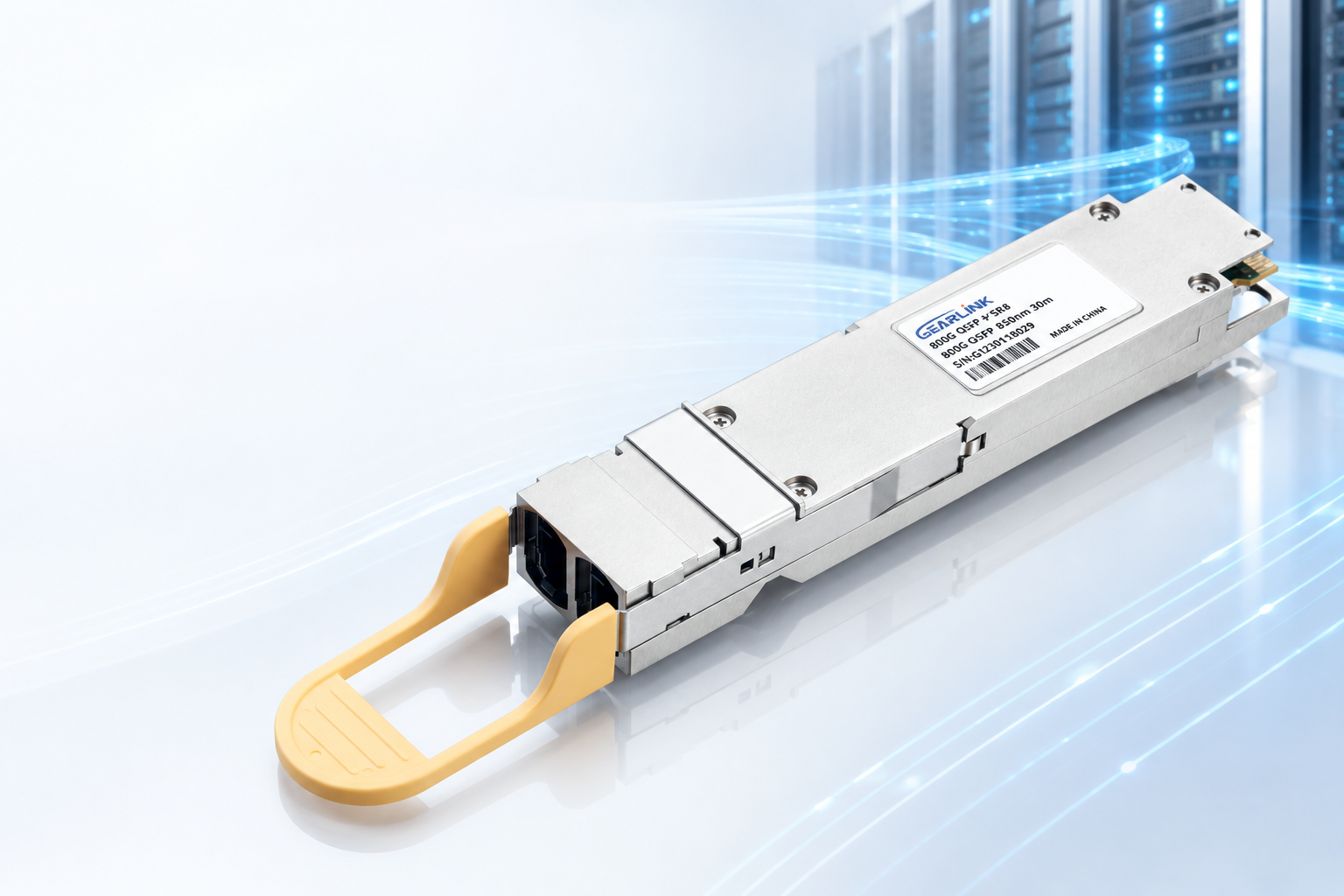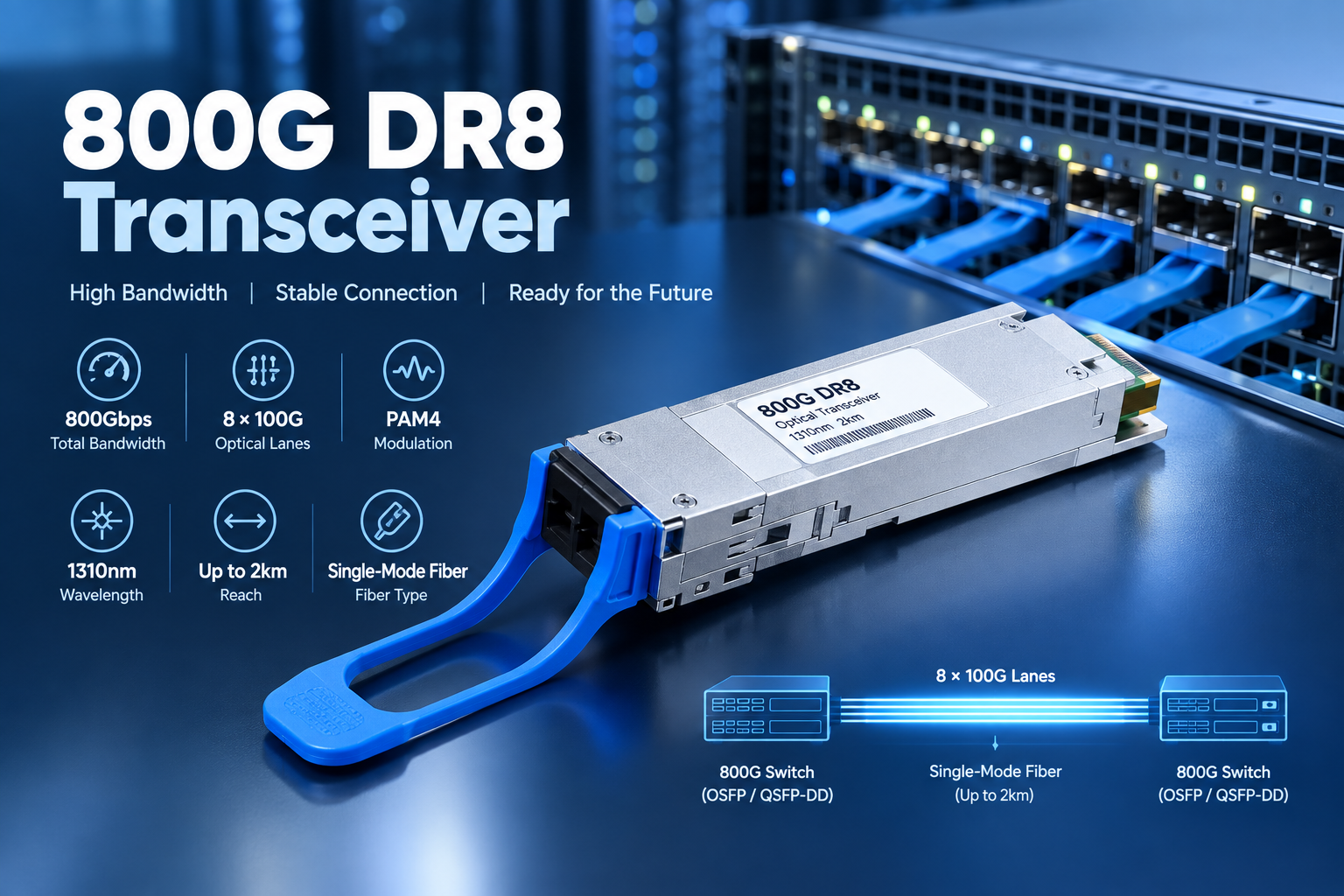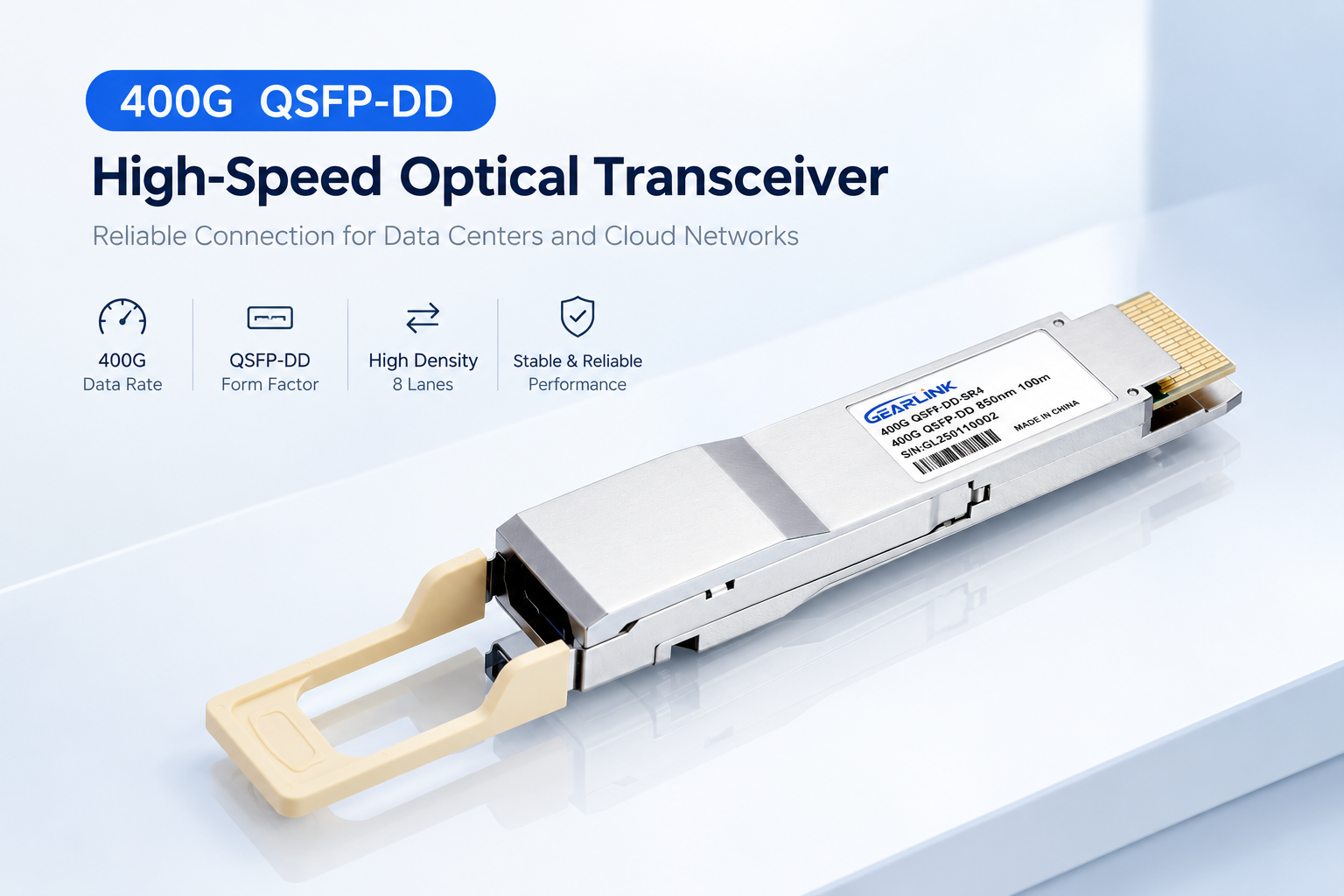
As data centers continue to handle more traffic, network speeds are moving rapidly from 100G and 200G toward 400G and 800G. In this transition, qsfp dd has become an important form factor for high-speed optical transceivers. Its compact design, high port density, and flexible electrical architecture make it suitable for modern data center networks, cloud platforms, and high-performance computing environments.
However, understanding this technology can be challenging at first. Therefore, this guide explains what QSFP-DD is, how it works, which optical modules use the form factor, and how it compares with other high-speed solutions.
What Is QSFP DD?
QSFP-DD stands for Quad Small Form-factor Pluggable Double Density. The “DD” refers to its double-density electrical interface compared with the original QSFP form factor.
Unlike traditional QSFP modules, QSFP-DD provides eight electrical lanes. Each lane can support different signaling speeds depending on the generation and application. As a result, the same form factor can support multiple network speeds.
For example, QSFP-DD modules can be designed for:
| Network Speed | Typical Application | Electrical Lanes |
| 200G | Data center uplinks | 8 lanes |
| 400G | Data center switching | 8 lanes |
| 800G | AI and HPC networks | 8 lanes |
| 2 × 200G | Breakout applications | 8 lanes |
Furthermore, the architecture provides a practical migration path for network operators. Existing equipment can therefore be upgraded without requiring a completely different physical module design.
Why QSFP DD Matters in Modern Data Centers
Modern data centers are under constant pressure to increase bandwidth while keeping equipment compact. Consequently, transceiver density has become almost as important as raw network speed.
A QSFP-DD port can provide much higher bandwidth than earlier QSFP generations while maintaining a relatively compact footprint. This makes it especially useful when switch front-panel space is limited.
For example, a high-density switch may provide dozens of QSFP-DD ports in a relatively small rack unit. In addition, the same port architecture can support different optical technologies.
This flexibility is valuable because network requirements are rarely identical across an entire data center.
Some connections may require only a few hundred meters, while others may need several kilometers. Therefore, different optical designs can be deployed while the host-side form factor remains similar.
QSFP DD Electrical Architecture Explained
The key difference between QSFP-DD and traditional QSFP modules is the electrical interface.
A traditional QSFP module normally uses four electrical lanes. QSFP-DD doubles this to eight lanes. Each lane can operate at a specific data rate depending on the host platform and optical technology.
For 400G applications, PAM4 signaling is widely used. PAM4, or four-level pulse amplitude modulation, allows more bits to be carried per symbol than traditional NRZ signaling.
QSFP DD and PAM4 Technology
PAM4 has become increasingly important as network speeds have increased.
With NRZ signaling, each symbol represents one bit. PAM4 uses four signal levels, allowing each symbol to represent two bits.
However, PAM4 also introduces additional signal integrity challenges. Therefore, DSPs, FEC, equalization, and other signal-processing technologies are commonly used in high-speed transceivers.
The relationship can be simplified as follows:
| Technology | Signal Levels | Bits per Symbol | Typical Use |
| NRZ | 2 | 1 | Legacy 10G/25G |
| PAM4 | 4 | 2 | 200G/400G/800G |
| Higher-speed PAM4 | 4 | 2 | Advanced 800G networks |
Because of this architecture, QSFP-DD can support high bandwidth without requiring an excessively large module.
Common QSFP DD Optical Modules
QSFP-DD is not a single optical specification. Instead, it is a form factor that can be used with several optical technologies.
As a result, different QSFP-DD modules can provide very different transmission distances and optical interfaces.
400G QSFP DD Transceivers
400G is one of the most common applications.
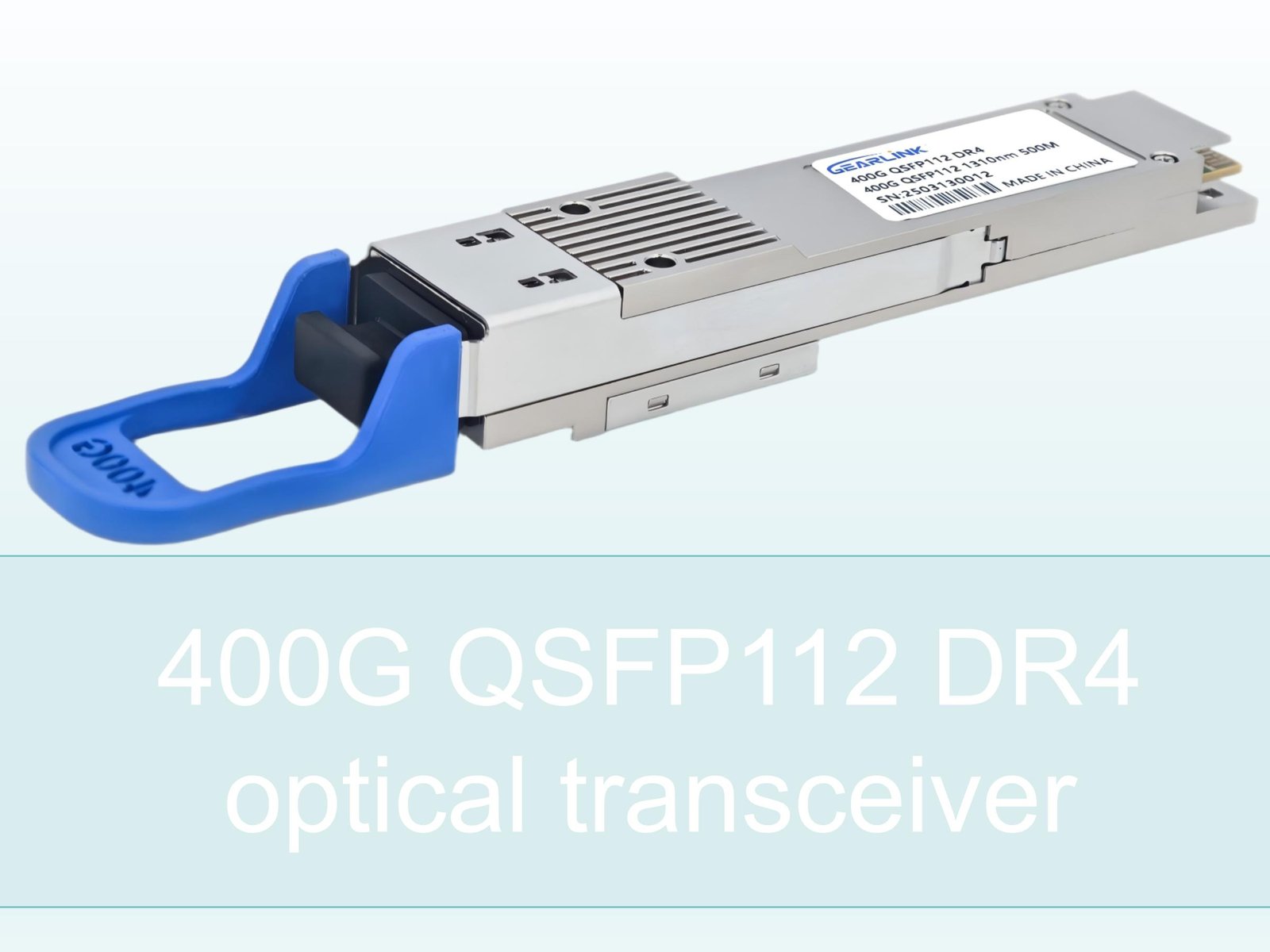
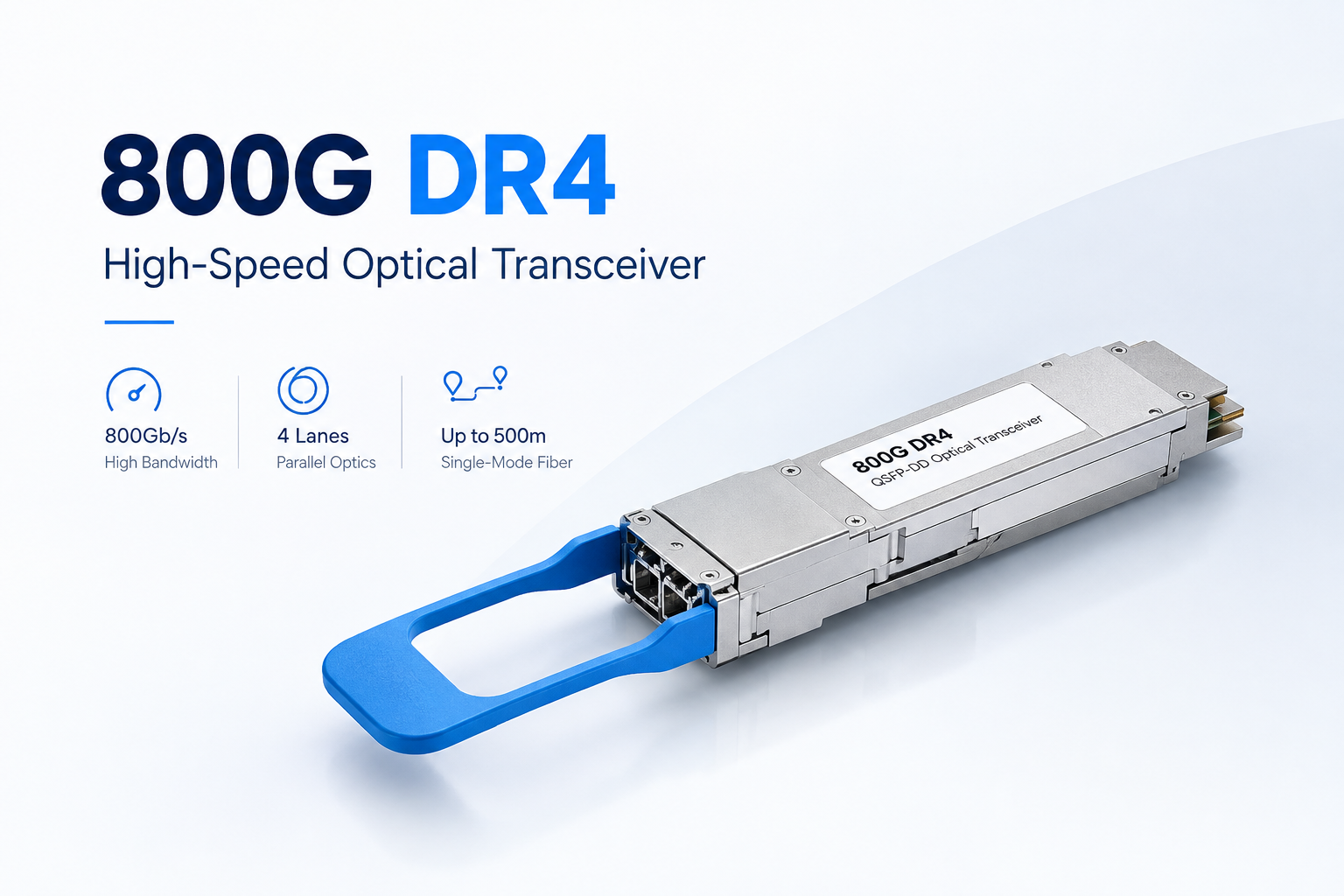
Several optical configurations are available, including DR4, FR4, LR4, and other designs.
| Module Type | Typical Wavelength | Fiber | Typical Reach |
| 400G DR4 | 1310 nm | SMF | 500 m |
| 400G FR4 | 1310 nm | SMF | 2 km |
| 400G LR4 | 1310 nm | SMF | 10 km |
| 400G SR4 | 850 nm | MMF | Short reach |
The exact specifications may vary between manufacturers. Therefore, the host switch, optical budget, connector type, and interoperability should always be checked before deployment.
800G QSFP DD Transceivers
As AI clusters and high-performance computing systems continue to grow, 800G connectivity is becoming increasingly important.
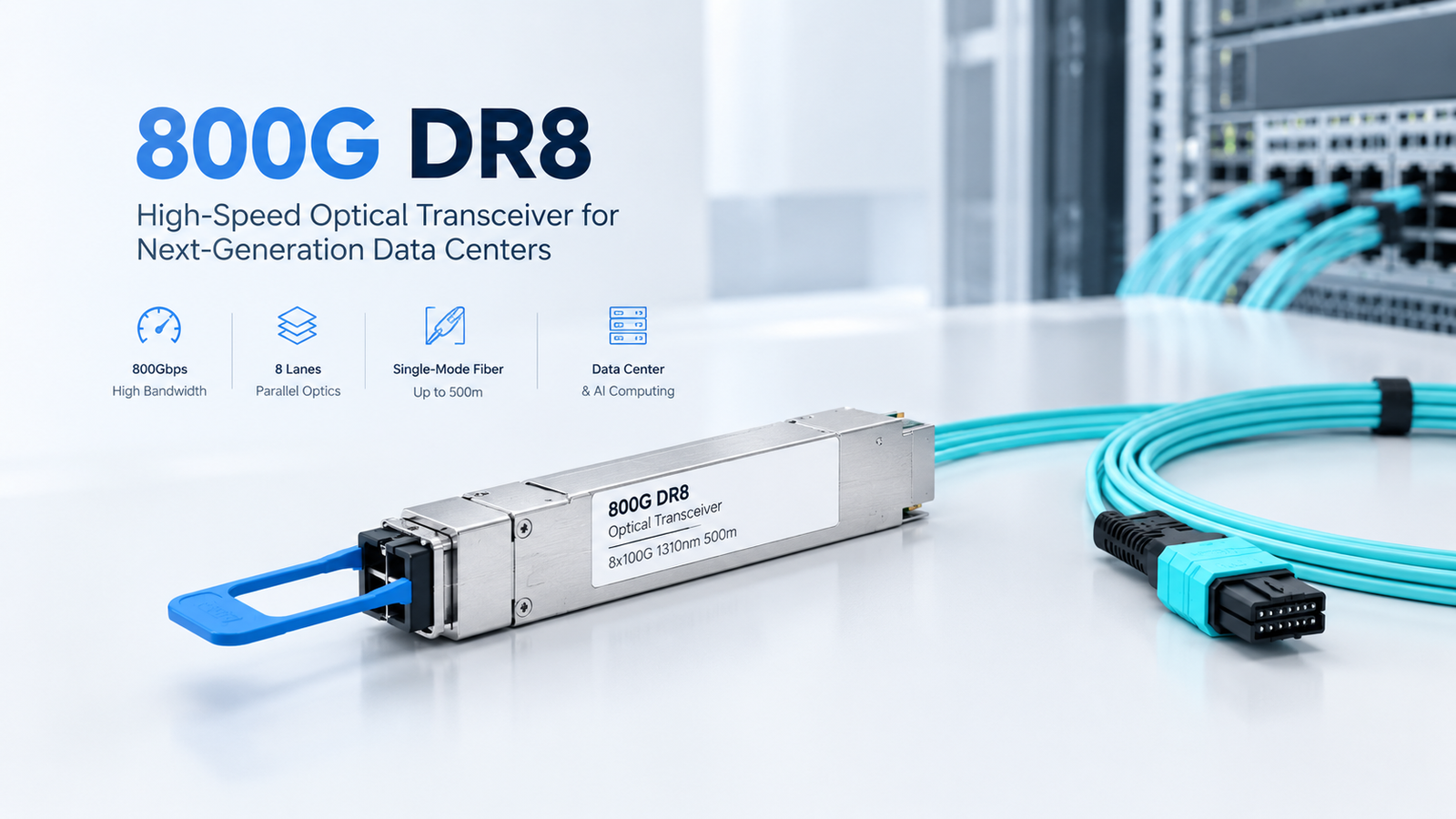
An 800G implementation can use eight electrical lanes with higher per-lane speeds. Depending on the optical architecture, multiple optical lanes can then be used to deliver the required aggregate bandwidth.
For example, an 800G module may use:
8 × 100G electrical lanes
8 × 100G optical lanes
4 × 200G optical lanes
Parallel multimode or single-mode fiber architectures
This flexibility allows manufacturers to develop different 800G solutions for different network environments.
QSFP DD vs QSFP112
QSFP-DD and QSFP112 are often compared because both are used in modern 400G and 800G networking.
However, their electrical architectures are different.
| Feature | QSFP-DD | QSFP112 |
| Electrical lanes | 8 | 4 |
| Typical high-speed application | 400G/800G | 400G/800G |
| Lane speed | Depends on generation | Up to 112G class |
| Port density | High | High |
| Common deployment | Data centers | High-performance networking |
The main difference is lane architecture. QSFP-DD uses more electrical lanes, while QSFP112 achieves higher bandwidth per lane.
Therefore, equipment designers may select one architecture over the other based on switch ASIC capability, power requirements, signal integrity, and port density.
QSFP DD vs OSFP
OSFP is another major form factor used for high-speed optical networking.
Unlike QSFP-DD, OSFP has a larger physical design. This additional space can provide more room for thermal management and high-speed electronics.
| Feature | QSFP-DD | OSFP |
| Physical size | More compact | Larger |
| Port density | Very high | High |
| Thermal headroom | More limited | Generally higher |
| 400G support | Yes | Yes |
| 800G support | Yes | Yes |
| Common environment | Data centers | AI/HPC and data centers |
In practice, neither form factor should be evaluated only by bandwidth. Power consumption, cooling, switch compatibility, cable management, and future upgrade plans are also important.
What Applications Use QSFP DD?
Because of its combination of bandwidth and density, QSFP-DD is used across several networking environments.
Data Center Networks
Data centers are one of the most common applications. QSFP-DD ports can be deployed for switch-to-switch connections, server aggregation, and spine-leaf architectures.
For example, a 400G optical module can connect high-speed switches across a data center using single-mode or multimode fiber.
Cloud Computing
Cloud providers handle large volumes of east-west traffic. Therefore, higher-speed interconnects are required between servers, switches, storage systems, and computing clusters.
QSFP-DD provides a scalable interface that can support different optical configurations as network requirements change.
AI and High-Performance Computing
AI workloads require extremely high bandwidth between GPUs, switches, and compute nodes. Consequently, 400G and 800G optical connections are becoming increasingly important.
In these environments, latency, power consumption, thermal performance, and optical reach must all be considered together.
How to Select the Right QSFP DD Module
Choosing a transceiver should not begin with data rate alone. Instead, several technical parameters should be checked.
1. Check the Required Data Rate
First, determine whether the network requires 200G, 400G, or 800G.
The transceiver must match the host switch or NIC. Otherwise, the module may not operate correctly even when the physical connector appears compatible.
2. Check the Transmission Distance
Next, identify the required reach.
For short data center links, multimode solutions may be sufficient. For longer connections, single-mode fiber is generally more appropriate.
3. Check the Fiber Type
The optical module must match the installed fiber infrastructure.
| Fiber | Common Application |
| OM3 | Short-reach multimode |
| OM4 | Higher-performance multimode |
| OS2 | Single-mode long-reach |
| Duplex SMF | LR/FR applications |
| Parallel SMF | DR/parallel optics |
4. Check the Connector
Connector selection is also important.
Some parallel optical modules use MPO/MTP connectors, while duplex designs such as FR4 or LR4 may use LC connectors.
5. Verify Host Compatibility
Finally, compatibility should be confirmed with the exact switch, NIC, or router model.
Coding, firmware behavior, FEC requirements, DOM/DDM support, and vendor-specific interoperability may affect the final result.
QSFP DD and Breakout Networking
Another advantage of the form factor is its suitability for breakout configurations.
A high-speed 400G port can sometimes be divided into multiple lower-speed connections. For example, a 400G interface may be used in a 4 × 100G configuration when supported by the host equipment and transceiver.
This approach can help organizations migrate gradually from lower-speed networks to higher-speed architectures.
For instance:
400G → 4 × 100G
This can be useful when a new high-speed switch must connect to several existing 100G devices.
However, breakout compatibility must be verified at both ends. The switch, transceiver, cable, and software configuration must support the intended mode.
Important Parameters to Check Before Purchase
A reliable procurement process should consider more than the product name.
The following parameters should be confirmed:
| Parameter | Why It Matters |
| Data rate | Determines network capacity |
| Wavelength | Must match optical architecture |
| Reach | Determines usable link distance |
| Fiber type | Affects optical performance |
| Connector | Must match cabling |
| FEC | Important for high-speed links |
| DOM/DDM | Helps monitor module status |
| Power consumption | Important for switch cooling |
| Operating temperature | Important for deployment environment |
| Compatibility | Determines whether the module works with the host |
In addition, the exact manufacturer part number should be checked whenever a replacement or cross-reference is required.
The Future of QSFP DD Networking
Network speeds are continuing to increase. At the same time, data center operators need higher density without unlimited increases in rack space and power consumption.
Therefore, the role of compact high-speed form factors is expected to remain important.
As 400G becomes more widely deployed and 800G adoption expands, optical modules based on QSFP-DD will continue to provide a flexible option for data center connectivity.
Furthermore, improvements in DSP technology, PAM4 signaling, FEC, and optical components will continue to support higher bandwidth.
For network engineers, the key is not simply choosing the fastest available module. Instead, the goal is to select an optical solution that balances bandwidth, reach, power, compatibility, density, and total network cost.
Conclusion
QSFP DD has become an important form factor for high-speed Ethernet and data center networking. Its eight-lane electrical architecture allows high bandwidth to be delivered within a compact module design.
More importantly, the platform can support multiple optical technologies and transmission distances. As a result, it can be used in data centers, cloud infrastructure, AI clusters, and other high-bandwidth environments.
When selecting a solution, engineers should evaluate the complete link rather than focusing on the transceiver alone. Data rate, fiber type, optical reach, connector, FEC, power consumption, and host compatibility should all be considered.
With the continued growth of 400G and 800G networks, QSFP-DD provides a practical foundation for building dense and scalable optical infrastructure.
1. What is QSFP DD?
QSFP DD, or QSFP-DD, is a high-density pluggable form factor designed for high-speed networking. It uses eight electrical lanes and can support applications such as 200G, 400G, and 800G, depending on the implementation.
2. What is QSFP DD used for?
QSFP DD is commonly used in data centers, cloud computing networks, AI infrastructure, high-performance computing, and high-speed switch interconnects. Different optical versions can support different transmission distances and fiber types.
3. What is the difference between QSFP DD and QSFP112?
The main difference is their electrical lane architecture. QSFP-DD generally uses eight electrical lanes, while QSFP112 uses four higher-speed electrical lanes. Both can be used for high-speed 400G and 800G networking.
4. Can QSFP DD support 800G?
Yes. QSFP-DD can be used for 800G applications when the host platform, electrical interface, optical module, and signaling architecture support the required bandwidth. The exact implementation should therefore be checked against the switch or NIC specifications.
5. How do I choose the right QSFP DD transceiver?
Start by checking the required data rate, transmission distance, fiber type, connector, wavelength, FEC requirements, power consumption, and host compatibility. For replacement projects, the original manufacturer and complete part number should also be verified.