Introduction
As data centers continue to expand, network operators need faster, more reliable, and more efficient optical connectivity. 400G FR4 has become an important solution for high-speed data transmission, especially in cloud computing, enterprise networks, and large-scale data center environments.
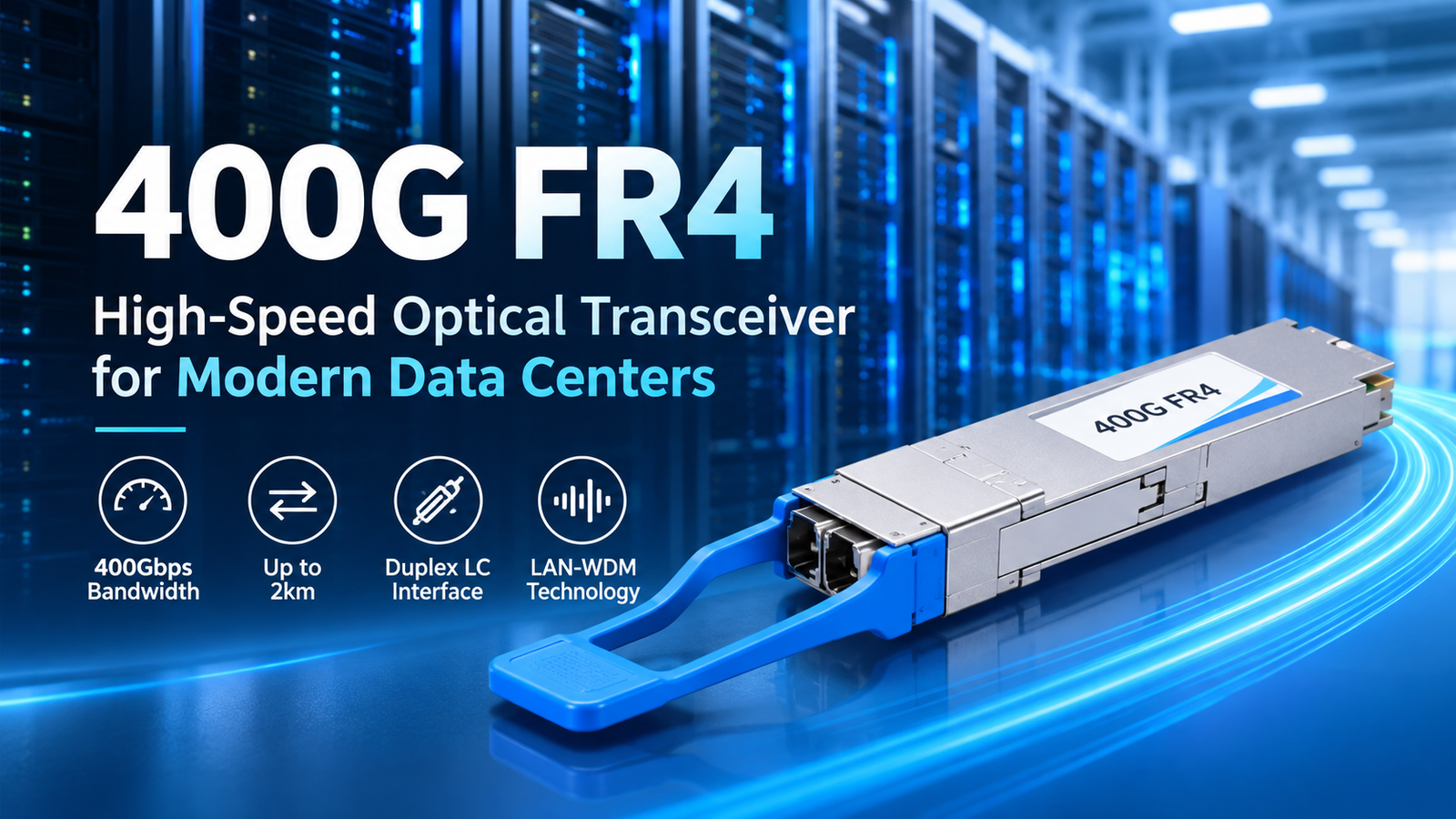
A 400G FR4 optical transceiver supports a transmission rate of 400Gbps over single-mode fiber. It uses four optical wavelengths in the 1310nm range to transmit data across distances of up to 2 kilometers. In addition, its duplex LC interface makes installation and fiber management relatively simple.
Unlike parallel-fiber solutions, this technology uses wavelength division multiplexing (WDM) to carry multiple optical signals over a pair of fibers. As a result, network operators can achieve high bandwidth without requiring eight or more separate optical fiber connections.
In this article, we will explain how the technology works, review its main specifications, compare it with other 400G optical solutions, and explore where it delivers the greatest value.
What Is a 400G FR4 Optical Transceiver?
A 400G FR4 optical transceiver is a high-speed optical module designed to support 400 Gigabit Ethernet transmission over single-mode fiber.
The term FR4 refers to a four-wavelength optical interface designed for reach requirements in the 2km range. Each wavelength carries 100Gbps, and the four optical channels work together to provide a total bandwidth of 400Gbps.
Most 400G FR4 modules use four LAN-WDM wavelengths around 1310nm. These optical signals travel through one transmitting fiber and one receiving fiber, making the solution suitable for duplex LC fiber connections.
The module also converts electrical signals from a network switch or router into optical signals. At the receiving end, another module converts the incoming optical signals back into electrical data.
How Does 400G FR4 Work?
The operating principle is relatively straightforward. Instead of sending all 400Gbps through one optical channel, the module divides the data into four separate 100Gbps optical channels.
Each channel uses a different wavelength. A multiplexer combines the four channels into one optical signal, which travels through a single-mode fiber.
At the receiving end, a demultiplexer separates the wavelengths and sends each channel to its corresponding receiver.
The following table summarizes the basic transmission process.
| Component | Function |
| Electrical interface | Receives high-speed electrical data from the host |
| DSP | Processes electrical signals and supports signal recovery |
| Laser transmitter | Converts electrical data into optical signals |
| WDM multiplexer | Combines four optical wavelengths |
| Single-mode fiber | Carries the combined optical signal |
| WDM demultiplexer | Separates the four wavelengths |
| Optical receiver | Converts optical signals back into electrical data |
Therefore, four optical channels can operate over a standard duplex single-mode fiber connection.
Key Specifications of 400G FR4
Before selecting an optical module, network engineers should understand its main technical specifications. These parameters determine whether the module can meet the requirements of a particular network.
Although exact specifications may vary between manufacturers, the following table shows the typical characteristics of a 400G FR4 QSFP-DD or OSFP module.
| Parameter | Typical Specification |
| Data Rate | 400Gbps |
| Optical Interface | 4 × 100Gbps |
| Wavelength | 4 LAN-WDM wavelengths around 1310nm |
| Typical Center Wavelengths | 1271nm, 1291nm, 1311nm, 1331nm |
| Transmission Distance | Up to 2km |
| Fiber Type | Single-Mode Fiber (SMF) |
| Connector | Duplex LC |
| Modulation | PAM4 |
| Host Interface | 8 × 50G-class electrical lanes |
| Cable Type | Duplex SMF |
| Form Factors | QSFP-DD, OSFP |
| Application | 400G Ethernet |
| FEC | Host-supported RS(544,514) in typical 400G Ethernet implementations |
It is important to note that the exact electrical interface, power consumption, operating temperature, and optical performance depend on the module specification and form factor.
400G FR4 Wavelength and Optical Technology
One of the most important features of this optical solution is its wavelength division multiplexing technology.
The four optical channels use different wavelengths within the 1310nm region. This arrangement allows multiple data streams to travel through the same fiber pair without interfering with one another.
Typical center wavelengths are:
1271nm
1291nm
1311nm
1331nm
Each channel carries approximately 100Gbps using PAM4 modulation.
Compared with traditional NRZ modulation, PAM4 can transmit two bits per symbol. Consequently, it supports higher data rates without requiring an equivalent increase in the symbol rate.
This technology makes high-speed optical transmission more practical for modern data center networks.
Why Choose 400G FR4 for Data Center Networks?
As network bandwidth requirements increase, selecting the right optical interface becomes increasingly important.
There are several reasons why 400G FR4 is an attractive option for data center operators.
1. High Bandwidth for Modern Networks
The module provides an aggregate bandwidth of 400Gbps. Therefore, it can support demanding applications such as cloud services, virtualization, AI infrastructure, and high-performance computing.
For large data centers, this bandwidth helps reduce the number of optical connections required to achieve a given network capacity.
2. Duplex LC Connectivity
Another major advantage is its duplex LC interface.
Unlike parallel-fiber modules that require MPO connectors, this solution uses two single-mode fibers for transmission and reception.
As a result, installation and maintenance can be easier, particularly in existing networks that already use duplex LC fiber infrastructure.
3. Practical 2km Transmission Distance
A transmission distance of up to 2km makes the module suitable for many data center interconnections.
For example, it can connect switches, routers, and network equipment located in different server rooms or nearby buildings.
Moreover, it provides more reach than many short-reach parallel-fiber solutions.
4. Efficient Fiber Utilization
The four optical wavelengths share the same duplex fiber connection.
Consequently, operators can transmit 400Gbps without using four separate fiber pairs.
This approach can help reduce fiber management complexity and make better use of existing fiber resources.
5. Compatibility with Modern 400G Platforms
Depending on the module form factor and host specifications, FR4 optics can be deployed in QSFP-DD and OSFP platforms.
These form factors are widely used in modern high-density switches and routers.
However, buyers should always verify the host equipment’s supported optical standards, firmware requirements, and module compatibility before ordering.
400G FR4 vs DR4 vs LR4: What Are the Differences?
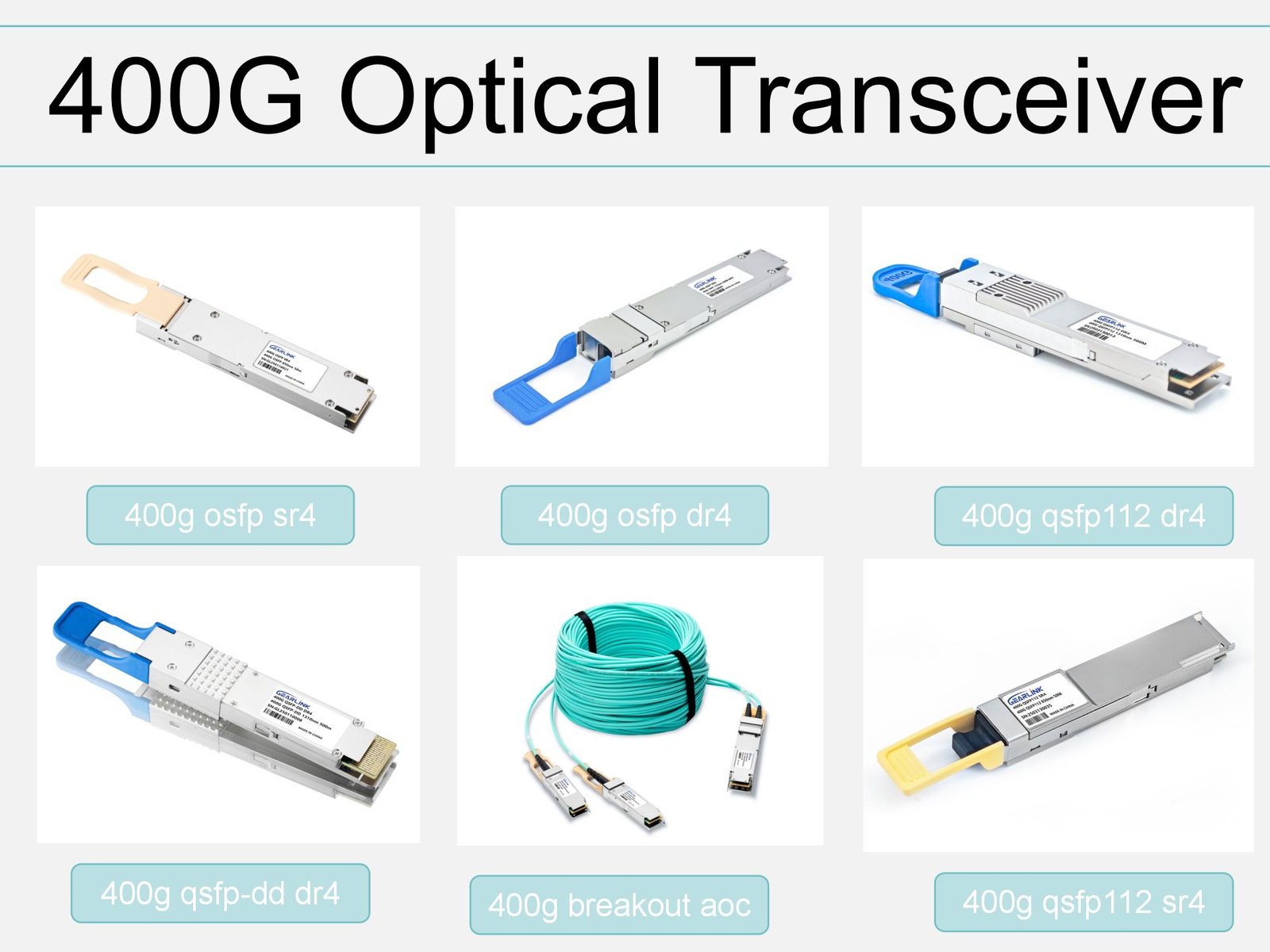
When selecting a 400G optical transceiver, engineers often compare FR4, DR4, and LR4.
Although all three solutions support 400Gbps transmission, they use different optical architectures and transmission distances.
The following comparison highlights their main differences.
| Feature | 400G FR4 | 400G DR4 | 400G LR4 |
| Data Rate | 400Gbps | 400Gbps | 400Gbps |
| Transmission Distance | 2km | 500m | 10km |
| Fiber Type | Single-Mode | Single-Mode | Single-Mode |
| Optical Channels | 4 wavelengths | 4 parallel lanes | 4 wavelengths |
| Fiber Connection | Duplex LC | MPO-12 | Duplex LC |
| WDM Technology | Yes | No | Yes |
| Typical Application | Data center interconnection | Short-reach data center links | Longer-reach network links |
400G FR4 vs 400G DR4
The main difference between these two technologies is their optical transmission method.
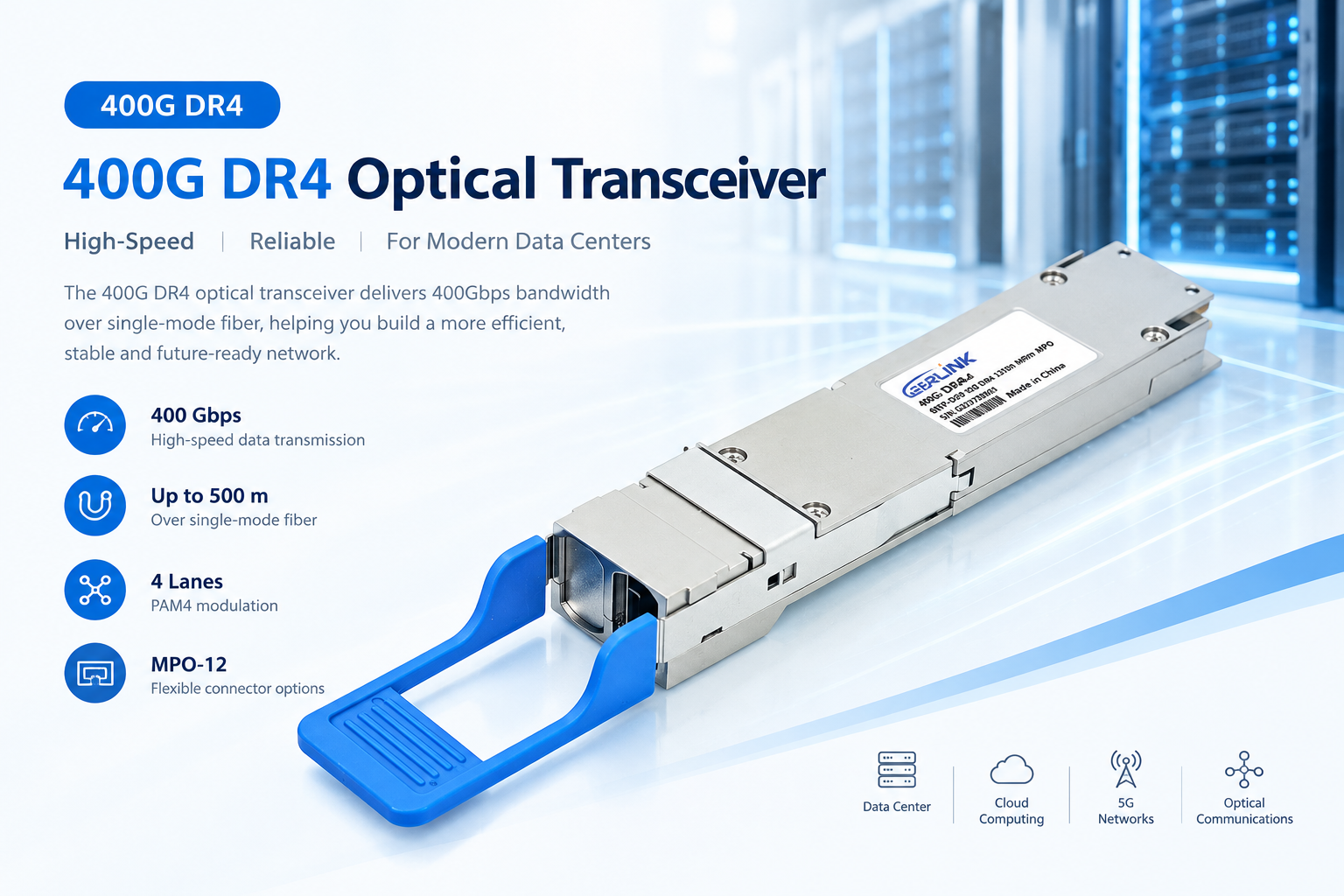
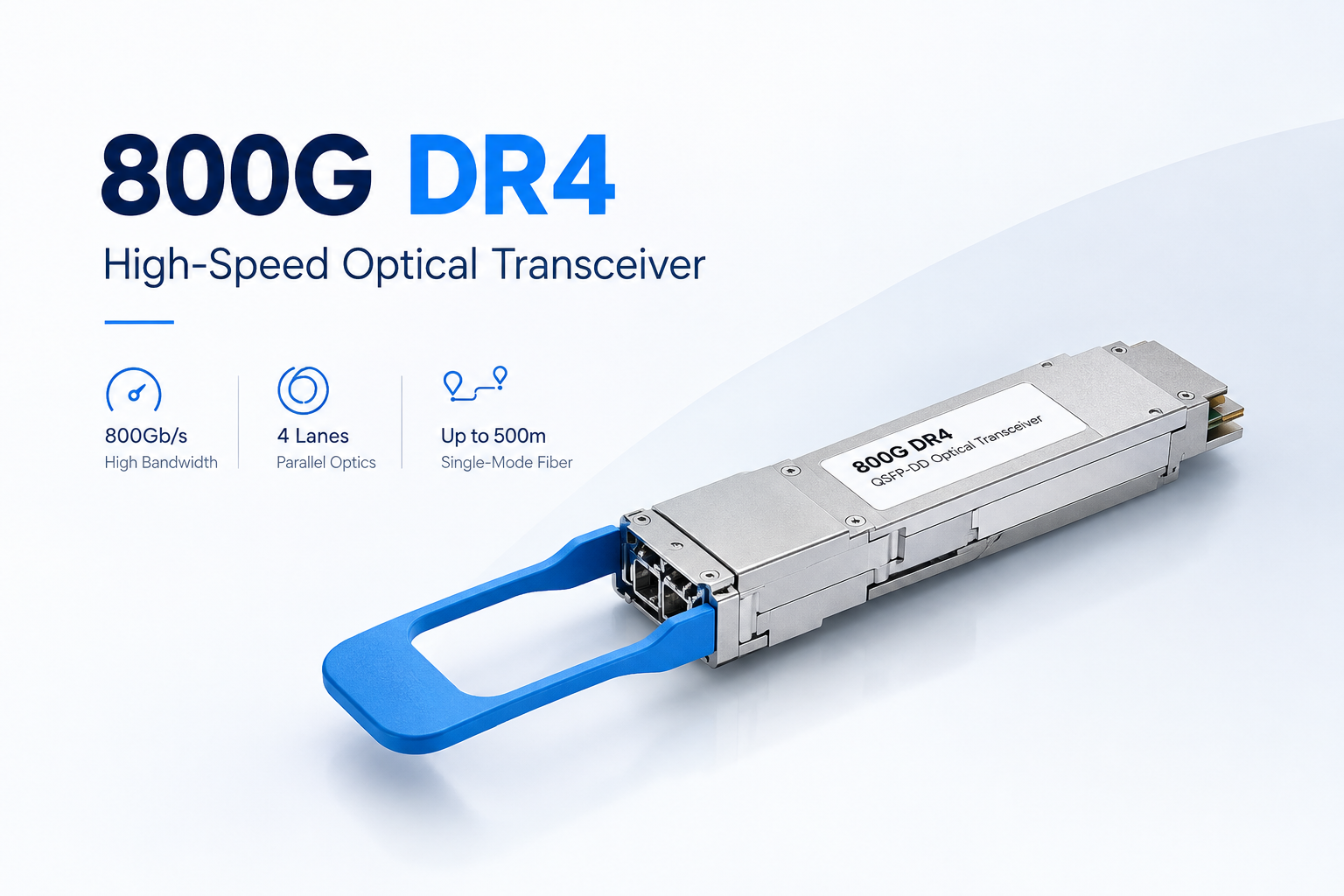
400G DR4 uses four parallel optical channels. Each channel carries 100Gbps over a separate fiber path. Therefore, it typically requires an MPO-12 connector.
In contrast, FR4 combines four wavelengths through WDM technology and transmits them over a duplex single-mode fiber connection.
DR4 typically supports up to 500 meters, while FR4 supports up to 2 kilometers.
Therefore, DR4 is suitable for shorter connections, whereas FR4 offers greater flexibility when network equipment is located farther apart.
400G FR4 vs 400G LR4
Both FR4 and LR4 use wavelength division multiplexing and duplex LC connectivity.
However, their transmission distances are different.
FR4 generally supports up to 2km, while LR4 is designed for longer distances of up to 10km.
For this reason, FR4 is often suitable for connections within large data center campuses, while LR4 is a better option for longer interconnections.
The actual choice should depend on link distance, optical budget, equipment support, and total deployment cost.
Common Applications of 400G FR4
With its high bandwidth and practical transmission distance, this optical technology supports several important networking applications.
Data Center Interconnections
Large data centers often contain multiple network rooms and equipment areas.
400G FR4 can connect high-speed switches and routers across these locations. Its duplex LC interface also makes it easier to integrate with existing single-mode fiber infrastructure.
Cloud Computing Infrastructure
Cloud service providers need high-capacity connections to support virtual machines, distributed storage, and large-scale computing workloads.
By providing 400Gbps connectivity, FR4 modules help improve network capacity and support increasing data traffic.
AI and High-Performance Computing
AI training and high-performance computing systems generate large volumes of data.
High-speed connections between switches, storage systems, and computing clusters are essential for maintaining efficient communication.
Consequently, 400G optical modules have become important components in modern AI infrastructure.
Enterprise and Telecom Networks
Large enterprises and telecommunications operators also need reliable high-bandwidth connections.
FR4 modules can support 400G uplinks between aggregation switches, core routers, and data center equipment.
Their 2km reach provides flexibility for many campus and metropolitan network environments, although longer links may require LR4 or other extended-reach solutions.
How to Select the Right 400G FR4 Module
Choosing an optical module involves more than checking its transmission speed.
Buyers should evaluate several factors before placing an order.
| Selection Factor | What to Check |
| Form Factor | QSFP-DD or OSFP |
| Host Compatibility | Switch or router model |
| Transmission Distance | Actual link length |
| Fiber Type | OS2 single-mode fiber |
| Connector | Duplex LC |
| Optical Wavelength | Supported LAN-WDM channels |
| Power Consumption | Platform power budget |
| Operating Temperature | Commercial or industrial requirements |
| FEC Support | Host and module interoperability |
| Warranty | Product warranty and technical support |
Check Switch and Router Compatibility
First, confirm that the host device supports the required 400G optical interface.
Different manufacturers may use different firmware policies and compatibility requirements.
Therefore, buyers should provide the exact switch or router model when requesting a quotation.
Confirm Fiber Infrastructure
Next, check whether the existing fiber infrastructure supports single-mode transmission.
A duplex LC connection requires one fiber for transmitting data and another for receiving data.
In addition, inspect fiber cleanliness and connector quality before installation. Poor connections can increase optical loss and affect link stability.
Evaluate Power and Thermal Performance
High-speed optical modules generate heat during operation.
For this reason, engineers should consider power consumption, airflow direction, cooling capacity, and the thermal design of the host platform.
Proper airflow is particularly important when multiple 400G modules operate in the same switch.
Verify FEC and Interoperability
Finally, confirm that the host equipment and optical module support compatible FEC settings.
Forward Error Correction helps improve signal reliability by detecting and correcting transmission errors.
However, interoperability depends on the complete link configuration, including host firmware, optical specifications, and FEC implementation.
For critical deployments, engineers should conduct compatibility testing before large-scale installation.
Installation and Maintenance Recommendations
Proper installation helps maintain stable optical performance and extends the service life of network equipment.
Consider the following recommendations:
Inspect optical connectors: Clean LC connectors before installation to prevent dust-related signal loss.
Use suitable fiber: Select high-quality OS2 single-mode fiber for the required transmission distance.
Check optical power: Measure transmitter and receiver power to confirm that the link operates within the specified optical budget.
Monitor module temperature: Check module temperature and power consumption through digital diagnostic monitoring when supported.
Verify link status: Confirm that the switch recognizes the module and that all four optical channels operate correctly.
Perform interoperability tests: Test the complete connection with the target equipment before deploying multiple links.
Additionally, avoid bending optical cables beyond their recommended minimum bend radius. Excessive bending can increase signal loss and reduce transmission reliability.
Conclusion: Is 400G FR4 the Right Choice?
As data center bandwidth requirements continue to grow, selecting an appropriate optical transceiver becomes increasingly important.
400G FR4 offers a useful combination of 400Gbps bandwidth, 2km transmission distance, WDM technology, and duplex LC connectivity.
Compared with DR4, it provides longer reach and uses fewer fiber connections. Compared with LR4, it offers a shorter transmission distance that may better match many data center applications.
Ultimately, the best solution depends on network architecture, link distance, equipment compatibility, and deployment cost.
For network operators looking to upgrade their infrastructure, FR4 is a practical option worth considering.
At OpticTran, we provide optical transceiver solutions for data center and telecommunications applications. Contact our team to discuss your 400G connectivity requirements, request technical specifications, or check compatibility with your network equipment.
Frequently Asked Questions About 400G FR4
1. What is the transmission distance of a 400G FR4 transceiver?
A 400G FR4 optical transceiver typically supports transmission distances of up to 2 kilometers over single-mode fiber. It uses four LAN-WDM wavelengths to transmit 400Gbps through a duplex LC fiber connection.
2. What type of fiber does 400G FR4 use?
400G FR4 uses single-mode fiber, typically OS2 fiber, with a duplex LC connector. One fiber carries the transmitting signal, while the other carries the receiving signal.
3. What is the difference between 400G FR4 and 400G DR4?
The main difference is the optical transmission method. 400G FR4 uses four wavelengths over duplex LC single-mode fiber and supports up to 2km. In comparison, 400G DR4 uses four parallel optical channels with an MPO connector and typically supports up to 500 meters.
4. What wavelengths does a 400G FR4 optical module use?
A typical 400G FR4 module uses four LAN-WDM wavelengths: 1271nm, 1291nm, 1311nm, and 1331nm. Each wavelength carries approximately 100Gbps using PAM4 modulation.
5. Which applications are suitable for 400G FR4 optical transceivers?
400G FR4 optical transceivers are suitable for data center interconnections, cloud computing infrastructure, AI networks, enterprise networks, and high-speed switch-to-switch connections. Their 2km reach and duplex LC interface make them practical for many single-mode fiber deployments.